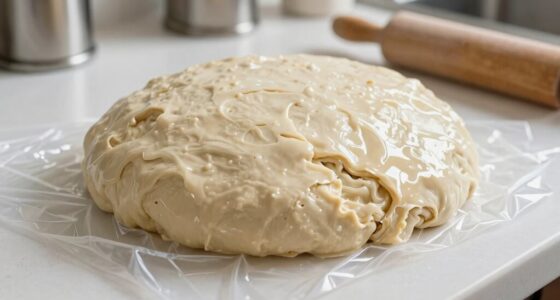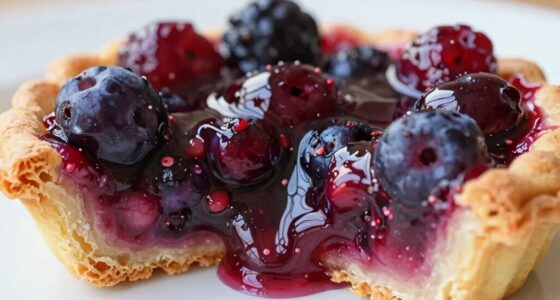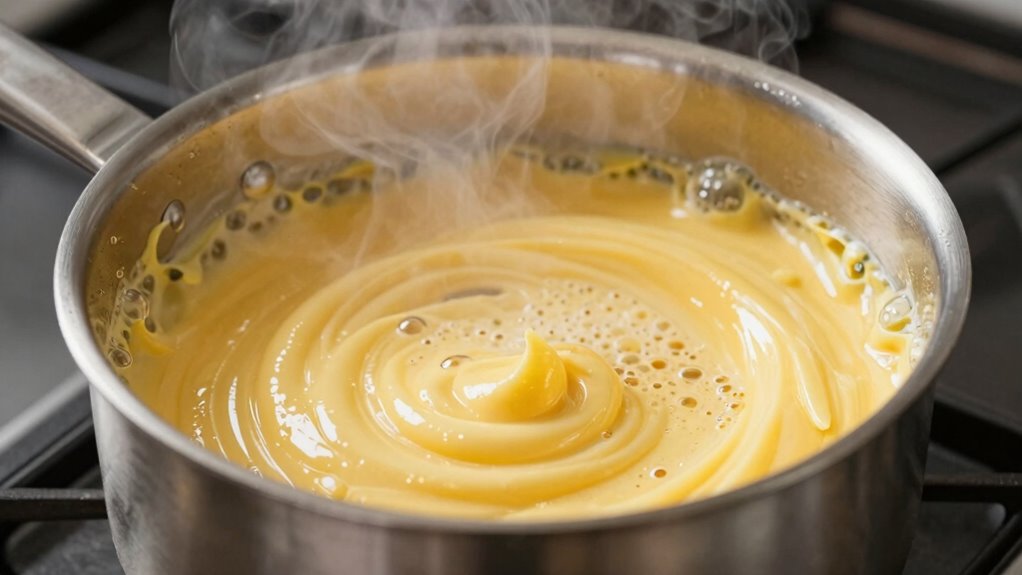

When your pastry cream starts acting up on the stove, it’s often due to heat and timing issues. Using high heat can cause curdling or scorching, while too low heat prevents proper thickening. To avoid problems, cook over medium-low heat and whisk constantly to prevent lumps and uneven cooking. Once the mixture coats the back of a spoon, it’s ready. Keep these tips in mind, and you’ll master troubleshooting for silky results—more insights lie ahead.

Get baking supplies delivered free with Prime
- Fast, free delivery on millions of items
- Prime Video, Amazon Music and more included
- Member-only deals all year
Key Takeaways
- Overheating can cause curdling or graininess; cook over medium-low heat and remove once thickened.
- Constant whisking prevents lumps and ensures even heat distribution during cooking.
- Using high heat risks scorching the mixture, leading to undesirable texture changes.
- Proper temperature control is essential to avoid curdling and achieve smooth, silky pastry cream.
- Remove from heat promptly once the mixture coats the back of a spoon to prevent overcooking.
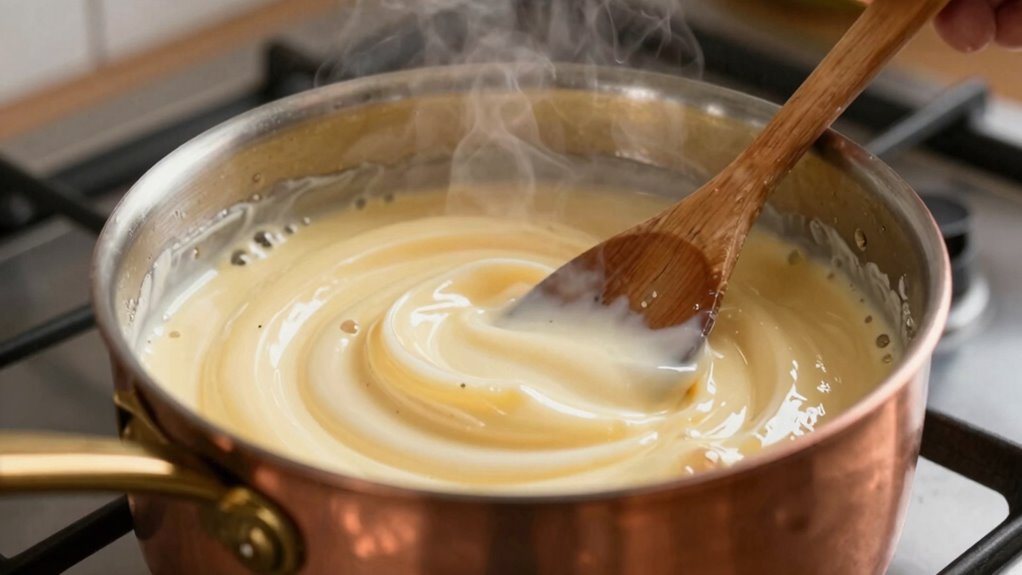
Pastry cream is a versatile filling used in many desserts, but it can sometimes develop problems that ruin the final product. One of the most common issues starts right at the stove, where improper technique or ingredient choices can cause curdling, lumps, or a runny texture. To prevent these problems, you need to pay close attention during the cooking process and understand how ingredient substitutions can impact the outcome. For example, using cornstarch instead of flour can change the thickening properties, so be sure to adjust your measurements accordingly. If you’re out of milk, almond or soy milk might seem like good substitutes, but they can alter the cream’s consistency and flavor. It’s best to stick with whole milk for a smooth, stable pastry cream unless you’re experienced in balancing alternative ingredients. Additionally, understanding the thickening properties of different ingredients can help you troubleshoot and perfect your recipe. Your heat control is vital—too high, and you risk scorching or curdling the mixture; too low, and it may not thicken properly. Always cook over medium-low heat, whisking constantly to prevent the mixture from sticking to the bottom of the pan. As soon as the mixture starts to thicken and coats the back of a spoon, remove it from the heat. This precise timing helps you avoid overcooking, which can cause the cream to become grainy or develop a skin. Once cooked, immediately transfer the pastry cream to a clean bowl to stop the cooking process. Cover it with plastic wrap pressed directly onto the surface to prevent a skin from forming and store it in the refrigerator. Proper storage tips are essential—use airtight containers and consume within 2-3 days for the best texture and flavor. Using temperature control during cooking can also prevent common issues, as high heat can quickly cause curdling or burning. If your pastry cream ends up too runny, don’t panic; you can often fix it by gently reheating and adding a slurry of cornstarch mixed with cold water, then cooking until thickened. If it’s too thick, whisk in a little warm milk until you reach your desired consistency. Knowing how to troubleshoot and adapt with ingredient substitutions can save your dessert. Always remember, proper storage tips will keep your pastry cream fresh and prevent spoilage or unwanted texture changes. Whether you’re making a classic éclair filling or a fruit tart base, mastering these stove-starting problems makes all the difference between a failed dessert and a perfect, silky pastry cream. Being familiar with cooking techniques can further help you avoid common pitfalls and achieve a smooth, luscious filling every time. Paying attention to ingredient quality and sourcing fresh, high-quality ingredients can also improve the overall texture and flavor of your pastry cream. Developing a good sense of timing and temperature during the cooking process is crucial for achieving the ideal consistency every time.
stainless steel whisk for pastry cream
As an affiliate, we earn on qualifying purchases.
As an affiliate, we earn on qualifying purchases.
Frequently Asked Questions
How Can I Prevent Lumps in My Pastry Cream?
To prevent lumps in your pastry cream, whisk the mixture constantly as it heats, and gradually add hot liquid to your egg mixture to temper it. Use fresh ingredients and strain the cream afterward for extra smoothness. For flavor variations, incorporate extracts or fruit purees once cooled. Store your pastry cream in an airtight container in the fridge, and use it within a couple of days to keep it fresh and lump-free.
What’s the Best Type of Saucepan for Pastry Cream?
Imagine a smooth, gentle river flowing evenly—your saucepan should do the same. Opt for a heavy-bottomed saucepan made from copper or stainless steel, as these materials offer superb heat distribution. This guarantees your pastry cream heats uniformly, preventing lumps and scorching. Avoid thin or lightweight pans, which can create hot spots. The right saucepan keeps your cream silky, smooth, and perfectly cooked from start to finish.
How Do I Fix Curdled Pastry Cream?
If your pastry cream has curdled, don’t worry—try whisking it vigorously over low heat to smooth it out. If that doesn’t work, strain it through a fine sieve to remove lumps. For flavor variations, consider adding vanilla, citrus zest, or chocolate. Store your pastry cream in an airtight container in the fridge, and use it within a couple of days for the best texture and flavor.
Can I Use a Double Boiler Instead of Direct Heat?
Yes, you can use a double boiler instead of direct heat for pastry cream. A double boiler provides gentle, even heat distribution, reducing the risk of curdling or burning. It helps control temperature more effectively, ensuring your pastry cream thickens smoothly without overcooking. Just make sure the water beneath doesn’t touch the top bowl, and stir constantly for the best results.
How Long Should Pastry Cream Cook to Thicken Properly?
Think of cooking pastry cream like nurturing a delicate garden; patience is key. You should cook it for about 5-7 minutes after it starts to thicken, stirring constantly. Once it reaches a smooth, custard-like consistency, remove from heat. This guarantees it’s properly thickened for flavor variations like vanilla or chocolate. Store it in an airtight container in the fridge, and always give it a quick stir before using to keep it silky.
double boiler for gentle heating
As an affiliate, we earn on qualifying purchases.
As an affiliate, we earn on qualifying purchases.
Conclusion
So, sweeten your skill and soothe your struggles by staying steady and savoring each step. With patience, practice, and a pinch of persistence, you’ll master the pastry cream problem that starts at the stove. Remember, every small success strengthens your skill, turning mistakes into masterful moments. Keep calm, stay committed, and soon you’ll serve silky, sumptuous pastry cream with confidence and charm, championing your culinary creativity through consistent, clever craftsmanship.
As an affiliate, we earn on qualifying purchases.
As an affiliate, we earn on qualifying purchases.
Halloween Picks
halloween
As an affiliate, we earn on qualifying purchases.