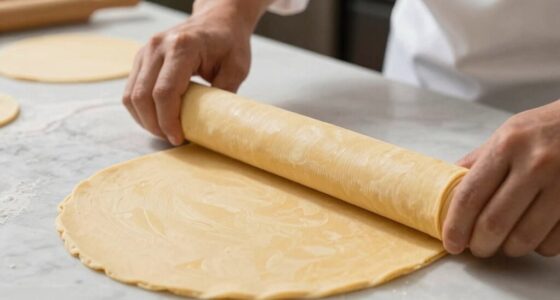
To assess lamination quality before baking, feel the dough’s elasticity—well-laminated dough should stretch smoothly without cracking and feel supple with a slight tackiness. Handle it gently to see if the layers hold together during folding and rolling; if it tears easily or is overly sticky, more resting or folding is needed. Proper handling and resting improve layer separation. Keep exploring to reveal more tips for perfect flaky dough.

Get baking supplies delivered free with Prime
- Fast, free delivery on millions of items
- Prime Video, Amazon Music and more included
- Member-only deals all year
Key Takeaways
- Check dough elasticity by gently stretching; it should resist tearing and stretch smoothly without cracking.
- Inspect the surface; well-laminated dough feels supple, slightly tacky, and holds layers during rolling.
- Perform folds and presses; clear layer separation indicates good lamination before baking.
- Rest the dough appropriately; relaxed gluten improves layer definition and prevents fusion.
- Ensure proper handling and temperature control; consistent technique and correct oven preheat support optimal lamination.
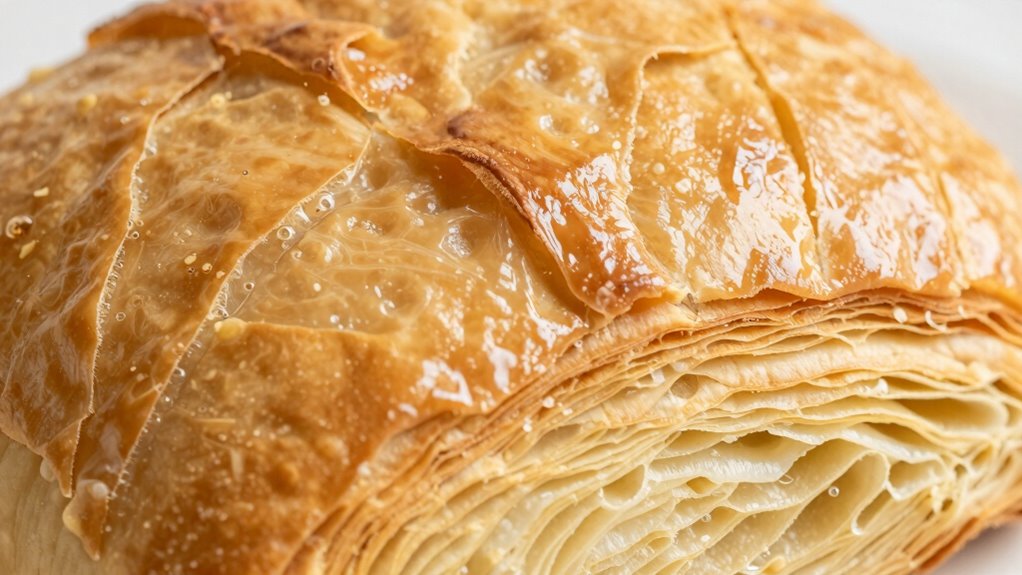
Before baking, it’s fundamental to assess the lamination quality of your dough, as this directly impacts the final texture and appearance of your baked goods. Lamination refers to the thin layers of dough separated by butter or fat, creating the flaky, airy structure characteristic of pastries like croissants and puff pastry. To evaluate this, start by gently stretching or folding the dough. If the dough resists tearing and stretches smoothly without cracking, it indicates good dough elasticity, which is key for maintaining distinct layers during baking. Poor elasticity often results in uneven layers or a dense texture, so recognizing the feel of elastic dough helps you determine whether it’s ready for the oven.
Next, pay close attention to the dough’s surface and the way it responds to handling. Well-laminated dough should feel supple and slightly tacky but not sticky. When you roll or fold it, the layers should hold together firmly without sticking excessively to your work surface or rolling pin. If the dough feels overly sticky or tears easily, it may need additional folding and resting to develop better lamination and elasticity. Resting periods are imperative, as they allow gluten to relax and improve dough elasticity, leading to more distinct layers once baked. Additionally, understanding the concept of lamination quality helps you better assess whether your dough has been properly prepared for baking. Recognizing these signs ensures the layers will separate properly during baking, resulting in a perfect flaky texture. It’s also helpful to keep in mind that proper dough handling techniques can significantly influence the lamination process and final outcome. Furthermore, consistent technique during rolling and folding can help achieve the desired lamination and layer separation. For optimal results, make sure to monitor the dough’s temperature, as it can affect elasticity and lamination during handling.
Now, consider the oven temperature, which plays an indispensable role in how well your lamination turns out. Baking at the right temperature ensures that the butter between layers melts at the proper rate, creating steam that lifts and separates the layers, resulting in a light, flaky texture. Too high a temperature can cause the butter to melt too quickly, preventing proper layer formation and leading to a greasy, uneven pastry. Conversely, too low a temperature might not generate enough steam, resulting in dense, less airy baked goods. Before baking, confirm your oven is properly preheated to the recommended temperature for your recipe, typically between 375°F to 425°F for pastries like croissants. Proper oven temperature control is crucial for achieving the ideal lamination effect.
As an affiliate, we earn on qualifying purchases.
Frequently Asked Questions
Can Lamination Quality Affect the Final Baked Product’s Texture?
Yes, lamination quality directly affects your baked product’s texture. If the lamination consistency isn’t right, your layers may not separate properly, resulting in a dense or uneven crumb. Proper dough elasticity ensures the layers can stretch without tearing, creating flaky, tender pastries. When you check lamination quality before baking, you’re ensuring the dough’s elasticity and lamination consistency are ideal, which leads to a light, airy, and well-structured final product.
How Long Should I Inspect Lamination Before Deciding to Bake?
Ever wondered how long to inspect lamination before baking? You should check your laminated dough for at least 15-20 minutes, ensuring it’s well-rested and properly laminated. During this time, monitor lamination storage conditions and dough handling, looking for even layers and no tearing. Proper inspection helps prevent issues like uneven baking or poor texture. Don’t rush—patience in this stage guarantees a flaky, professional finish.
Is There a Visual Difference Between Good and Poor Lamination?
Yes, there’s a visual difference. Good lamination shows smooth, even layers with no tears or uneven spots, indicating proper dough elasticity and folding techniques. Poor lamination often reveals uneven layers, tears, or holes, suggesting the dough wasn’t folded correctly or lacked elasticity. Carefully inspecting these visual cues helps you determine if your dough is laminated well, ensuring a flaky, perfect bake.
What Tools Are Best for Examining Lamination Quality?
A stitch in time saves nine, so use the right tools to check lamination quality early. Your best options include a magnifying glass or jeweler’s loupe to inspect lamination types closely, revealing air pockets or tears. A strong light source, like a flashlight or backlit viewing box, helps highlight inconsistencies. Combining these inspection techniques guarantees you catch issues before baking, leading to a perfect final product.
How Does Lamination Thickness Impact Baking Results?
Thicker lamination can lead to uneven baking and less delicate layers, while thinner lamination enhances dough elasticity and results in a more refined, flaky crust. If your lamination consistency is inconsistent, it affects how evenly the dough bakes, potentially creating gaps or dense spots. Adjusting lamination thickness helps you achieve best dough elasticity, ensuring a uniform rise and an ideal flaky texture. Proper thickness is key to great baking results.
As an affiliate, we earn on qualifying purchases.
Conclusion
By inspecting your lamination carefully before baking, you guarantee your pastry will turn out beautifully flaky and crisp. Look for even layers, no tears, and consistent thickness—these signs indicate good lamination. Remember, isn’t the effort you put into checking this worth the delicious results? Taking a few extra moments now can save you from disappointment later. So, are you ready to master the art of perfect lamination and elevate your baking game?
As an affiliate, we earn on qualifying purchases.
As an affiliate, we earn on qualifying purchases.
Halloween Picks
halloween
As an affiliate, we earn on qualifying purchases.