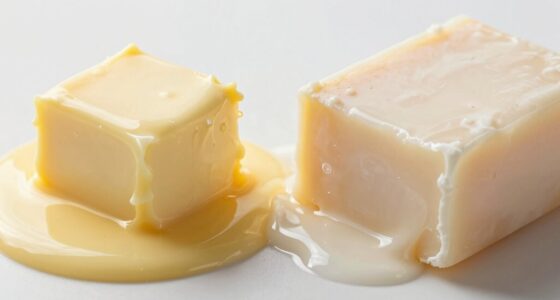

Overrun is the amount of air you incorporate into your mixture, which greatly impacts the texture and appearance of your ice cream or foam. When you mix, air bubbles form and trap within the ingredients, making your product lighter, fluffier, and smoother. Managing overrun by controlling your churning speed and temperature helps you achieve the perfect balance of volume and richness. Keep exploring to discover how to perfect your technique and get consistently great results.

Get baking supplies delivered free with Prime
- Fast, free delivery on millions of items
- Prime Video, Amazon Music and more included
- Member-only deals all year
Key Takeaways
- Overrun measures the amount of air whipped into ice cream, influencing its lightness and texture.
- Air bubbles create a smooth, airy structure, with smaller bubbles enhancing stability and creaminess.
- Higher overrun results in a fluffier, less dense product, while lower overrun yields a richer, thicker texture.
- Controlling churning speed, temperature, and ingredient ratios helps adjust the level of overrun.
- Proper air incorporation and stabilization produce a visually appealing, uniform ice cream with ideal mouthfeel.
ice cream overrun control machine
As an affiliate, we earn on qualifying purchases.
As an affiliate, we earn on qualifying purchases.
What Is Overrun and Why Is It Important?

Have you ever wondered how ice cream makers guarantee their products are fluffy and light? The answer lies in overrun, which measures how much air is whipped into the mixture. This air creates tiny ice crystal formation, giving ice cream its smooth, airy texture. Proper fat stabilization helps trap this air evenly throughout the base, preventing ice crystals from growing too large and ruining the creaminess. When overrun is high, the mixture becomes more voluminous and less dense, making it feel lighter on your palate. Additionally, the texture of the final product heavily depends on the amount of air incorporated during churning. Controlling overrun is essential for consistent quality, as it directly affects the product’s texture and overall sensory experience. Modern ice cream production often utilizes advanced equipment that ensures uniform air incorporation and consistent overrun levels. So, controlling overrun is essential to achieving that perfect balance of creaminess and fluffiness, making each scoop delightful. In modern ice cream production, energy-efficient equipment plays a vital role in maintaining precise control over overrun levels.
commercial ice cream maker with adjustable churning speed
As an affiliate, we earn on qualifying purchases.
As an affiliate, we earn on qualifying purchases.
How Does Air Interact With Ingredients During Mixing?

During mixing, air bubbles are actively incorporated into the ingredients through agitation, creating a foam-like structure that traps air within the mixture. This process depends on factors like foam stability and air bubble size. Smaller bubbles tend to create a smoother texture and are more stable, resisting collapse over time. Larger bubbles can make the mixture lighter but are less stable, risking rapid deflation. The interaction between air and ingredients influences the final texture and appearance. Understanding this interaction helps you control the mixture’s lightness and consistency. Additionally, foaming techniques play a crucial role in achieving the desired overrun and final texture. The imaging‑scale of air bubbles can be controlled to influence the final product’s quality and appearance. Moreover, controlling air incorporation methods allows for better consistency and desired sensory qualities in the final mixture. Proper stabilizers can also enhance foam stability, ensuring the mixture maintains its texture over time. Techniques such as temperature control can further optimize foam formation and stability.
foam and ice cream texture stabilizer
As an affiliate, we earn on qualifying purchases.
As an affiliate, we earn on qualifying purchases.
How Does Overrun Affect Texture and Appearance?
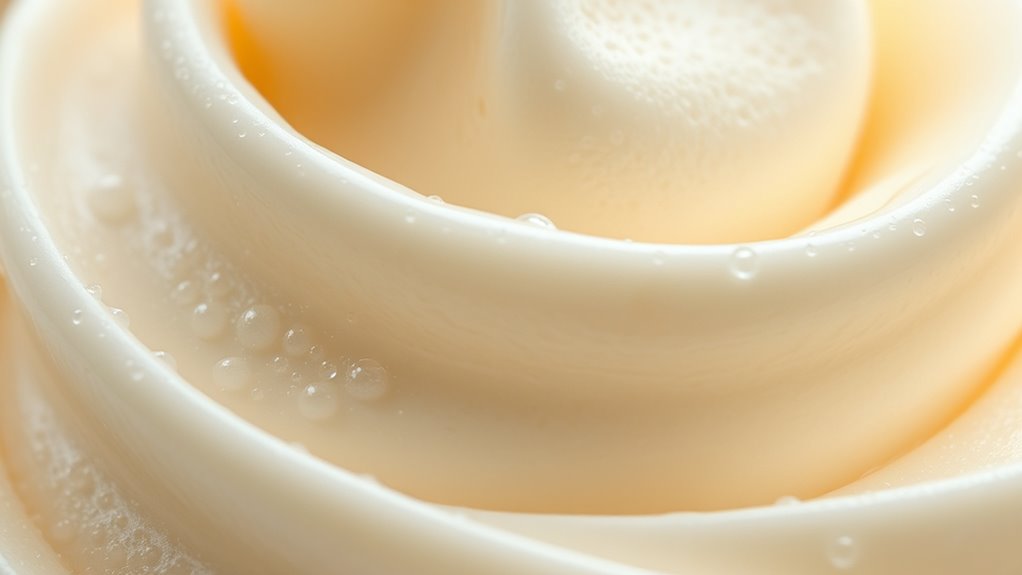
Overrun directly influences the final texture and appearance of your mixture. When you control overrun levels, you impact foaming stability, which determines how well the mixture holds air during freezing. Higher overrun creates a lighter, fluffier texture, enhancing the ice cream’s creaminess and smoothness. Conversely, lower overrun results in a denser, richer consistency. The amount of air incorporated affects the visual appeal too; more air makes the product look voluminous and inviting, while less air gives a more solid, traditional appearance. Proper overrun management guarantees your ice cream achieves the desired texture enhancement and aesthetic quality. By understanding how overrun impacts foaming stability, you can tailor your mixture to produce the perfect balance of lightness and richness, ultimately elevating your finished product. Additionally, controlling overrun is essential for foaming stability, which directly influences the final quality of your ice cream. Maintaining consistent overrun levels also helps ensure uniform texture and appearance across batches, making your product more appealing to customers. Moreover, understanding the role of net worth in the industry can help you better appreciate market trends and product positioning. Recognizing the relationship between overrun and texture development allows for more precise adjustments in your recipes.
As an affiliate, we earn on qualifying purchases.
What Are Effective Ways to Control and Adjust Overrun?
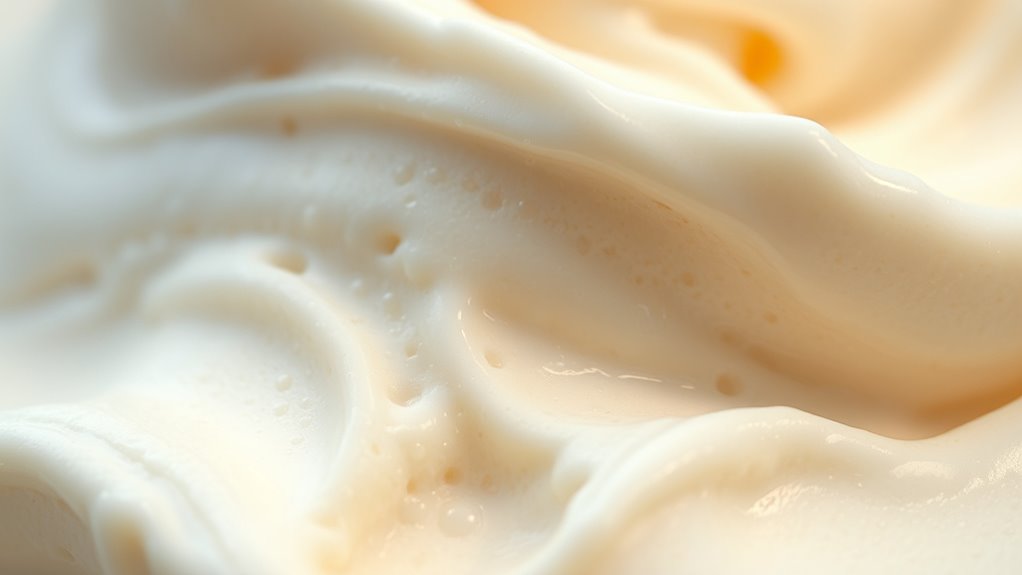
Controlling and adjusting overrun is key to achieving the desired texture and appearance in your ice cream. To fine-tune overrun, focus on balancing ingredient ratios and air incorporation. Here are effective ways to do that:
- Adjust the churning speed: slower speeds produce less air, resulting in a denser texture and better flavor balance.
- Modify the freezing temperature: colder temperatures limit air incorporation, helping you control overrun precisely.
- Tweak ingredient ratios: increasing fat or stabilizers can reduce overrun, while adding more liquid or air-entraining agents can boost it.
- Regularly monitoring the performance metrics of your equipment can also help maintain consistent overrun control.
- Proper oil maintenance and filtration are essential for consistent operation and can influence how well your equipment performs in controlling overrun.
- Consistent use of the right exfoliating agents, like glycolic acid, can improve the overall texture and clarity of your skin, similarly to how precise control over overrun improves ice cream quality.
- Understanding the role of air in texture development is essential, as it influences both the mouthfeel and visual appeal of your final product, and staying informed about AI advancements can lead to innovative techniques in food production.
How Can You Achieve Perfect Overrun in Your Recipes?

Achieving perfect overrun in your recipes requires careful attention to both ingredient selection and processing techniques. Start with the creaming method: beat your fat, typically butter or sugar with cream, to incorporate air evenly. This creates a stable base for incorporating more air during freezing. Pay close attention to fat content; higher fat levels can help trap air better, resulting in a lighter texture. Guarantee your equipment is cold, and don’t overmix, as excessive agitation can deflate the foam. Use gentle, consistent movements when adding air and folding ingredients. Adjust your freezing time accordingly to prevent over- or under-incorporation of air. Proper incorporation of air is essential for achieving a light and fluffy end product. Additionally, understanding the role of air entrapment during freezing can help improve the overall texture of your recipe. Ensuring optimal air retention can further enhance the stability of your mixture and prevent deflation. Incorporating techniques such as proper mixing speed can also influence how well air is incorporated and maintained throughout the process. For optimal results, consider how essential oils might influence the stability of your mixture, as they can affect the emulsion and texture. By focusing on proper creaming and managing fat content, you’ll achieve a consistent, perfect overrun that enhances your recipe’s texture.
Frequently Asked Questions
How Does Overrun Influence Flavor Intensity in Ice Cream?
Higher overrun increases air incorporation, which makes your ice cream lighter and fluffier. This texture enhancement can dilute flavor intensity, making the taste seem milder. Conversely, lower overrun results in less air, concentrating flavors and giving a richer, more intense taste. So, by adjusting overrun, you control how strong your ice cream’s flavor feels, balancing texture with flavor impact for the perfect scoop.
Can Overrun Variation Impact Nutritional Content?
Think of overrun variation as a hidden chef in your ice cream, subtly changing its nutritional recipe. Higher air incorporation can dilute nutrients, making the ice cream lighter but slightly less nutritious. Conversely, lower overrun helps preserve nutritional content, packing more ingredients in each scoop. So, yes, adjusting overrun impacts nutritional preservation, influencing how wholesome your ice cream truly is while also shaping its texture and mouthfeel.
What Equipment Best Controls Overrun in Commercial Production?
To control overrun in commercial production, you should use equipment that allows precise adjustments, like high-quality commercial cream whippers or ice cream machines. Regular equipment calibration guarantees consistent cream stability and overrun levels. By maintaining proper calibration and selecting equipment designed for accurate air incorporation, you can achieve consistent texture, prevent over-aeration, and deliver a product with the desired cream stability and mouthfeel.
How Does Temperature Affect Overrun Stability?
Temperature greatly influences overrun stability by affecting air incorporation during freezing. When you control temperature precisely, you guarantee consistent air bubbles form and stay evenly distributed, preventing texture issues. Cooler temperatures help trap air effectively, leading to stable overrun. Conversely, temperature fluctuations can cause air to escape or form unevenly, resulting in inconsistent texture. So, maintaining strict temperature control is key to achieving smooth, uniform ice cream with stable overrun.
Is There a Health Risk Associated With Excessive Overrun?
Excessive overrun isn’t generally a health risk for most people, but it can raise allergy concerns if the added air introduces allergens or contaminants. If you have allergies or respiratory issues, you might experience symptoms from the increased air content or impurities. Keep in mind that high overrun levels can also affect the texture and quality of your ice cream, so balance is key to ensuring both taste and safety.
Conclusion
Understanding overrun is like mastering a secret ingredient in your culinary toolkit. When you control how air interacts with ingredients, you craft textures and appearances that delight the senses. Think of overrun as the heartbeat of perfect ice cream—pumping life into your creations. With practice, you’ll turn this invisible force into your greatest ally, transforming simple ingredients into extraordinary treats. Embrace the dance of air and ingredients, and watch your recipes reach new heights of perfection.
Fall Picks
fall essentials
As an affiliate, we earn on qualifying purchases.