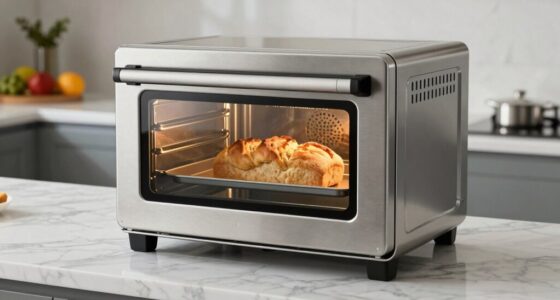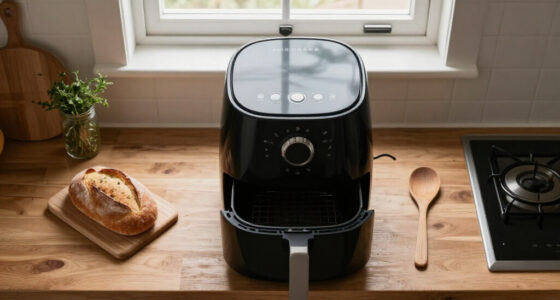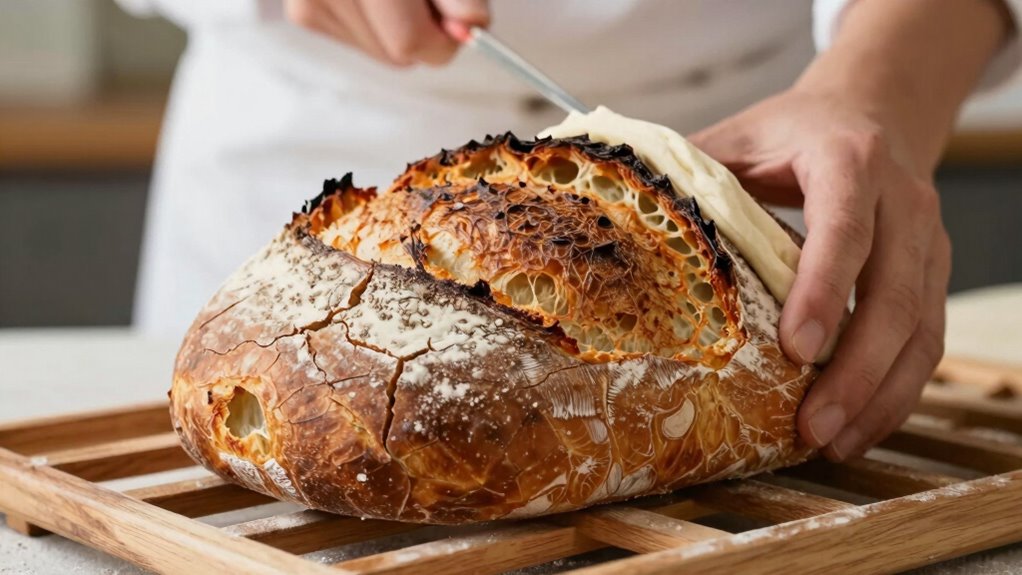

Fast surface browning can happen quickly due to reactions like Maillard and caramelization, but it doesn’t mean your food is baking fast overall. These reactions happen at the surface and happen faster than heat penetrates the interior. Higher oven temperatures speed up browning without fully cooking the inside. To get even doneness, you need to manage heat and baking time carefully. If you want to understand how to balance browning and doneness, keep exploring these key concepts.

Get baking supplies delivered free with Prime
- Fast, free delivery on millions of items
- Prime Video, Amazon Music and more included
- Member-only deals all year
Key Takeaways
- Browning results from surface reactions like Maillard and caramelization, which occur faster than heat penetrates the interior.
- High oven temperatures speed surface browning but do not accelerate internal heat transfer.
- Rapid surface browning can lead to an undercooked interior if baking times aren’t adjusted.
- Uneven heat transfer at higher temperatures causes surface browning without evenly cooking the inside.
- Proper oven management, like rotation and temperature control, is essential to ensure both browning and thorough baking.
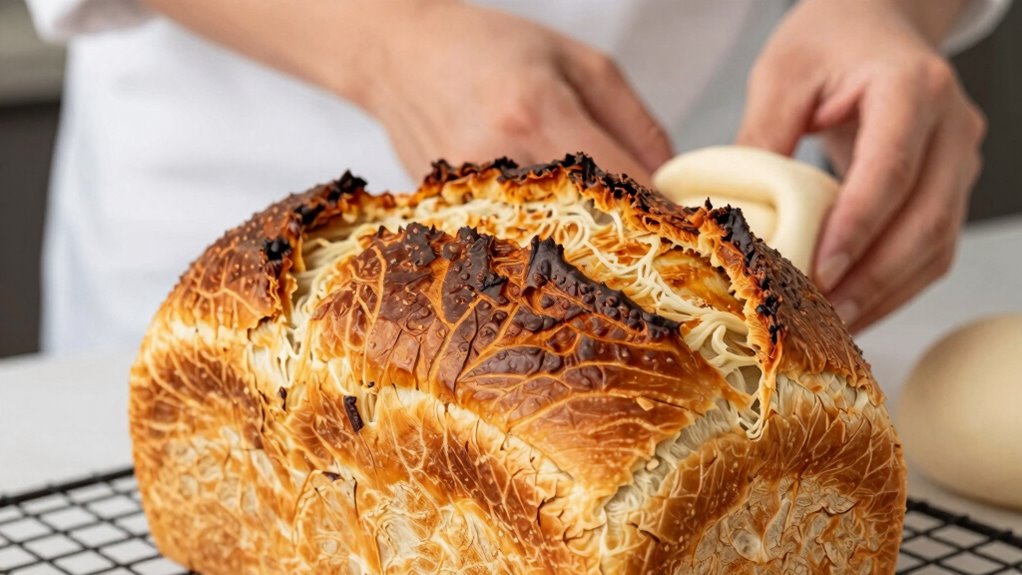
Browning your food quickly might make you think the entire baking process will follow suit, but in reality, these two steps are driven by different factors. When you see a dish turn golden or develop a crisp crust in a short time, it’s tempting to assume the whole baking process will be just as swift. However, browning is primarily about surface reactions—specifically, the Maillard reaction and caramelization—that occur rapidly at certain temperatures. These reactions happen quickly once the oven temperature reaches a level that promotes browning, but that doesn’t mean the interior of your food heats up equally fast or that the entire baking process speeds up. Heat transfer in baked goods is uneven, especially at higher temperatures, which can lead to a browned exterior and an undercooked interior. Recognizing the importance of heat conduction can help you optimize your baking process to achieve better results. Proper oven management strategies, such as rotating your baked items or adjusting rack positions, can also help ensure even cooking and browning throughout.
Oven temperature plays a huge role in browning, but it’s just one part of the equation. For quick browning, you might crank up the heat, and yes, the surface will turn a lovely shade of brown faster. Yet, higher oven temperatures also mean the heat penetrates the food unevenly. The interior may lag behind, remaining underdone or raw until the oven manages to transfer enough heat inward. This is why some baked goods with a browned exterior remain underdone inside if you push the temperature too high or don’t adjust baking times accordingly. Additionally, understanding heat conduction can help you optimize your baking process to achieve better results. Proper ingredient preparation, such as drying surfaces or cutting ingredients evenly, can also influence how quickly and uniformly your food browns.
oven heat distribution thermometer
As an affiliate, we earn on qualifying purchases.
As an affiliate, we earn on qualifying purchases.
Frequently Asked Questions
Can Browning Times Vary With Different Oven Types?
Yes, browning times can vary with different oven types because factors like oven insulation and baking duration influence heat distribution. An well-insulated oven retains heat better, speeding up browning, while a less insulated one might take longer. Additionally, ovens with different heating elements or temperature controls can affect how quickly your food browns. You should always monitor your baking process and adjust times accordingly to achieve the desired browning.
Does Preheating Affect the Browning Process?
Preheating your oven definitely affects the browning process. When you preheat, the oven reaches the ideal temperature quickly, encouraging the caramelization process to happen evenly and efficiently. This guarantees your food browns properly without burning. If you skip preheating, the oven temperature fluctuates, making it harder to control browning. So, always preheat to create the perfect environment for even, golden-brown results.
Are There Specific Ingredients That Influence Browning Speed?
Certain ingredients, like sugar, butter, and eggs, influence browning speed because of ingredient reactions. Sugar promotes caramelization, while butter and eggs contain moisture that can slow surface browning if not properly managed. High moisture levels on the surface hinder Maillard reactions, delaying browning. To speed up browning, reduce surface moisture and include ingredients that encourage caramelization and Maillard reactions, ensuring an even, golden-brown finish.
How Does Altitude Impact Browning and Baking Times?
Altitude effects can cause your baked goods to brown faster and unevenly, making it harder to achieve browning consistency. At higher elevations, lower air pressure accelerates moisture evaporation and heats ingredients quicker, which impacts the browning process. You might notice faster browning but with less control, so adjusting baking times and temperatures becomes essential. By understanding altitude effects, you can fine-tune your recipes for more consistent browning and better baked results.
Can You Brown and Bake Simultaneously?
You can brown and bake simultaneously by adjusting your techniques. Use browning techniques like searing or caramelizing ingredients before baking to boost flavor development. This approach saves time and enhances taste, but watch carefully to avoid over-browning. Incorporate these steps into your process, and you’ll develop richer flavors without extending your overall cooking time. Just keep an eye on temperature and timing to make sure even browning and perfect baking results.
baking oven temperature controller
As an affiliate, we earn on qualifying purchases.
As an affiliate, we earn on qualifying purchases.
Conclusion
Remember, just because something browns quickly doesn’t mean it’s ready. Think of your baked goods like a seed—quick color change is only the surface showing life beneath. Patience is your secret ingredient, allowing the heat to work its magic inside. So, don’t rush to the finish line by chasing a golden crust. Instead, let the oven be your steady guide, turning raw potential into a masterpiece that’s truly baked to perfection.
As an affiliate, we earn on qualifying purchases.
As an affiliate, we earn on qualifying purchases.
Halloween Picks
halloween
As an affiliate, we earn on qualifying purchases.