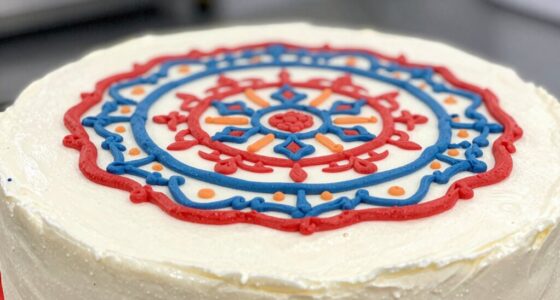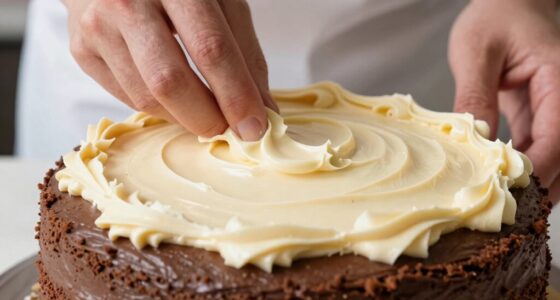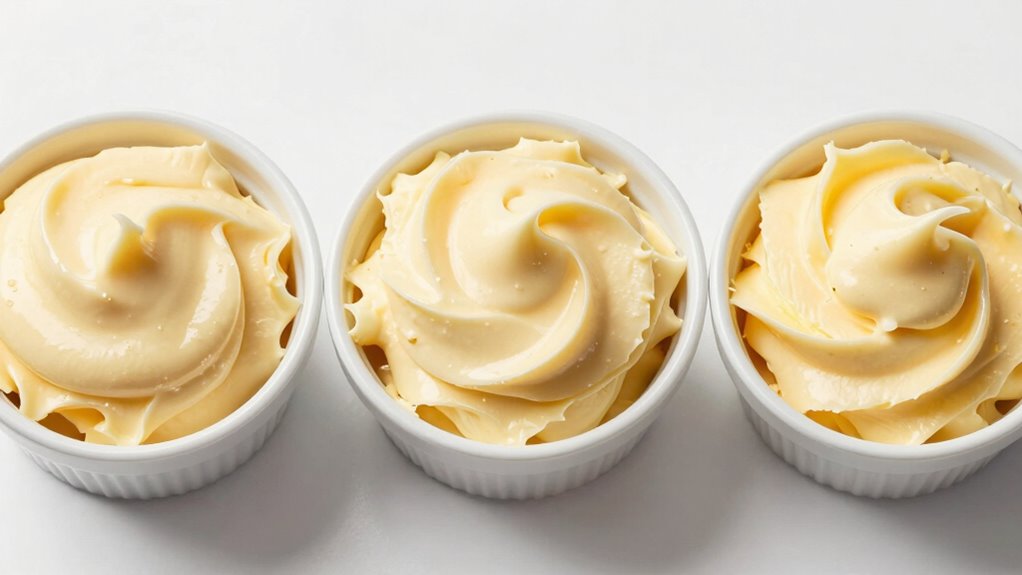

A buttercream consistency chart categorizes frosting into soft, medium, and stiff types, each suited for specific decorating tasks. Soft buttercream is ideal for spreading and smoothing, medium is great for borders and simple piping, and stiff holds detailed shapes like flowers. Adjusting liquid and sugar helps you achieve the right texture for your project. If you want to master these techniques, you’ll find helpful tips to refine your buttercream consistency below.
Key Takeaways
- The buttercream consistency chart categorizes buttercream as Soft, Medium, and Stiff based on firmness and ideal uses.
- Soft buttercream is ideal for spreading and smoothing, while medium is suitable for piping borders and detailed designs.
- Stiff buttercream maintains shape well, perfect for intricate piping, flowers, and structural decorations.
- Achieving each consistency involves adjusting ingredients, temperature, and mixing techniques during preparation.
- Troubleshooting tips include chilling or warming the buttercream and adjusting with powdered sugar or liquids to reach desired firmness.
What Are the Different Buttercream Consistencies?

Understanding the different buttercream consistencies is essential for achieving perfect results in your decorating projects. The consistency you choose impacts your cake’s flavor and frosting techniques. Soft buttercream is ideal for spreading smoothly and creating delicate decorations, making it perfect for layered cakes with intricate designs. Medium buttercream offers a balance, providing enough firmness for piping borders or rosettes without losing softness. Stiff buttercream is firm and holds its shape well, suitable for detailed piping or structural elements. Each consistency influences how you work with the frosting, so selecting the right type depends on your desired cake flavor and the decorating techniques you plan to use. Mastering these variations helps guarantee your decorated cake looks professional and tastes great. Understanding buttercream properties can help you better select the right consistency for each project, especially considering how frosting texture affects application and appearance. Recognizing the consistency variations is also key to troubleshooting common decorating issues and achieving the desired finish. Additionally, being aware of creative decorating techniques can enhance your overall cake design skills and ensure your frosting performs as needed. Knowing how buttercream temperature influences its stability and workability can further refine your decorating process and results.
How Do You Make Soft Buttercream for Easy Spreading?
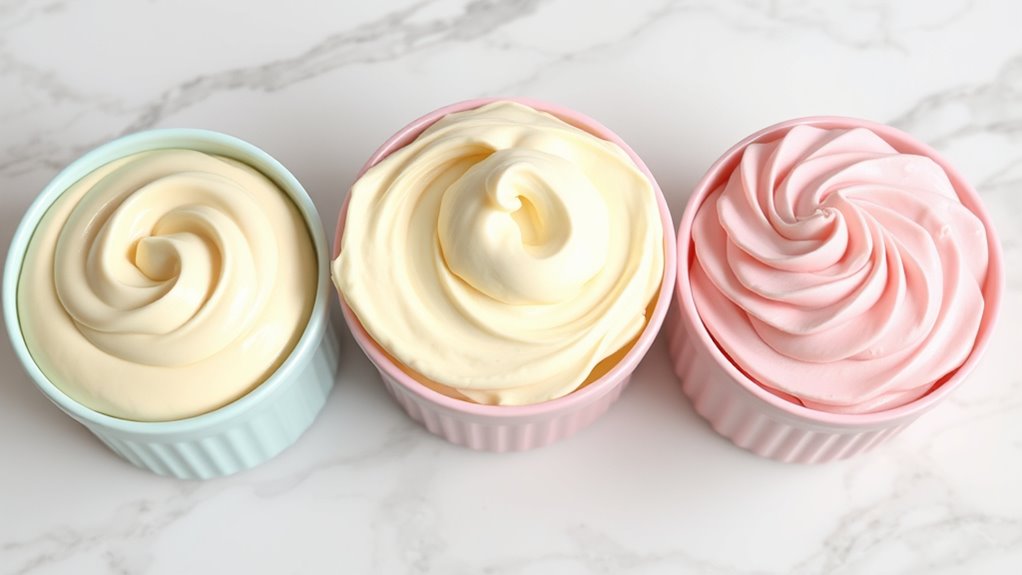
To make soft buttercream that’s easy to spread, start with your base ingredients—butter and powdered sugar—and beat them together until smooth and creamy. This creates a buttercream flavor that’s light and fluffy, perfect for spreading smoothly over cakes and cupcakes. If your buttercream feels too stiff, add a small amount of milk or heavy cream, one teaspoon at a time, until you reach the desired softness. Using the right consistency is key for decorating techniques like spreading, piping, or creating textured designs. Keep in mind, the goal is a buttercream that’s soft enough to work with easily but firm enough to hold its shape. Properly prepared soft buttercream simplifies decorating and guarantees your finished cake looks professional and appetizing.
What Is Medium Buttercream, and When Should You Use It?

Ever wonder what medium buttercream is and how it differs from soft or stiff varieties? Medium buttercream strikes a balance—firm enough to hold shapes but soft enough for smooth application. It’s ideal for decorating techniques like piping flowers or borders, where control and detail matter. This consistency is also more energy-efficient, making it a practical choice for large-scale or professional baking. Additionally, it minimizes waste by reducing the need for reworking or reapplying. Its stability allows for better color retention during decorating, ensuring your designs stay vibrant. Since many appliances used in baking and decorating can be integrated with smart home technology for better control, choosing the right buttercream consistency can complement your overall kitchen setup. It’s perfect for creating layered designs or textured finishes, giving you control without cracking or sagging.
How Can You Achieve the Perfect Medium Buttercream for Decorations?

To get the perfect medium buttercream, start by balancing your ingredient ratios carefully—too much powdered sugar or butter can throw off the consistency. Next, focus on your mixing technique, ensuring you blend until smooth and creamy without overworking it. With the right proportions and method, you’ll achieve a buttercream that’s ideal for decorating. Additionally, understanding texture control can help you fine-tune the consistency to match your decorating needs, especially by adjusting ingredient ratios to meet specific stability requirements. Incorporating techniques for consistency can further refine your results, ensuring a smooth and stable finish for your cake decorations. Paying attention to body composition can also influence how your buttercream holds up during application, helping you achieve a professional look. Being aware of temperature considerations can also impact the final texture, making sure your buttercream remains manageable during decorating sessions.
Proper Ingredient Ratios
Achieving the perfect medium buttercream for decorations hinges on getting the right ingredient ratios. To reach this consistency, balance butter, powdered sugar, and liquid carefully. Typically, using equal parts butter and powdered sugar creates a smooth, spreadable texture ideal for decorating techniques. Adjust the liquid—milk or cream—gradually to achieve the desired firmness without thinning the buttercream too much. Keep in mind that flavor variations, like adding vanilla or other extracts, won’t markedly alter the ratio but can influence the overall texture slightly. Precise measurement is key; too much butter makes it soft, while too much powdered sugar makes it stiff. By maintaining proper ratios, you’ll ensure your buttercream remains medium, easy to work with, and perfect for detailed decorations.
Technique for Texture
Getting the right texture for medium buttercream involves adjusting your mixing technique and ingredients carefully. To achieve this, mix your butter and icing sugar until smooth but avoid overbeating, which can make the buttercream too stiff. Incorporate flavor pairings like vanilla or almond extract gradually, tasting as you go to maintain a balanced flavor. When color mixing, add gel food coloring in small amounts to prevent thinning the consistency. If your buttercream becomes too soft, beat in a little more powdered sugar; if too stiff, add a tiny splash of milk or cream. The goal is a smooth, spreadable texture that holds its shape for decorations without being too stiff or runny. Proper technique ensures your medium buttercream is perfect for piping detailed designs and achieving vibrant, balanced colors. Additionally, paying attention to the air quality during preparation can help maintain the consistency and stability of your buttercream. Ensuring good airflow in your workspace may also prevent humidity from affecting the texture. Being mindful of humidity levels can further help prevent your buttercream from becoming too soft or sticky. Maintaining optimal environmental conditions is essential for consistent results every time, and understanding how climate factors influence buttercream stability can lead to better outcomes.
How Do You Make Stiff Buttercream for Piping Flowers and Borders?

To make stiff buttercream perfect for piping flowers and borders, start by using less liquid in your recipe. Gradually add powdered sugar to achieve the right firmness, and chill the mixture before piping. These steps help you create a sturdy buttercream that holds its shape beautifully.
Use Less Liquid
Wondering how to make your buttercream stiffer for piping intricate flowers and borders? The key is to use less liquid in your recipe. If you’re adding food coloring or flavoring, do so sparingly, as these can thin your buttercream. Instead of mixing in large amounts at once, add small amounts gradually until you reach the desired stiffness. Keep in mind, too much liquid makes the buttercream too soft for detailed piping. If your buttercream becomes too loose, you can chill it briefly to help it firm up. Avoid overmixing, which can introduce extra moisture. Proper consistency is essential for achieving stable, professional-looking decorations. By controlling the amount of liquid and being cautious with additives like food coloring and flavoring, you’ll achieve a thick, stable buttercream perfect for piping delicate designs.
Add Powdered Sugar Gradually
Adding powdered sugar gradually is essential for achieving a stiff buttercream suitable for piping delicate flowers and borders. Adding it in small amounts allows you to control the texture and prevent over-softening. As you incorporate the sugar, you can also add food coloring and flavoring additives in stages, ensuring even distribution without thinning the frosting. This gradual approach helps you build the right consistency for detailed piping work. Keep mixing until the buttercream becomes thick and holds its shape firmly. If it’s too soft, add a little more powdered sugar; if too stiff, incorporate a tiny splash of milk or cream. Patience in adding powdered sugar ensures your buttercream remains stiff enough for precise piping of flowers, borders, and other decorative elements.
Chill Buttercream Before Piping
Chilling buttercream before piping helps it firm up, making it easier to create clean, precise flowers and borders. When your buttercream reaches a stiff consistency, it holds its shape better, allowing you to use advanced piping techniques with confidence. To achieve this, refrigerate your buttercream for about 20-30 minutes, but avoid over-chilling, which can make it too hard to work with. Keep in mind, your choice of buttercream flavors can influence the texture—some flavors may soften or stiffen more quickly. Once chilled, use your piping tips to craft detailed designs, ensuring sharp edges and defined shapes. Properly chilled buttercream is essential for intricate decorating, especially when making flowers and borders that require a stiff, stable consistency. Additionally, understanding credit card terms can help you manage your baking expenses more effectively, especially if purchasing specialized decorating tools. Remember that texture control is key to achieving the perfect piping consistency for your designs.
What Are Tips for Adjusting Buttercream to the Right Consistency Quickly?
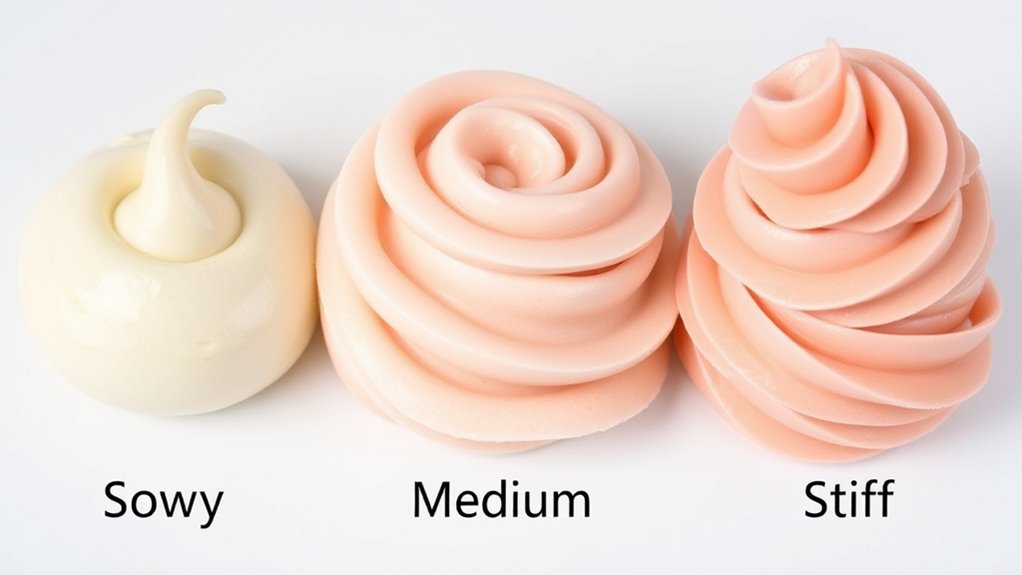
When you need to quickly adjust the consistency of buttercream, acting promptly and knowing the right techniques can make all the difference. If your buttercream is too stiff, add small amounts of milk or cream, blending thoroughly until it reaches the desired softness. Conversely, if it’s too soft, incorporate a bit more powdered sugar or chill it briefly. To maintain an appealing presentation, consider flavor pairings that complement the adjusted texture, like vanilla with medium consistency or citrus for softer buttercream. Quick adjustments also help you achieve a smooth, professional look. Remember to work efficiently, as overmixing can alter flavor and texture. With these tips, you’ll ensure your buttercream is always perfect for decorating and delicious for serving.
How Can You Troubleshoot Common Buttercream Consistency Problems?

Troubleshooting common buttercream consistency issues requires quick identification of the problem and targeted adjustments. If your buttercream is too soft, try chilling it briefly or adding more powdered sugar to firm it up. If it’s too stiff, gently warm it or incorporate a small amount of milk. When working on flavor variations, keep in mind that added extracts or flavorings can alter texture, so adjust accordingly. For color techniques, overly dark or intense colors may affect consistency; thinning the frosting with a bit of milk can help. Always mix thoroughly after adjustments to ensure smooth, uniform texture. Monitoring your buttercream during preparation allows you to make precise tweaks, preventing larger issues and achieving the desired consistency for decorating or spreading. Understanding buttercream types can help you select the right method for your specific needs.
How Do You Fix Buttercream That’s Too Soft or Too Stiff?

If your buttercream turns out too soft or too stiff, quick adjustments can save your frosting and improve its texture. To fix a soft buttercream, try chilling it for 10-15 minutes or adding a small amount of powdered sugar to stiffen it. For a stiff buttercream, gently warm it by letting it sit at room temperature or adding a tiny bit of milk or cream to loosen it. When incorporating food coloring or flavoring adjustments, do so gradually to avoid altering the consistency further. If the frosting becomes too soft after adding liquids, chill it again before piping or decorating. Conversely, if it’s too stiff after flavoring, a splash of liquid can make it more workable. Adjusting temperature and ingredients helps you achieve the perfect buttercream consistency. Understanding the ideal textures can guide you in making precise adjustments for the best results. Additionally, being aware of free floating techniques can assist in maintaining the desired consistency during different stages of preparation.
What Are Best Storage Practices to Maintain Buttercream Consistency?

Proper storage is essential for maintaining the ideal buttercream consistency and ensuring your frosting stays fresh and workable. Use airtight storage containers to prevent moisture loss and flavor variations from picking up other fridge odors. Before storing, cover the buttercream with plastic wrap directly on its surface to minimize drying or crusting. Keep it refrigerated if not used immediately, especially if it contains dairy or fresh ingredients. When ready to use, allow the buttercream to come to room temperature and re-whip for smoothness. For longer storage, freeze in a sealed container, then thaw in the fridge overnight. This helps preserve texture, flavor, and consistency, ensuring your frosting remains perfect for decorating whenever you need it.
How Can You Customize Buttercream Consistency for Different Decorations?

To customize your buttercream for different decorations, you can adjust its consistency by adding more liquid or sugar as needed. Temperature control also plays a key role, so keeping the buttercream at the right temperature helps achieve your desired texture. Experimenting with these methods lets you create the perfect frosting for any design.
Adjust With Liquid Amounts
Adjusting buttercream consistency with liquid amounts is a straightforward way to tailor it for various decorating needs. When your buttercream is too stiff, adding small amounts of liquid—like milk, cream, or water—can loosen it up for smoother piping or spreading. Conversely, if it’s too soft, you can reduce liquid or incorporate a bit more powdered sugar, but in this section, focus on liquid adjustments. Consistency tips include adding liquids gradually, a teaspoon at a time, to avoid overshooting. Keep in mind that different decorations require different textures; softer buttercream works well for filling or delicate piping, while stiffer buttercream is better for borders and detailed designs. Adjustments with liquids give you precise control over your buttercream’s consistency, ensuring perfect results every time.
Incorporate Additional Sugar
When your buttercream is too soft for detailed decorating or piping borders, incorporating additional sugar can help firm it up. Gradually add powdered sugar, mixing well after each addition, until you reach your desired consistency. This method not only increases firmness but also allows you to customize the buttercream’s texture for specific decorations. You can also add flavor by mixing in extracts or flavorings before adjusting with sugar, ensuring your buttercream tastes as good as it looks. If you’re working with colored buttercream, adding food coloring can sometimes affect its consistency, so adjusting with more sugar helps maintain stability. Keep in mind that adding too much sugar may make the buttercream overly sweet, so add gradually and stop once you achieve the perfect firmness for your decorating needs.
Use Temperature Control
Controlling the temperature of your buttercream is a key way to customize its consistency for different decorating tasks. When you adjust the temperature, you can make your buttercream softer or stiffer as needed. To soften it, gently warm the mixture or add a small amount of milk or cream, which helps improve spreadability. Conversely, if your buttercream is too soft, refrigerate it briefly or chill the mixing bowl to firm it up. Temperature control also impacts ingredient ratios—warmer buttercream often requires less powdered sugar, while colder batches may need more to achieve the desired stiffness. By managing both temperature and ingredient ratios carefully, you can tailor your buttercream for piping delicate flowers, creating smooth borders, or filling cakes perfectly.
Frequently Asked Questions
Can Buttercream Consistency Be Adjusted After It’s Been Mixed?
Yes, you can adjust buttercream consistency after mixing. If it’s too stiff, add a small amount of milk or cream and mix well. If it’s too soft, incorporate more powdered sugar gradually. Proper buttercream storage can affect its texture, so keep it covered in the fridge if not used immediately. Use mixing techniques like folding or whipping to fine-tune the consistency, ensuring it’s just right for your decorating needs.
How Does Temperature Affect Buttercream Consistency During Decorating?
Temperature effects profoundly impact buttercream stability during decorating. When it’s too warm, buttercream becomes softer and may lose its shape, making it hard to pipe detailed designs. Conversely, cold temperatures can cause it to stiffen, making piping tricky. To maintain ideal consistency, keep your workspace cool for stability and avoid sudden temperature changes. Using a chilled bowl or refrigerating briefly can help you keep buttercream at the perfect consistency for decorating.
Are There Alternative Ingredients to Change Buttercream Stiffness?
If you want to change buttercream stiffness, you can use alternative thickeners like powdered sugar or meringue powder, which naturally increase firmness. Liquid substitutions, such as milk or cream, can soften your buttercream if needed. Adjusting these ingredients helps you achieve the desired consistency for decorating, whether you need it softer or stiffer. Just remember to add small amounts gradually to prevent over-thickening or thinning.
What Tools Are Best for Testing Buttercream Consistency?
You can’t just guess your buttercream’s consistency—you need the right tools! Use a sturdy spatula to lift and feel the texture, or try piping bag techniques like piping a small sample to test stiffness. A simple spatula selection helps you gauge whether it’s soft, medium, or stiff. These tools give you precise control, making your decorating flawless and saving you from frustrating guesswork, ensuring perfect buttercream every time.
How Long Does It Take for Buttercream to Change Consistency After Adding Ingredients?
It usually takes about 5 to 10 minutes for buttercream to change texture after adding ingredients, but this depends on the ingredient effects. For example, adding more powdered sugar will stiffen it quickly, while liquid ingredients may make it softer over a few minutes. You should keep mixing and observe the texture change closely, adjusting as needed, to achieve your desired consistency for your frosting.
Conclusion
Mastering buttercream consistency means mastering your desserts. Whether you want it soft for spreading, medium for decorating, or stiff for piping intricate designs, knowing how to adjust each one empowers your baking. It’s about understanding texture, troubleshooting issues, and customizing to your needs. With practice, your buttercream will be perfect every time, enhancing your creations and impressing everyone. So, embrace the process, experiment often, and enjoy the art of buttercream mastery.