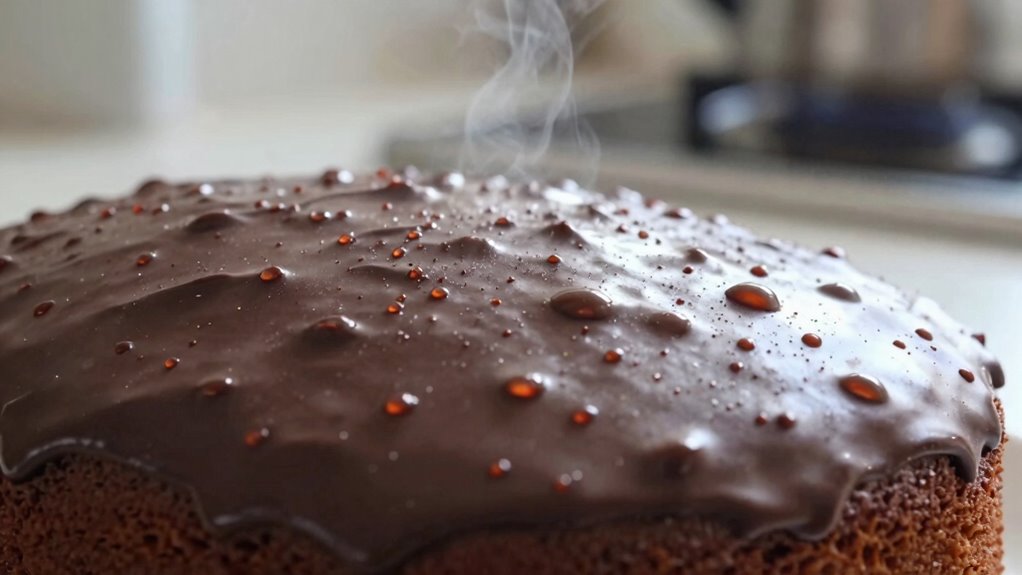

When you chill a cake, moisture from the warm air condenses on its cold surface, causing it to sweat and spoil. To prevent this, let your cake cool completely at room temperature before storing it in a sealed container or wrapped lightly with plastic. Avoid sudden temperature changes and high humidity environments. Proper cooling and storage help keep your cake dry and fresh. Learn more tricks to keep your cakes pristine and moisture-free.

Get baking supplies delivered free with Prime
- Fast, free delivery on millions of items
- Prime Video, Amazon Music and more included
- Member-only deals all year
Key Takeaways
- Cold cakes cause moisture in warm air to condense on their surface, leading to sweating.
- Rapid cooling or placing warm cakes directly in the fridge traps moisture and promotes condensation.
- High humidity environments increase the likelihood of surface condensation after chilling.
- Proper cooling at room temperature before storage prevents excess moisture buildup.
- Wrapping cakes in airtight, moisture-resistant coverings helps prevent surface sweating.
As an affiliate, we earn on qualifying purchases.
What Causes Cakes to Sweat After Chilling?
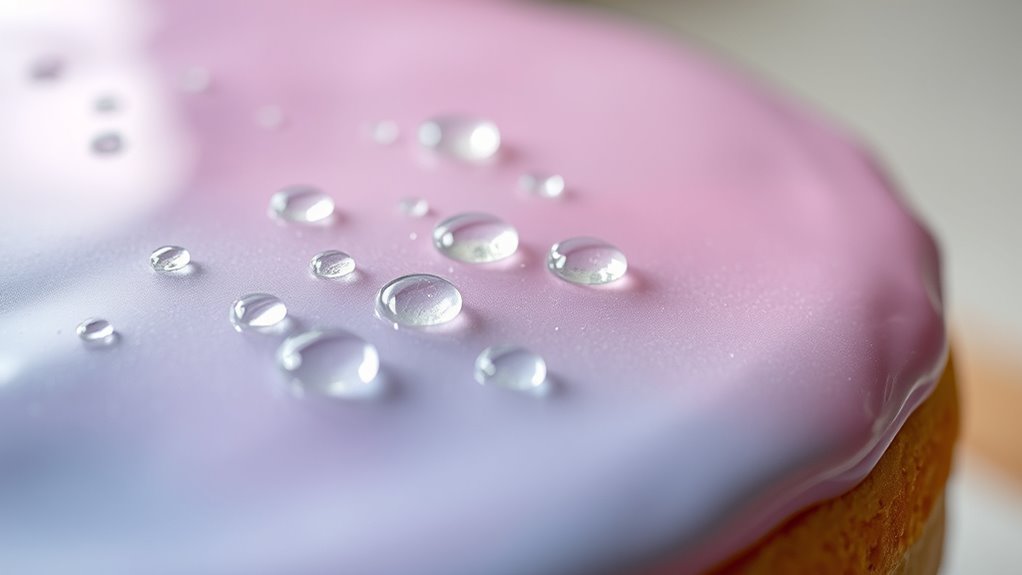
Cakes tend to sweat after chilling because of the moisture that condenses on their surface when they shift from a cold environment to a warmer one. This moisture can ruin your cake decoration, making details smudge or slide off. It also impacts flavor preservation, as excess humidity can cause ingredients to break down or develop an off-taste. When you take a chilled cake out of the fridge, the cold surface cools the air directly around it, causing moisture in the warmer air to condense into droplets. This process is natural, but it can be frustrating if you’re aiming for a beautiful, flawless appearance or want to maintain the cake’s original flavor. Understanding this helps you take steps to prevent sweating and keep your cake looking and tasting perfect. Additionally, proper temperature calibration of your storage environment can help minimize condensation issues, especially considering that humidity control plays a crucial role in maintaining optimal cake conditions. Maintaining a consistent storage temperature can further reduce the likelihood of condensation forming on your cake surface. Implementing adequate insulation around your storage area can also help stabilize temperature fluctuations and prevent sweating.
As an affiliate, we earn on qualifying purchases.
How Do Temperature and Humidity Affect Cake Sweating?

Temperature and humidity levels play a significant role in how much moisture condenses on a chilled cake’s surface. When humidity is high, the air contains more moisture, making condensation on your cake more likely. Proper humidity control helps keep moisture levels stable, reducing sweating. Likewise, temperature regulation is essential; if the cake is too cold compared to the room’s temperature, condensation occurs as warm, moist air contacts the cold surface. To prevent this, ensure your cake is cooled gradually and stored in a controlled environment where both temperature and humidity are managed. Using a dehumidifier or airtight container can help maintain ideal conditions. Additionally, understanding the impact of environmental factors can further assist in preventing cake sweating. For example, temperature fluctuations can cause moisture buildup on the surface of your cake, so maintaining a consistent environment is crucial. Being aware of storage conditions can also guide you in choosing the best environment for your baked goods. Maintaining stable climate control can significantly reduce the risk of condensation forming on your cake’s surface. Moreover, incorporating proper packaging techniques can help shield your cake from rapid environmental changes that contribute to sweating.
As an affiliate, we earn on qualifying purchases.
Why Does Condensation Form on Cold Cakes?
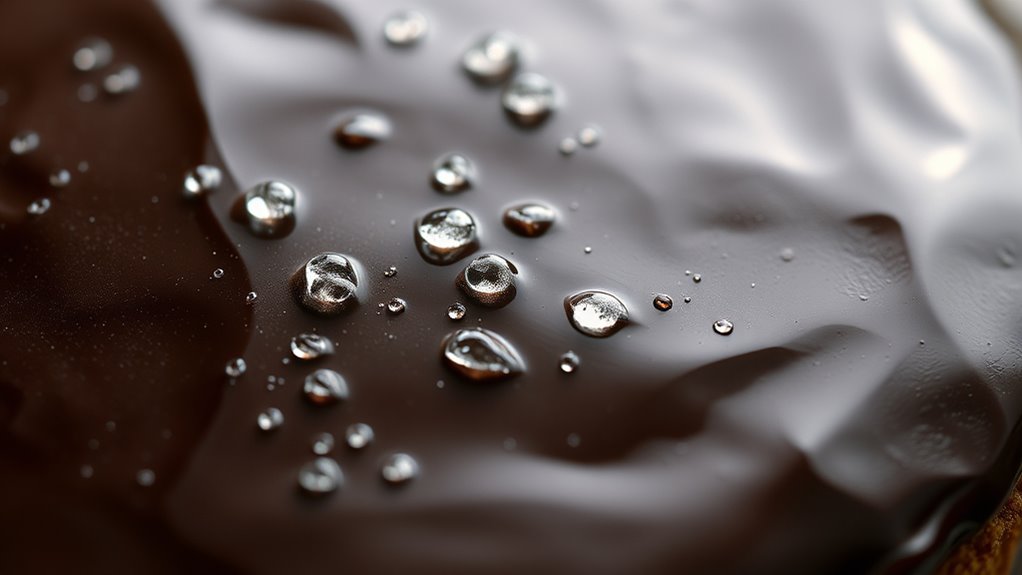
When you take a cold cake out of the fridge, the temperature difference between it and the warm, humid air causes condensation to form on its surface. High humidity and poor air quality can make this process even more pronounced. Understanding how these factors interact helps explain why your cake gets that sweaty coating after chilling. Additionally, the moisture can sometimes lead to surface spoilage, affecting the cake’s texture and flavor over time. Proper storage conditions, such as using solar pool covers to maintain optimal temperature and humidity levels, can help minimize this condensation formation and preserve the cake’s quality. Being aware of humidity control techniques can further reduce the likelihood of condensation and keep your baked goods fresh longer.
Temperature Difference Effects
As a cold cake is removed from the refrigerator, the difference in temperature between its surface and the surrounding air causes moisture in the air to condense on its surface. This rapid temperature change impacts icing techniques and frosting stability, making the surface sticky and prone to sweating. To minimize condensation, consider gradual warming or covering the cake briefly to allow temperature equalization. The table below highlights how temperature differences influence condensation:
| Temperature Difference | Effect on Cake Surface | Resulting Issue |
|---|---|---|
| Large (Refrigerator to Room) | Rapid cooling | Heavy condensation, sweating |
| Moderate | Slower cooling | Reduced condensation |
| Small (Pre-warmed cake) | Minimal temperature gap | Less sweating |
| Controlled environment | Consistent temperature | Better frosting stability |
| Using icing techniques | Proper sealing | Maintains frosting integrity |
Humidity and Air Quality
Humidity and air quality substantially influence whether condensation forms on a cold cake. High humidity levels increase the likelihood of moisture in the air settling on the cake’s surface, causing sweating. Poor air circulation traps humid air around the cake, preventing it from drying out and promoting condensation. To minimize this, make certain good ventilation in your storage area, allowing moist air to escape and fresh air to circulate. Additionally, ingredient moisture plays a role; cakes with higher moisture content release more humidity when chilled. Covering the cake properly with a breathable cover can help regulate moisture exchange, reducing the chance of condensation. Proper piercing care and maintaining a dry, well-ventilated environment is key to preventing sweating caused by humidity and poor air quality. Ensuring adequate ventilation helps disperse humid air and maintain optimal conditions for stored cakes. Maintaining a consistent temperature and humidity level in your storage area further supports optimal storage conditions and helps prevent condensation buildup. Being aware of air circulation patterns in your storage space can also help in reducing moisture accumulation around your cakes. Additionally, regularly monitoring humidity levels with a hygrometer can help you maintain ideal conditions for your baked goods.
As an affiliate, we earn on qualifying purchases.
What Mistakes Make Cakes More Likely to Sweat?
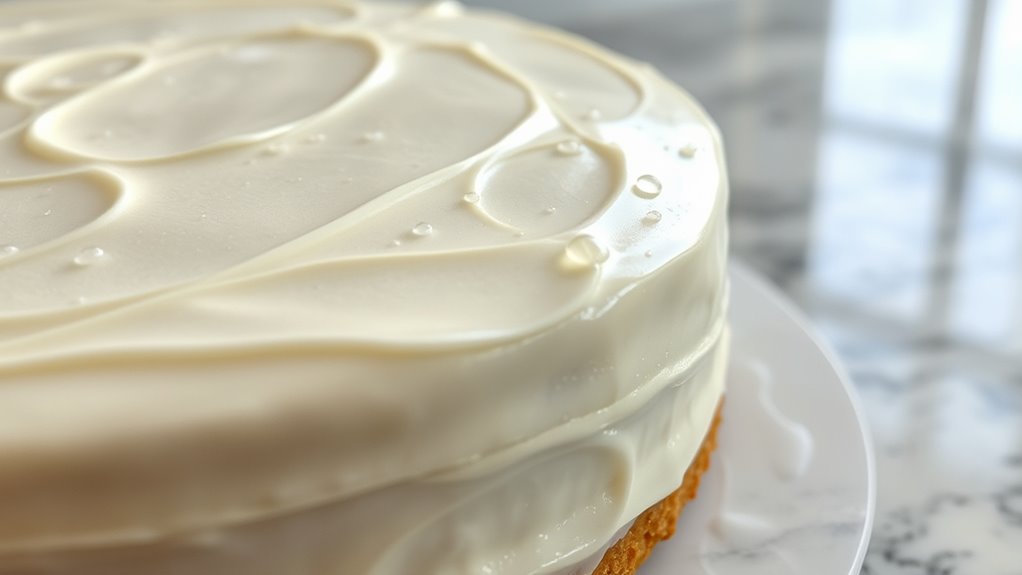
One common mistake that makes cakes more likely to sweat is cooling them too quickly or in an overly cold environment. When you rush the process, moisture condenses on the surface, causing sweating and ruining your cake’s appearance. To avoid this, be mindful during cake decoration and follow proper baking techniques. Here are three mistakes to watch out for:
- Placing a hot or warm cake directly into the fridge, which causes condensation.
- Cooling in a drafty or overly cold space that accelerates moisture buildup.
- Covering the cake with plastic wrap immediately, trapping moisture and promoting sweating.
How Can You Cool Cakes Properly Before Storing?
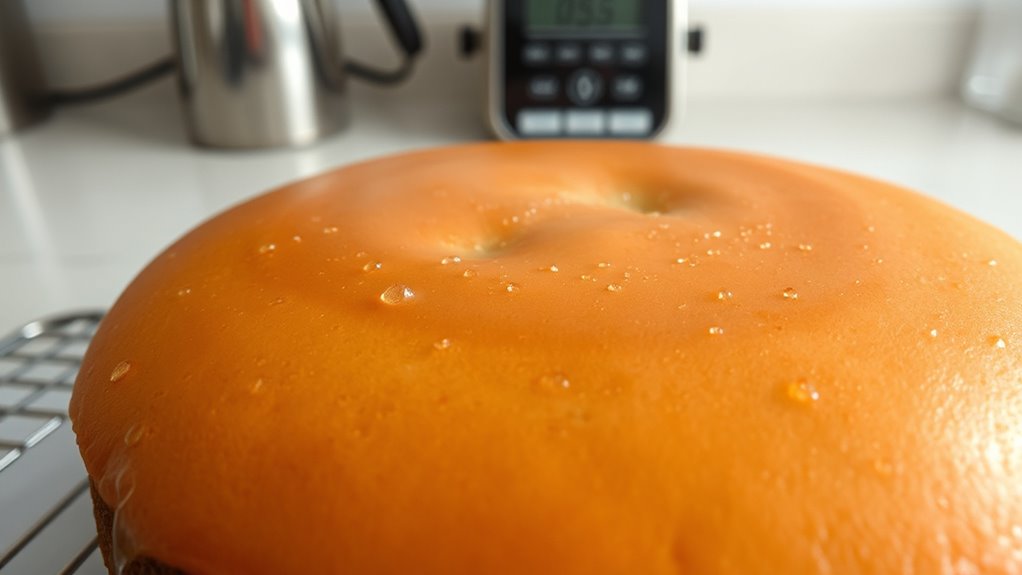
To cool cakes properly, place them on a wire rack to guarantee even air circulation and prevent condensation. Make sure the cake is completely at room temperature before storing to avoid excess moisture. Use the right storage containers that allow some airflow or are airtight, depending on your cake type, to keep it fresh without trapping too much humidity. Additionally, consider storage techniques to optimize the freshness and texture of your cakes, especially when managing moisture levels in your storage environment. Proper air circulation within your storage setup helps prevent trapped humidity that can lead to sweating or spoilage, which can be influenced by humidity control methods used during storage.
Proper Cooling Techniques
Cooling a cake properly before storing is essential to prevent sweating and maintain its texture. When cooling, focus on methods that protect the cake’s surface for ideal cake decoration and flavor preservation. First, remove the cake from the oven and place it on a wire rack, allowing air to circulate evenly around it. Second, let it cool completely at room temperature for at least an hour, avoiding drafts that can cause uneven cooling. Third, if necessary, lightly cover the cake with a breathable cloth to prevent dust while it cools further. This careful approach prevents condensation, helps retain moisture, and keeps your cake looking beautiful for decoration and tasting fresh. Proper cooling ensures your cake stays perfect before wrapping or storing, especially when preparing for precise decorating techniques. Additionally, understanding paint sprayer zone techniques can help when decorating with spray finishes, ensuring a smooth and professional appearance. Using the correct cooling methods can also reduce the risk of moisture buildup, which is crucial for long-term storage.
Using the Right Storage Containers
Choosing the right storage container is essential to maintaining your cake’s perfect texture and preventing moisture buildup. Use airtight containers to keep humidity out and ensure proper sealing. This prevents condensation from forming inside, which can cause sweating when you take the cake out of the fridge. Before storing, make sure your cake is completely cooled and dry. Wrap it lightly with plastic wrap or parchment paper for extra protection, then place it in an airtight container. Avoid containers that are too large or flimsy, as they can let air in or cause crushing. Proper sealing locks in freshness and keeps moisture at bay, helping your cake stay moist without developing that unwanted sweat.
What Are the Best Ways to Store Cakes and Prevent Moisture?
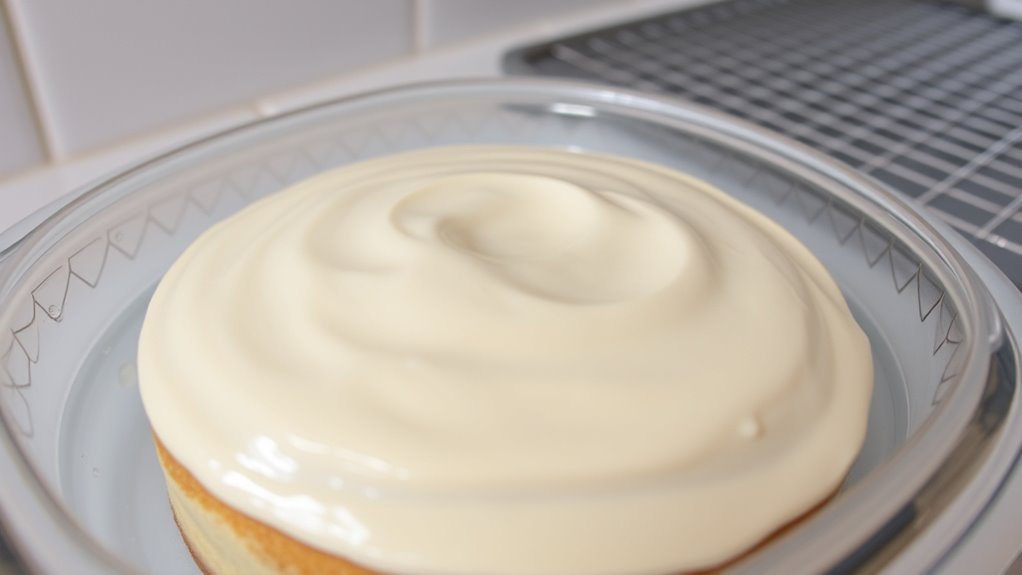
Properly storing cakes is essential to prevent excess moisture and keep them fresh. To do this effectively, consider these methods:
- Use airtight containers that lock in moisture without trapping excess humidity, helping maintain cake ingredients’ freshness.
- Wrap the cake tightly with plastic wrap, sealing in moisture and preventing it from drying out or accumulating condensation.
- Store cakes in a cool, dry area, avoiding temperature fluctuations that can cause condensation and affect baking techniques.
How Should You Serve Chilled Cakes to Avoid Condensation?
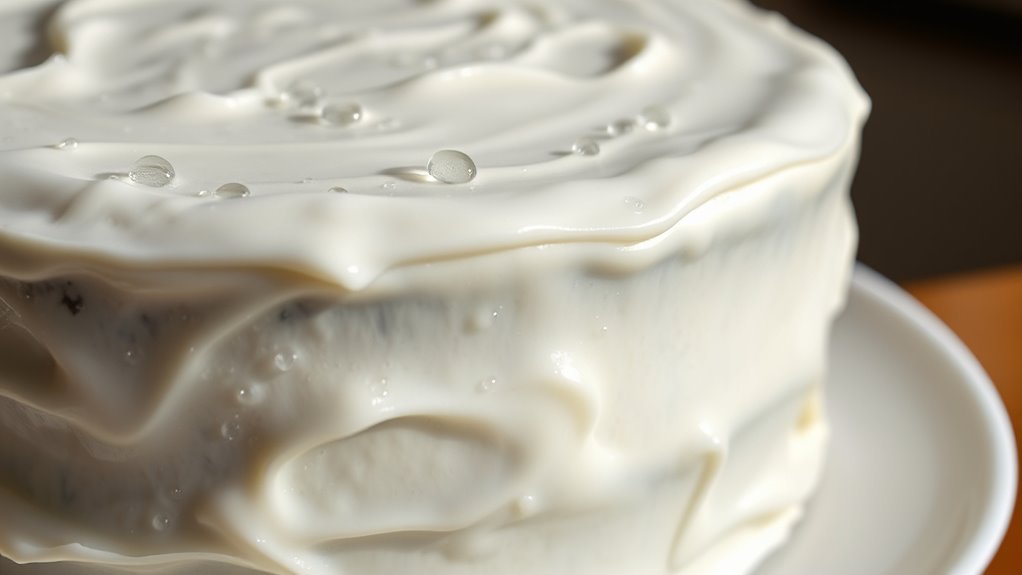
To serve chilled cakes without unwanted condensation, it’s important to let the cake reach room temperature gradually before presenting it. This slow warming helps prevent moisture from forming on the surface, which can ruin your cake’s appearance and texture. When serving, avoid sudden exposure to warm air; instead, place the cake on a platter and cover it loosely with a clean cloth for about 20-30 minutes. This allows the cake to equilibrate without sweating. As you serve, consider how your cake decoration complements the presentation, ensuring it remains intact and attractive. Proper warming also helps preserve the cake’s flavor, preventing it from becoming watered down or dull. Taking these steps ensures your cake looks beautiful and tastes just as good as when it was first made.
What Extra Tips Help Keep Cakes Fresh and Dry After Chilling?
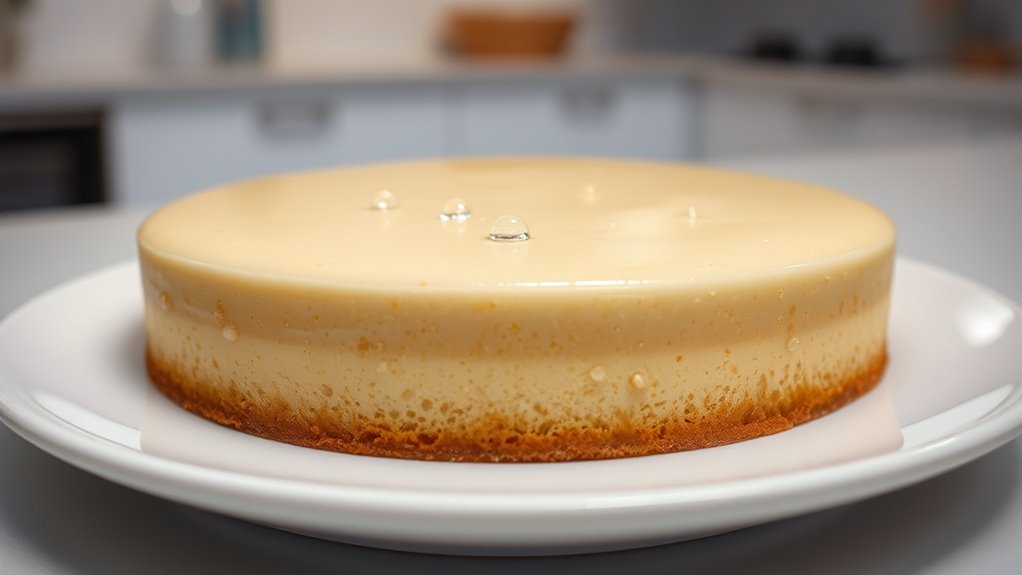
After chilling your cake, taking steps to keep it fresh and dry guarantees it stays appealing longer. First, wrap your cake tightly in plastic wrap or place it under a cake dome to prevent moisture exposure. Second, use proper frosting techniques—apply a smooth, thick layer of buttercream or fondant that acts as a barrier against humidity. Third, avoid refrigerating it directly on cold surfaces; instead, set the cake on a raised, insulated stand to minimize condensation. When decorating, choose frostings that resist sweating, like ganache or stabilized whipped cream. These tips create an effective shield against moisture, ensuring your cake remains moist on the inside and dry on the outside, preserving its presentation and flavor longer.
Frequently Asked Questions
Can Wrapping a Cake Before Chilling Cause Sweating?
Wrapping a cake before chilling can cause sweating because it traps moisture inside, leading to moisture buildup. When you cover a warm cake, the condensation forms on the surface as it cools, creating a sweaty appearance. To prevent this, let your cake cool completely before wrapping, and use a breathable or lightly covered wrap. This way, you avoid moisture buildup and keep your cake fresh and dry.
Does the Type of Frosting Affect Sweating After Chilling?
Think of frosting as a delicate dance, where textures and ingredients interact gracefully. Different frosting types, like buttercream or fondant, influence sweating after chilling. Buttercream’s creamy texture can trap moisture, causing sweating, while fondant’s smooth surface resists it better. To avoid this, choose frostings with stable ingredient interactions, and guarantee proper sealing. Your cake’s finish will stay pristine, just like a well-preserved masterpiece in an art gallery.
How Long Should a Cake Be Left at Room Temperature Before Serving?
You should leave your cake at room temperature for about 30 minutes to an hour before serving. Doing this helps maintain cake freshness and enhances its flavor, making each bite more enjoyable. If you chill the cake too long, it can become stiff or lose flavor. Allowing it to rest at room temperature ensures ideal texture and taste, giving your guests a delightful experience with every slice.
Is It Better to Chill Cakes Uncovered or Covered?
Think of cake storage like a sponge—cover it properly to prevent it from absorbing unwanted moisture. It’s better to cover your cake with plastic wrap or a cake dome to prevent condensation, which causes sweating. Leaving it uncovered can lead to drying out or excess moisture. I once left a cake uncovered overnight, and it developed a wet, sticky surface. Covering it guarantees proper condensation prevention and keeps your cake fresh and beautiful.
Can Using a Fan or Air Conditioner Help Prevent Cake Sweating?
Yes, using a fan or air conditioner can help prevent cake sweating. They improve air circulation and assist in moisture control, reducing humidity around the cake. Proper air circulation keeps the surface dry and prevents condensation from forming. Just make sure the fan or AC isn’t blowing directly onto the cake, which could cause uneven drying. Maintaining a cool, well-ventilated environment is key to keeping your cake free from unwanted moisture.
Conclusion
To keep your cakes dry and delightful, think of chilling as tucking them into a cozy, moisture-proof blanket. By controlling temperature, humidity, and your handling, you can prevent that unwanted sweat from forming like tears on a cold face. With a little patience and smart storage, your cake will stay fresh and inviting, shining like a jewel straight from the oven—dry, perfect, and ready to impress with every sweet bite.
Halloween Picks
halloween
As an affiliate, we earn on qualifying purchases.