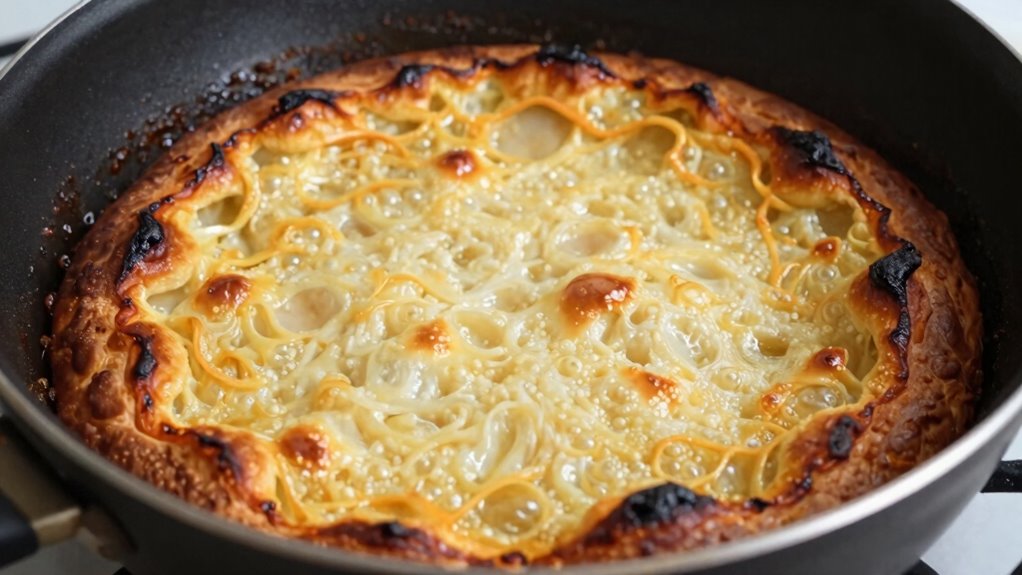

If you’re experiencing burned edges and a raw center, the pan’s depth could be the issue. Shallow or uneven pans can cause uneven heat distribution, leading to hot spots that burn food edges while the center remains undercooked. Using the right cookware with sufficient depth and even sides helps promote better heat flow and safer cooking results. Keep exploring how choosing the proper pan can improve your cooking and prevent these common problems.

Get baking supplies delivered free with Prime
- Fast, free delivery on millions of items
- Prime Video, Amazon Music and more included
- Member-only deals all year
Key Takeaways
- Shallow or uneven pans cause uneven heat distribution, burning edges while leaving the center undercooked.
- Using cookware with adequate depth helps contain heat and liquids, preventing hot spots.
- Materials like cast iron or deep stainless steel pans improve heat retention and promote even cooking.
- Monitoring cooking and adjusting heat prevents burning edges and raw centers caused by pan issues.
- Choosing the right pan for your recipe ensures consistent results and avoids the pan depth problems.
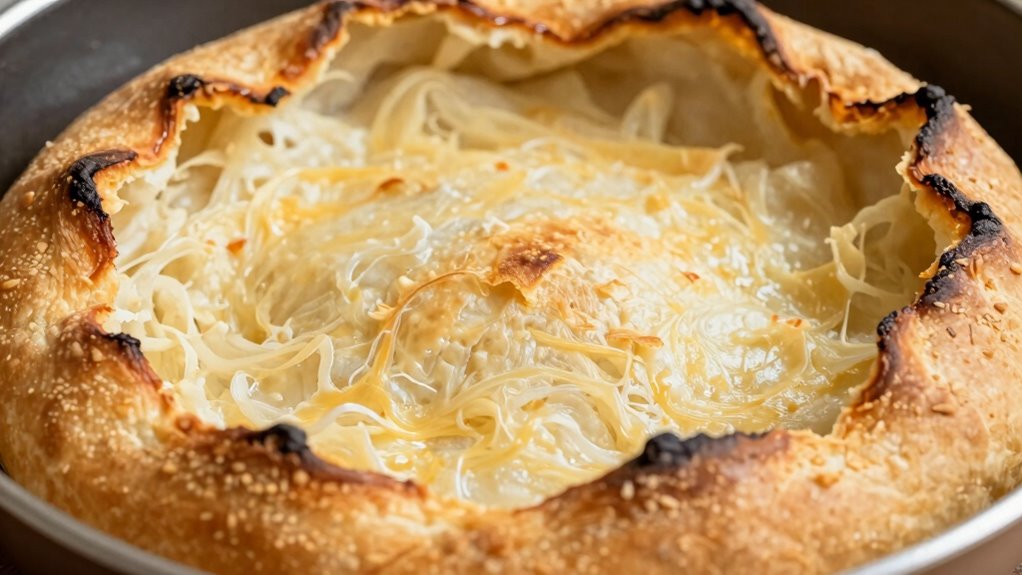
A pan depth issue occurs when the cookware’s sides are too shallow or uneven, making it difficult to cook evenly and safely. When your pan isn’t deep enough, it limits how much food you can cook at once and increases the risk of spills and splatters. This problem often leads to uneven heat distribution, causing some parts of your dish to burn while others remain undercooked. To avoid this, you need to pay attention to both your oven safety practices and the pan material you choose. Proper oven safety means selecting cookware that can withstand high temperatures without warping or breaking, which is especially important if you’re using your oven to finish dishes or cook at high heat. When your pan isn’t deep enough, hot oil or bubbling sauces can easily spill over the sides, creating hazards that compromise oven safety and your kitchen’s cleanliness. Selecting appropriate cookware that offers sufficient depth helps prevent spills and uneven cooking. The material your pan is made of plays a vital role in how well it manages heat and handles deep cooking. For example, stainless steel pans often have a sturdy build, but if they’re too shallow, they won’t contain liquids well or prevent hot splashes. Non-stick pans, while convenient for certain recipes, tend to be shallower and less suitable for deep-frying or simmering large quantities of food. Cast iron, on the other hand, usually offers deeper sides and excellent heat retention, making it better suited for dishes that require more depth to cook evenly. Choosing the right pan material can help mitigate the effects of shallow sides by ensuring consistent heat transfer and reducing the risk of burning or undercooking food. If you’re cooking something that demands even heat distribution, like a stew or a thick sauce, a shallow or uneven pan can cause frustration and inconsistent results. Burned edges develop quickly when hot spots form along the sides, while the center remains raw or underdone. To prevent this, opt for a pan with sufficient depth and even sides, and always monitor your cooking process. Make certain your oven safety measures are in place, like avoiding sudden temperature changes that could warp your cookware. A well-chosen pan material with proper depth helps maintain stable heat, reduces spill risks, and promotes safer cooking practices overall. By understanding the importance of pan depth and material, you’ll improve your cooking results and keep your kitchen safer and cleaner.
As an affiliate, we earn on qualifying purchases.
Frequently Asked Questions
Does Pan Material Affect Heat Distribution?
Yes, pan material affects heat distribution. You’ll notice that pans made from materials with high conductivity, like copper or aluminum, distribute heat more evenly, reducing hot spots. Thicker pans also help by providing better heat retention and preventing temperature fluctuations. So, choosing a pan with good material conductivity and appropriate thickness guarantees your food cooks uniformly, avoiding burned edges or raw centers.
Can Oven Temperature Influence Edge Burning?
Think of your oven as a fiery artist’s brush, and its temperature as the color palette. When you crank up the heat, you risk edge burning, like a canvas scorched at the edges while the center remains untouched. Adjusting oven temperature carefully controls the heat’s reach, preventing the edges from burning and ensuring even baking. Lower temperatures allow gentle heat to work its magic, avoiding those scorched edges you dread.
How Does Pan Shape Impact Baking Results?
You’ll notice that pan shape considerably impacts your baking results. A round pan distributes heat evenly, promoting uniform baking, while a square or rectangular pan can cause edges to bake faster than the center. Using a deep pan can prevent burning edges but might leave the center undercooked. Choose your pan shape carefully based on your recipe to guarantee consistent, perfectly baked results.
Should I Adjust Recipes for Different Pan Depths?
Think of your pan as a stage—its size sets the scene for your baking performance. You should definitely adapt recipes for different pan depths, especially when it comes to pan size. A shallower pan spreads batter thinner, baking faster and risking overbaking edges. Conversely, a deeper pan may require longer baking times. Tweaking your recipe ensures your baked goods come out perfectly, no matter the pan size.
What Are Signs of an Uneven Heat Source?
You’ll notice uneven heat sources when your food cooks inconsistently, like hot spots that cause some areas to burn while others stay undercooked. Temperature fluctuations make it hard to maintain steady heat, resulting in uneven cooking. Signs include uneven browning, hot spots on pans, or food cooking faster in certain spots. To fix this, rotate your pan regularly and use a diffuser to distribute heat more evenly.
cast iron skillet with high sides
As an affiliate, we earn on qualifying purchases.
As an affiliate, we earn on qualifying purchases.
Conclusion
Just like a cake with a burnt crust and a raw center, uneven pan depth can ruin your dish. But don’t worry—you can fix this by choosing the right pan and adjusting your cooking techniques. Think of it as tuning an instrument; once you get it right, everything plays smoothly. With a little attention and practice, you’ll master perfect, evenly cooked meals every time. Your kitchen will become your favorite symphony of deliciousness.
non-stick sauté pan with deep sides
As an affiliate, we earn on qualifying purchases.
As an affiliate, we earn on qualifying purchases.
oven-safe cookware with even heat distribution
As an affiliate, we earn on qualifying purchases.
As an affiliate, we earn on qualifying purchases.
Columbus Day / Indigenous Peoples' Day Picks
long weekend sales
As an affiliate, we earn on qualifying purchases.