
You shouldn’t judge a stand mixer’s performance based solely on its wattage. While higher wattage means more electrical power, it doesn’t guarantee better mixing or handling of heavy ingredients. Motor efficiency and design play a bigger role in how well it performs, often more than wattage alone. Smaller, well-designed models can outperform larger, more powerful ones. To make the best choice, consider overall performance and fit for your kitchen—there’s more to it than just numbers.
Key Takeaways
- Wattage indicates energy consumption, not mixing effectiveness or overall performance.
- Motor efficiency and design are more important than wattage in handling heavy ingredients.
- A lower-wattage, efficient motor can outperform a higher-wattage, poorly designed one.
- Size and space considerations often matter more than wattage for practical kitchen use.
- Focus on overall performance, durability, and suitability rather than just motor wattage.
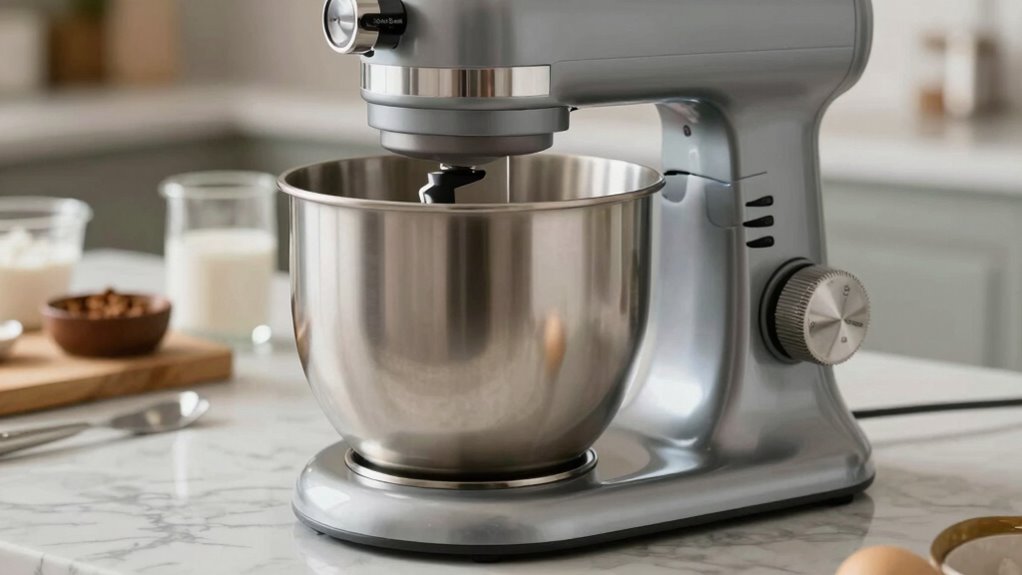
When choosing a stand mixer, understanding wattage is essential because it directly impacts the motor’s power and performance. Many bakers assume that higher wattage automatically means better mixing ability, but this isn’t always the case. Wattage measures how much electrical power the motor consumes, not necessarily how efficiently it converts that power into mixing strength. Electric motor efficiency plays a crucial role here. A high-wattage motor isn’t necessarily more effective if it’s not designed to use that power efficiently. Instead, you should look for a mixer with a motor that balances power with efficiency, ensuring it can handle heavy doughs or multiple batches without overheating or faltering.
Wattage indicates power consumption, but efficiency determines a stand mixer’s true performance and ability to handle heavy doughs effectively.
Additionally, considering wattage alone can be misleading because it doesn’t tell the whole story about a stand mixer’s actual capabilities. For example, a 500-watt motor on one model might outperform a 700-watt motor on another if the first has better electric motor efficiency. This difference becomes especially noticeable when you’re working with dense ingredients like bread dough, where a powerful motor must also operate smoothly without excessive strain. So, don’t be swayed solely by watt numbers; focus on how well the motor performs in real-world conditions. Knowing how electric motor efficiency impacts performance can help you make a more informed decision. Furthermore, motor design influences how effectively a mixer can convert electrical power into mechanical energy, affecting overall performance and durability. In addition, a well-designed motor can contribute significantly to the longevity of the appliance and reduce the risk of overheating during extended use.
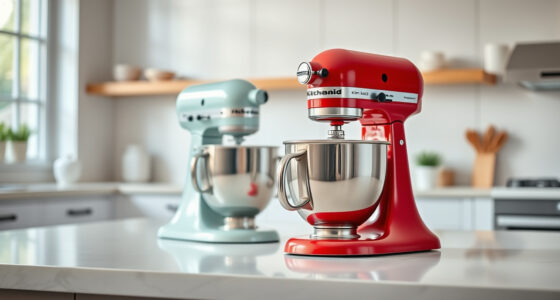
Another factor to keep in mind is countertop space considerations. If you have a small kitchen or limited counter space, a larger, high-wattage mixer might feel cumbersome. These bulky models often require more room, and their size can make storage tricky. Conversely, some compact mixers with lower wattage can deliver impressive results if they’re well-designed. When evaluating wattage, think about how the mixer fits into your kitchen setup. A model with a slightly lower wattage but efficient motor design can be a smarter choice than a larger, more powerful unit that consumes more space and energy. It’s also worth noting that motor efficiency can vary significantly between brands and models, impacting overall performance.
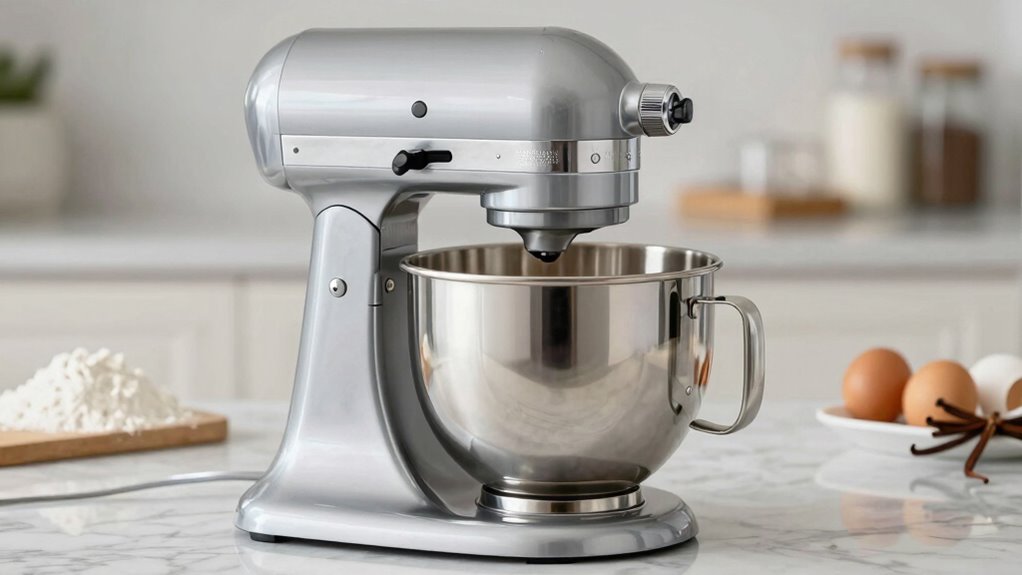
In the end, wattage shouldn’t be your only criterion when shopping for a stand mixer. Instead, consider how the electric motor’s efficiency, the mixer’s size, and your specific baking needs come together. A high-wattage motor isn’t a shortcut to better baking; it’s just one piece of the puzzle. Focus on overall performance, reliability, and how the mixer fits into your kitchen environment. That way, you’ll find a model that truly meets your needs without overpaying for unnecessary power or sacrificing space.
best stand mixer for heavy dough
As an affiliate, we earn on qualifying purchases.
As an affiliate, we earn on qualifying purchases.
Frequently Asked Questions
Does Higher Wattage Mean Longer Motor Lifespan?
Think of wattage as a double-edged sword—higher wattage doesn’t automatically mean a longer motor lifespan. While it may suggest more power, it doesn’t guarantee better motor durability. In a wattage comparison, a lower-wattage mixer with quality components can last longer than a higher-wattage one that’s overworked. You should prioritize build quality and proper use, not just power, to guarantee your mixer endures through countless baking adventures.
Can Lower Wattage Stand Mixers Handle Heavy Dough?
Lower wattage stand mixers can handle heavy dough, but they might struggle with prolonged dough handling tasks. The motor durability depends more on the mixer’s build quality and design rather than wattage alone. If you frequently knead dense doughs, look for a model with a sturdy motor and good reviews on dough handling. This way, you guarantee your mixer remains reliable without necessarily needing high wattage.
How Does Wattage Affect Mixer Noise Levels?
Wattage doesn’t necessarily determine your mixer’s noise levels. Higher wattage motors often run more quietly because they’re designed for efficiency and smoother operation, reducing motor noise. Conversely, lower wattage models may produce louder sounds during heavy mixing, as the motor struggles. So, when choosing a stand mixer, consider sound levels and motor design rather than wattage alone, since a more powerful motor can actually operate more quietly.
Is Wattage the Best Indicator of Mixer Quality?
Wattage isn’t the best indicator of mixer quality, as power efficiency and brand reputation matter more. A high-wattage mixer might be powerful but less efficient or less durable. Consider reputable brands known for quality, and look for features that match your needs. A mid-range wattage with good reviews often outperforms a higher-wattage model from a less trusted brand. Focus on overall performance, not just wattage, for better results.
Do Professional Bakers Prefer High-Wattage Mixers?
You might think professional bakers prefer high-wattage mixers for power, but they actually prioritize baking precision and mixer aesthetics. Ironically, a powerful motor doesn’t guarantee perfect results; skill and design matter more. High wattage can make a mixer bulky and less precise, which isn’t ideal for delicate recipes. So, professionals focus on balance, craftsmanship, and performance, not just raw power, proving wattage isn’t the ultimate indicator of quality.
compact stand mixer with efficient motor
As an affiliate, we earn on qualifying purchases.
As an affiliate, we earn on qualifying purchases.
Conclusion
Remember, just like the tale of the tortoise and the hare, speed isn’t everything. A higher wattage might seem like the magic ingredient, but it’s not a shortcut to perfect baking. Instead, focus on how you use your stand mixer—attention, patience, and technique matter more. So, don’t chase wattage like a rabbit darting ahead; trust your skills and choose a mixer that suits your needs. True mastery comes from consistent effort, not just raw power.
As an affiliate, we earn on qualifying purchases.
As an affiliate, we earn on qualifying purchases.