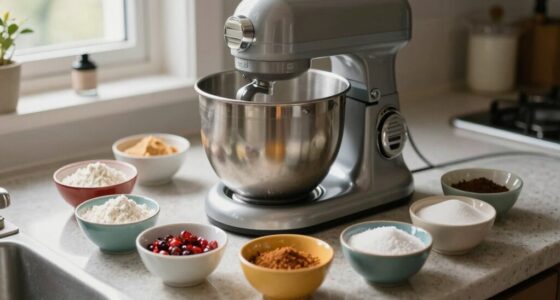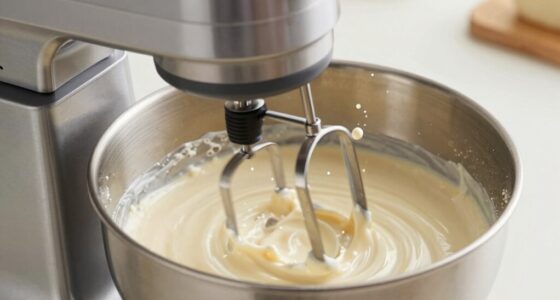
You need to adjust your mixing expectations because rich and lean doughs respond differently to handling. Rich doughs, containing more fats, sugars, and eggs, are softer and more delicate, so you should mix gently and avoid overworking them. Lean doughs rely on gluten development for structure, so they require vigorous kneading. Understanding these differences helps you get better results. Keep learning, and you’ll find the right techniques to perfect your baked goods.

Get baking supplies delivered free with Prime
- Fast, free delivery on millions of items
- Prime Video, Amazon Music and more included
- Member-only deals all year
Key Takeaways
- Rich doughs contain fats and sugars that inhibit gluten formation, requiring gentler mixing to prevent dense textures.
- Lean doughs develop gluten quickly, benefiting from vigorous kneading to achieve elasticity and structure.
- Overmixing rich doughs can cause a greasy, tender crumb, unlike lean doughs where thorough mixing enhances rise.
- The presence of fats and sugars in rich doughs slows fermentation, so mixing techniques are adjusted for longer proofing.
- Proper mixing expectations ensure optimal texture, rise, and flavor development specific to each dough type.
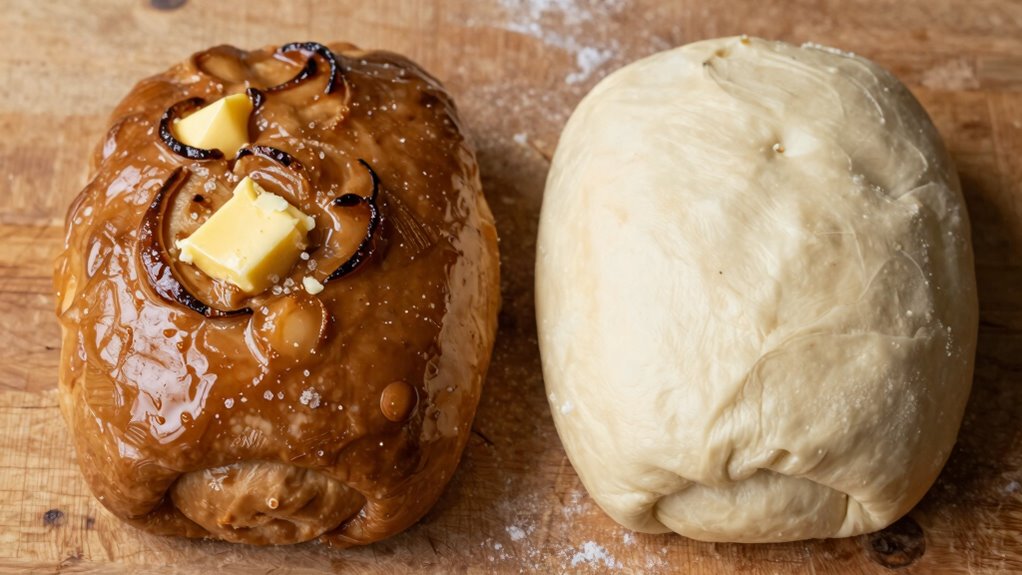
When you start mixing dough, it’s important to understand what to expect regarding texture and consistency. Different types of dough, like rich and lean varieties, have unique characteristics that influence your mixing process. Recognizing these differences helps you manage fermentation timing and gluten development more effectively, ensuring your baked goods turn out just right. Rich doughs, which contain higher amounts of fat, sugar, and eggs, tend to be softer and more tender. They often require longer fermentation times because the additional ingredients can slow down yeast activity. You might notice that these doughs don’t develop gluten as quickly or as strongly as lean doughs, which are primarily made of flour, water, salt, and yeast. Lean doughs rely heavily on gluten development to achieve structure and elasticity, so you’ll need to pay close attention to kneading and mixing to promote proper gluten formation.
In contrast, rich doughs need a gentler touch during mixing. Overmixing can break down the delicate structure and lead to a dense or greasy final product. Because of the higher fat content, they’re less prone to developing a strong gluten network, which means you don’t need to knead as vigorously or for as long as you would with lean doughs. When it comes to fermentation timing, rich doughs usually require longer proofing periods. The fats and sugars slow down yeast activity, so giving the dough extra time allows the flavors to develop and the dough to rise adequately. You’ll notice that rich doughs often need patience, as their fermentation process is more gradual. Additionally, understanding the role of gluten formation in dough can help you tailor your technique for different types of baked goods. Paying attention to ingredient ratios is also crucial, as they directly impact the texture and fermentation behavior of the dough.
Lean doughs, on the other hand, benefit from vigorous kneading to develop gluten quickly. This gluten network traps the gases produced during fermentation, giving lean doughs their characteristic chewy texture and good rise. Because they rely more on gluten structure than on ingredients like fat or sugar, they tend to ferment faster, so you may see a quicker rise. The key is to monitor the dough’s appearance and feel — it should be smooth, elastic, and slightly tacky. Proper gluten development ensures the dough holds its shape and produces a good oven spring during baking.
Ultimately, understanding these distinctions helps you set realistic expectations for mixing, fermentation, and the final texture of your baked goods. Rich and lean doughs each have their own rhythm, and adjusting your technique accordingly will lead to better results every time.
As an affiliate, we earn on qualifying purchases.
Frequently Asked Questions
How Does Ingredient Quality Affect Dough Mixing Times?
Ingredient quality directly impacts your dough mixing times. Fresh ingredients, especially flour, guarantee proper gluten development, so your dough mixes efficiently. High-quality flour type, like bread flour, absorbs water better and creates a stronger gluten network, reducing mixing time. Conversely, stale ingredients or lower-quality flour may require longer mixing to achieve the desired dough consistency. Paying attention to ingredient freshness and choosing the right flour type helps you mix dough correctly and efficiently.
Can Environmental Factors Change Mixing Expectations?
Ever wonder if climate influence and humidity effects can change your mixing expectations? Yes, they definitely can. High humidity adds moisture, making dough softer and possibly needing less mixing time. Conversely, dry air can dry out ingredients, requiring longer mixing to develop gluten properly. Environmental factors like temperature and air moisture directly impact dough consistency, so you should adjust mixing times and techniques accordingly to achieve the best results.
What Tools Are Best for Mixing Rich Versus Lean Dough?
For mixing rich dough, you should use a heavy-duty mixer with a dough hook to handle higher dough hydration and guarantee thorough gluten development. Lean dough requires a lighter mixer, like a stand mixer or even hand mixing, since it has less fat and water. Using the right tools helps you control gluten development and hydration levels, ensuring the dough reaches the right texture without overmixing.
How Do I Adjust Mixing if My Dough Is Too Sticky or Dry?
If your dough’s too sticky, decrease hydration or add a small amount of flour, then knead gently to incorporate. If it’s too dry, increase hydration gradually and continue kneading until the dough becomes elastic. Adjust kneading techniques based on dough type: for rich dough, knead longer to develop gluten, while for lean dough, focus on gentle mixing to avoid overworking. Always observe dough texture and adapt accordingly.
Are There Safety Concerns When Mixing Large Batches of Dough?
Mixing large batches of dough is like steering a ship—you need to stay alert for safety. Always monitor dough temperature to prevent overheating and adjust mixing speed to avoid splashing or strain on equipment. Use proper safety gear, guarantee good ventilation, and follow manufacturer guidelines. Keep a close eye on mixing times and machine capacity to prevent accidents. Safety comes first when handling big batches!
As an affiliate, we earn on qualifying purchases.
Conclusion
Just like a delicate balance of flavors in life, understanding the difference between rich and lean doughs helps you master their unique needs. Think of rich dough as a lush garden, demanding gentle tending and patience, while lean dough is a sturdy tree that needs firm roots to grow strong. Embrace these symbolic lessons, and you’ll craft breads that not only rise beautifully but also tell a story of your skill and care.
As an affiliate, we earn on qualifying purchases.
As an affiliate, we earn on qualifying purchases.
Halloween Picks
halloween
As an affiliate, we earn on qualifying purchases.