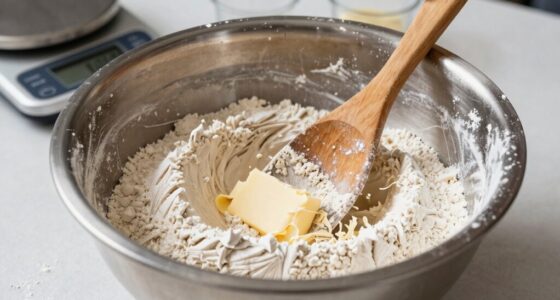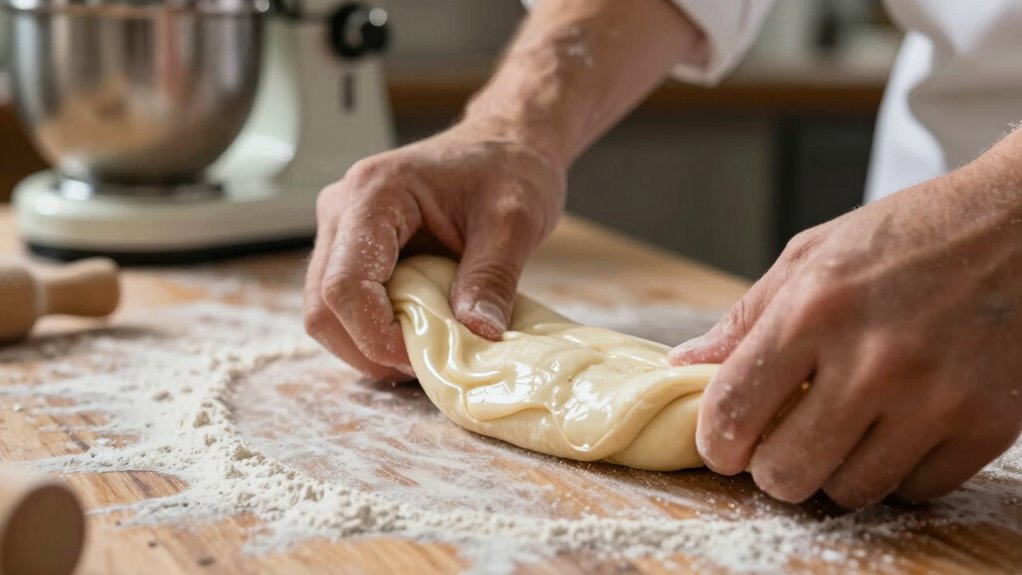
Even advanced bakers can fall into the dough development trap by overmixing or overworking dough, which leads to tough, dense bread and handling issues. It’s easy to misjudge when dough is perfectly developed, especially if relying on time rather than subtle cues like appearance and elasticity. Paying attention to these signs and respecting ingredient quality and fermentation stages can prevent this. Stick with it, and you’ll discover how fine-tuning these details makes all the difference.
Key Takeaways
- Relying solely on timing rather than visual and tactile cues leads to overmixing or underfermentation.
- Ignoring ingredient quality and freshness can cause dough toughness despite advanced skills.
- Overdeveloping gluten through excessive kneading or fermentation weakens dough structure.
- Focusing on process rules instead of dough appearance and elasticity increases the risk of tough dough.
- Underestimating fermentation signs results in poor rise and dense texture, even with advanced techniques.
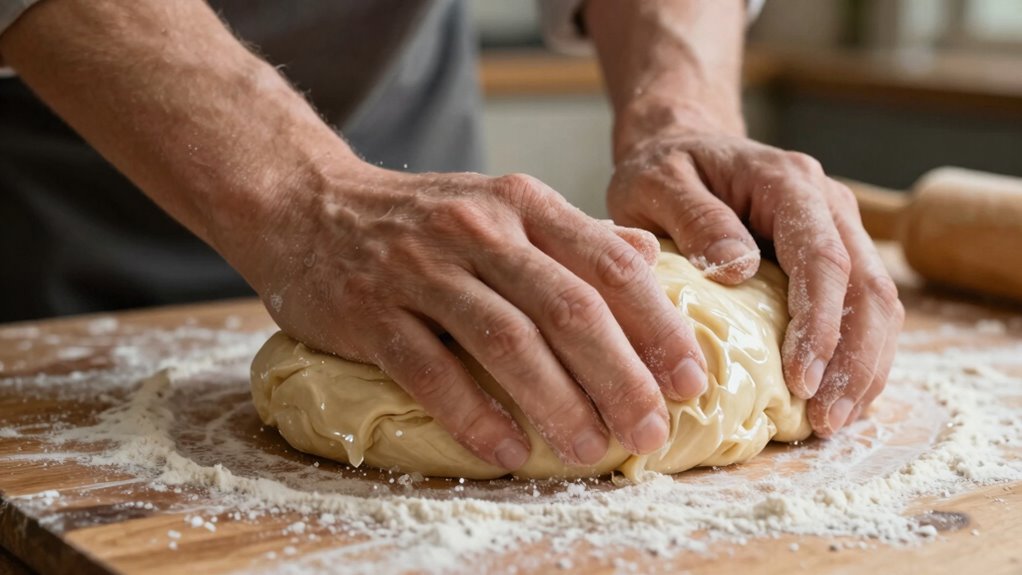
Have you ever noticed your dough becoming overly tough or difficult to work with despite following the recipe? This common frustration often stems from a misjudgment in the dough development process. Even experienced bakers can fall into the trap of overworking dough, which results in a dense, tough crumb rather than the light, airy texture you’re aiming for. The key to avoiding this lies in understanding the delicate fermentation timing and the quality of ingredients you use. These factors play an essential role in how your dough develops and how forgiving it is during handling.
Fermentation timing is perhaps the most overlooked aspect of dough development. When dough ferments too long, gluten structures can become overly relaxed or overdeveloped, leading to a dough that’s difficult to shape and prone to toughness. Conversely, insufficient fermentation can leave your dough underdeveloped, resulting in poor rise and a dense texture. The trick is to monitor the dough’s appearance and feel rather than rely solely on clock time. Look for signs like a slight doming or a bouncy feel, and perform a gentle poke test to gauge readiness. Overfermentation not only affects the dough’s texture but also alters its flavor, making it less desirable. Paying close attention to fermentation timing guarantees your dough reaches its best state, resulting in a more manageable and flavorful bread. Additionally, understanding gluten development can help you better judge when your dough is ready for the next step. Recognizing these cues can help prevent overmixing and ensure optimal dough elasticity.
Monitor dough appearance and feel to perfect fermentation timing for better texture and flavor.
Ingredient quality also plays a significant role in how your dough develops. Using fresh, high-quality flour with adequate protein content provides better gluten formation, which is essential for elasticity and structure. Cheap or old flour may contain less gluten, making it harder for the dough to develop properly and increasing the risk of toughness. Similarly, the quality of yeast and water influences fermentation and dough consistency. Poor-quality ingredients can cause inconsistent results, requiring you to compensate by overmixing or overproofing, which leads to the very toughness you’re trying to avoid. Investing in good ingredients means you’re giving your dough the best chance to develop a strong gluten network naturally, making it easier to handle and shaping. Being aware of the ingredient freshness can help you fine-tune your process for consistent results.
Even advanced bakers sometimes forget to adjust their process based on ingredient quality and fermentation timing, falling into the trap of overworking their dough. Instead of rushing through the process, pay attention to these subtle cues and adjust accordingly. Recognize that perfect dough isn’t about following a set time blindly but understanding how your ingredients and fermentation stages influence its development. When you respect these factors, you’ll find your dough becomes more forgiving, easier to work with, and yields the bakery-quality results you’re after.
bread dough proofing thermometer
As an affiliate, we earn on qualifying purchases.
As an affiliate, we earn on qualifying purchases.
Frequently Asked Questions
How Can I Identify if My Dough Is Overdeveloped?
You can tell if your dough is overdeveloped by observing its texture and gluten network. If it feels excessively sticky, slack, or tears easily when stretched, it’s likely overdone. Also, overfermentation can weaken the gluten structure, causing a breakdown in the dough’s elasticity. Pay attention to fermentation timing; too long, and the gluten network deteriorates, leading to overdevelopment. Adjust your timing to prevent this and achieve the best dough strength.
What Are the Signs of Underdeveloped Dough?
If your dough is underdeveloped, it’ll feel stiff, lumpy, or resistant when you try to stretch it. You might notice that fermentation timing was too short, so gluten hasn’t fully formed, and the dough lacks elasticity. Poor ingredient quality can also hinder proper development. To fix this, make certain you give the dough enough time to ferment, and use fresh, high-quality ingredients to promote better gluten structure and rise.
How Does Dough Hydration Affect Development?
Did you know that hydration levels can range from 50% to over 90%, dramatically affecting dough development? Higher hydration enables better gluten formation, but it also requires precise fermentation timing and high-quality ingredients. When you adjust hydration, you influence how well your dough develops, making it more extensible and airy. By understanding this balance, you can avoid over- or underdeveloping your dough, ensuring ideal texture and flavor.
Can Dough Development Be Rushed or Sped Up?
You can’t really rush or speed up dough development without risking poor fermentation timing and compromised flavor. High-quality ingredients improve fermentation efficiency, but proper timing remains essential. If you try to cut corners, the gluten structure won’t develop properly, leading to dense bread. Trust the natural process, monitor fermentation closely, and use good ingredients to guarantee your dough develops fully without sacrificing texture or taste.
What Tools Help Achieve Proper Dough Development?
Did you know that essential fermentation timing can improve dough structure by up to 30%? To achieve proper dough development, use tools like a digital scale for precise ingredient measurement and a dough scraper for consistent mixing. A proofing box or temperature-controlled environment helps regulate fermentation timing. High-quality ingredients, especially flour and yeast, are vital. These tools and quality ingredients guarantee even gluten development, preventing the dough from being under or overdeveloped.
As an affiliate, we earn on qualifying purchases.
Conclusion
Don’t let the dough’s silent resistance lull you into complacency. Like a stubborn seed hidden beneath the surface, it holds potential waiting to be revealed through patience and understanding. When you nurture it with gentle care and attentive development, you awaken its true strength—transforming a simple mixture into a masterpiece. Remember, mastery isn’t just about technique; it’s about listening to the dough’s quiet whispers, allowing it to rise to its fullest, most vibrant self.
As an affiliate, we earn on qualifying purchases.
As an affiliate, we earn on qualifying purchases.