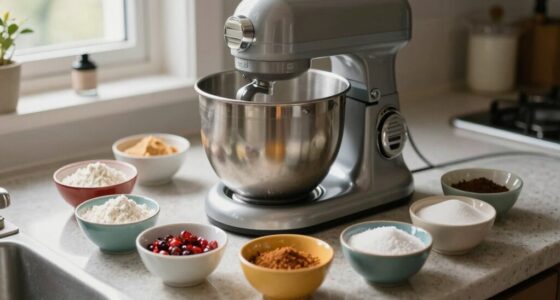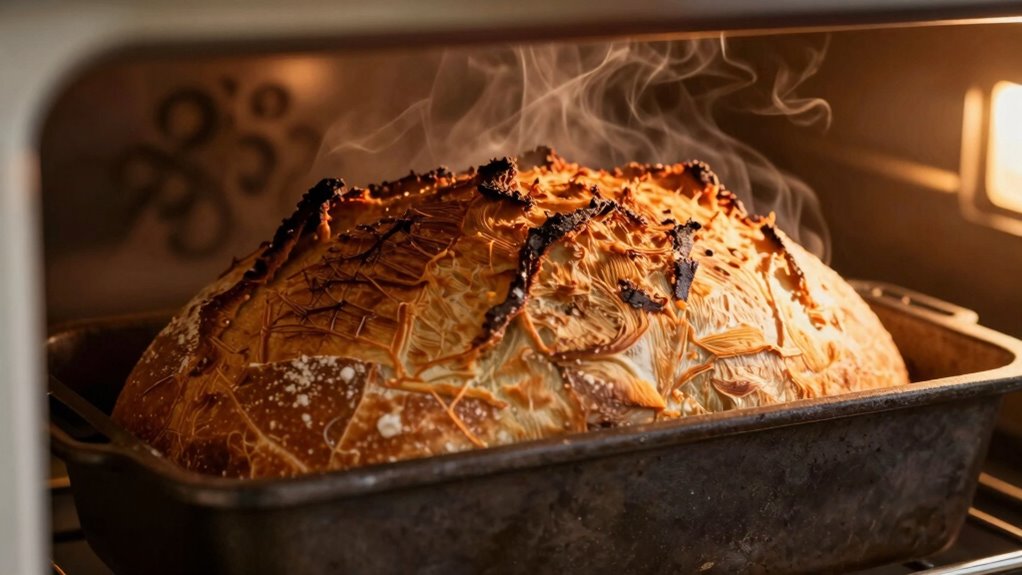
Even a slight change in your oven temperature can ruin your entire bake by causing uneven cooking, underbaking, or burning your treats. Your oven’s accuracy is key for delicate cakes and flaky pastries, so regular calibration is essential. Ingredient temperatures also play a role in the final texture, and small fluctuations can throw off your results. If you want to learn how to keep your bakes perfectly consistent, keep exploring for more tips.

Get baking supplies delivered free with Prime
- Fast, free delivery on millions of items
- Prime Video, Amazon Music and more included
- Member-only deals all year
Key Takeaways
- Small temperature changes can cause uneven baking, resulting in undercooked or burnt edges.
- Even slight shifts in oven temperature can disrupt ingredient interactions, affecting texture and rise.
- Uncalibrated ovens may not reach or maintain the set temperature, compromising baking consistency.
- Ingredient temperature sensitivity means minor fluctuations can alter final results significantly.
- Regular oven calibration and precise ingredient prep are essential to prevent small temperature shifts from ruining your bake.

Even a slight change in your oven’s temperature can derail your entire baking project. When you’re trying to perfect a delicate cake or flaky pastry, precision matters. Small fluctuations in oven temperature can cause uneven baking, undercooking, or burnt edges, making it difficult to achieve consistent results. That’s why understanding oven calibration is essential. If your oven isn’t correctly calibrated, it may not be heating to the temperature you set, leading to unpredictable outcomes. Regularly checking and adjusting your oven’s calibration ensures it maintains the right temperature, which is imperative for reliable baking.
Small temperature changes can ruin your baking; proper oven calibration ensures consistent, perfect results every time.
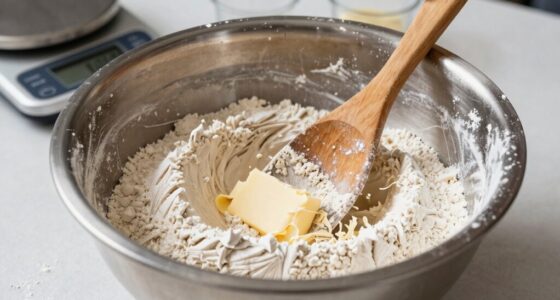
In addition to oven calibration, paying attention to ingredient temperature plays a key role in baking success. Many recipes specify ingredient temperatures because they influence how ingredients interact and affect the final product. For example, using butter that’s too cold or too warm can alter the texture of baked goods. Similarly, eggs at the right temperature help incorporate air evenly, resulting in a better rise. When your ingredients aren’t at the proper temperature, even a perfectly calibrated oven can’t compensate for the imbalance. Always measure ingredients accurately and bring them to the recommended temperature before mixing. Proper ingredient preparation is crucial for consistent baking results. Additionally, understanding how ingredient temperature impacts protein coagulation can help you troubleshoot texture issues in your baked goods. Being aware of subtle temperature variations can help you make quick adjustments during baking. Recognizing these baking temperature factors can significantly improve your outcomes.
As an affiliate, we earn on qualifying purchases.
Frequently Asked Questions
How Does Altitude Affect Baking Temperature Adjustments?
Altitude effects require you to make baking adjustments because higher elevations cause lower air pressure. You should increase your oven temperature slightly, about 15-25°F, to help baked goods set properly. Additionally, you might need to reduce leavening agents and increase liquids to prevent over-expansion and dryness. Making these altitude effects adjustments guarantees your baked goods rise evenly and maintain the right texture, even at higher elevations.
Can Oven Calibration Improve Baking Accuracy?
Yes, oven calibration can improve baking accuracy. When you calibrate your oven, you guarantee its temperature matches the set value, preventing uneven or undercooked results. Calibration methods often involve using an oven thermometer to identify discrepancies and adjusting the oven’s thermostat accordingly. By maintaining oven accuracy, you create a more reliable baking environment, ensuring your cakes, bread, or cookies turn out just right every time, without surprises.
Do Different Oven Types Respond Differently to Temperature Shifts?
Different oven types respond differently to temperature shifts, affecting oven consistency and temperature stability. For example, electric ovens generally maintain steady heat better than gas ovens, which can fluctuate more. Convection ovens distribute heat more evenly, improving baking results. Recognizing these differences helps you adjust your baking process accordingly. Ensuring your oven is properly calibrated also enhances temperature stability, leading to more reliable, consistent baked goods every time you bake.
How Long Does It Take for a Temperature Change to Impact a Bake?
A temperature change can impact your bake within minutes, especially during oven warm-up or when ingredients haven’t reached the right temperature. As you bake, a slight shift in oven heat or ingredient temperature can alter how quickly your batter rises or sets. To avoid issues, preheat your oven fully and make sure ingredients are at their proper temperature before mixing. Even a few degrees can make a noticeable difference in your final result.
Are There Tools to Monitor Real-Time Oven Temperature?
Yes, you can use an oven thermometer to monitor real-time oven temperature. It provides accurate readings and helps you maintain temperature stability during baking. Simply place the thermometer inside your oven, and check it regularly to guarantee consistent heat. This way, you can quickly spot any fluctuations and make adjustments, reducing the risk of your baked goods turning out uneven or disappointing due to temperature inconsistencies.
As an affiliate, we earn on qualifying purchases.
Conclusion
So, next time you’re baking, remember that a tiny temperature tweak can turn your perfect pie into a crusty disaster. Don’t underestimate the power of precision—your oven’s quirks and a little patience matter. Keep your thermometer handy, stay vigilant, and don’t let a small shift ruin your masterpiece. Trust me, even a baker from the days of ye olde kitchens would tell you, it’s the little details that make all the difference. Happy baking!
ingredient temperature thermometer
As an affiliate, we earn on qualifying purchases.
As an affiliate, we earn on qualifying purchases.
oven temperature calibration kit
As an affiliate, we earn on qualifying purchases.
As an affiliate, we earn on qualifying purchases.
Halloween Picks
halloween
As an affiliate, we earn on qualifying purchases.