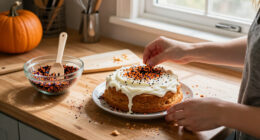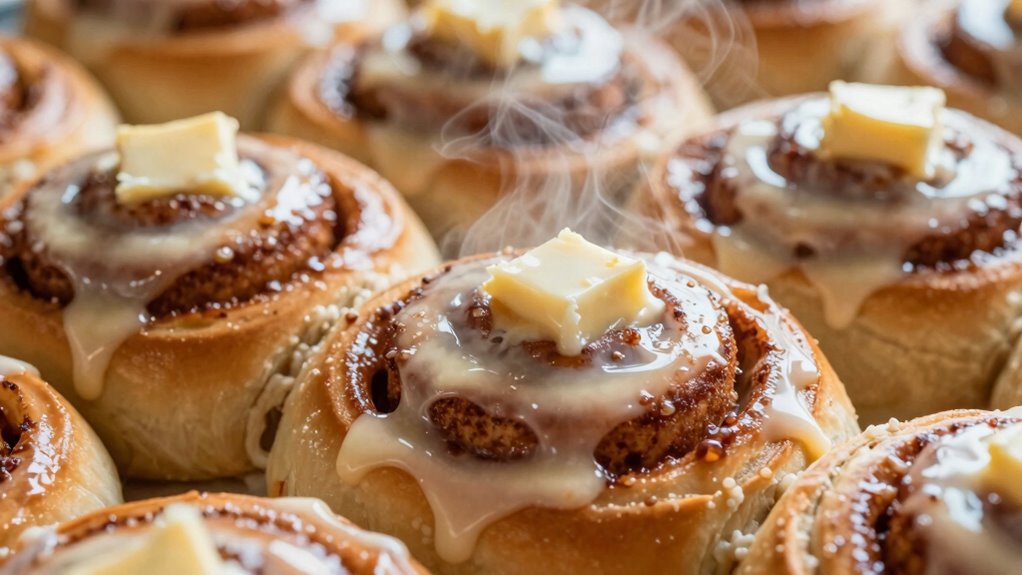

If you apply the icing too soon, your cinnamon rolls can turn out thin, runny, and poorly adhered, ruining their texture and appearance. To get that perfect sticky glaze, wait until the rolls have cooled slightly—about 10-15 minutes—so the heat doesn’t cause the glaze to melt too quickly. Proper timing, along with the right temperature, makes all the difference. Keep going to discover the key details that elevate your cinnamon rolls to perfection.

Get baking supplies delivered free with Prime
- Fast, free delivery on millions of items
- Prime Video, Amazon Music and more included
- Member-only deals all year
Key Takeaways
- Wait until cinnamon rolls are slightly cooled before applying the glaze to prevent melting and ensure proper adhesion.
- Allow baked rolls to rest for 10-15 minutes after baking to avoid icing sliding off or becoming too runny.
- Apply the glaze when rolls are warm but not hot, ensuring it melts just enough for a sticky, glossy finish.
- Avoid icing immediately out of the oven; proper timing helps the glaze set properly and enhances texture.
- Achieve the best results by controlling baking temperature and timing the icing application carefully.

There’s nothing quite like the irresistible aroma of warm, sticky cinnamon rolls straight from the oven. As you pull them out, your anticipation builds, especially when you’re enthusiastic to add the perfect glaze. But timing is everything, and rushing to ice your rolls too early can lead to disappointment. One common mistake many bakers make is not paying attention to the glaze consistency or the baking temperature, both of which directly impact how well your cinnamon rolls turn out.
First, consider the glaze consistency. If you apply the icing too soon, it’s often too thin and runny, sliding right off the warm rolls. This happens because the heat causes the glaze to melt quickly, losing its ideal thickness. The goal is to have a glaze that’s smooth, glossy, and just thick enough to cling to the rolls without pooling excessively. To achieve this, you need to wait until the rolls are slightly cooled—just enough to prevent the heat from melting the icing instantly. When the rolls are at the right temperature, the glaze will spread evenly, creating that beautiful sticky coating that makes cinnamon rolls irresistible.
Wait until cinnamon rolls are slightly cooled for the perfect, glossy glaze that sticks beautifully.
Next, baking temperature plays a pivotal role. If you bake the rolls too hot, they can become overbaked on the outside while remaining underdone inside, which affects how the glaze settles and adheres. Conversely, if the oven isn’t hot enough, the rolls won’t develop that perfect golden-brown crust, and the warmth might cause the glaze to melt prematurely. A typical baking temperature of around 375°F (190°C) provides the ideal environment to develop the right texture and color. Once out of the oven, it’s best to let the cinnamon rolls cool just enough—about 10 to 15 minutes—before glazing. This cooldown prevents the icing from sliding off and ensures the glaze sets into a sticky, glossy finish.
Timing your icing application is also about patience. Resist the urge to frost them immediately from the oven. Instead, give the rolls a brief rest so they’re warm but not hot. When the glaze hits the slightly cooled surface, it will melt just enough to create that luscious, sticky coating without becoming a soggy mess. Proper baking temperature ensures even cooking, which in turn means the rolls will be at the perfect temperature for icing. When you master these details—the right glaze consistency and precise baking temperature—you’ll end up with cinnamon rolls that look as good as they taste, with a glossy, sticky finish that’s simply irresistible.
As an affiliate, we earn on qualifying purchases.
Frequently Asked Questions
How Can I Tell if My Icing Is the Right Consistency?
To check if your icing has the right consistency, lift a spoonful and see how it flows. It should be smooth and slightly thick, not runny or stiff. If it’s too thick, add a small amount of milk or cream and stir well. If it’s too thin, add more powdered sugar. Aim for a frosting thickness that spreads easily but holds its shape on your cinnamon rolls.
What Are Some Alternative Toppings for Cinnamon Rolls?
Imagine you want a unique twist on your cinnamon rolls—try caramelized pecans or a cream cheese glaze. These topping variations bring new flavors and textures, elevating your treat. You can also experiment with frosting flavors like vanilla, maple, or chocolate, customizing your rolls to suit your taste. These alternatives make your cinnamon rolls more exciting and personalized, ensuring everyone loves the delicious, creative toppings you choose to serve.
Can I Prepare the Icing Ahead of Time?
Yes, you can prepare the icing ahead of time. Store it in an airtight container in the fridge to prevent spoilage. Just give it a good stir before spreading on your cinnamon rolls. This allows you to explore flavor variations, like adding vanilla or cream cheese, and makes assembly easier. Keep in mind, Icing storage is key to maintaining its texture and flavor, ensuring your cinnamon rolls taste fresh and delicious.
How Do Humidity Levels Affect Icing Setting?
Humidity impact can considerably affect icing setting, as high humidity makes the icing take longer to set and can cause it to become runny or sticky, impacting the icing texture. Conversely, low humidity helps the icing set more quickly and maintain a firm, smooth texture. To guarantee perfect results, keep your environment consistent, and consider adjusting ingredients or using refrigeration if humidity levels are high.
What Are Quick Fixes if My Icing Is Too Runny?
If your icing is too runny, you can quickly fix it by adding more powdered sugar, which thickens the consistency without modifying the icing flavor or cinnamon swirl. Stir well until smooth. If it’s still too thin, refrigerate for 10-15 minutes to help it set. These adjustments ensure your cinnamon swirl sticky rolls look appealing and taste delicious, with perfectly coated icing that doesn’t slide off.
baking cooling rack for cinnamon rolls
As an affiliate, we earn on qualifying purchases.
As an affiliate, we earn on qualifying purchases.
Conclusion
To guarantee your sticky cinnamon rolls turn out perfect, timing the icing is essential. Imagine baking for hours only to find the glaze slides right off because you waited too long—it’s frustrating, right? By icing them just as they cool slightly, you lock in that sweet, sticky goodness. For example, a home baker once learned this the hard way, but now she always times her icing perfectly, transforming her rolls into an irresistible treat every time.
As an affiliate, we earn on qualifying purchases.
non-stick baking mats for cinnamon rolls
As an affiliate, we earn on qualifying purchases.
As an affiliate, we earn on qualifying purchases.
Fall Picks
fall essentials
As an affiliate, we earn on qualifying purchases.