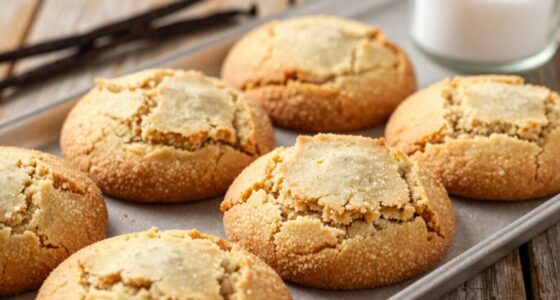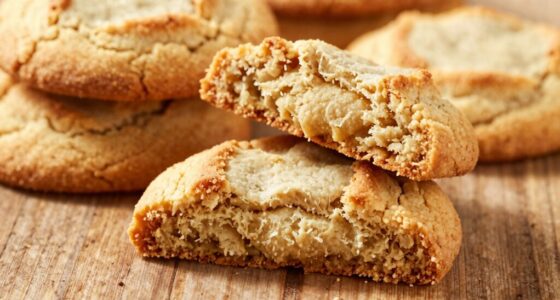
To keep your cookie bars soft and non-crumbling, choose ingredients like brown sugar, yogurt, or applesauce to add moisture and tenderness. Bake at a slightly lower temperature and avoid overbaking, removing them just as edges set. Cool them properly and store in an airtight container to lock in softness. Small tweaks make a big difference, and if you keep exploring, you’ll discover even more tips for perfect, chewy cookie bars.
Key Takeaways
- Avoid overbaking by removing cookie bars when edges are just set and using a toothpick test for doneness.
- Incorporate moisture-rich ingredients like yogurt or applesauce to enhance tenderness and prevent crumbling.
- Bake at a slightly lower temperature to ensure even cooking and maintain a soft, chewy texture.
- Cool the cookie bars completely in the pan before storing to lock in moisture and prevent dryness.
- Store in an airtight container with a slice of bread or damp paper towel to keep them soft and fresh.
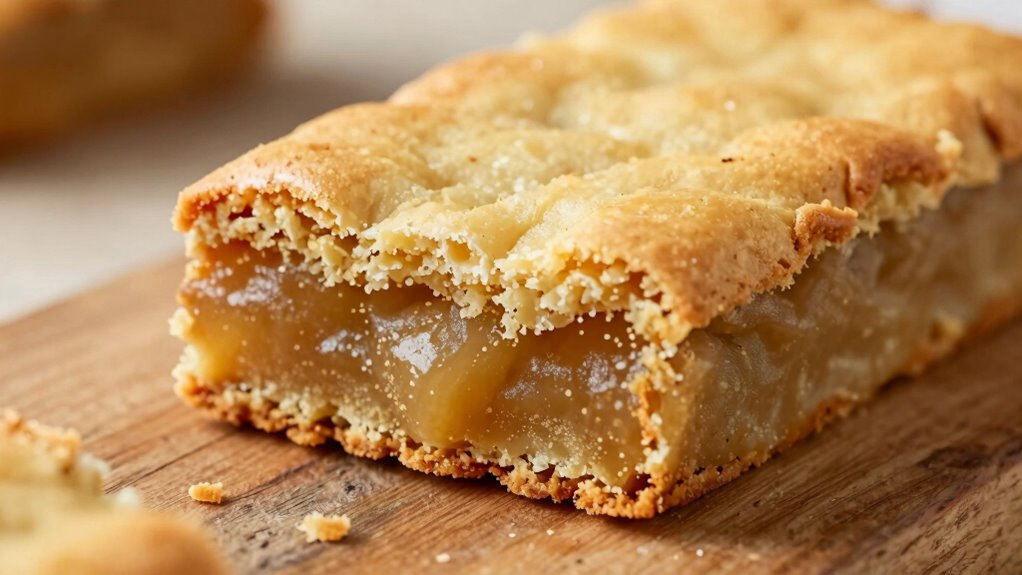
If you’ve ever bitten into a cookie bar that’s too crispy or dry, you know how disappointing it can be. Achieving that perfect, soft, and chewy texture isn’t just luck—it’s a result of careful ingredient choices and baking techniques. One of the most effective ways to keep your cookie bars tender is through ingredient substitutions. Replacing some of the traditional ingredients with alternatives can make a big difference. For example, swapping out butter for brown sugar or adding a small amount of yogurt can introduce moisture, helping your bars stay soft and chewy. Using ingredients like applesauce or mashed bananas can also contribute moisture without making the bars overly greasy or heavy. These substitutions not only enhance flavor but also improve the overall texture, making your cookie bars irresistibly soft. Incorporating proper storage methods can further help maintain their freshness and tenderness over time.
Swapping butter for brown sugar or adding yogurt keeps cookie bars moist and irresistibly soft.
Beyond choosing the right ingredients, your baking techniques play a vital role. One key tip is to avoid overbaking. Many bakers tend to leave cookie bars in the oven a little too long, which causes moisture loss and results in dryness. Instead, bake until the edges are just set and a toothpick inserted in the center comes out with moist crumbs—not wet batter, but definitely not dry. Removing the bars from the oven at the right moment preserves their softness. Also, consider slightly underbaking, then letting the bars cool completely in the pan. This technique allows residual heat to finish the baking process gently, maintaining a moist interior.
Another technique that helps is controlling the oven temperature. Baking at a slightly lower temperature ensures gentle heat, which prevents the exterior from becoming crispy before the inside is fully cooked. Using a convection oven? Reduce the temperature by about 25°F to avoid drying out the bars. Additionally, letting your cookie bars cool on a wire rack rather than in the pan retains their moisture and prevents a hard crust from forming on the bottom.
Finally, don’t forget to store your cookie bars properly. Once cooled, keep them in an airtight container at room temperature. Adding a slice of bread or a damp paper towel inside can help retain moisture during storage. By combining thoughtful ingredient substitutions with precise baking techniques, you’ll consistently create cookie bars that are soft, chewy, and far from crumbling. Master these small adjustments, and those disappointing dry bars will be a thing of the past.
Frequently Asked Questions
Can I Substitute Gluten-Free Flour in the Recipe?
Yes, you can replace gluten-free flour in your cookie bar recipe. Use gluten-free options like almond flour, rice flour, or a commercial gluten-free flour blend as flour substitutes. Keep in mind, you might need to adjust the amount slightly or add a binder like xanthan gum to achieve the same soft, chewy texture. Experimenting ensures your bars stay delicious without gluten, and they won’t crumble apart.
How Long Can Cookie Bars Be Stored Without Losing Softness?
You can store your cookie bars for up to 3-4 days without losing their softness if you keep them in an airtight container. To preserve their freshness, avoid exposing them to air or humidity, which can cause them to become dry or crumble. For longer storage, wrap them tightly and freeze for up to 2 months, then thaw at room temperature to maintain their soft texture.
Are There Vegan Alternatives for the Ingredients?
Did you know that nearly 3.5% of the U.S. population identifies as vegan? You can easily make cookie bars vegan by using substitutes like flax eggs or applesauce instead of eggs, and coconut oil or vegan butter in place of dairy. Ingredient swaps are straightforward, and these vegan options maintain the softness and flavor you love, ensuring your cookie bars stay delicious and cruelty-free.
Can I Add Nuts or Other Mix-Ins Without Affecting Softness?
Yes, you can add nut mix-ins or other ingredients without substantially affecting the softness. Just fold them gently into the batter before baking, and opt for chopped nuts or mix-ins that won’t add too much moisture or density, which could alter the texture. Keep the quantity moderate to preserve the cookie bars’ soft, chewy quality, ensuring they remain moist and tender without becoming dry or overly crunchy.
What Is the Best Way to Reheat Leftover Cookie Bars?
You’ll want to reheat your leftover cookie bars gently to keep them irresistibly soft. For quick warmth, microwave reheating works like magic—just 10-15 seconds can revive their gooey goodness. For a more even heat, oven reheating at 350°F for 8-10 minutes does wonders, making them taste almost fresh out of the oven. Either way, don’t overdo it, or you’ll risk turning your precious bars into crumbling disasters!
Conclusion
So, now that you’ve cracked the code, go ahead—bake those cookie bars with confidence. Who needs crispy, crumbly messes when you can have soft, irresistible squares? Remember, the secret’s in the sweet, tender touch and a little patience. Or maybe just less baking time. Either way, enjoy your perfectly soft cookie bars and bask in the glory of your baking genius—because nothing beats a bar that’s soft, not sorry. Happy baking!