
If your blondies turn out greasy, the most likely cause is using too much butter or baking at too low a temperature, preventing fats from fully absorbing or evaporating. Make sure you measure your ingredients carefully and follow a proper oven temperature—around 350°F—using an oven thermometer for accuracy. Adjusting the butter amount slightly and baking just until edges are set can make a big difference. Keep going to discover more tips to perfect your blondies.

Get baking supplies delivered free with Prime
- Fast, free delivery on millions of items
- Prime Video, Amazon Music and more included
- Member-only deals all year
Key Takeaways
- Use the correct butter-to-flour ratio to prevent excess fat and greasiness.
- Bake at a proper temperature, around 350°F, to ensure fats bake off evenly.
- Avoid overbaking, which can trap excess butter and cause oily surfaces.
- Cool blondies properly on a wire rack to allow fats to settle and prevent pooling.
- Follow recipe measurements carefully and make gradual adjustments for optimal texture.
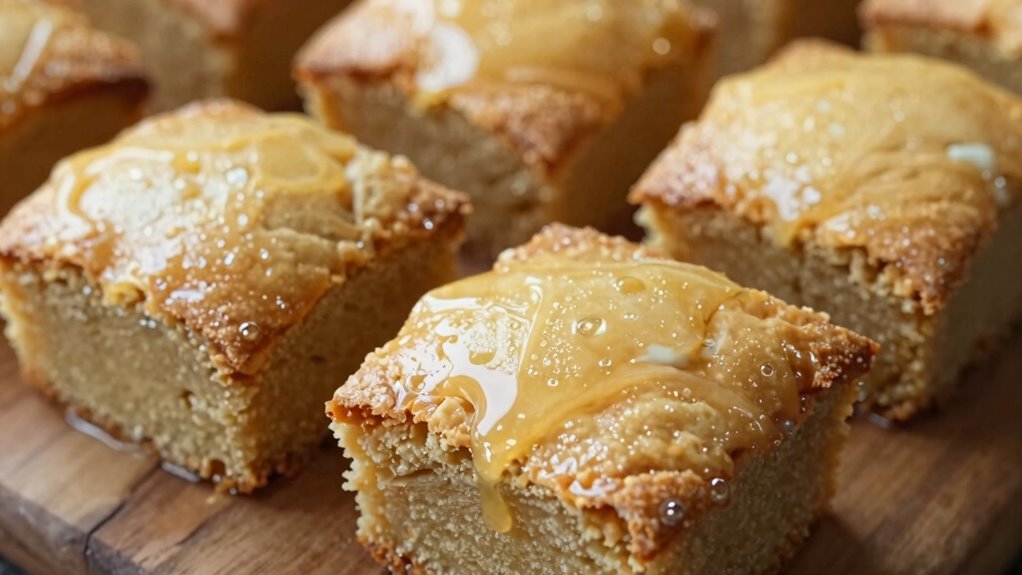
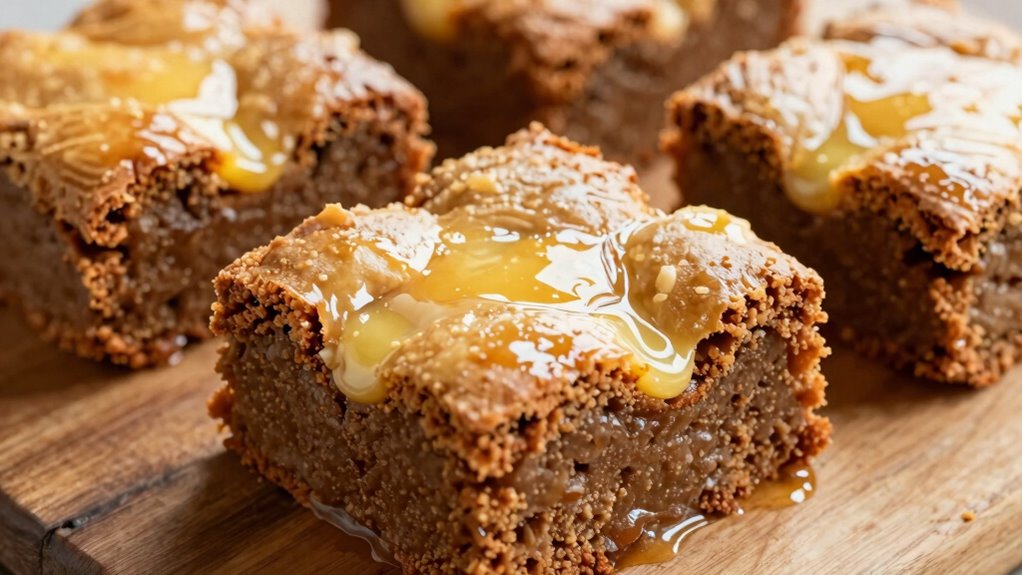
Have your blondies turned out greasy despite following your favorite recipe? If so, it’s likely a few simple issues are at play, especially related to the butter ratio and oven temperature. Blondies rely heavily on butter for their rich flavor and moist texture, but too much butter can make them greasy. When the butter ratio is off, excess butter doesn’t fully bake off, leaving behind a greasy, oily surface and dense, overly moist interior. To fix this, start by reducing the amount of butter slightly. You don’t have to eliminate it entirely; just cut back a little and see if that produces a better texture. Many recipes call for a specific butter-to-flour ratio, so sticking to the recommended measurements ensures your blondies aren’t overwhelmed by fat. If you’re experimenting, do so gradually—small adjustments make a big difference in avoiding greasiness.
Another key factor that influences greasy blondies is oven temperature. Baking at too low a temperature can cause the butter to melt too slowly, which allows excess fat to pool and seep into the batter, resulting in greasy spots. Conversely, baking at too high a temperature can cause the butter to melt rapidly, creating a greasy surface before the rest of the blondie is properly baked through. To prevent this, double-check your oven’s temperature accuracy with an oven thermometer. Most recipes specify an ideal baking temperature—usually around 350°F (175°C). Maintaining this temperature ensures the blondies bake evenly, allowing the butter to emulsify properly into the batter and cook off excess moisture. Proper oven temperature also helps develop a tender crumb without greasiness. Additionally, considering baking time and technique can further improve your results.
Timing matters, too. Overbaking can dry out the blondies, but underbaking leaves excess butter and moisture inside. Remove your blondies when they’re just set around the edges and a toothpick inserted in the center comes out with moist crumbs. Letting them cool properly on a wire rack allows the fats to settle and prevents excess greasiness from pooling as they cool. If you find that your blondies are consistently greasy, reassess your butter ratio and oven temperature first. Small adjustments in these areas often solve the problem, giving you that perfect, gooey texture without excess oil. Remember, baking is as much about precision as it is about following the recipe, so paying attention to these details will help you achieve blondies that are just right—moist, tender, and not greasy.
oven thermometer for accurate baking
As an affiliate, we earn on qualifying purchases.
As an affiliate, we earn on qualifying purchases.
Frequently Asked Questions
Can Overmixing the Batter Cause Greasy Blondies?
Yes, overmixing the batter can cause greasy blondies. When you mix too much, you activate the gluten and incorporate excess air, leading to a batter that’s overly emulsified and greasy. Using proper mixing techniques helps you achieve the right batter consistency, preventing excess fat from pooling and creating a greasy texture. To avoid this, mix just until the ingredients are combined, and don’t overdo it.
Does Using Butter Instead of Oil Affect Greasiness?
Using butter instead of oil can make your blondies greasier because butter has a richer flavor and a thicker, more solid consistency when melted. Oil, with its smoother, more liquid texture, creates a lighter, less greasy feel. If you want to avoid greasiness, consider using a neutral oil for a subtle flavor and better oil consistency, which helps your blondies stay moist but not greasy.
How Does Oven Temperature Influence Blondie Greasiness?
Think of oven temperature as the conductor guiding your blondies’ symphony. When it’s too hot, they brown too quickly, releasing excess fat like a leaky faucet, making them greasy. A consistent, moderate temperature guarantees even browning techniques, allowing the fats to meld seamlessly into the batter. Keep your oven steady and your blondies will develop a perfect crust without the unwanted grease seeping through, creating a tender, balanced treat.
Are Pre-Packaged Ingredients More Likely to Make Blondies Greasy?
Pre-packaged ingredients can make your blondies greasier because they often contain added preservatives and stabilizers for shelf stability, which can affect fat content. These additives may increase the oil or fat levels, leading to a greasy texture. To avoid this, opt for fresh ingredients whenever possible, and check labels for unnecessary fats or oils. Using high-quality, natural ingredients helps guarantee your blondies turn out perfectly moist without excess greasiness.
Can Substituting Ingredients Reduce the Greasy Texture?
Yes, substituting ingredients can reduce the greasy texture in blondies. You can try alternative flours like almond or coconut flour, which absorb less fat and moisture. Additionally, using low-fat substitutes such as applesauce or Greek yogurt in place of butter or oil helps cut down on greasiness. These swaps keep your blondies moist and tender without making them greasy, resulting in a better texture and flavor.
As an affiliate, we earn on qualifying purchases.
Conclusion
Now that you know why your blondies turn out greasy—whether it’s too much butter or underbaking—you can fix the problem. Think of your batter as a delicate balance, like a tightrope walker on a thin wire, where too much weight causes a fall. By adjusting ingredients and baking time, you’ll create golden, perfectly chewy blondies instead of greasy, flat ones. With these tips, your next batch will be both beautiful and delicious.
wire cooling rack for baked goods
As an affiliate, we earn on qualifying purchases.
As an affiliate, we earn on qualifying purchases.
As an affiliate, we earn on qualifying purchases.
Halloween Picks
halloween
As an affiliate, we earn on qualifying purchases.