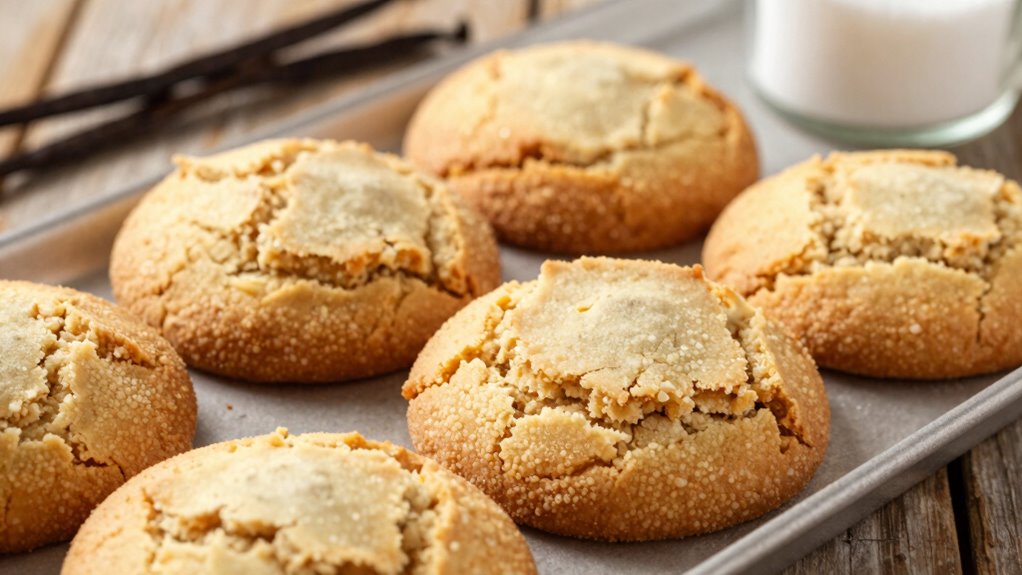

If your cookies still taste bland despite using vanilla, the issue might be quality ingredients or baking techniques. Using stale flour, cheap butter, or imitation vanilla can dull the flavor, while incorrect oven temperature or underbaking can prevent proper caramelization. Properly measuring ingredients and maintaining the right temperature guarantees the flavors develop fully. Pay attention to these factors, and you’ll discover how small adjustments can make your cookies taste richer and more delicious. Keep exploring to learn more tips.

Get baking supplies delivered free with Prime
- Fast, free delivery on millions of items
- Prime Video, Amazon Music and more included
- Member-only deals all year
Key Takeaways
- Use fresh, high-quality ingredients like real vanilla and fresh butter to boost flavor.
- Ensure your oven is at the correct temperature for even baking and caramelization.
- Avoid overmixing dough to preserve delicate flavors and prevent a bland taste.
- Properly measure and follow the recipe to maintain ingredient balance and flavor consistency.
- Preheat your oven and bake cookies just until golden for optimal caramelization and richer flavor.

Many people look forward to biting into freshly baked cookies, but lately, some have found their treats tasting unexpectedly bland. If you’re wondering why your cookies don’t have that rich, flavorful punch despite adding vanilla, it might come down to a few key factors. First, the ingredient quality makes a big difference. Using fresh, high-quality ingredients ensures your cookies have the depth of flavor you’re craving. Cheap or old butter, stale flour, or artificial vanilla can dull the taste and leave your cookies feeling flat. When you buy ingredients, opt for fresh products, and consider investing in real vanilla extract rather than imitation vanilla. The difference in flavor is noticeable, and it can elevate your cookies from bland to delicious.
Another essential aspect that often gets overlooked is oven temperature. Baking at the wrong temperature can greatly impact the flavor and texture of your cookies. If your oven runs hot or cold, it can cause uneven baking, resulting in a cookie that’s either underbaked or burnt. Underbaked cookies tend to taste doughy and lack the caramelization that creates complex flavors. On the other hand, overbaked cookies can become bitter and dry, dulling the overall taste. To avoid this, always preheat your oven and use an oven thermometer to guarantee accurate temperature control. Most cookie recipes recommend around 350°F (175°C), but your oven might need a slight adjustment. Proper oven temperature helps the sugar caramelize just enough to develop richer, more nuanced flavors, which vanilla alone can’t compensate for if the baking process isn’t precise.
Additionally, baking techniques such as not overmixing the dough can help preserve the delicate flavors and improve the overall taste. Make sure you measure carefully and follow the recipe closely, but also trust your senses—taste the dough if possible and adjust accordingly.
Products Worth Considering

Le Creuset Enamemed Cast Iron Oval Dutch Oven, 5 qt., White/Crucible

Le Creuset Signature Enameled Cast Iron Round Dutch Oven, 5.5 qt, Deep Teal

Ninja Artisan 5-in-1 Portable Electric Pizza Oven, Blue & Gold
As an affiliate, we earn on qualifying purchases.
Frequently Asked Questions
Can Using Fresh Vanilla Beans Improve Cookie Flavor?
Using fresh vanilla beans can definitely improve your cookie flavor. When you scrape the seeds from a vanilla bean, you add a rich, aromatic essence that bottled vanilla extract can’t match. This vanilla bean provides a flavor enhancement, making your cookies taste more complex and vibrant. So, next time, opt for fresh vanilla beans to elevate your baking and create cookies with a deeper, more authentic vanilla flavor.
How Does Ingredient Freshness Affect Cookie Taste?
Think of ingredient freshness as the spark that ignites your cookie’s flavor. When you use high-quality, fresh ingredients, they blend into a symphony of taste, transforming bland dough into a rich masterpiece. Fresh ingredients act like flavor enhancement tools, amplifying every note of vanilla, butter, and sugar. Skimp on freshness, and your cookies risk tasting dull and lifeless. Keep ingredients fresh, and watch your cookies burst with vibrant, memorable flavor.
Do Baking Temperature and Time Impact Flavor Development?
Baking temperature and time directly impact flavor development in your cookies. If you bake at too high a temperature, the exterior might burn before the inside fully cooks, leading to a bland taste. Conversely, too low a temperature can result in underdeveloped flavors. Adjust your baking temperature and time carefully to allow proper caramelization and Maillard reaction, which enhance the rich, complex flavors you want in your cookies.
Can Substituting Ingredients Alter the Vanilla Flavor in Cookies?
Think of vanilla extract as the soul of your cookies, and ingredient substitution as a new melody. When you swap ingredients, you might mute or distort that vanilla flavor, turning your cookies into a bland symphony. Using a different vanilla extract or neglecting to add enough can dull the vibrant aroma. To keep that rich vanilla note, stick closely to the original recipe or choose high-quality vanilla for a true flavor boost.
Does Storing Cookies Improperly Diminish Their Flavor?
Storing cookies improperly can definitely lead to flavor loss. If you make storage mistakes like leaving cookies exposed to air or in the fridge, they can become stale or absorb unwanted odors. To keep their flavor intact, store cookies in an airtight container at room temperature, away from strong smells. Proper storage helps preserve their freshness and guarantees you enjoy their full, delicious flavor each time.
Conclusion
So, next time your cookies fall flat despite adding vanilla, ask yourself—are you really using fresh ingredients or just rushing through the process? Sometimes, it’s the little details, like measuring accurately or not overbaking, that make all the difference. Don’t settle for bland cookies when a few tweaks can turn them into something special. After all, isn’t baking about creating something memorable, not just following a recipe?