To get thick cookies without adding extra flour, focus on proper dough prep by creaming butter and sugar until fluffy to incorporate air, which helps with rise. Chill the dough for at least 30 minutes to firm it up and reduce spreading. Baking at a slightly higher temperature ensures the edges set quickly, supporting thickness. Avoid flattening the dough before baking, and make sure to space cookies well. Keep these tips in mind, and you’ll discover more ways to perfect your cookies.

Get baking supplies delivered free with Prime
- Fast, free delivery on millions of items
- Prime Video, Amazon Music and more included
- Member-only deals all year
Key Takeaways
- Chill the dough thoroughly before baking to prevent spreading and help cookies retain their height.
- Use a larger cookie scoop or portion size to support thicker, more voluminous cookies.
- Bake at a slightly higher temperature to set the edges quickly and promote better rise.
- Avoid flattening or pressing down the dough before baking to preserve thickness.
- Proper creaming and not overmixing the dough develop structure and air, enhancing cookie height without extra flour.
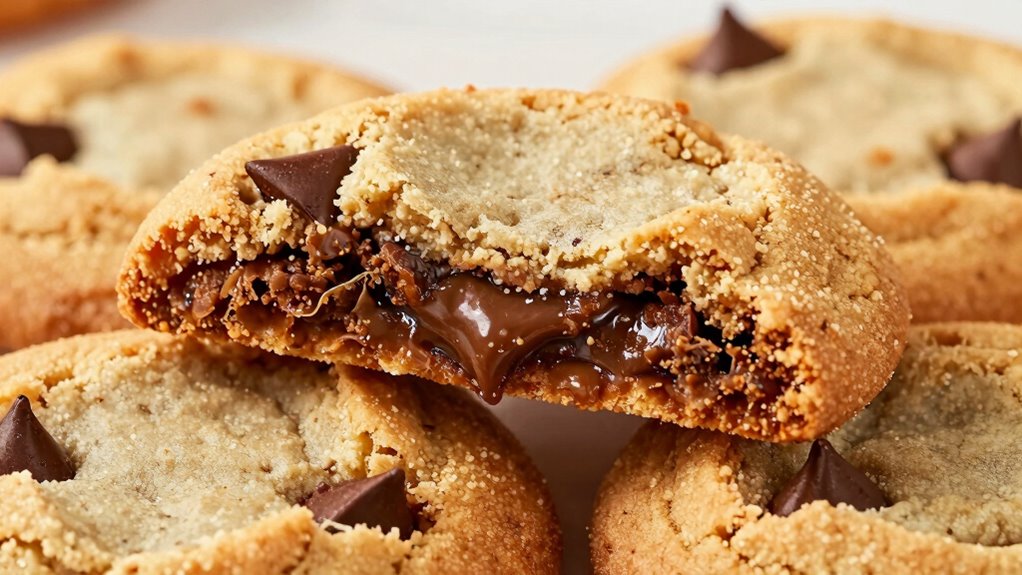
Ever wonder how to achieve thick, bakery-quality cookies at home? It all comes down to understanding how to manipulate cookie texture and mastering the right baking techniques. You don’t need to add extra flour to bulk up your cookies; instead, focus on the ingredients and methods that influence their rise and shape. Achieving that perfect thickness requires a few smart adjustments and a clear understanding of how each step impacts your final product.
First, consider your dough’s composition. Using the right amount of fat, like butter or shortening, plays a significant role in cookie thickness. When you cream the butter and sugar properly, you incorporate air into the mixture, which helps create a lighter, more voluminous dough. This process impacts cookie texture, making them less dense and more capable of holding their shape during baking. It’s essential to beat the ingredients until they’re fluffy, but don’t overmix, as that can develop gluten and make cookies tough rather than thick.
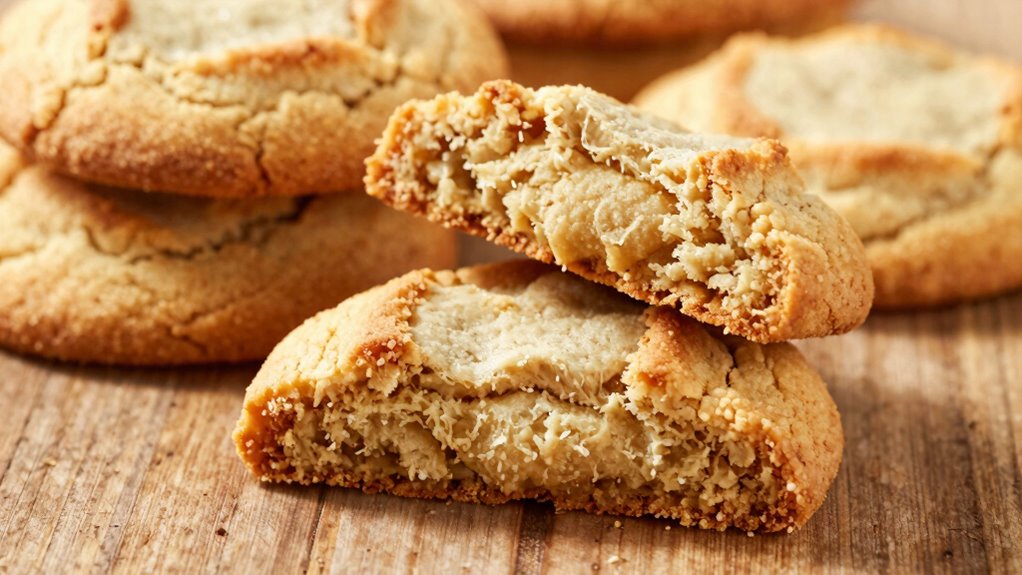
Next, chill your dough thoroughly before baking. Cold dough spreads less when it hits the oven, which keeps your cookies thick and well-shaped. When you chill the dough for at least 30 minutes, it firms up, allowing the cookies to retain their height. This step is a simple yet effective baking technique that directly influences cookie texture, giving you that thick, chewy interior with a slightly crisp edge.
Another useful trick is to bake your cookies at a slightly higher temperature than usual. Increasing the oven temperature by 10-15°F encourages the outer edges to set quickly, locking in moisture and supporting the cookie’s rise. It also promotes better caramelization, enhancing flavor and contributing to that bakery-quality appearance. Keep an eye on your baking time to prevent overbaking, which can dry out cookies and compromise their thickness.
Using a thicker cookie scoop or portioning your dough into larger balls can also help. Larger portions naturally result in thicker cookies, as they have more mass to support their shape during baking. Make sure to space them adequately on the baking sheet, giving each cookie room to rise without spreading too much.
Finally, avoid pressing down on your cookie dough before baking. This simple step preserves the height and thickness, allowing the baking techniques you employ to do their job. With proper attention to cookie texture and these baking methods, you’ll be able to craft thick, bakery-quality cookies that look and taste incredible—all without adding extra flour.
Products Worth Considering

Le Creuset Signature Enameled Cast Iron Round Dutch Oven, 5.5 qt, Deep Teal

Le Creuset Enameled Cast Iron Round Dutch Oven, 5.5 Qt, Flame

Le Creuset Enamemed Cast Iron Oval Dutch Oven, 5 qt., White/Crucible
As an affiliate, we earn on qualifying purchases.
Frequently Asked Questions
Can Substituting Ingredients Affect Cookie Thickness?
Yes, substituting ingredients can affect cookie thickness. Using alternative ingredients like coconut flour or nut butters changes moisture and structure, impacting thickness. Your baking methods also matter—chilling dough or adjusting baking time can help you achieve thicker cookies. Experimenting with these options allows you to customize texture without extra flour, giving you control over thickness and overall cookie quality.
Does Chilling Dough Influence Cookie Thickness?
Chilling dough can markedly influence cookie thickness. When you refrigerate it, you’re slowing down gluten development and fat melting, which helps maintain a thicker, softer cookie. Think of it like letting a cake batter rest—ingredients balance out and create a better texture. As a chef friend told me, “Dough’s temperature is like a mood—cool it down, and it’s more likely to hold its shape.”
How Does Baking Temperature Impact Cookie Density?
Baking temperature directly impacts cookie density by affecting how the dough spreads and sets. When you increase the baking temperature, cookies tend to spread less and become denser and thicker because the exterior sets quickly, trapping moisture inside. Conversely, lower temperatures allow more spreading, resulting in thinner cookies. So, adjusting the baking temperature helps you control cookie density, giving you the desired thickness and chewy or crispy texture.
Are There Specific Mixing Techniques for Thicker Cookies?
Think of your mixing method as the heartbeat of your cookie’s thickness. You want to gently fold ingredients, avoiding overmixing, which can deflate your dough. Add ingredients at the right timing—like holding back the rush of a storm—so the dough remains thick and sturdy. Use a spatula to combine, ensuring air is preserved, and your cookies stay dense and thick, like a mountain waiting to be scaled.
Can Using Different Types of Sugar Change Cookie Thickness?
Using different types of sugar can influence cookie thickness by affecting sugar crystallization and caramelization effects. For instance, brown sugar contains more moisture, promoting thicker, chewier cookies, while superfine sugar dissolves faster, leading to a crisper texture. These sugars also impact caramelization, adding richer flavor and color. Experimenting with various sugars allows you to control the cookie’s structure and thickness, giving you the perfect chewy or crispy result.
Conclusion
By following these tips, you’ll achieve thick, chewy cookies without extra flour. Remember, using cold butter and chilling your dough can make a big difference. Did you know that cookies baked at a higher altitude tend to spread less, resulting in thicker treats? So, experiment with your environment and techniques to perfect your cookie game. With a little practice, you’ll consistently enjoy thick, bakery-style cookies right at home.