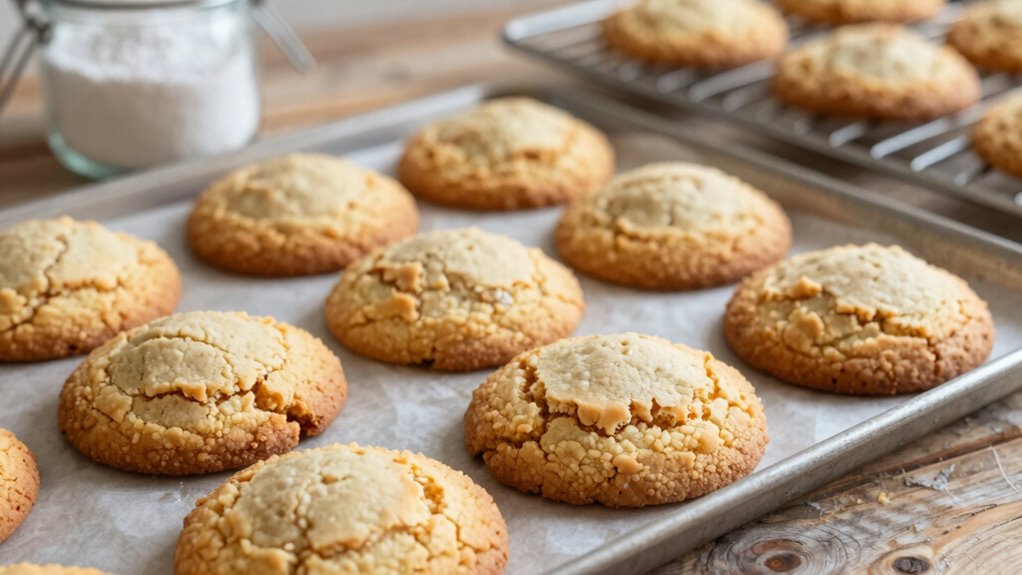
Cookies turn hard the next day because they lose moisture when left uncovered or stored improperly, making them dry and stale. Air exposure accelerates moisture evaporation, and humidity can lead to mold or sogginess. To prevent this, store cookies in airtight containers or wrap them well, add a piece of bread or damp paper inside, and keep them in a cool, dry place. For more tips on maintaining freshness, stay with us to learn the best storage methods.
Key Takeaways
- Cookies lose moisture to the air when left uncovered, causing them to harden quickly.
- Storing cookies in airtight containers helps trap moisture and maintain their softness.
- Using moisture-retaining tricks like adding a slice of bread or damp paper towel keeps cookies tender.
- Exposure to humid environments or heat accelerates moisture loss and leads to dryness.
- Freezing cookies and properly thawing them preserves their fresh, soft texture longer.

Ever wondered why your freshly baked cookies become hard and crunchy by the next day? The answer often lies in how you handle cookie preservation and moisture retention. When cookies sit out uncovered or aren’t stored properly, they lose their moisture, causing them to become dry and crumbly. This moisture loss is natural, but you can control it with simple storage techniques. Properly preserving cookies helps maintain their softness, chewiness, and overall freshness longer.
Proper storage preserves cookie moisture, keeping them soft and fresh longer.
To keep your cookies soft and prevent them from turning hard, moisture retention is key. Once baked, cookies continue to release moisture into the air, especially if left exposed. If you want to slow this process, storing cookies in an airtight container is essential. Using a sealed container traps the moisture inside, preventing it from escaping and keeping the cookies tender. Adding a slice of bread or a damp paper towel inside the container can further help retain moisture, as the cookies absorb just enough to stay soft without becoming soggy. This method is especially effective for preserving cookies that are meant to be chewy or soft.
Another way to improve cookie preservation is to pay attention to the container you choose. Glass or plastic containers with tight-fitting lids work best because they prevent air from getting in and drying out your treats. Avoid leaving cookies out on the counter uncovered for extended periods, as exposure to air accelerates moisture loss. If you need to store cookies longer, consider freezing them. Wrap individual cookies in plastic wrap or foil, then place them in a freezer-safe bag. When you’re ready to enjoy them, let them thaw at room temperature, and they’ll regain much of their original softness.
Temperature and humidity also play a role. Store cookies in a cool, dry place away from direct sunlight, which can cause the fats in the cookies to go rancid or dry out faster. If you live in a humid environment, be cautious about storing cookies in overly humid conditions, as excess moisture can cause mold or make cookies soggy. In such cases, using a vacuum-sealed container or a desiccant packet can help maintain ideal moisture levels. Additionally, proper storage methods can significantly extend the freshness of your baked goods.
Ultimately, understanding how moisture retention impacts cookie preservation empowers you to keep your baked goods fresh longer. Small adjustments—like using airtight containers, adding moisture-retaining elements, and storing in optimal conditions—can make a significant difference. With these simple steps, you’ll enjoy soft, delicious cookies even days after baking, rather than ending up with a hard, crunchy treat that’s lost its original appeal.
Frequently Asked Questions
Can Freezing Cookies Help Keep Them Soft Longer?
Freezing cookies can help with cookie preservation and keep them soft longer. When you store cookies in the freezer, it slows down the staling process and prevents them from becoming hard. To maximize freshness, wrap them tightly in plastic wrap or place them in an airtight container before freezer storage. When you want to enjoy them, just let them thaw at room temperature for a few minutes for that soft, fresh-baked feel.
Does Adding Bread or Apple Slices Affect Cookie Freshness?
Adding bread or apple slices to your cookies is like sending a messenger to preserve freshness. Bread acts as a sponge, helping maintain cookie softness through bread preservation, while apple storage releases moisture that keeps cookies moist longer. Just place slices in an airtight container with your cookies, and they’ll stay fresher. Think of it as a moisture shield, guarding your treats from turning hard too quickly.
How Does Humidity Impact Cookie Texture Over Time?
Humidity effects can make your cookies softer or soggier over time because they absorb moisture from the air. When humidity levels are high, cookies take in moisture, causing them to lose their crispness and become chewy or sticky. To prevent this, store your cookies in airtight containers and keep them in a cool, dry place. Reducing moisture absorption helps maintain their original texture and keeps them fresh longer.
Are There Specific Ingredients That Prevent Cookies From Hardening?
Imagine you’re in a 1920s speakeasy, and your cookies stay soft despite time passing. To achieve this, you can use ingredient substitutions like adding a bit of brown sugar or honey, which retain moisture. Baking techniques such as slightly underbaking or storing cookies with a slice of bread help keep them tender. These tricks prevent cookies from hardening and assure they stay fresh longer, no matter the era.
What’s the Best Way to Re-Soften Hardened Cookies?
To re-soften hardened cookies, you should use effective cookie softening techniques like microwaving them with a damp paper towel for 10-15 seconds or placing them in a sealed storage container with a slice of bread or a damp paper towel to add moisture. Store your cookies in airtight storage container options, such as plastic or glass containers, to keep them soft longer and prevent future hardening.
Conclusion
To keep your cookies soft the next day, consider storing them with a slice of bread or a damp paper towel to maintain moisture. Notably, some say that sugar crystallization causes cookies to harden over time, but research suggests that moisture loss is the main culprit. So, by sealing your cookies tightly or adding a moisture-retaining element, you can enjoy fresh, soft cookies longer. After all, a little extra care makes all the difference.