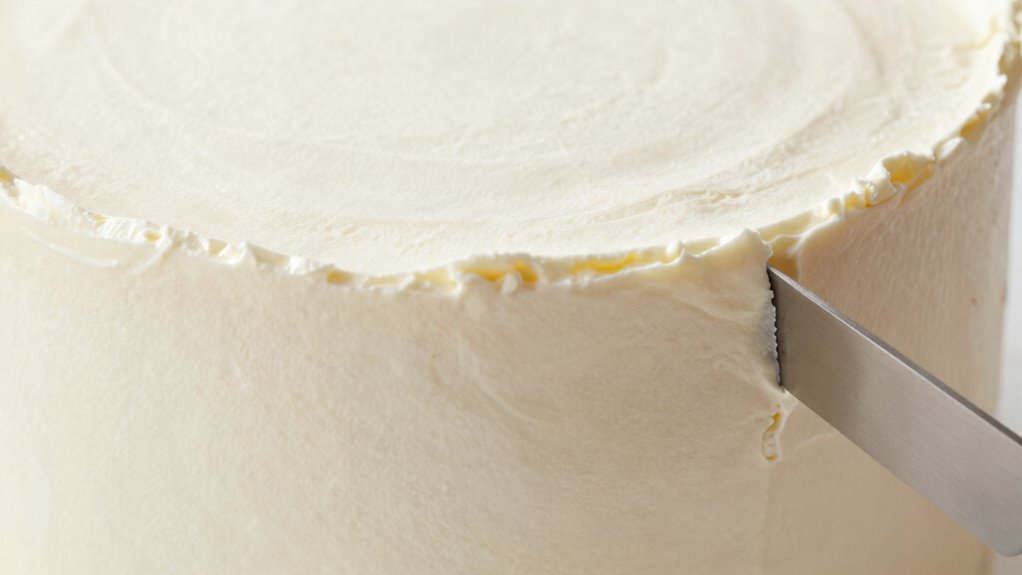
To get sharp edges on your frosted cake, start by smoothing the frosting thoroughly with a hot metal spatula or bench scraper, ensuring an even surface. Chill the cake for about 30 minutes to firm up the frosting, making carving easier. Use a straight-edged tool at a slight angle to trim and refine edges gradually, frequently rotating the cake. Applying fondant over a cold cake and smoothing carefully helps achieve crisp, professional-looking corners. Keep practicing these steps to master the technique.

Get baking supplies delivered free with Prime
- Fast, free delivery on millions of items
- Prime Video, Amazon Music and more included
- Member-only deals all year
Key Takeaways
- Chill the frosted cake for 30 minutes to firm the frosting, making edges easier to shape sharply.
- Use a hot, straight-edged spatula or bench scraper at a slight angle to carve and define edges precisely.
- Smooth frosting thoroughly with a hot spatula, periodically dipping and wiping for an even surface.
- Work slowly and methodically, rotating the cake to maintain control and achieve sharp, clean lines.
- Regularly chill the cake during shaping to preserve crisp edges and prevent surface distortion.

Getting Sharp Edges on a Frosted Cake
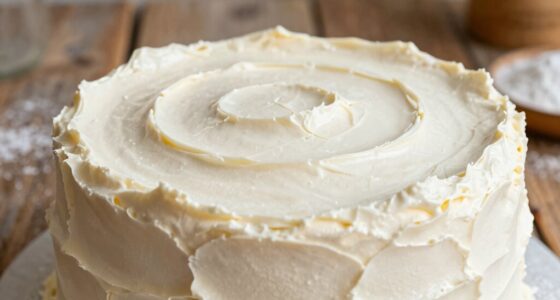
Getting sharp edges on a frosted cake can transform a simple dessert into a professional-looking masterpiece. It’s all about technique, patience, and the right tools. When you’re aiming for those crisp, clean lines, your first step involves smoothing the frosting thoroughly. Use a hot, metal spatula or an offset spatula dipped in hot water, then wiped dry before each pass. This heat helps glide smoothly over the frosting, creating an even surface. Once your cake is evenly coated, chill it in the refrigerator for about 30 minutes. Cold frosting firms up, making it easier to carve and refine edges without disturbing the surface.
When you’re ready to refine the edges further, you’ll want to focus on cake carving and shaping. Use a bench scraper or a long, straight-edged spatula to gently press against the sides of the cake. Keep the scraper at a slight angle and work slowly, rotating the cake as you go. This allows you to shave off any uneven bits and achieve a sharp, defined edge. If you notice any bumps or irregularities, a gentle touch with the scraper or a fine-grain sanding sponge can smooth those out. For best results, work in small sections and frequently check your progress from different angles.
Fondant techniques come into play when you want that extra level of sleekness. Once your cake is chilled and the edges are crisp, you can cover it with fondant for a flawless finish. To do this, roll out fondant to a uniform thickness, dusted lightly with cornstarch or icing sugar to prevent sticking. Drape the fondant over the chilled cake, then carefully smooth it from the top down with a fondant smoother, working your way around the sides. As you smooth, you’ll see the fondant conform to the sharp edges underneath. For sharp corners, press the fondant into the creases, then trim away any excess with a sharp knife or fondant cutter. Use your fingers or a fondant tool to gently sharpen the edges, ensuring they’re crisp and well-defined.
Throughout the process, patience is your best friend. Rushing can cause the frosting or fondant to tear or lose definition. Keep your tools clean and hot, work slowly, and regularly chill the cake to maintain firm edges. Proper frosting smoothing techniques are essential for creating those perfect lines. With practice, you’ll develop a steady hand and an eye for detail, giving you those perfect, sharp edges that make your cake look polished and professional. Remember, achieving those clean lines isn’t magic—it’s method and precision.
metal spatula for cake decorating
As an affiliate, we earn on qualifying purchases.
As an affiliate, we earn on qualifying purchases.
Frequently Asked Questions
Can I Achieve Sharp Edges Without Using a Cake Scraper?
Yes, you can achieve sharp edges without a cake scraper by using alternative tools like an offset spatula or a bench scraper, if you have one. Make sure your frosting is the right consistency—firm but spreadable—so it holds its shape. Use a steady hand and gentle pressure to smooth the sides, and run your tool along the edge to create a clean, sharp finish. Patience and even pressure are key.
How Does Room Temperature Affect Frosting Smoothing?
Room temperature substantially impacts frosting smoothing because temperature control affects frosting consistency. If your room is too warm, the frosting softens, making it harder to achieve sharp edges and a smooth finish. Conversely, cooler rooms help the frosting set faster and maintain its shape. To get the best results, keep the room at a consistent, moderate temperature, and adjust your frosting’s temperature if needed, ensuring it’s firm but still spreadable for smooth, sharp edges.
Is There a Specific Type of Frosting Best for Sharp Edges?
Surprisingly, the best frosting for sharp edges isn’t some fancy, magic concoction—it’s buttercream. Its sturdy texture control makes it ideal for clean, crisp edges. Avoid overly soft frostings like whipped cream or cream cheese, which can melt and lose shape. Opt for a chilled, well-beaten buttercream, and use a hot spatula to create those sharp, professional-looking edges. Trust me, buttercream’s the secret weapon in your cake decorating arsenal.
How Long Should I Chill the Cake Before Trimming Edges?
Chill the cake for at least 30 minutes to an hour before trimming edges. This chill duration allows the frosting to firm up, making it easier to work with. Make certain your frosting has a smooth, consistent texture—neither too soft nor too stiff—so it holds its shape during trimming. Properly chilled cake and ideal frosting consistency help you achieve sharp, clean edges without mess or smudging.
Can I Re-Sharpen Edges After Initial Smoothing?
Yes, you can re-sharpen edges after initial smoothing by carefully reapplying frosting for edge re-sharpening. Use a small spatula or icing smoother to gently refine the edges, removing any uneven spots. If needed, do a quick frosting repair by adding a tiny amount of frosting to the edges, then smooth it out again. This method helps you achieve crisp, professional-looking edges even after the first layer.
As an affiliate, we earn on qualifying purchases.
Conclusion
Now that you know the method, sharp edges are within your reach—no magic required. With patience and a steady hand, you’ll turn your frosted cake into a masterpiece that commands attention. Think of it as sculpting a work of art; each smooth, clean line is a demonstration of your skill. So go ahead, embrace the process, and let your cake’s pristine edges tell your story. After all, perfection is just a steady hand away.
As an affiliate, we earn on qualifying purchases.
As an affiliate, we earn on qualifying purchases.
Fall Picks
fall essentials
As an affiliate, we earn on qualifying purchases.