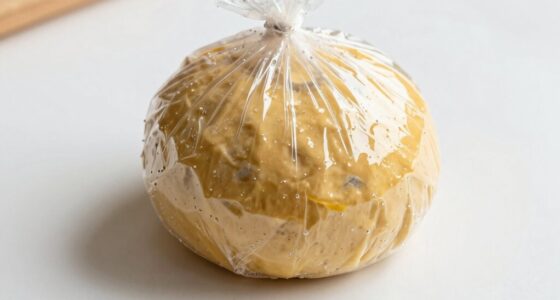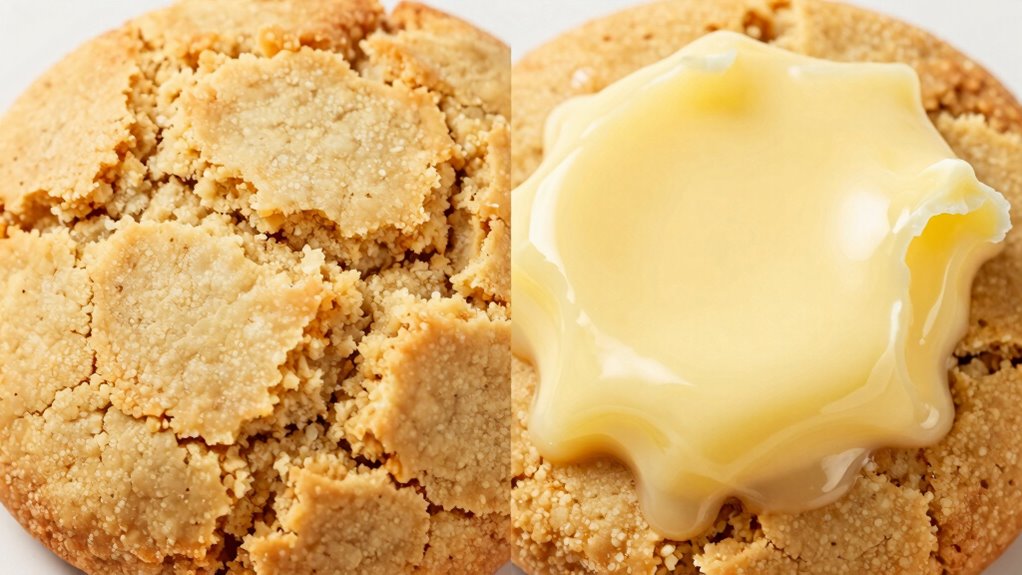

Using softened butter creates a tender, chewy cookie with a thicker appearance because it traps air during creaming. Melted butter, on the other hand, spreads more quickly and results in thinner, crisper cookies due to less air incorporation. The choice affects how the dough behaves and bakes. If you want to understand how these differences impact texture and flavor potential, exploring further will give you more baking insights.
Key Takeaways
- Room-temp butter traps air during creaming, resulting in thicker, chewier cookies.
- Melted butter spreads faster in the oven, producing thinner, crisper cookies.
- Softened butter allows even ingredient blending, influencing cookie structure and texture.
- Melted butter accelerates caramelization, adding richer flavor but increasing browning risk.
- Choosing between softened and melted butter directly impacts cookie thickness, spread, and chewiness.

When baking or cooking, understanding the difference between room-temperature and melted butter is essential, as it can considerably affect your recipe’s outcome. The key lies in the butter’s melting point, which is around 90-95°F (32-35°C). When you use butter at room temperature, it’s softened but still solid, allowing for smooth mixing with other ingredients. Melted butter, on the other hand, is liquid, which changes how it interacts with flour, sugar, and leavening agents. This difference impacts not just texture but also chemical reactions like sugar caramelization, which occurs at around 320°F (160°C). When you melt butter, you’re effectively starting the caramelization process earlier in your baking, adding depth to flavors, but also risking over-browning if not monitored carefully.
The butter melting point is critical because it influences how ingredients blend and how the dough behaves. For cookies, using softened butter typically results in a tender, chewy texture because it creams easily with sugar, trapping air and creating a light structure. When you melt butter, you’re removing the solid form entirely, which means less trapping of air and a denser, crisper cookie. The melted butter also promotes faster spreading during baking, leading to thinner, more crispy cookies. Conversely, room-temperature butter helps maintain the cookie dough’s structure, giving you a thicker, chewier result.
Sugar caramelization is another essential factor affected by your butter choice. When butter is melted, it combines more readily with sugar, accelerating caramelization. This can enhance flavor complexity but also increases the risk of burning if baking times aren’t adjusted. The caramelized sugar develops a rich, toasted flavor that’s desirable in some recipes but can turn bitter if overdone. With room-temperature butter, sugar dissolves more slowly and caramelizes more gradually, allowing for better control over browning and flavor development. This slow caramelization process ensures your cookies have a balanced sweetness and a soft, tender crumb.
In essence, the choice between room-temperature and melted butter isn’t just about convenience; it’s about the final cookie texture and flavor. Understanding your butter’s melting point and how it influences sugar caramelization helps you decide which method to use. If you want chewy, tender cookies with evenly distributed sweetness, go for softened butter. If you prefer crispy, thin cookies with a toasted flavor, melted butter is your best bet. Knowing these nuances allows you to tailor your baking approach precisely, ensuring consistently satisfying results.

SACO Cultured Buttermilk Blend for Cooking and Baking, 16 ounce (Pack of 1) | Certified Kosher, Gluten-Free and Nut-Free
SAME GREAT BUTTERMILK, NEW CONVEINENT PACKAGING: Enjoy the same high-quality buttermilk as our classic canister, now in a…
As an affiliate, we earn on qualifying purchases.
As an affiliate, we earn on qualifying purchases.
Frequently Asked Questions
How Does Butter Temperature Affect Cookie Baking Time?
You notice that butter temperature substantially impacts baking time because it influences butter’s melting behavior. When you use room-temperature butter, it melts gradually, helping cookies spread evenly and bake more uniformly. In contrast, melted butter’s lower melting point causes rapid spreading, which can lead to quicker baking times or even overbaking if not monitored. Adjust your baking time accordingly, depending on whether you use softened or melted butter, for the best cookie texture.
Can Using Different Butter Types Change Cookie Texture?
Yes, using different butter types can change your cookie texture. For example, European butter has a richer flavor and a higher melting point, which can result in cookies that are more tender and flavorful. Conversely, lower-fat or different types like margarine may produce cookies with a different texture. Your choice of butter influences not only flavor but also how the butter melts during baking, affecting overall cookie consistency.
Does Butter Temperature Influence Cookie Dough Spreading?
Yes, butter temperature affects how much your cookie dough spreads. When you use softened or room-temperature butter, the dough becomes more elastic, allowing it to spread more evenly during baking. If your butter is cold, the dough’s elasticity decreases, resulting in less spreading. Melted butter causes the dough to spread even more, creating thinner cookies. Adjust butter consistency based on your desired cookie thickness and spread for perfect results.
Are There Specific Cookie Recipes Better With Melted or Room-Temp Butter?
Think of your cookie as a story, where butter’s role is like a character’s mood. For richer flavor and a chewy texture, melted butter is your go-to, perfect for recipes like chewy chocolate chip cookies. If you want a tender, cakey crumb, room-temp butter helps maintain structure. So, choose melted for indulgence or room-temp for fluffiness, and consider ingredient substitution to customize your cookie’s personality.
How Does Butter Temperature Impact Cookie Shelf Life and Freshness?
You’ll notice that using butter at different temperatures can affect your cookie’s shelf life and freshness. Melted butter may cause quicker butter oxidation, leading to stale cookies sooner, while room-temp butter preserves freshness longer. By choosing the right butter temperature, you help extend the shelf life of your cookies and keep them tasting fresh. Proper storage also plays a key role in maintaining their quality over time.

Lotus Biscoff Cookie Butter Spread, Creamy, non GMO + Vegan, 25.4oz
Includes 1 of 25.4 Ounce Cookie Butter Jar
As an affiliate, we earn on qualifying purchases.
As an affiliate, we earn on qualifying purchases.
Conclusion
So, next time you’re baking cookies, will you choose room-temperature or melted butter to get that perfect texture? Remember, your choice impacts whether your cookies turn out soft and chewy or crispy and crunchy. It’s all about what kind of cookie you crave. Why settle for one texture when you can master both? Experiment and see which butter method makes your baking truly shine. Ready to switch things up and bake your best batch yet?

Cookie Decorating Supplies Including 2Pcs Acrylic Cookie Turntable 6Pcs Cookie Scribe Needle 4Pcs Silicone Mesh Mats 6Pcs Cookie Decoration Brushes 8Pcs Rubber Feet Bumpers
【Package Includes】You will get 2pcs acrylic cookie turntable, 6pcs cookie scribe needles, 6pcs decorating cookie brush, 4pcs anti-slip…
As an affiliate, we earn on qualifying purchases.
As an affiliate, we earn on qualifying purchases.

WEPSEN Mixing Bowls with Lid Set, 25PCS Kitchen Utensils Metal Bowl Stainless Steel Nesting Bowls, Measuring Cups and Spoons, Egg Whisk for Baking Prepping Cooking Serving Supplies
Sold over 50,000+ – Since its launch, more than 50,000 + families have chosen to purchase our mixing…
As an affiliate, we earn on qualifying purchases.
As an affiliate, we earn on qualifying purchases.