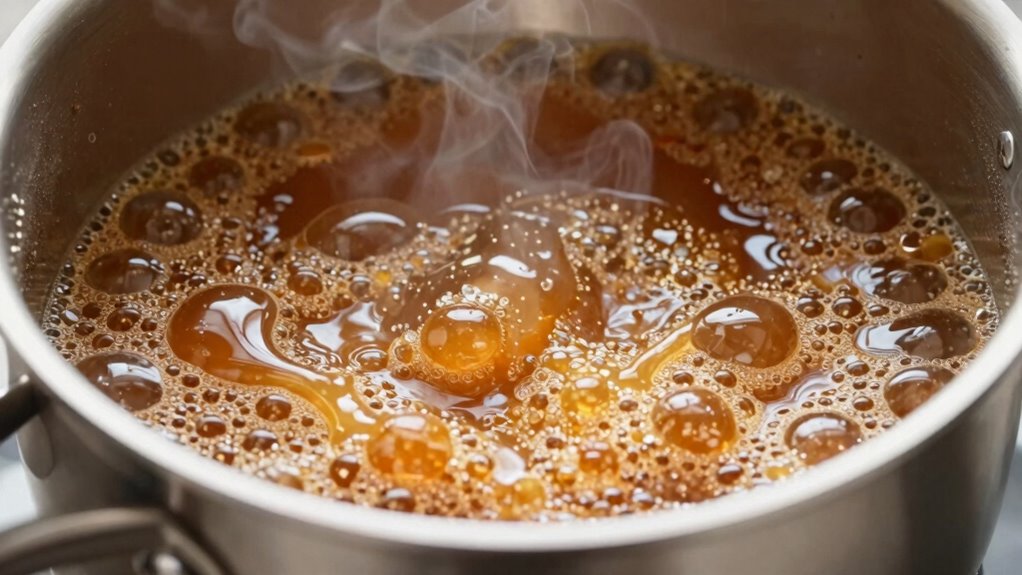
Caramel can turn grainy even in a clean pot if you don’t control the heat carefully. Sudden temperature spikes or uneven heating cause sugar crystals to form, leading to a grainy texture. Moisture from wet utensils or impurities can also trigger crystallization. Rushing the process or stirring vigorously can make it worse. For a smooth caramel, maintaining steady, moderate heat and gentle swirling is key. To find out more about preventing grainy caramel, keep exploring.

Get baking supplies delivered free — and shop member deals
- Fast, free delivery on millions of items
- Access to Prime Big Deal Days deals on October 6–7
- Prime Video, Amazon Music and more included
Key Takeaways
- Sudden temperature spikes cause sugar crystals to form, leading to graininess.
- Even in a clean pot, impurities or moisture can act as nucleation sites for crystallization.
- Uneven heating creates hotspots that promote premature crystal formation.
- Stirring with wet utensils introduces moisture, encouraging graininess.
- Rushing the process or increasing heat quickly triggers crystallization and grainy texture.
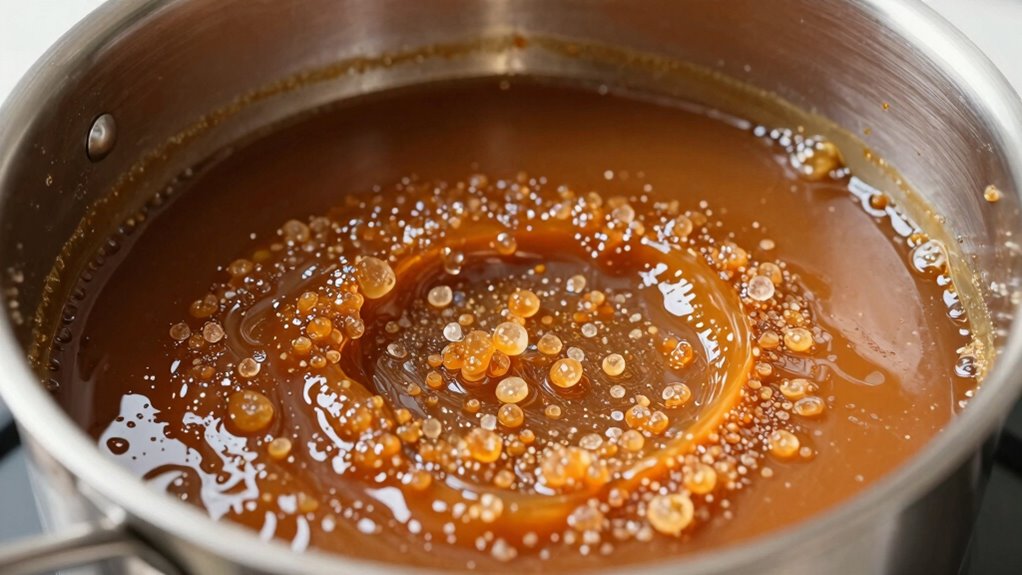
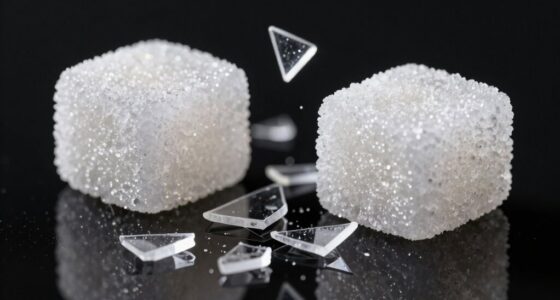
If your caramel turns grainy even when you use a clean pot, you’re not alone—this common problem can be frustrating. Graininess usually results from sugar crystallization, which happens when sugar molecules form uneven crystals during cooking. Even the cleanest pots can’t prevent this if other factors aren’t managed carefully. One of the most critical aspects to control is heat. Too high a temperature or uneven heat distribution can cause sugar to seize up and crystallize prematurely, leading to that undesirable grainy texture.
Effective heat control is key to achieving smooth, velvety caramel. When you’re making caramel, you want to heat the sugar gradually and evenly. Starting with medium heat helps the sugar dissolve slowly, reducing the risk of sudden temperature spikes. As the sugar melts, avoid stirring vigorously, which can disturb the formation of a smooth syrup. Instead, gently swirl the pan to distribute heat evenly. This gentle approach minimizes the chances of localized hotspots that can cause crystallization.
Gradually heat sugar, avoid stirring vigorously, and gently swirl the pan for smooth, crystalline-free caramel.
Another common mistake is adding moisture or impurities to the sugar. Even tiny amounts of water or impurities from your utensils can serve as nuclei for crystal formation. To prevent this, use a clean, dry pan and avoid stirring with wet utensils. If you need to incorporate butter or cream later, do so carefully once the sugar has fully melted and reached the desired amber color. Adding these ingredients at the right temperature can actually help prevent crystallization, but if added too early or at the wrong temperature, it can trigger graininess.
Sometimes, people attempt to rush the process by increasing heat, but this backfires often enough to make the sugar crystallize. Patience is essential. Maintain a steady, moderate heat and watch the sugar closely as it transitions from clear to amber. Once your caramel reaches the right color and consistency, remove it from heat immediately to prevent overcooking, which can also cause graininess or burning.
As an affiliate, we earn on qualifying purchases.
Frequently Asked Questions
Can Using Different Sugar Types Affect Caramel Texture?
Yes, using different sugar types can affect caramel texture because of how each sugar crystallizes. For example, using raw or brown sugar may promote sugar crystallization, leading to graininess, unlike refined white sugar. Ingredient substitution can alter the caramel’s consistency, so you should be mindful of sugar choice. To prevent graininess, you might need to adjust cooking methods or add ingredients like corn syrup to inhibit crystallization.
Does Altitude Impact Caramel Consistency?
Altitude effects can definitely impact caramel consistency. At higher elevations, the lower boiling point causes sugar to cook differently, increasing the risk of caramel crystallization. You might notice your caramel turning grainy or not setting properly. To counteract this, adjust cooking times or add a small amount of acid like lemon juice. Monitoring temperature accurately is key, as altitude can alter the ideal temperature needed for smooth, creamy caramel.
Is It Okay to Stir Caramel During Cooking?
Absolutely, you can stir caramel during cooking, but do it carefully. Stirring too much or too early can disturb sugar crystal formation, leading to grainy caramel. When you stir, you risk introducing air or uneven heat, which can cause crystallization. To keep it smooth, avoid unnecessary stirring after the sugar melts, and instead, gently tilt the pan to evenly distribute heat. Patience and gentle handling are your best allies.
How Does Humidity Influence Caramel Graininess?
Humidity effects greatly influence caramel’s graininess because high moisture impact causes the sugar to seize or crystallize more easily. When the air is humid, moisture can get into the caramel as it cooks or cools, disrupting the smooth consistency. To prevent this, work in a dry environment, keep your ingredients covered, and avoid stirring too much once the caramel reaches the right temperature. This helps maintain a glossy, grain-free finish.
Can I Fix Grainy Caramel After It Cools?
Think of your cooled caramel as a fragile glass sculpture—once grainy, it’s tough to restore its smoothness. While you can try reheating and stirring gently, it often won’t fully regain that luscious caramel flavor and silky texture. To prevent this, focus on controlling the cooking temperature and avoiding overcooking. If it’s already grainy, the best fix is starting fresh, ensuring you maintain the right temperature for smooth, perfect caramel.
non-stick saucepan for caramel making
As an affiliate, we earn on qualifying purchases.
As an affiliate, we earn on qualifying purchases.
Conclusion
So, next time your caramel turns grainy despite a clean pot, remember it’s often a dance of temperature and moisture. Keep your heat steady, avoid stirring too much, and watch carefully as sugar transforms from syrup to luscious caramel. Think of it as a delicate ballet—each step matters. With patience and attention, you’ll master smooth, silky caramel that melts in your mouth, not in your hands. Happy caramelizing!
silicone spatula for caramel stirring
As an affiliate, we earn on qualifying purchases.
As an affiliate, we earn on qualifying purchases.
heavy-bottomed saucepan for sugar cooking
As an affiliate, we earn on qualifying purchases.
As an affiliate, we earn on qualifying purchases.
Halloween Picks
halloween
As an affiliate, we earn on qualifying purchases.