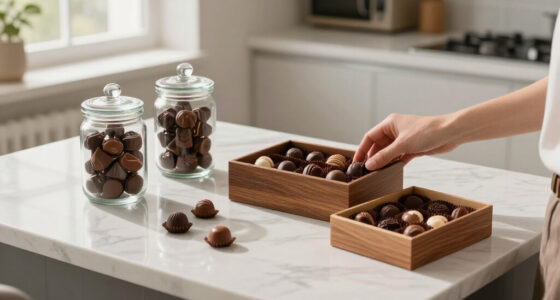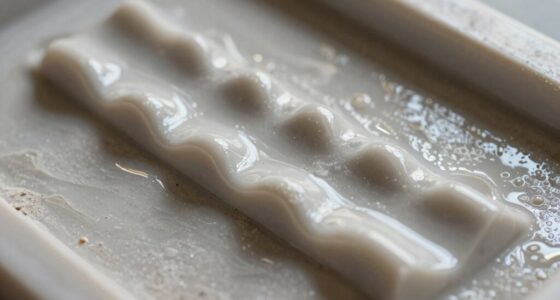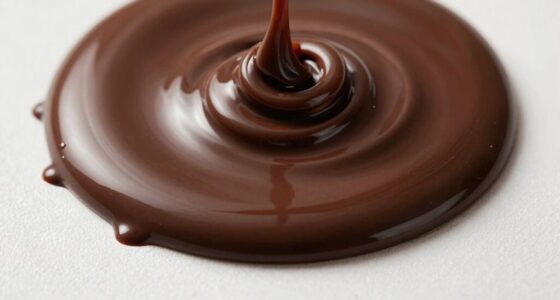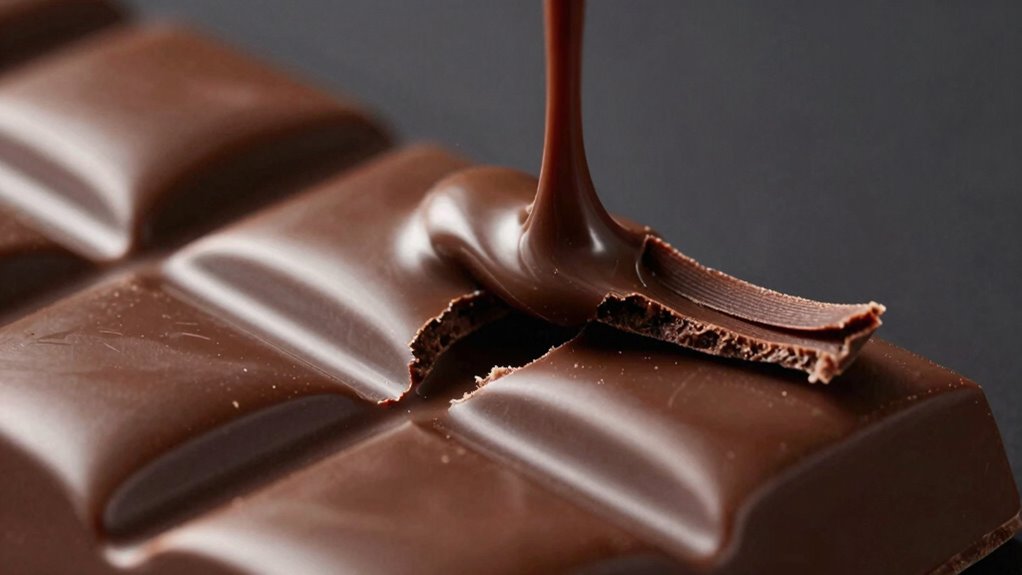

To assess if your chocolate is properly tempered, look for a mirror-like shine, which shows good surface gloss. Tap it gently to hear a crisp, clean snap, indicating crystalline stability. Check the flow—if it spreads smoothly and evenly without streaks or lumps, you’re on the right track. Dullness or a soft, tacky feel suggests issues. Continuing further will help you master interpreting these cues for perfect results every time.

Get baking supplies delivered free with Prime
- Fast, free delivery on millions of items
- Prime Video, Amazon Music and more included
- Member-only deals all year
Key Takeaways
- A glossy, mirror-like surface indicates properly tempered chocolate with good crystal structure.
- A clean, crisp snap upon breaking confirms crystalline stability and proper temper.
- Smooth, even flow without streaks or lumps signifies correct tempering and temperature control.
- Dull or dull-looking surfaces suggest under- or over-tempering, requiring process adjustment.
- Surface flaws like bloom or dullness reveal improper storage or handling affecting shine and texture.
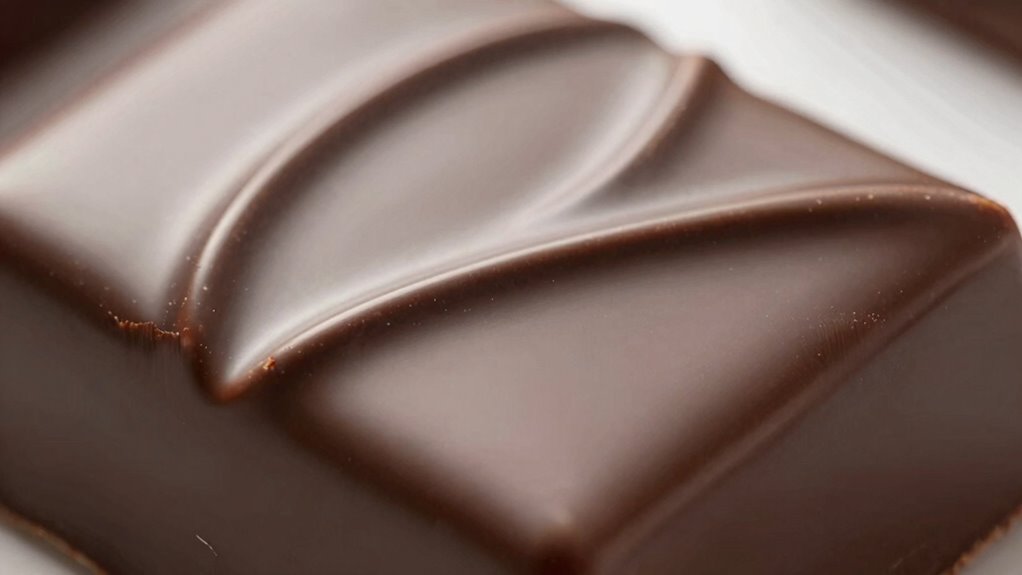
Tempered chocolate reveals its quality through subtle cues like shine, snap, and flow, which are vital to mastering its perfect finish. When you’re working with chocolate, understanding these cues helps you determine whether your tempering process was successful and if your final product will have that professional, glossy look. Proper chocolate storage is essential, too, because temperature fluctuations can ruin your temper and compromise these visual and tactile signals. Keep your chocolate in a cool, dry place, ideally between 60-70°F, and avoid humidity, which can cause bloom and dullness. When it comes to tempering techniques, your goal is to control the temperature carefully—melting, cooling, and then gently re-warming—to produce stable crystals that give chocolate its signature shine and snap. Controlling temperature during tempering directly influences the crystal structure, which is crucial for achieving the desired shine, snap, and flow. Developing a consistent tempering method helps ensure these cues are reliable and predictable, leading to better results each time. Additionally, understanding the temperature phases involved in tempering can help you troubleshoot issues more effectively. A solid grasp of these phases allows you to adjust your process as needed for optimal results.
Tempered chocolate’s shine, snap, and flow reveal its perfect finish and quality.
As you work through tempering, pay attention to the flow of the chocolate. When properly tempered, it flows smoothly off a spatula or knife and forms a thin, even coating without streaks or lumps. If your chocolate appears dull or uneven, it might be a sign that it’s either under-tempered or over-tempered. Temperature control during tempering directly influences this flow—too hot, and the chocolate becomes too fluid, losing its structure; too cold, and it thickens, making it hard to work with and impairing the flow. Achieving the right flow indicates that your chocolate has reached the ideal temper, which will give your confections a professional finish. Additionally, observing the flow can help you troubleshoot issues early in the process before the chocolate sets.
The shine of your tempered chocolate is another key indicator. A well-tempered batch will have a mirror-like gloss that reflects light vividly. If your chocolate looks dull or matte, it suggests it’s not properly tempered. This dullness can be caused by improper chocolate storage or incorrect tempering techniques, like overheating or insufficient cooling. To enhance the shine, ensure your chocolate is cooled to the correct temperature during the tempering process, and work quickly once it’s at the right stage to prevent bloom or dullness from developing. Proper handling and temperature management are essential for achieving this desirable shiny appearance. Being mindful of temperature fluctuations during handling can help maintain that perfect gloss and prevent surface flaws.
Finally, the snap is a tactile cue that confirms your chocolate’s proper temper. When you break a piece, it should produce a clean, crisp sound and a firm snap, indicating the crystalline structure is stable. If it bends or feels soft, you need to revisit your tempering process—adjust the temperature, work faster, or refine your techniques. As you master reading these cues—shine, snap, and flow—you’ll gain confidence in your ability to produce beautifully tempered chocolate every time, elevating your confections from good to exceptional. Recognizing and interpreting these visual and tactile signals is the key to consistent success in chocolate tempering.
professional chocolate tempering thermometer
As an affiliate, we earn on qualifying purchases.
As an affiliate, we earn on qualifying purchases.
Frequently Asked Questions
Can Shine, Snap, and Flow Indicate Proper Cocoa Butter Temperature?
Yes, shine, snap, and flow can indicate proper cocoa butter temperature. When your chocolate has the right cocoa butter consistency, it reflects good temperature stability, which helps achieve a glossy shine and a firm snap. If the chocolate flows smoothly without being too runny or too thick, it signals that the temperature is just right. Observing these factors guarantees your tempering process results in beautifully finished, stable chocolate.
How Do Humidity Levels Affect Chocolate Tempering Results?
Humidity levels greatly influence your chocolate tempering results. High humidity causes moisture absorption, leading to a dull shine, a soft snap, and uneven flow. To maintain quality, you need moisture control—keeping your workspace dry and storing chocolate properly. Even slight humidity fluctuations can disrupt tempering, so monitor humidity impact carefully and guarantee your environment stays low humidity for consistent, glossy, and crisp chocolate.
What Are Common Mistakes That Ruin the Shine or Snap?
You often ruin the shine or snap when you don’t achieve color consistency and texture uniformity. Overheating or undercooling your chocolate causes dullness and uneven texture, ruining the finish. Rushing the tempering process or not stirring enough can also lead to inconsistent results. Always guarantee proper temperature control, gentle mixing, and patience to maintain a glossy appearance and crisp snap, avoiding common mistakes that compromise quality.
How Long Does Tempered Chocolate Typically Stay Glossy?
Once you’ve got your tempering process down, your chocolate can stay glossy for quite some time—up to several days, if stored properly. Keep in mind, good chocolate storage is essential to maintain that shine, and using quality tempering equipment helps prevent dullness. However, don’t leave it out in the heat or humidity, as it’ll lose its luster faster. Patience is key for lasting perfection.
Can Artificial Additives Influence the Appearance of Tempered Chocolate?
Artificial additives, including chocolate preservatives, can impact the appearance of tempered chocolate. They might alter the shine, snap, or flow by affecting the cocoa butter’s crystallization process. While some additives help extend shelf life or improve texture, others could cause dullness or uneven gloss. You should always check ingredient lists if you’re aiming for the classic glossy, crisp finish, as artificial additives can influence how your chocolate looks and behaves.
silicone spatula for chocolate tempering
As an affiliate, we earn on qualifying purchases.
As an affiliate, we earn on qualifying purchases.
Conclusion
Mastering shine, snap, and flow in tempered chocolate transforms your creations from ordinary to extraordinary. While a glossy finish and crisp snap showcase perfection, the smooth flow reveals your control and finesse. These qualities, like contrasting notes in a symphony, highlight the delicate balance between art and science. Embrace these indicators, and you’ll elevate your chocolatiering from simple technique to a refined craft, where each piece tells a story of precision and passion.
As an affiliate, we earn on qualifying purchases.
As an affiliate, we earn on qualifying purchases.
Evergreen bestsellers Picks
bestsellers
As an affiliate, we earn on qualifying purchases.