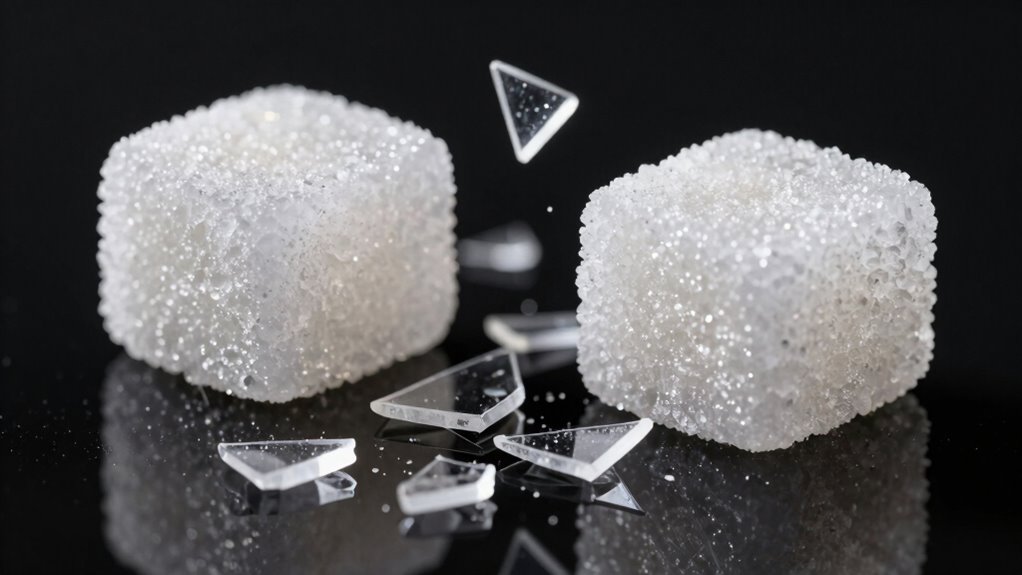

Your pulled sugar breaks instead of shining when crystal growth isn’t properly controlled during cooking and cooling. If it’s stirred too much or cooled too quickly, large crystals form, making the candy brittle and dull. Impurities or excess moisture can also cause cracks, as they interfere with the smooth, glossy surface. To get a shiny, elastic texture, precise temperature control and careful handling are essential. If you want to understand how to prevent these issues, keep exploring the details.

Get baking supplies delivered free with Prime
- Fast, free delivery on millions of items
- Prime Video, Amazon Music and more included
- Member-only deals all year
Key Takeaways
- Excessive stirring during cooling can cause crystal growth, leading to brittle, breaking pulled sugar instead of shining smoothly.
- Improper temperature control may result in under-cooked or over-cooked sugar, affecting elasticity and causing breakage.
- Large or uneven crystals weaken the sugar’s structure, making it prone to breaking rather than shining.
- Impurities or moisture contamination interfere with proper crystallization, reducing the candy’s shine and elasticity.
- Insufficient cooling or uneven heating prevents even crystal development, causing the pulled sugar to break instead of shine.
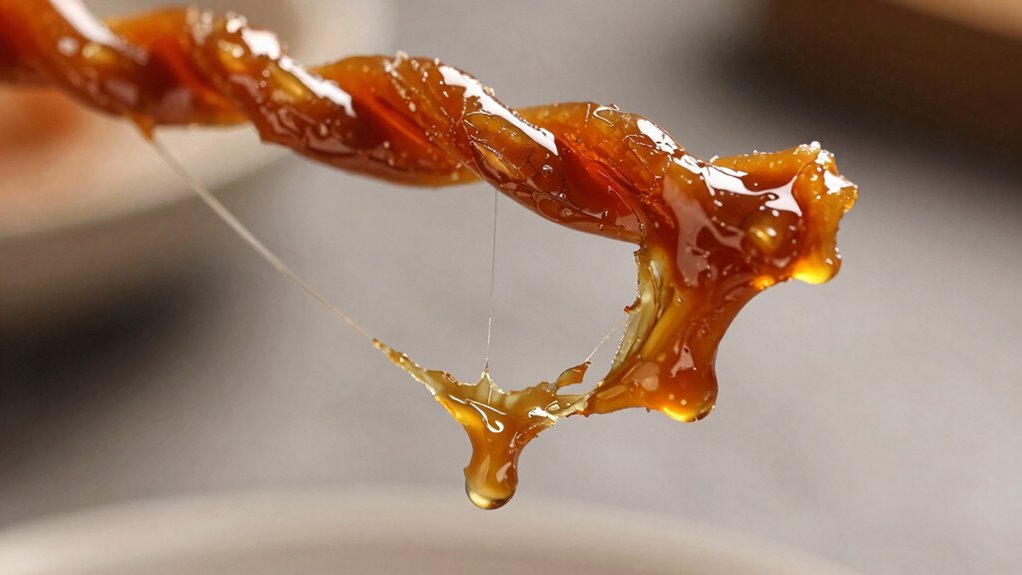
The texture of your pulled sugar is directly affected by how the sugar crystals form and grow during the cooking process. When you heat sugar with water, it dissolves into a syrup. As the syrup cools and is worked, sugar molecules begin to form crystals. If these crystals grow too large or form prematurely, the candy’s texture shifts from soft and pliable to hard and brittle. This change is what causes the sugar to break instead of shine when you pull or shape it. Ideally, you want a smooth, homogeneous mixture where crystals are tiny and evenly dispersed, giving the candy its characteristic glossy appearance and chewy feel.
Sugar crystallization is the key process here. When sugar molecules start to stick together and form crystals, they influence the final candy texture. If your syrup cools too quickly or if you stir it excessively during cooling, you encourage larger crystal growth. Large crystals create a grainy, brittle candy that’s prone to cracking. To prevent this, you must control the temperature carefully during cooking and avoid stirring the syrup once it reaches the desired stage. Using a clean, damp brush to wash away sugar crystals on the sides of the pot can help maintain a smooth, uniform mixture. Also, adding a small amount of acid, like lemon juice, can interfere with crystal growth, resulting in a clearer, shinier pulled sugar. Proper crystallization control is crucial for achieving the ideal glossy finish and elasticity in pulled sugar.
Temperature control is paramount. If you don’t cook the sugar to the proper stage, the resulting texture won’t be ideal for pulling. Under-cooked sugar remains too soft and sticky, while over-cooked sugar becomes hard and prone to cracking. When you work at the right temperature, the sugar develops the perfect candy texture—pliable but firm enough to manipulate without breaking. This balance ensures that when you pull and stretch the sugar, it forms a shiny, smooth surface. If the candy still cracks, check your cooking temperature, your stirring technique, and whether impurities or moisture have affected your syrup. Proper crystallization control, combined with temperature management, is essential for achieving the desired glossy finish and elasticity in pulled sugar.
candy thermometer for sugar cooking
As an affiliate, we earn on qualifying purchases.
As an affiliate, we earn on qualifying purchases.
Frequently Asked Questions
How Does Humidity Affect Pulled Sugar Consistency?
Humidity greatly impacts pulled sugar consistency by promoting sugar crystallization, which can cause it to become grainy or break instead of shining smoothly. When humidity levels are high, moisture enters the sugar, making it softer and easier to crystallize prematurely. To prevent this, you need effective humidity control, keeping the environment dry and stable. This guarantees your pulled sugar remains pliable, shiny, and easy to work with, avoiding unwanted crystallization and breakage.
Can Different Types of Sugar Impact the Breaking Point?
Yes, different types of sugar impact the breaking point because of sugar crystallization properties. For example, glucose and corn syrup inhibit crystallization, making the sugar more pliable and less prone to breaking. Meanwhile, pure granulated sugar tends to crystallize easily, leading to breaks. Using various sugars also enhances flavor, which can influence how you perceive its texture and consistency during pulling. Adjusting sugar types helps you control the perfect balance between flexibility and strength.
What Tools Are Best for Preventing Sugar From Breaking?
You should use tools like a heat-resistant silicone spatula, a candy thermometer, and a sturdy work surface to prevent sugar from breaking. These tools help maintain color consistency and flavor enhancement by ensuring even heat and proper handling. When you control temperature and handle the sugar carefully, you reduce the risk of cracks and breaks, making your pulled sugar shiny, smooth, and beautifully textured every time.
How Long Should Sugar Be Pulled to Avoid Breaking?
You should pull sugar for about 8-10 minutes to prevent cracking and promote even sugar crystallization. During this time, the sugar becomes shiny and smooth, which helps with color enhancement. If you pull it too long, it can become too thick and prone to breaking, while too short may result in dullness and uneven crystallization. Keep a close eye to achieve the perfect shine without risking breakage.
Does Temperature Variation Influence Sugar’s Ability to Shine?
Temperature variation greatly influences sugar’s ability to shine by affecting its thermal stability and promoting sugar crystallization. When temperatures fluctuate, the sugar’s structure becomes unstable, causing uneven crystallization that dulls its shine. Maintaining a consistent, controlled temperature guarantees the sugar remains thermally stable, preventing crystallization issues. This stability allows the sugar to develop a glossy, smooth finish, making it shine brightly and look professional.
As an affiliate, we earn on qualifying purchases.
Conclusion
So, if your pulled sugar stubbornly breaks rather than shines, remember to check your temperature, tension, and technique. Troubleshooting these tiny tweaks transforms your treat from a tangle of trouble to a tantalizingly glossy masterpiece. Don’t despair—deliberate practice and diligent detail make all the difference. With patience and persistence, you’ll produce polished, perfect pulled sugar that shines splendidly, showcasing your skill and sweet success. Keep experimenting, and let your craftsmanship shine through!
crystal growth control for candy
As an affiliate, we earn on qualifying purchases.
As an affiliate, we earn on qualifying purchases.
sugar crystallization thermometer
As an affiliate, we earn on qualifying purchases.
As an affiliate, we earn on qualifying purchases.
Halloween Picks
halloween
As an affiliate, we earn on qualifying purchases.