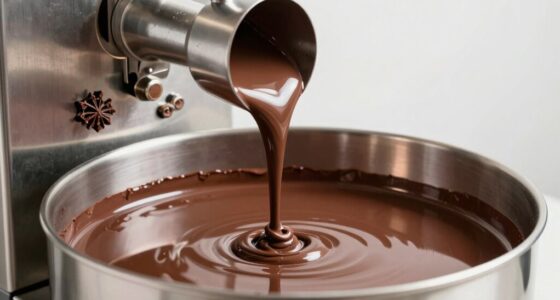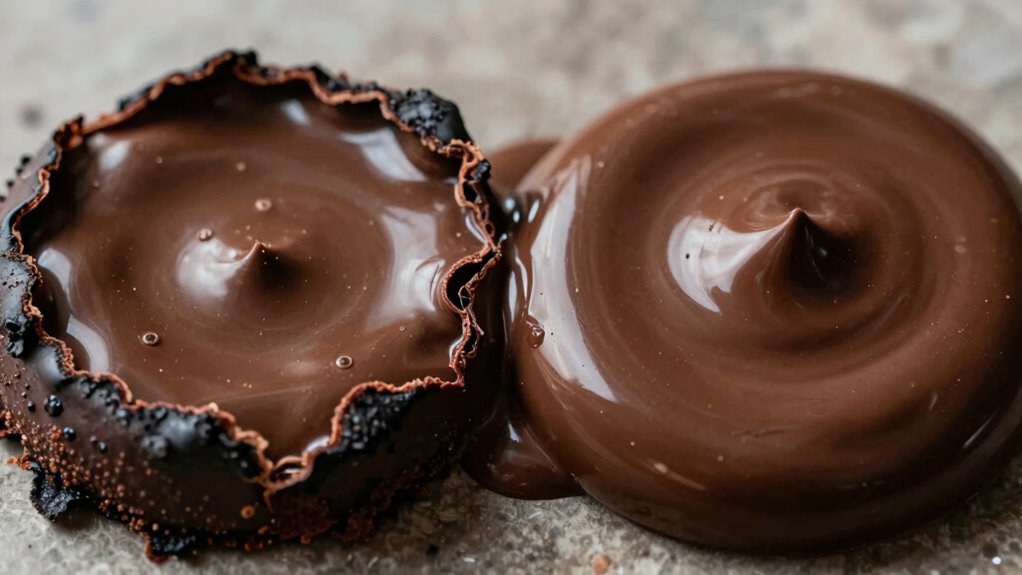

When you use direct heat to melt chocolate, it can quickly scorch and cause uneven melting, leading to a grainy or greasy texture. Gentle heat methods like a double boiler or microwave in short bursts help control temperature and prevent burning, protecting chocolate’s delicate fats and sugars. If you keep heat low and stir often, your chocolate stays smooth and glossy. Want to discover how to master these techniques? Let’s explore further.

Get baking supplies delivered free with Prime
- Fast, free delivery on millions of items
- Prime Video, Amazon Music and more included
- Member-only deals all year
Key Takeaways
- Direct heat can cause uneven temperature rise, leading to scorching and burning of the chocolate surface.
- Gentle heat methods distribute warmth evenly, preventing hot spots that cause scorching.
- Rapid temperature increases with direct heat break down fats and sugars, resulting in burnt flavor and texture.
- Using indirect methods like a double boiler maintains controlled, low temperatures, reducing the risk of scorching.
- Proper temperature control and stirring during gentle heating preserve chocolate’s smooth texture and prevent seizing.
double boiler for melting chocolate
As an affiliate, we earn on qualifying purchases.
As an affiliate, we earn on qualifying purchases.
How Does Heat Affect Chocolate?
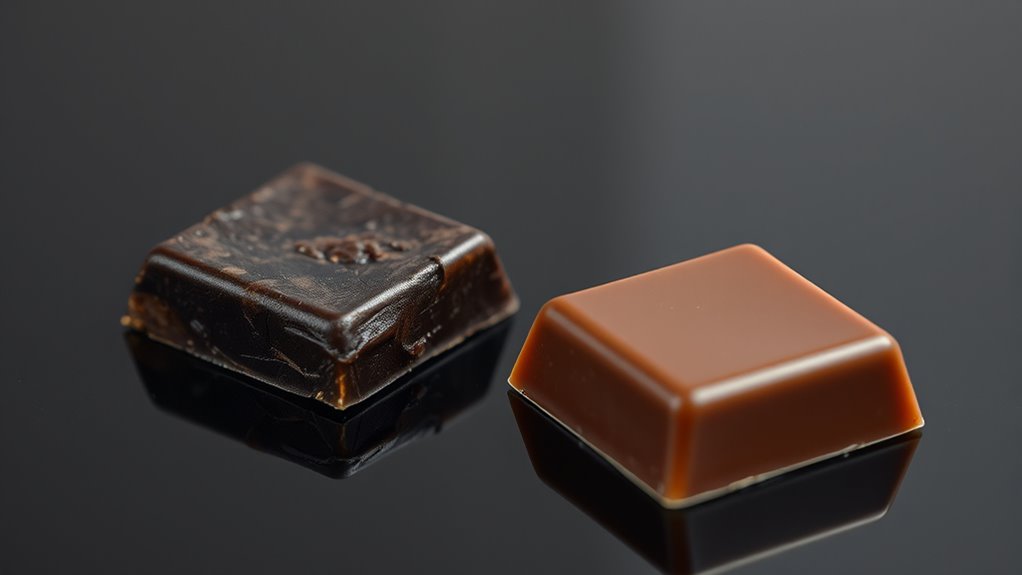
When heat interacts with chocolate, it causes the cocoa solids and fats to react in ways that can alter its appearance and texture. Proper temperature control is essential to prevent this, as excessive heat can cause the fats to melt unevenly, resulting in a greasy or grainy consistency. Maintaining a gentle, consistent temperature helps preserve the smooth, glossy texture you desire. If heat rises too high, the chocolate can seize or become lumpy, ruining its quality. By managing temperature carefully, you ensure the fats melt uniformly, keeping the chocolate’s texture intact. This delicate balance allows you to work with chocolate effectively, avoiding changes that could compromise its appearance and mouthfeel. Proper heat application is key to achieving professional results. Temperature management is crucial for maintaining the desired quality and consistency in chocolate.
microwave chocolate melting bowl
As an affiliate, we earn on qualifying purchases.
As an affiliate, we earn on qualifying purchases.
What Are the Risks of Using Direct Heat on Chocolate?
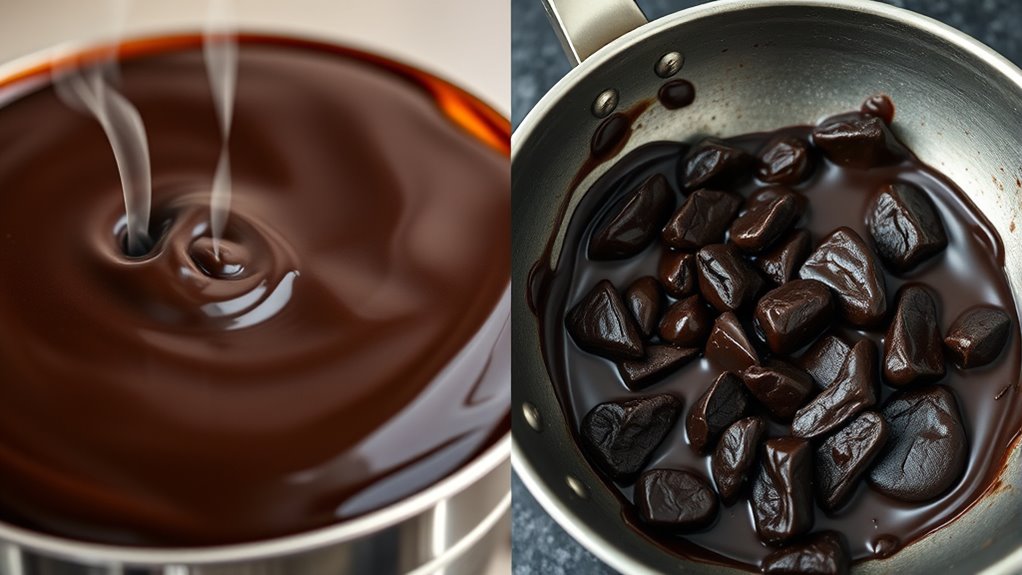
Applying direct heat to chocolate can quickly lead to burns and uneven melting, which jeopardize its smooth texture. When you don’t carefully control the temperature, chocolate burns easily, creating a bitter flavor and a scorched appearance. High heat causes the fats and sugars to break down prematurely, resulting in clumping and a gritty consistency. Without proper temperature control, you risk overheating, which makes the chocolate seize or develop a grainy texture. This not only ruins the final product but also wastes ingredients. Using direct heat demands constant attention to prevent scorching. If you’re not vigilant, you’ll end up with burnt chocolate that’s difficult to salvage. Overall, direct heat increases the risk of damaging your chocolate’s delicate composition, especially since temperature regulation is crucial for maintaining its quality and preventing seizing or burning. Proper gentle heat methods, such as a double boiler, can help ensure a smooth melting process and preserve the chocolate’s integrity. Additionally, choosing the right appliance for melting can make a significant difference in achieving consistent results. Understanding heat transfer mechanisms can help you better control the melting process and avoid common pitfalls.
As an affiliate, we earn on qualifying purchases.
What Are the Best Gentle Heat Techniques for Melting Chocolate?
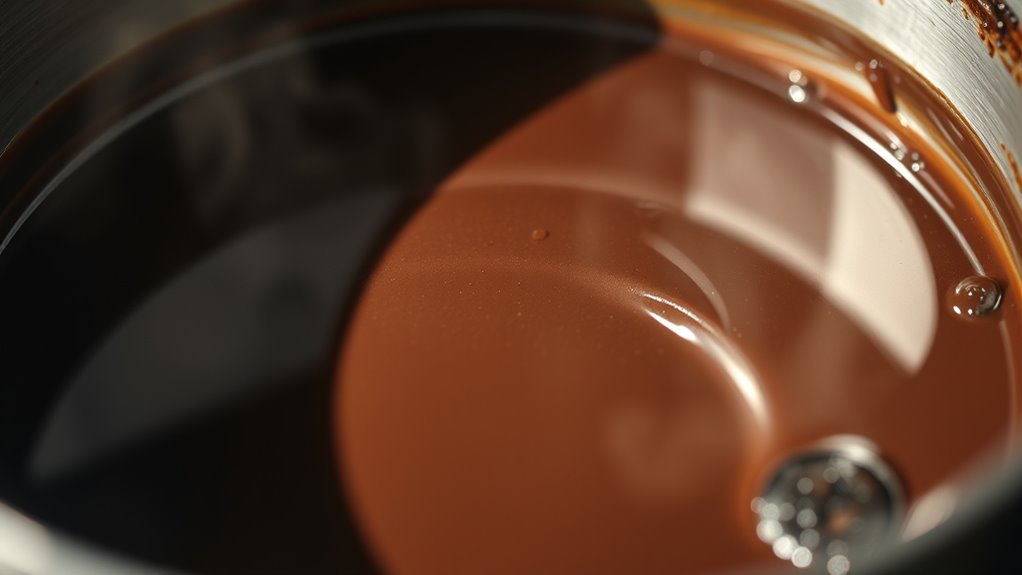
To melt chocolate safely and evenly, using gentle heat techniques is essential. These methods help with chocolate tempering and flavor preservation, preventing scorching and texture issues. A double boiler is ideal: place a heatproof bowl over simmering water, ensuring the bowl doesn’t touch the water. Alternatively, you can melt chocolate in short bursts in a microwave, stirring frequently to avoid hotspots. The table below summarizes effective gentle heat techniques:
| Technique | Method Description | Benefits |
|---|---|---|
| Double Boiler | Use a bowl over simmering water | Even heat, prevents scorching |
| Microwave Melting | Short bursts, stir between each | Quick, controlled melting |
| Warm Water Bath | Place bowl in warm water, stir gently | Gentle, consistent heat |
| Slow Heating on Stove | Low heat, constant stirring | Preserves flavor, tempering |
Additionally, controlling the temperature accurately ensures your chocolate melts evenly without burning. Using a digital thermometer can help monitor and maintain the ideal temperature for different types of chocolate, leading to better results. Proper temperature control is crucial for achieving the perfect melt and preventing issues like seizing or blooming. Developing technique mastery through practice can greatly enhance your chocolate tempering skills. Mastering these gentle heat techniques can significantly improve your chocolate melting process for smooth, glossy results.
professional chocolate tempering machine
As an affiliate, we earn on qualifying purchases.
As an affiliate, we earn on qualifying purchases.
How Can You Melt Chocolate Safely?
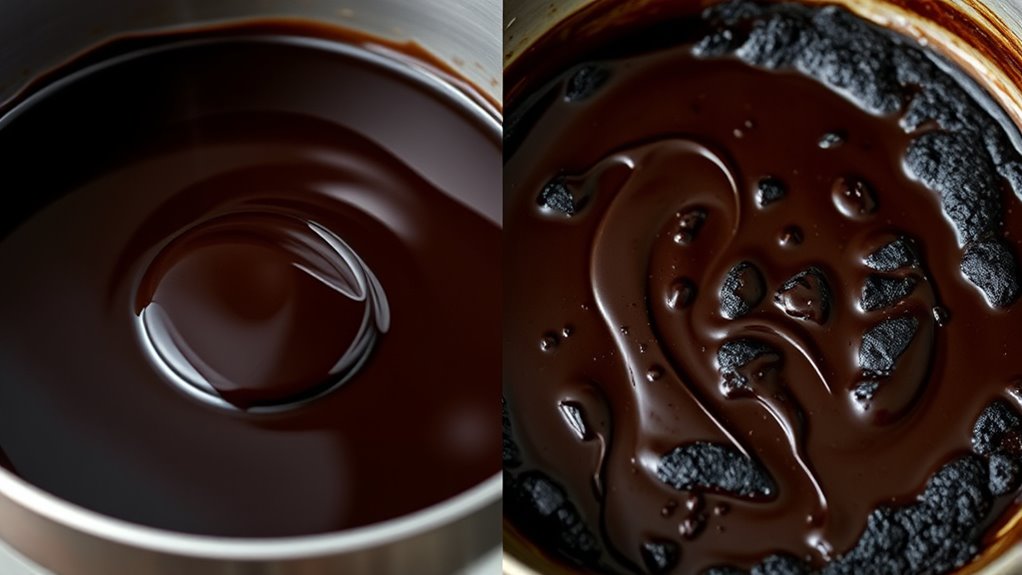
Melting chocolate safely requires careful attention to heat and technique to prevent burning or seizing. Using gentle heat methods like double boiling or microwave in short, controlled bursts helps you maintain consistent temperature. Incorporate tempering techniques if you plan to use the melted chocolate for coating or decorating; this ensures your chocolate remains glossy and crisp. Stir frequently to distribute heat evenly and avoid hot spots that cause scorching. Keep the temperature below 115°F (46°C) for dark chocolate and slightly lower for milk or white chocolate. Proper melting preserves flavor and texture, preventing bitterness or graininess. Temperature control is crucial for achieving a smooth, glossy finish. Applying the right melting method can also minimize the risk of scorching. Carefully monitoring thermal stability during the melting process helps prevent overheating. Patience is key—rushing the process risks ruining your chocolate, so take your time and monitor the heat carefully for perfect results. Additionally, understanding heat transfer principles can help you choose the most effective melting technique for your needs.
What Common Mistakes Should You Avoid When Melting Chocolate?

One common mistake to avoid when melting chocolate is exposing it to high heat too quickly, which can cause it to scorch or seize. Proper temperature control is essential; too hot, and the chocolate burns, too cool, and it won’t melt evenly. Stirring techniques also matter—frequent, gentle stirring helps distribute heat evenly and prevents hotspots. Use a double boiler or microwave in short bursts to manage temperature carefully. Additionally, being aware of market trends can help you time your chocolate melting process to avoid rushed heating during busy periods. Maintaining a consistent temperature throughout the process is key to achieving smooth, glossy melted chocolate without any lumps or burns. Understanding how heat transfer methods impact melting can further improve your technique and help prevent common mistakes. Paying attention to melting techniques can make all the difference in the final quality of your chocolate.
Frequently Asked Questions
Can Adding Liquids Affect Melted Chocolate’s Texture?
Adding liquids can definitely affect melted chocolate’s texture. A liquid addition may make it smoother and easier to work with, offering texture improvement. However, you need to add liquids gradually and sparingly, as too much can cause the chocolate to seize or become grainy. By controlling the amount of liquid, you guarantee a silky consistency, making your chocolate perfect for coating, dipping, or mixing into recipes.
Does the Type of Chocolate Influence How It Should Be Heated?
Yes, the type of chocolate influences how you should heat it. Different chocolates have varying compositions, such as cocoa solids, fats, and sugars, which affect melting techniques. For example, high-quality couverture chocolate melts smoothly with gentle heat, while white or milk chocolates may scorch more easily. You need to adapt your melting method accordingly, using indirect heat or a double boiler, to avoid burning and ensure a silky, uniform melt.
How Can Temperature Be Accurately Monitored During Melting?
You need precise temperature control to prevent your chocolate from burning. Use a reliable thermometer, ensuring its accuracy before you start. Keep a close eye on the reading, and don’t rely solely on visual cues. As the temperature approaches the melting point, your heart races—any misstep could ruin your smooth, glossy chocolate. Trust your thermometer and stay vigilant; accurate monitoring is the key to perfectly melted chocolate.
Is It Necessary to Stir Constantly While Melting Chocolate?
You don’t need to stir constantly while melting chocolate, but frequent stirring is essential to guarantee even melting and maintain a smooth consistency. Aim for gentle, consistent stirring every few seconds, especially when melting over gentle heat. This helps distribute heat evenly, preventing scorching or burning. By controlling stirring frequency, you’ll achieve a perfectly melted chocolate with the ideal melting consistency, making your baking or decorating process much easier.
What Are Alternative Methods for Melting Chocolate Without Heat?
Imagine melting chocolate like nurturing a delicate garden. Instead of direct heat, you can use tempering techniques or microwave melting as gentle methods. With tempering, you carefully heat and cool the chocolate, like tending plants for growth. Microwave melting involves short bursts of heat, stirring in between, ensuring even warmth without scorching. These alternatives let you achieve smooth, glossy chocolate without risking a scorched mess.
Conclusion
Remember, slow and steady wins the race, especially when melting chocolate. Using gentle heat guarantees you avoid scorching, saving you time and frustration. Always keep an eye on your chocolate and don’t rush the process. With patience and care, you’ll achieve smooth, glossy results every time. So, treat your chocolate with kindness—after all, a good thing takes time, and a perfect melt is worth the wait. Happy melting!
Halloween Picks
halloween
As an affiliate, we earn on qualifying purchases.