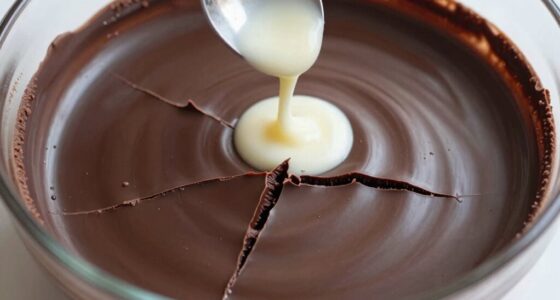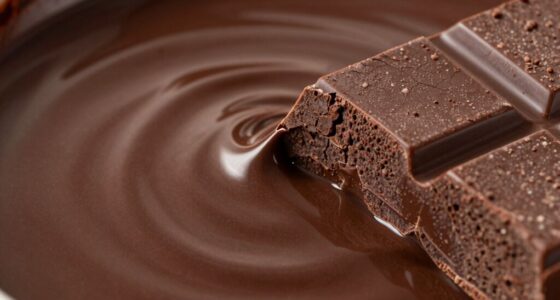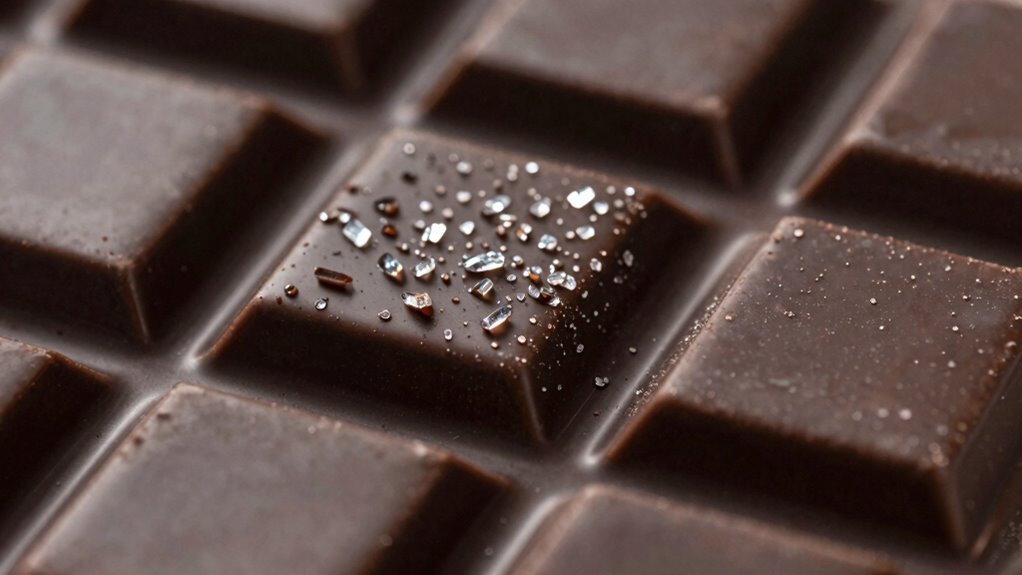

Shiny chocolate gets its glossy look through a precise process called tempering, which controls cooling and crystal formation. When you carefully heat, cool, and sometimes seed the chocolate, you promote the development of stable cocoa butter crystals, especially beta crystals. These crystals reflect light beautifully, giving your chocolate that mirror-like finish and satisfying snap. Mastering this science guarantees perfect appearance and texture—if you want to discover more, there’s plenty to uncover about the magic behind that flawless shine.

Get baking supplies delivered free with Prime
- Fast, free delivery on millions of items
- Prime Video, Amazon Music and more included
- Member-only deals all year
Key Takeaways
- Shiny chocolate results from stable beta cocoa butter crystals reflecting light effectively.
- Proper tempering controls cooling rates to promote uniform crystal formation.
- Heating and cooling cycles melt and reform cocoa butter crystals into stable, glossy beta forms.
- Seeding introduces desired crystals, ensuring a smooth, mirror-like finish.
- Correct crystal structure enhances both the visual appeal and texture of the chocolate.
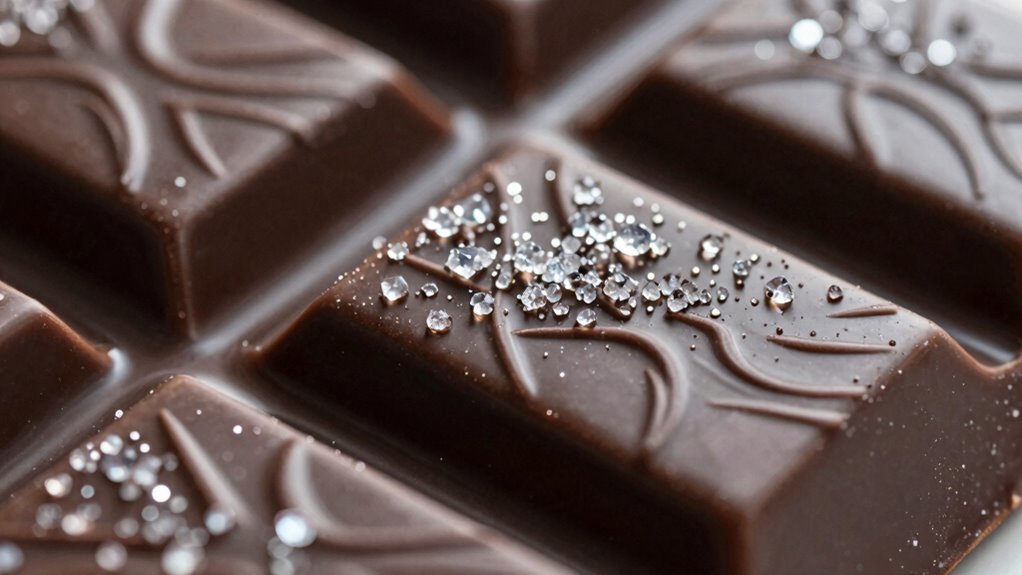
If you’ve ever admired the glossy sheen on high-quality chocolates, you might wonder what gives them that perfect shine. The answer lies in the intricate process of chocolate manufacturing and the fascinating science of crystal formation. During chocolate manufacturing, every step is carefully designed to influence the final appearance and texture. One critical aspect is controlling how chocolate cools and solidifies, which directly impacts its glossy finish. When chocolate is tempered, it undergoes a precise heating and cooling cycle that encourages the formation of stable cocoa butter crystals. This process is key to achieving that smooth, shiny surface.
Crystal formation is at the heart of creating visually stunning chocolates. Cocoa butter, the fat component in chocolate, has multiple types of crystals, but only one type produces that desirable gloss and crisp snap. When chocolate is tempered correctly, the cocoa butter crystals grow into the most stable form, known as the beta crystal. This stable crystal structure reflects light more effectively, giving the chocolate its signature shine. If the tempering process isn’t done properly, unstable crystals form, resulting in dull, matte surfaces and a less satisfying texture. Temperature control is crucial in ensuring the right type of crystal formation. Additionally, understanding how different cooling rates affect crystal growth can help in mastering the tempering process. Properly managing the cooling process ensures the development of the ideal crystal structure for that perfect finish. Moreover, temperature regulation is essential for maintaining consistent quality in chocolate production. Techniques like tempering methods exemplify how precise adjustments can influence crystal stability and final appearance.
The science behind crystal formation explains why temperature control is so vital. During tempering, chocolate is heated to a high temperature to melt all the fat crystals, then cooled carefully to allow the stable beta crystals to form. It’s a delicate balance—cool it too quickly or too slowly, and you risk forming unstable crystals that ruin the shine. Skilled chocolatiers often use a method called seeding, where they add tempered chocolate to molten chocolate to encourage the desired crystal growth. This step ensures a uniform crystal structure, which translates into a glossy appearance and a satisfying mouthfeel.
Understanding the relationship between crystal formation and chocolate manufacturing helps explain why some chocolates look more appealing than others. The shiny surface isn’t just a cosmetic feature; it’s a sign that the chocolate has been expertly crafted with precise temperature controls to promote the right crystal structure. When done correctly, the result is a piece of chocolate that’s visually stunning, with a smooth, mirror-like finish that hints at quality. So, the next time you admire a beautifully glossy chocolate, you can appreciate the complex science and craftsmanship that make that shine possible through the artful manipulation of crystal formation.
As an affiliate, we earn on qualifying purchases.
Frequently Asked Questions
How Does the Crystal Formation Affect Chocolate Flavor?
Crystal formation in chocolate, known as chocolate crystallization, directly impacts flavor. When cocoa butter crystallizes properly, it creates a smooth, glossy surface and enhances flavor release. Correct crystallization ensures a consistent texture, preventing a waxy or gritty taste. This process boosts flavor enhancement by allowing the chocolate’s aromatic compounds to develop fully, giving you a richer, more enjoyable experience. Proper crystal formation is essential for maximum flavor in high-quality chocolate.
Are Shiny Chocolates Safer to Eat Than Matte Ones?
Shiny chocolates are just as safe to eat as matte ones, provided the packaging is intact and safe. The shiny appearance results from a natural bloom process or proper finishing, not harmful substances. Consumer perception might favor shiny chocolates, thinking they’re fresher or of higher quality, but safety depends on packaging safety and storage. Always check for any damage or unusual odors before enjoying, regardless of the chocolate’s appearance.
Can Homemade Chocolates Develop Crystal Shine Naturally?
Yes, homemade chocolates can develop a natural crystal shine over time. As the chocolate cools and sets, a process called bloom occurs, where cocoa butter crystals form on the surface. This affects the chocolate’s texture, giving it a shiny appearance. Proper tempering and controlled cooling encourage uniform crystal growth, resulting in a smooth, glossy finish. So, with patience and the right technique, your homemade chocolates can achieve that attractive, shiny look naturally.
What Are the Environmental Impacts of Crystal Production in Chocolate?
The environmental impacts of crystal production in chocolate mainly involve energy use and waste, which can contribute to pollution if not managed properly. By opting for sustainable sourcing practices, you can help reduce the environmental footprint, ensuring responsible cultivation and harvesting. Additionally, supporting manufacturers that prioritize pollution reduction techniques minimizes harmful emissions and waste, making your chocolate consumption more eco-friendly and sustainable.
Is the Crystal Process Used in All Types of Chocolate?
Not all types of chocolate use the crystal process. This process is primarily applied to achieve a smooth, glossy chocolate texture through crystal stability. You’ll find it in high-quality chocolates, especially those that require a shiny appearance and perfect snap, like couverture. If the crystals aren’t properly formed, the chocolate can develop a dull surface or a grainy texture. So, the crystal process is essential for certain chocolates but not universally used across all types.
professional chocolate tempering machine
As an affiliate, we earn on qualifying purchases.
As an affiliate, we earn on qualifying purchases.
Conclusion
Next time you enjoy that glossy, shiny chocolate, remember the crystal secrets behind its shine. Your appreciation deepens knowing that nearly 70% of chocolate’s luster comes from proper conching and polishing techniques. So, savor each bite, knowing it’s not just delicious but also a product of precise craftsmanship and crystal-clear science. That glossy finish isn’t just for looks—it’s a demonstration to the artistry and meticulous process behind every bar.
As an affiliate, we earn on qualifying purchases.
cocoa butter crystal formation kit
As an affiliate, we earn on qualifying purchases.
As an affiliate, we earn on qualifying purchases.
Halloween Picks
halloween
As an affiliate, we earn on qualifying purchases.