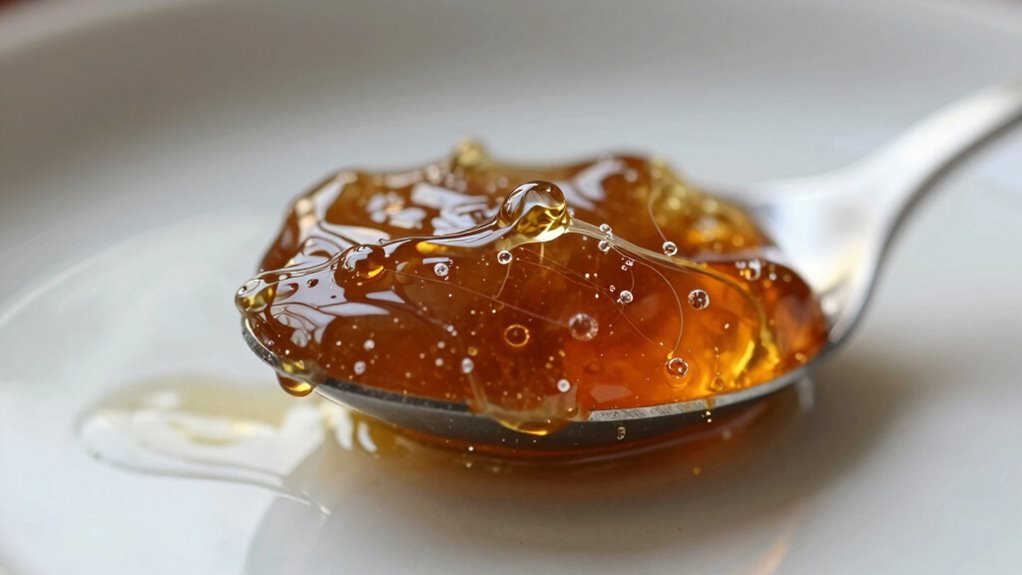

When you boil sugar and it cools, it turns sticky because of crystallization. As the temperature drops, sugar molecules come out of solution and form tiny crystals. These crystals trap moisture, creating a tacky texture. Factors like impurities, slow cooling, and concentration influence crystal growth. Proper techniques, like controlled cooling and stirring, can prevent excessive crystallization. Want to discover how to control this process for perfect confections? Keep exploring to learn more.

Get baking supplies delivered free with Prime
- Fast, free delivery on millions of items
- Prime Video, Amazon Music and more included
- Member-only deals all year
Key Takeaways
- Crystallization occurs as cooled sugar molecules form tiny crystals, creating a sticky, tacky texture.
- Higher sugar concentration promotes more crystallization, increasing stickiness after cooling.
- Impurities and slow cooling encourage larger crystals, making the sugar more sticky.
- Proper stirring and temperature control during cooling help prevent large crystal formation.
- Ingredients like corn syrup or acids inhibit uncontrolled crystallization, reducing stickiness.

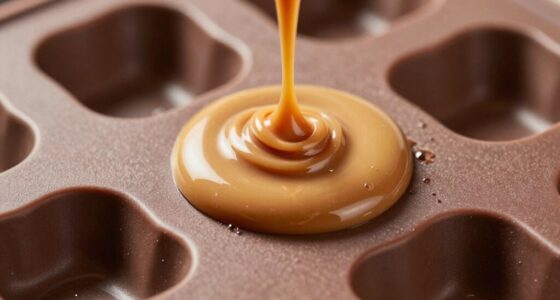
Ever wondered why boiled sugar becomes sticky once it cools? The answer lies in the complex transformations that occur during the heating and cooling process. When you boil sugar, you’re initiating a series of chemical changes known as the caramelization process. As the temperature climbs, the sugar molecules break down and recombine, creating new compounds that give caramel its rich flavor and golden color. This transformation is essential for developing the taste and appearance of many confections, but it’s also part of what makes the cooled sugar sticky.
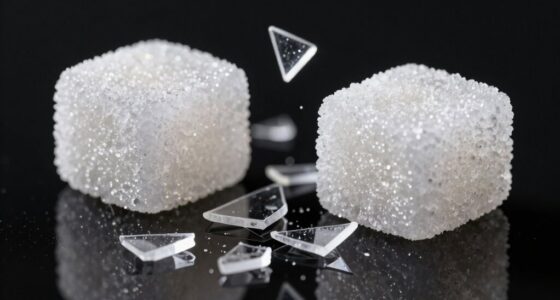
Once you remove the sugar from heat and allow it to cool, sugar crystallization begins to take over. During cooling, the dissolved sugar molecules start to come out of solution and form tiny crystals. If conditions are just right—like if the syrup cools slowly or contains impurities—these crystals grow larger and more numerous. These larger crystals are what cause the sticky, tacky texture you notice. When sugar crystallizes, it creates a network of tiny, interconnected crystals that trap moisture, making the cooled sugar cling to surfaces and feel sticky to your touch. Additionally, crystallization control is crucial for achieving the desired final texture in candies and confections. Proper temperature and stirring techniques can influence the size and number of crystals formed, impacting the final consistency.
Slow cooling and impurities promote crystal growth, leading to sticky, tacky sugar textures.
The sticky texture is also influenced by the concentration of sugar in your boiling mixture. The higher the sugar content, the more likely it is to crystallize upon cooling. If you don’t take precautions, such as adding an acid or a small amount of corn syrup, you can encourage uncontrolled crystallization, resulting in that undesirable stickiness. That’s why many recipes for candies or caramel sauces include ingredients to inhibit crystal growth or require specific cooling techniques to produce a smooth, non-sticky finish. Additionally, temperature regulation during boiling and cooling can help minimize unwanted crystallization and improve the texture of the final product. Properly controlling the cooling process can also prevent the formation of large crystals, leading to a more desirable smoothness.
In essence, the sticky aftermath of cooled boiled sugar is a natural outcome of the intricate balance between caramelization and crystallization. Caramelization gives your sugar that complex flavor, while crystallization determines its texture. Understanding these processes helps you manipulate the conditions to achieve the perfect consistency—whether you want a shiny caramel or a smooth, non-sticky confection.
candy thermometer for sugar boiling
As an affiliate, we earn on qualifying purchases.
As an affiliate, we earn on qualifying purchases.
Frequently Asked Questions
Can the Stickiness Be Prevented Without Changing the Recipe?
Yes, you can prevent stickiness without changing the recipe. To do this, avoid sugar crystallization by not stirring the sugar syrup once it reaches the right temperature. Keep the cooled sugar in a moisture-proof container to prevent moisture absorption, which causes stickiness. Additionally, maintaining a proper temperature during cooling helps minimize crystallization, keeping your sugar from becoming sticky. Proper storage and gentle handling are key in keeping it smooth.
Does Humidity Affect the Sugar’s Stickiness After Cooling?
You’ll notice that high humidity impact can make cooled sugar sticky, like dew settling on a window pane. Environmental factors, especially moisture in the air, interfere with the sugar’s crystalline structure, causing it to cling and become tacky. When humidity rises, it introduces more water molecules, making your cooled sugar surface feel sticky and soft. To prevent this, keep your workspace dry and store your sugar in airtight containers, shielding it from moisture.
How Long Does It Take for Boiled Sugar to Become Sticky?
Boiled sugar typically becomes sticky within an hour after cooling, depending on factors like sugar crystallization and temperature control. If you leave it at room temperature, crystallization speeds up, making it sticky sooner. To delay this, maintain a consistent, lower temperature and avoid humidity. Properly stored in an airtight container, cooled sugar can stay firm longer, but fluctuations in temperature or humidity will hasten its stickiness.
Are There Alternative Methods to Cool Sugar Quickly?
To cool sugar quickly and prevent stickiness, you can use rapid cooling techniques like placing the hot sugar in a bowl of ice water or spreading it thinly on a cool, greased surface. These methods accelerate cooling, reducing the chance of sugar crystallization that causes stickiness. Just be careful not to disturb the sugar too much during cooling, as this can induce crystallization and affect the final texture.
Can Adding Ingredients Reduce the Stickiness of Cooled Sugar?
Adding ingredients can considerably reduce the stickiness of cooled sugar, like a magic wand transforming a sticky mess into perfection. Incorporating flavor enhancement agents such as butter or cream can create a smoother, less tacky texture, while certain thickeners or acids can modify the structure, preventing excessive stickiness. These modifications improve the overall texture and taste, making your sugar creations more enjoyable and easier to handle after cooling.
silicone spatula for candy making
As an affiliate, we earn on qualifying purchases.
As an affiliate, we earn on qualifying purchases.
Conclusion
So, next time your cooled sugar feels sticky, remember it’s like a sweet story that’s just begun to unfold. The magic of sugar’s transformation lies in its delicate dance of heat and cooling, creating a sticky-sweet memory that clings to your senses. Embrace the sticky embrace as a sign of your culinary adventure—each crystal’s whisper telling you that even the simplest ingredients can craft a masterpiece. Keep experimenting, and let your kitchen be your sugar-coated playground.
candy crystallization inhibitor ingredients
As an affiliate, we earn on qualifying purchases.
As an affiliate, we earn on qualifying purchases.
As an affiliate, we earn on qualifying purchases.
Halloween Picks
halloween
As an affiliate, we earn on qualifying purchases.