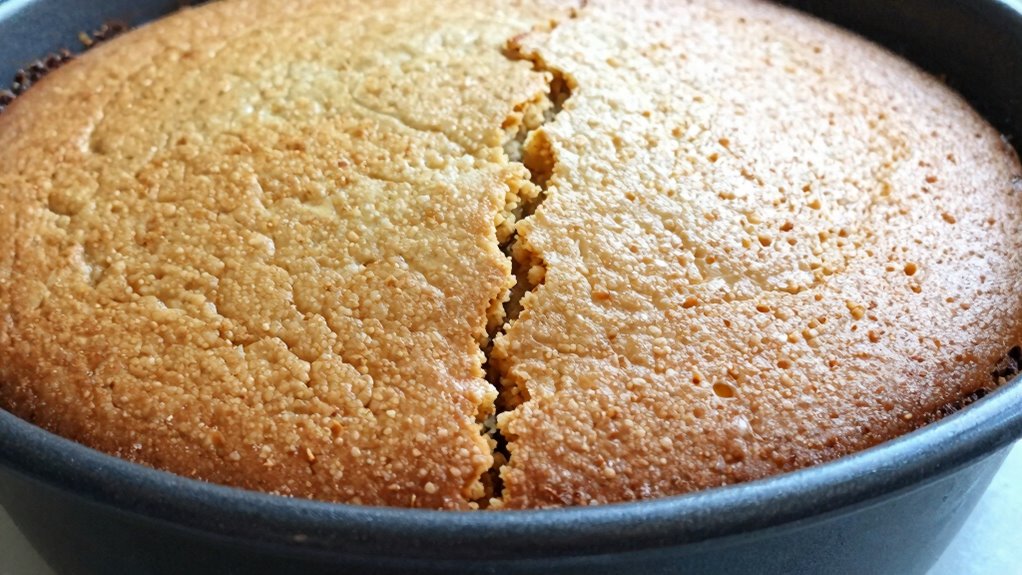
Your cake layers shrink away from the pan because uneven heating causes them to set too quickly and cool unevenly. If you use pans that heat too fast or unevenly, it can lead to cracks and pulling away as the cake contracts during cooling. Properly preparing your pan and controlling oven temperature helps guarantee even baking. Want to discover more tips for perfect cake layers? Keep exploring for all the details.

Get baking supplies delivered free — and shop member deals
- Fast, free delivery on millions of items
- Access to Prime Big Deal Days deals on October 6–7
- Prime Video, Amazon Music and more included
Key Takeaways
- Rapid oven temperature causes quick crust formation, leading to uneven expansion and shrinkage during cooling.
- Using metal pans with quick heat transfer can promote uneven baking, increasing the risk of shrinking away from the pan.
- Insufficient or uneven pan preparation can cause sticking, pulling the cake away as it cools.
- Excessive heat or improper temperature control causes premature setting, resulting in shrinkage during cooling.
- External factors like humidity and air circulation affect cooling and contraction, contributing to the cake pulling away.

Have you ever noticed your cake layers pull away from the sides of the pan after baking? It’s a common issue that can leave you puzzled, but understanding the root cause can help you improve your baking results. One of the main factors is baking temperature. When you set your oven too high, the heat causes the batter to rise rapidly, creating a crust that sets too quickly. As the cake cools, this rapid expansion and contraction can lead to shrinking and pulling away from the pan sides. Conversely, baking at a lower, more controlled temperature allows the cake to rise evenly and contract less during cooling, reducing the chances of separation.
Another critical aspect is the pan material. Different materials conduct heat differently, influencing how your cake bakes and cools. For example, metal pans heat quickly and can create a more intense heat environment, which may cause the outer layer of your cake to set faster than the interior. This can lead to uneven expansion and shrinkage, making the layers pull away from the sides once cooled. On the other hand, glass or ceramic pans heat more slowly and distribute heat more evenly, helping your cake bake more uniformly and reducing the likelihood of shrinkage. Silicone pans, while flexible and non-stick, also tend to heat unevenly and may contribute to this problem.
Your choice of pan material also affects how much your cake expands during baking. Metal pans tend to conduct heat more efficiently, resulting in a taller, more stable rise if the baking temperature is appropriate. When you use a metal pan, you should pay close attention to your oven’s temperature settings to prevent overheating. Using the right temperature ensures the batter bakes evenly and cools gradually, preventing the layers from pulling away from the sides as they contract. Additionally, understanding how pan material influences heat transfer can help you select the best option for consistent results. Being aware of baking techniques such as proper mixing and batter consistency can also contribute to a more even rise and reduce shrinkage issues.
Furthermore, proper pan preparation can help prevent sticking and uneven shrinkage. Proper greasing and lining can help the cake release smoothly without sticking, which can also influence how much it shrinks or pulls away during cooling. If your cake sticks excessively, it might pull away more from the sides as you try to remove it. So, maintaining the correct baking temperature and selecting the appropriate pan material are key steps in preventing your cake layers from shrinking away from the pan, resulting in a more professional and beautiful finish. Being mindful of baking environment factors such as humidity and air circulation can also impact how your cake cools and contracts.
As an affiliate, we earn on qualifying purchases.
Frequently Asked Questions
Can Using Non-Stick Pans Prevent Cake Shrinkage?
Using non-stick pans can help prevent cake shrinkage, but it’s not a guarantee. The cake pan material, like metal or silicone, affects heat conduction, so choose a quality pan. Also, maintaining the right baking temperature is essential—baking too hot causes rapid expansion and shrinkage. Non-stick coatings may help with easier removal, but controlling temperature and choosing the right pan material are key to achieving even, stable cake layers.
Does the Type of Flour Affect Cake Expansion?
Yes, the type of flour affects cake expansion because it influences gluten development and moisture retention. Using bread flour, which has higher protein content, creates more gluten, making the cake denser and limiting expansion. Conversely, cake flour has less protein, resulting in tender, airy layers. Properly selecting your flour helps control gluten formation and moisture retention, ensuring your cake rises well and maintains a soft, fluffy texture.
How Does Oven Temperature Influence Cake Size?
Did you know that even a 10°F difference in oven temperature can alter your cake’s size by up to 20%? Oven temperature consistency is essential; too high and your cake may rise rapidly then collapse, too low and it won’t fully expand. You should also make baking time adjustments to prevent over- or under-baking, ensuring your layers stay perfectly sized and moist.
Should Cake Batter Be Chilled Before Baking?
Chilling your cake batter before baking isn’t necessary, but it can help improve cake temperature and batter consistency. If your batter is too warm, it may cause the cake to rise unevenly or sink. Chilling firms up the batter, leading to a more controlled bake and better structure. Just avoid over-chilling, which can make the batter too stiff and difficult to work with. A short chill is usually enough.
Can Overmixing Batter Cause Shrinkage?
Yes, overmixing batter can cause shrinkage in your cake layers. Imagine the batter, once perfectly smooth and glossy, becoming overly aerated and tense. This alters the cake’s texture, making it fragile and prone to collapse as it bakes. When you overmix, the batter’s consistency shifts, trapping too much air, which then escapes during baking. The result? cake layers that shrink away from the pan, uneven and disappointing.
As an affiliate, we earn on qualifying purchases.
Conclusion
Next time you see your cake pull away from the pan, remember it’s a silent whisper of growth and change. Just like life’s moments of stretching and shifting, your cake’s journey reflects patience and resilience. Embrace the little gaps as symbols of transformation—reminders that even when things seem to drift apart, they’re shaping something beautiful beneath the surface. Sometimes, the spaces tell the sweetest stories of becoming.
As an affiliate, we earn on qualifying purchases.
As an affiliate, we earn on qualifying purchases.
Fall Picks
fall essentials
As an affiliate, we earn on qualifying purchases.