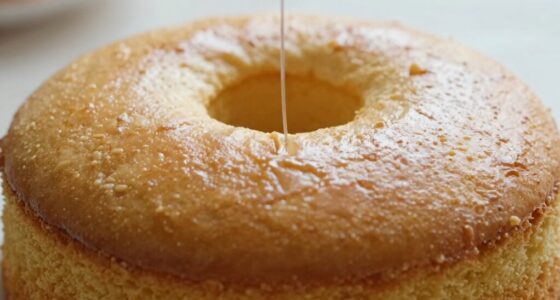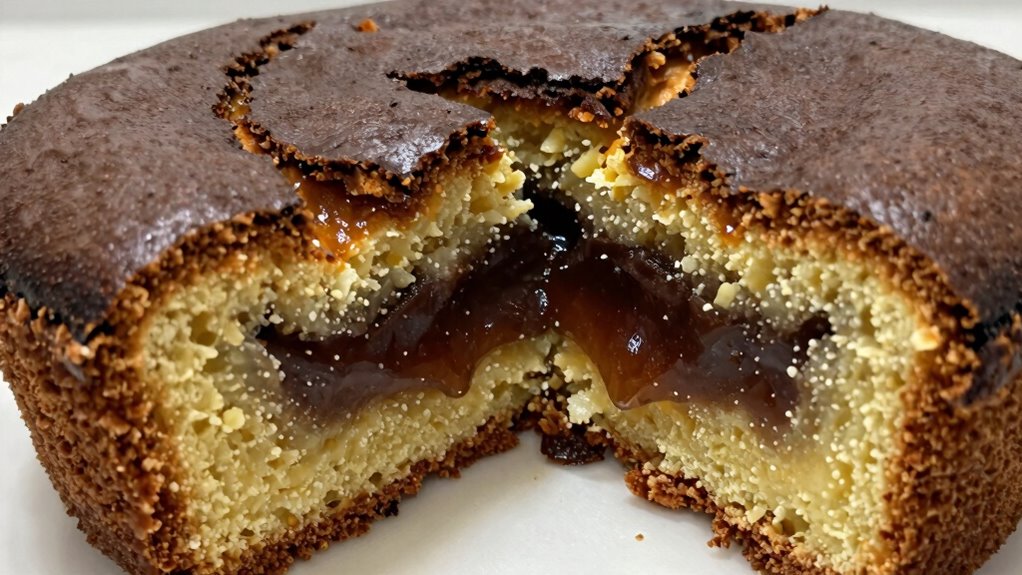

When your cake starts to overbake but still feels underdone inside, it’s often because uneven heat transfer causes the outer layer to firm and brown too quickly, trapping moisture inside. High oven temperatures can create a barrier that prevents heat from reaching the center properly, leading to dry, overcooked edges and a raw interior. To fix this, controlling your oven temperature and ensuring even heat distribution is key—keep going to find out how to get perfect results.

Get baking supplies delivered free with Prime
- Fast, free delivery on millions of items
- Prime Video, Amazon Music and more included
- Member-only deals all year
Key Takeaways
- Rapid heat buildup causes the outer layer to set quickly, trapping moisture inside and leading to an underbaked interior.
- High oven temperatures create a barrier to heat transfer, preventing even baking and resulting in an undercooked center.
- Improper oven calibration or uneven heat distribution can cause the batter to be underbaked initially, then overbaked as it continues to cook.
- Using an unpreheated or poorly preheated oven can cause uneven heat penetration, starting with underbaked batter that dries out later.
- Inconsistent baking conditions and timing adjustments can turn initially underbaked batter into an overbaked, dry cake.
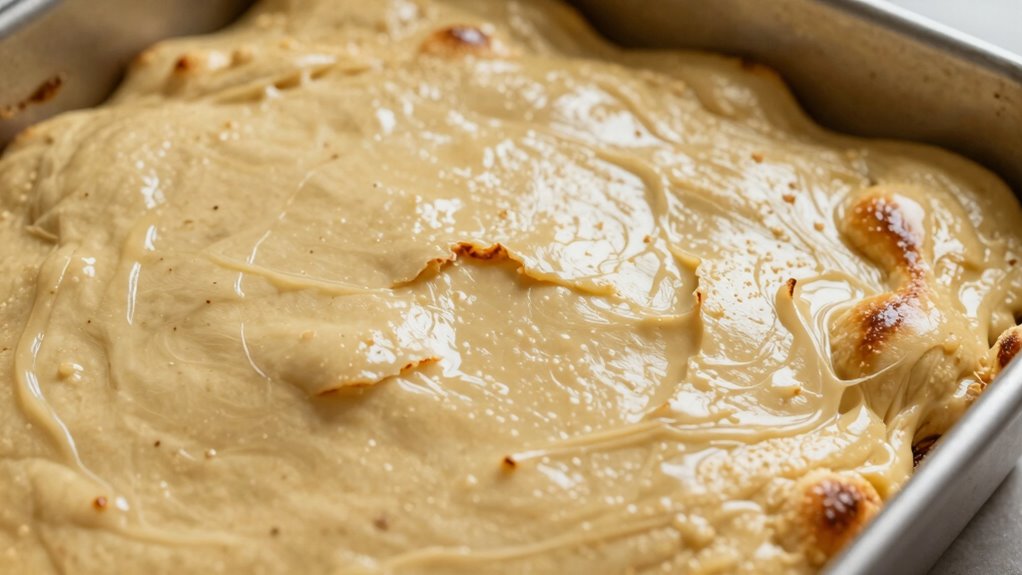
Many bakers find that their cakes become overbaked and dry, even when they start with what seems like underbaked batter. This paradox often puzzles even experienced bakers. The key to understanding this lies in how cake texture and baking temperature interact during baking. When you mix your batter, it might look perfect—smooth, glossy, and just right. But as the oven heats your cake, the way heat penetrates the batter and how the structure sets are vital. If the baking temperature is too high, the outer layers can set and brown too quickly, creating a barrier that prevents even heat distribution. This causes the interior to continue baking past the point of doneness, leading to a dry, overbaked exterior while the inside remains undercooked.
Overbaking and dryness happen when high temperatures create a barrier, trapping moisture inside while overcooking the exterior.
Your goal is to achieve a cake with a tender, moist crumb—meaning a good cake texture. To do that, you need to pay close attention to your oven’s temperature. An overly hot oven accelerates the baking process, making the outer layers firm up rapidly, which can trap moisture inside but still lead to a dry exterior overall. Conversely, a too-low temperature might cause uneven baking, where the middle remains underdone long after the edges are overbaked. The trick is to find the right baking temperature that allows heat to distribute evenly, giving your cake a uniform texture without drying out. Proper heat transfer during baking is essential for even cooking and preventing overbaking.
You might also notice that the timing of your bake affects the final cake texture. If you rely solely on the timer without adjusting for your oven’s actual temperature, you could end up with a cake that’s underbaked inside yet overdone outside. Using an oven thermometer can help you dial in the correct temperature. When you bake at an ideal temperature, the heat gradually penetrates the batter, cooking it evenly and preserving moisture. This results in a cake with a moist, tender crumb and a delicate, fluffy texture. Accurate oven temperature plays a crucial role in preventing overbaking and ensuring even heat distribution. Additionally, understanding how heat transfer works during baking can help you optimize your process for better results. Proper oven calibration is also essential to maintain consistent baking conditions and avoid surprises.
In addition, the type of pan you use, its size, and whether you preheated your oven properly influence the baking process. If the oven isn’t heated to the right temperature before baking, or if the pan conducts heat unevenly, your cake can overbake in some areas and remain underbaked in others. The conclusion? Consistently monitor your baking temperature, adjust your oven settings as needed, and always test for doneness with a toothpick. These steps help guarantee your cake develops a perfect, moist texture without the risk of ending up dry or overbaked despite starting with underbaked batter.
As an affiliate, we earn on qualifying purchases.
Frequently Asked Questions
How Can I Tell if My Batter Is Properly Mixed?
To tell if your batter is properly mixed, focus on your mixing techniques and batter texture. You’ll want a smooth, uniform mixture without streaks of flour or lumps. Use gentle folding or stirring methods to avoid overmixing, which can affect texture. When your batter is consistent in color and texture, with no visible pockets of dry ingredients, it’s a good sign you’ve mixed it just right and are ready to bake.
What Causes Uneven Baking in Cakes?
A stitch in time saves nine, and uneven baking often results from neglecting proper batter preparation. When your batter isn’t evenly mixed or aerated, heat distributes unevenly, causing inconsistent cake texture. Overly dense areas bake slower, leading to overbaked edges and underbaked centers. To avoid this, guarantee thorough mixing and proper batter aeration. This makes your cake bake uniformly, preventing the common pitfall of uneven results.
Can Ingredient Temperature Affect Batter Consistency?
Yes, ingredient temperature can affect batter consistency. When ingredients like butter, eggs, or milk are too cold, they don’t blend smoothly, leading to a lumpy or uneven batter. Conversely, warm ingredients help create a more uniform batter, ensuring even baking. To achieve the perfect batter consistency, make sure all your ingredients are at room temperature before mixing, which helps prevent underbaked or overbaked cakes caused by inconsistent heat transfer.
How Does Oven Calibration Influence Baking Results?
Your oven calibration accuracy is key to consistent baking results. If it’s off, it’s like trying to hit a moving target—your oven temperature might be too high or too low. This impacts how quickly your cake bakes, often leading to overbaking or underbaking. Regularly calibrate your oven to verify the temperature settings match actual heat levels, helping you avoid surprises and achieve perfectly baked treats every time.
Are There Specific Pans That Prevent Underbaking?
You can prevent underbaking by choosing the right bakeware. Metal pans heat evenly and conduct heat well, reducing the risk of underbaked centers. Silicone pans are excellent for flexible removal but may cause uneven baking if not supported properly. The pan shape also matters—shallow, wide pans promote even cooking, while deep, narrow ones can trap heat, leading to underbaked interior. Picking the right bakeware materials and pan shape helps make sure your cake bakes thoroughly.
even heat distribution baking mats
As an affiliate, we earn on qualifying purchases.
As an affiliate, we earn on qualifying purchases.
Conclusion
So, next time you think your cake is doomed from the start, remember—an underbaked batter is like a mischievous prankster, secretly plotting to turn your masterpiece into a burnt disaster. It’s as if your oven’s trying to sabotage your baking dreams! Stay vigilant, test your batter early, and don’t let that sneaky underbake ruin your perfect cake. Because in baking, a little patience and attention can save you from a fiery, crumbly catastrophe!
As an affiliate, we earn on qualifying purchases.
As an affiliate, we earn on qualifying purchases.
Halloween Picks
halloween
As an affiliate, we earn on qualifying purchases.