Proper frosting timing can make or break your layer cake’s appearance, texture, and flavor. When you apply the crumb coat and wait for it to set, you guarantee a smooth, professional finish without smudges or cracks. Acting quickly during the final coat prevents tearing, and understanding how frosting behaves at different stages helps you avoid common issues. Mastering timing allows you to create a beautifully finished cake that’s as delicious as it is stunning—so keep going to uncover the secrets behind perfect frosting timing.

Get baking supplies delivered free with Prime
- Fast, free delivery on millions of items
- Prime Video, Amazon Music and more included
- Member-only deals all year
Key Takeaways
- Proper frosting timing ensures smooth, professional-looking layers without smudges or cracks.
- Waiting for the crumb coat to set prevents tearing during final frosting application.
- Timing influences flavor integration and prevents frosting from melting or sliding.
- Working at optimal times improves frosting stability, shaping, and overall cake aesthetics.
- Correct timing balances texture and firmness for a polished, delicious finished cake.

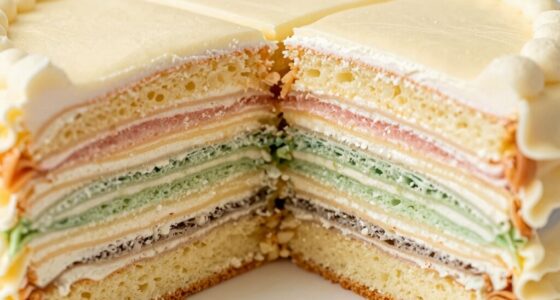
Frosting timing is essential when assembling a layer cake, as proper application guarantees clean, smooth layers and prevents messes or melting. When you’re stacking and frosting your cake, timing plays a crucial role in achieving a professional look and ensuring the flavors blend harmoniously. If you rush the process or frost too early, you risk smudging or cracking the frosting, making the final presentation less appealing. Conversely, waiting too long can cause the frosting to set too firmly, making it difficult to spread evenly or add decorative touches. The key is to find that sweet spot where the frosting is soft enough to manipulate yet firm enough to hold its shape.
Proper frosting timing ensures clean layers, smooth finishes, and a polished, professional cake appearance.
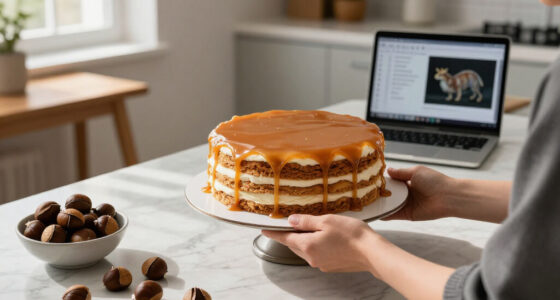
Incorporating the right decorating techniques at the correct time can elevate your cake’s appearance. For example, using a crumb coat early on seals in loose crumbs and creates a smooth base for the final layer of frosting. Once you apply the crumb coat, give it about 20 to 30 minutes to set before adding the final layer. This step prevents crumbs from mixing into your decorative frosting and ensures a sleek finish. When it’s time to add the top coat, work quickly but carefully, maintaining steady pressure to avoid tearing the frosting. Using tools like bench scrapers or offset spatulas can help you achieve even, straight sides and a level surface. Recognizing how frosting behaves during different stages is vital for a flawless finish. Understanding how frosting consistency changes as it sets can also make a significant difference in your decorating success. Additionally, paying attention to the temperature of the environment can affect how the frosting reacts, so working in a cool, controlled space can improve your results. Being aware of frosting behavior at various points in the process can help you troubleshoot issues before they become difficult to fix. Moreover, adjusting your approach based on frosting texture can prevent common decorating problems and improve your overall technique.
Flavor pairing is another important aspect to take into account when timing your frosting application. The right timing allows flavors to meld, enhancing the overall taste of your cake. For example, if you’re working with a fruit-based filling, it’s best to wait until the filling has cooled and settled before applying the frosting. This prevents the frosting from melting or sliding off and ensures the flavors stay distinct yet complementary. Additionally, if you’re incorporating flavors like citrus or spices into your frosting, doing so at the right stage—either during preparation or after the initial set—can intensify the taste and create a more cohesive flavor profile.
Ultimately, mastering frosting timing isn’t just about aesthetics; it’s about balancing appearance, texture, and flavor. When you pay attention to how your frosting behaves at each stage, you’ll develop a better feel for the process. This awareness allows you to choose suitable decorating techniques, whether piping intricate designs or creating simple, elegant finishes. Proper timing ensures your layer cake turns out not only beautiful but also delicious, with flavors that are perfectly integrated and textures that invite every bite.
As an affiliate, we earn on qualifying purchases.
Frequently Asked Questions
Can Refrigeration Affect Frosting Consistency?
Yes, refrigeration can affect frosting consistency. When you refrigerate frosting, the cold temperature can cause the frosting ingredients to firm up or become grainy, especially if it contains butter or cream cheese. Proper frosting storage helps maintain its texture, so you should cover it well and let it come to room temperature before applying. This prevents unwanted changes in consistency, ensuring your frosting stays smooth and easy to spread.
How Do Humidity Levels Impact Frosting Application?
Humidity effects can considerably impact your frosting application. When humidity rises, it makes frosting more challenging to spread smoothly, risking melting or sliding off the cake. Low humidity, on the other hand, causes frosting to dry out and crack. To guarantee perfect frosting adhesion, you need to monitor humidity levels, keep your workspace consistent, and choose the right frosting type. Controlling humidity helps you achieve a flawless, professional finish every time.
What Types of Frosting Are Best for Different Cake Textures?
You should use buttercream variations for most cake textures, as they spread easily and can be customized for flavor and consistency. For smooth, professional finishes, fondant smoothing works best on dense or sturdy cakes, providing a sleek appearance. Lighter, airy cakes benefit from whipped buttercream, while richer, dense cakes pair well with thicker, more stable frostings like cream cheese or Swiss meringue buttercream.
How Can I Fix a Frosting That’s Too Soft?
If your frosting’s too soft, you can fix it by chilling it in the fridge for about 15-20 minutes, which improves frosting stability. Alternatively, adding a bit of powdered sugar or more butter can help thicken it without sacrificing flavor preservation. Be cautious not to overmix, as this may weaken texture. Properly stabilized frosting guarantees your layer cake stays neat, beautiful, and flavorful all at once.
Is It Better to Frost Cakes Cold or at Room Temperature?
Frosting your cake at the perfect temperature can make or break its presentation and flavor! You’ll get the best results by frosting a cake that’s just slightly chilled, not ice-cold, because cold cake helps the frosting stay smooth and prevents melting. Room temperature frosting spreads too easily but risks melting on warm days. Keep your cake cool enough to hold the frosting’s shape, but warm enough for that perfect, luscious finish!
As an affiliate, we earn on qualifying purchases.
Conclusion
So, next time you rush to frost your cake, remember—timing is everything. You might think slapping on frosting immediately is quickest, but that’s when disaster strikes. Ironically, waiting just a bit longer can save your masterpiece and keep it from turning into a sloppy mess. Sometimes, the best things in baking come down to patience. So, resist that urge, and let your cake sit—because in frosting, a little wait truly makes all the difference.
As an affiliate, we earn on qualifying purchases.
As an affiliate, we earn on qualifying purchases.
Fall Picks
fall essentials
As an affiliate, we earn on qualifying purchases.