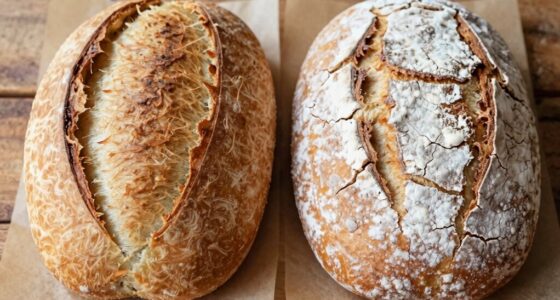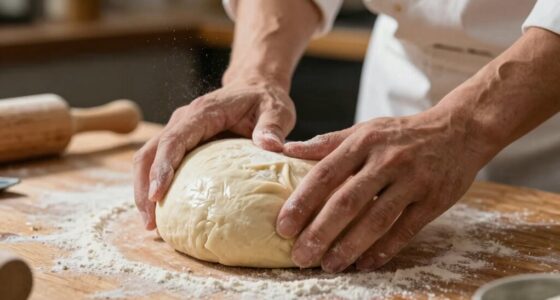

Steam helps your bread spring better by keeping the dough surface moist and flexible, allowing it to expand fully before the crust hardens. It delays crust formation, giving gases more room to expand and resulting in a lighter, more open crumb. However, steam won’t make much difference if your dough is dense or the oven heats too quickly. If you want to discover how to optimize steam for perfect oven spring, keep exploring these tips.
Key Takeaways
- Steam maintains surface moisture, delaying crust formation and allowing the dough to expand more rapidly during oven spring.
- Properly timed steam application enhances oven spring by keeping the dough surface flexible and trapping gases.
- Excessive or poorly timed steam can hinder crust development or have limited impact on oven spring, especially with dense or high-temperature baking.
- High hydration doughs benefit more from steam, as moisture promotes better expansion and crust quality.
- When dough is dense or oven temperatures are too high, steam’s influence on oven spring diminishes significantly.
What Exactly Happens During Oven Spring? The Science Explained

During oven spring, your bread dough undergoes a rapid rise as heat activates the remaining fermentation processes. This burst of expansion occurs because the oven’s heat causes gases produced during fermentation to expand quickly. As the temperature rises, gluten development continues, strengthening the dough’s structure and trapping these gases more effectively. Proper fermentation timing guarantees your dough has enough gas and elasticity for a good oven spring. If you underfermented, the dough may lack sufficient gases, resulting in a flatter loaf. Conversely, overfermentation weakens gluten, causing collapse during baking. The initial rapid rise is a critical moment where gluten’s strength and fermentation timing work together, shaping the final height, crumb, and texture of your bread. Additionally, the contrast ratio of your oven environment can influence the evenness of heat distribution, impacting how uniformly your bread expands. Maintaining an optimal fermentation stage ensures the dough’s gas retention and elasticity are at their peak for a successful oven spring. Proper temperature control during fermentation is essential to achieve consistent results, especially since temperature fluctuations can impact yeast activity and gas production.
How Does Steam Interact With Dough in the Oven?

When you add steam to your oven, it helps the dough expand more rapidly by keeping the surface moist. This moisture also delays crust formation, allowing for a better rise. As a result, your bread develops a lighter interior and a shiny, crisp crust. Additionally, steam promotes crust development, contributing to the overall texture and appearance of your bread. Proper steam management is essential for achieving consistent results and enhancing oven spring, especially since moisture retention plays a crucial role in bread quality. Understanding the baking process and how steam influences it can lead to more successful baking outcomes. Controlling steam levels is key to optimizing oven spring and achieving desired crust characteristics.
Moisture Boosts Expansion
Steam plays a crucial role in helping dough expand in the oven by providing moisture that keeps the outer layer flexible. When the dough has adequate dough hydration, it can better absorb steam, promoting uniform expansion. This moisture prevents the crust from setting too quickly, allowing the internal gases to expand fully, which results in a larger oven spring. Additionally, fermentation timing influences how the dough responds; if proofed properly, the gluten structure is strong enough to trap gases and expand when exposed to steam. Without enough moisture, the crust can form prematurely, limiting oven spring. Conversely, too much moisture early on can delay crust formation, giving the dough more time to rise. Properly timed fermentation and adequate hydration are key to maximizing the benefits of moisture during baking.
Crust Formation Delay
As moisture from steam interacts with the dough’s surface, it temporarily delays the crust formation. The steam keeps the outer layer moist, preventing it from drying out and hardening too quickly. This delay allows the dough to stay hydrated longer, promoting a smoother oven spring and better dough expansion. When the crust finally begins to form, the moisture evaporates, and the crust can develop a crisp, golden exterior. The key is timing: too much steam early on prolongs the crust formation delay, which can be beneficial or detrimental depending on your desired crust. Understanding how steam influences dough hydration helps you control when and how the crust forms, ultimately impacting the bread’s texture and appearance.
Why Does Steam Help Create a Crust and Boost Oven Spring?
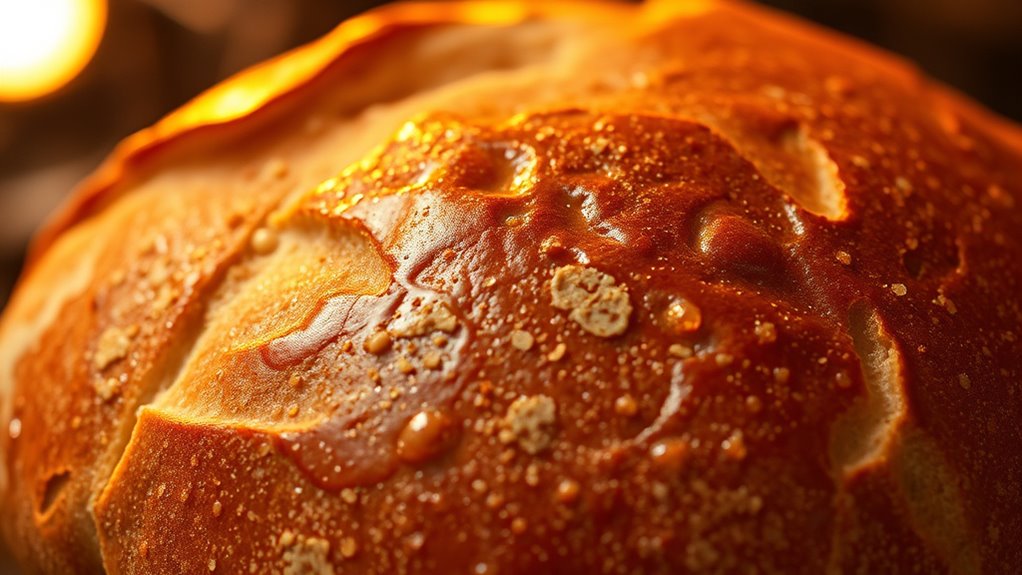
When you add steam during baking, moisture keeps the dough’s surface flexible, allowing it to expand fully. This moisture also helps form a crisp, shiny crust by controlling how the outer layer dries out. Understanding how steam influences both rise and crust formation can improve your baking results considerably. Additionally, proper use of modern kitchen technology like steam-injected ovens can ensure consistent and optimal humidity levels for better oven spring.
Moisture’s Role in Crust
Moisture plays an essential role in developing a crisp, glossy crust and enhancing oven spring because it creates the ideal environment for the dough to expand rapidly. When your dough has proper hydration, it allows for better gluten development, which helps trap gases and promotes a strong rise. During baking, moisture on the surface evaporates, aiding in crust coloration by caramelizing sugars and creating a golden-brown finish. Steam keeps the surface moist in the early stages, delaying crust formation and allowing the interior to expand more before setting. This balance between dough hydration and surface moisture is fundamental for achieving both a beautiful crust and maximum oven spring. Proper baking environment can further influence how moisture interacts with the dough, impacting the final texture and rise. Without enough moisture, the crust may be dull or overly thick, hindering the rise. Additionally, controlling steam level during baking can significantly affect the final outcome, making it crucial for bakers to understand how to manage moisture effectively. Understanding the role of humidity in baking can help bakers optimize oven conditions for the best crust and rise.
Steam’s Impact on Rise
Have you ever wondered why steam is so vital during baking? It plays a essential role in dough hydration and oven temperature control, both key to a good rise. Here’s how steam impacts your oven spring:
- It keeps the dough surface moist, delaying crust formation, allowing your bread to expand fully.
- Steam helps maintain a high oven temperature, promoting rapid yeast activity and better oven spring.
- It creates a thin, crisp crust that traps gases inside, giving your loaf volume and a shiny finish.
- Proper steam application also influences the crust development, ensuring a desirable texture and appearance.
Without enough steam, the crust forms too early, restricting rise and resulting in a denser crumb. Proper steam application ensures ideal dough hydration and oven conditions for a perfect rise.
How Can You Introduce Steam Into Your Oven? Easy Techniques
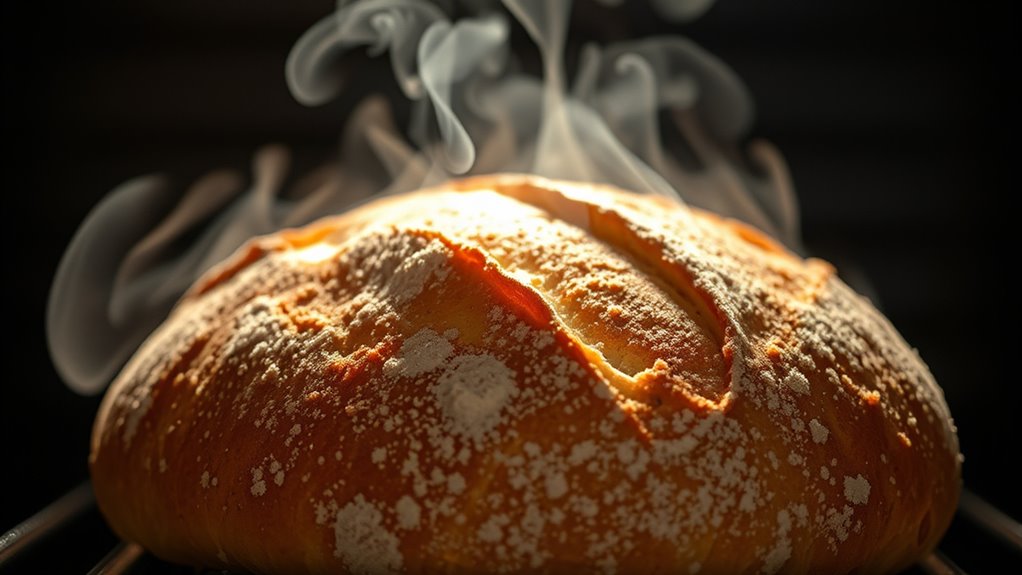
Are you wondering how to easily introduce steam into your oven? One simple method is steam injection, which involves adding moisture at the start of baking. You can do this by placing a heatproof dish filled with water on the oven floor or using a spray bottle to mist the interior just before baking. Another effective technique is using a Dutch oven or covered baking vessel, trapping steam as the dough bakes. These methods promote better crust development by keeping the surface moist initially, then allowing it to crisp up. No fancy equipment is needed—just a few quick steps to create a steamy environment that encourages oven spring and improves your bread’s texture.
What Are Common Mistakes and Myths About Using Steam?
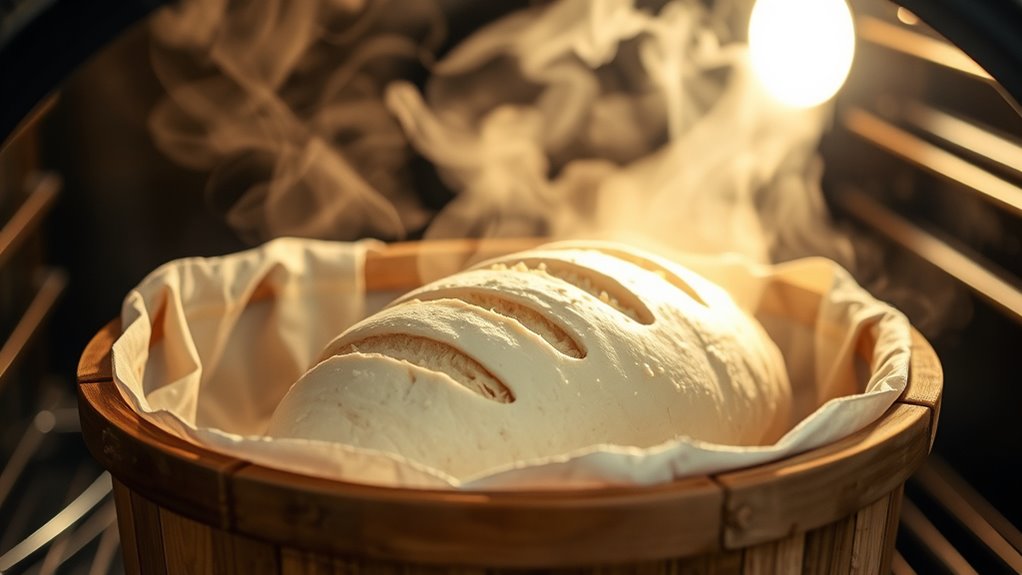
Many bakers believe that simply adding steam guarantees perfect crusts, but this is a common myth. Relying solely on steam without proper technique often leads to subpar results. Here are three common mistakes and steam myths to avoid:
- Overusing steam: Too much steam can make the crust soggy instead of crisp, so use it strategically during the first few minutes.
- Ignoring oven temperature: Without high heat, steam won’t promote proper oven spring; temperature matters just as much as steam.
- Assuming steam alone improves bread: Steam helps develop crust, but other factors like dough hydration and scoring are equally important.
Understanding these steam myths and common mistakes helps you use steam more effectively and achieve better oven spring.
When Might Steam Not Make Much Difference in Oven Spring?

While steam can considerably boost oven spring in many cases, there are instances when it might not make much difference. If your dough has high density or is tightly packed, the impact of steam diminishes because the structure resists expansion. Similarly, if your oven temperature is already very high, the rapid formation of a crust limits the effect steam can have on oven spring. Understanding oven behaviors can help in creating more targeted content that addresses specific baking conditions and techniques. Recognizing baking environment factors is essential for optimizing oven spring and achieving the best bread rise. Additionally, baking science principles can clarify why certain adjustments have limited effects in specific situations. For example, dough properties such as elasticity and hydration level influence how much oven spring can be achieved regardless of steam application. Here’s a quick comparison:
| Dough Density | Oven Temperature | Effect of Steam |
|---|---|---|
| Low | Moderate | Significant boost |
| High | Moderate to high | Minimal impact |
| Low | Very high | Limited effect |
In these scenarios, adjusting steam won’t substantially improve oven spring.
How Can You Adjust Steam Based on Dough Type and Goals?
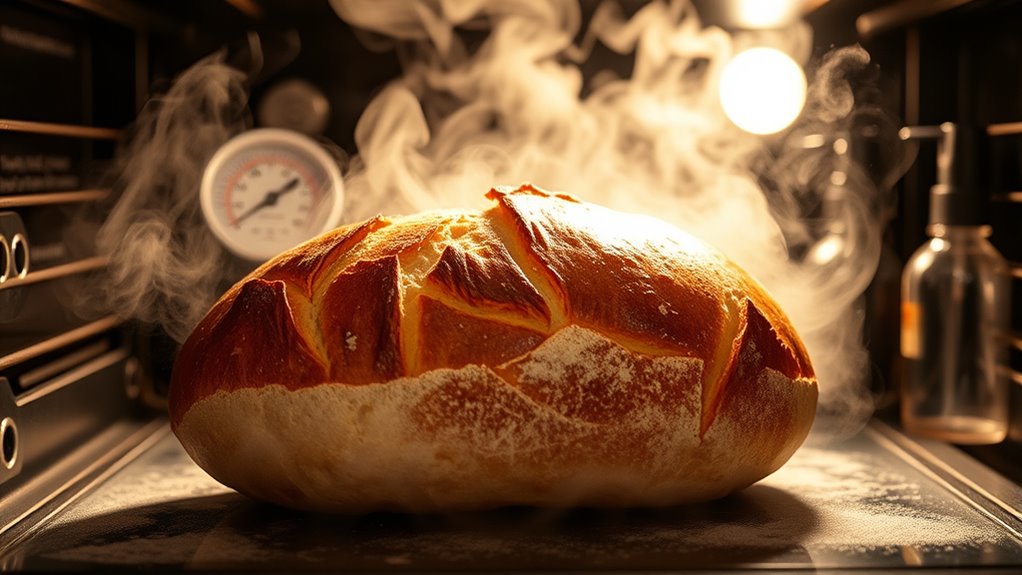
Adjusting steam during baking depends on your dough type and your baking goals. Higher dough hydration benefits from more steam to keep the crust soft and allow maximum oven spring. For leaner doughs with lower hydration, less steam is needed to prevent a soggy crust. You can also modify steam based on your desired baking temperature: higher temps benefit from more steam early on to develop a good crust, while lower temps may need less. Consider these adjustments:
- Use more steam for high-hydration doughs to promote expansion without crust setting too early.
- Reduce steam if you’re aiming for a crisp, thick crust in low-hydration or dense doughs.
- Alter steam levels depending on baking temperature to control oven spring and crust quality.
Fine-tuning steam helps you meet your specific baking goals and dough characteristics.
When and Why Should You Use Steam for the Best Oven Spring?
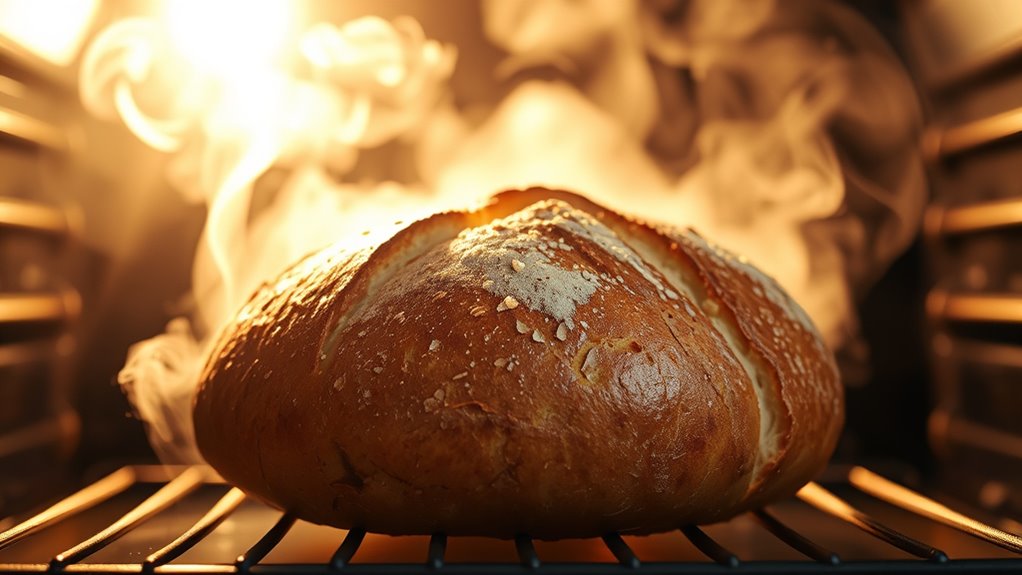
Using steam at the right moments during baking is essential for maximizing oven spring, especially in the initial phase. High dough hydration helps the surface stay moist, allowing the crust to expand fully before setting. Applying steam early in baking creates a humid environment that delays crust formation, giving your dough more time to rise. Additionally, maintaining an ideal baking temperature ensures the dough responds well to steam; too hot, and the crust might set prematurely, limiting oven spring. Use steam when your goal is to achieve maximum oven spring and an open crumb, particularly with high-hydration doughs. Understanding oven conditions can help you optimize your steaming technique for better results. Proper oven environment management, including humidity and temperature control, is crucial for consistent success. By timing steam correctly, you encourage better dough elasticity and expansion, resulting in a lighter, airier loaf with a beautifully developed crust.
Frequently Asked Questions
Can Too Much Steam Negatively Affect Bread Oven Spring?
Yes, too much steam can negatively affect your bread’s oven spring. Excess steam penetrates the dough excessively, leading to a soggy crust that hampers proper expansion. It can also cause uneven crust texture, making it overly soft or chewy instead of crisp. To avoid this, control steam levels carefully, ensuring enough to promote good oven spring without overwhelming the dough’s surface. Proper steam balance results in a well-risen loaf with ideal crust texture.
Does the Type of Oven Influence Steam Effectiveness?
You might think any oven works the same, but the truth’s a bit ironic. The oven material and size actually influence how effectively steam works. A metal oven heats quickly and retains steam better, boosting oven spring, while a larger oven provides more space for the bread to rise. So, your choice of oven can dramatically change your bread’s rise, proving that in baking, the tools truly matter.
How Does Dough Hydration Level Impact Steam’s Role?
Your dough’s hydration level directly impacts steam’s role in oven spring. Higher hydration improves dough consistency, making it more receptive to steam’s effects, resulting in better oven spring and a crisp crust. Conversely, lower hydration leads to a denser crumb and less expansion during baking. By adjusting hydration, you control how steam interacts with your dough, optimizing oven spring and achieving the desired loaf texture and crust quality.
Is Steam Necessary for All Bread Types or Just Specific Varieties?
Think of baking as painting a masterpiece—steam is your brush for certain bread varieties. Not all bread needs steaming techniques; some benefit greatly, like baguettes and ciabatta, which develop a crisp crust and airy crumb. For denser loaves, steam isn’t necessary. You decide based on the bread’s character. Using steam when appropriate enhances crust and oven spring, but for other varieties, it’s optional and may even hinder the final texture.
Can Homemade Steam Methods Replicate Professional Bakery Results?
Yes, homemade steam methods can replicate professional bakery results. You can achieve this through steam injection or placing a pan of hot water on your baking surface. Preheat your oven thoroughly, add water just before baking, and create a humid environment. These techniques mimic commercial steam, helping your bread develop a crisp crust and better oven spring. With practice, your homemade methods will produce bakery-quality results.
Conclusion
Now that you understand how steam transforms your oven spring, imagine the perfect loaf just moments away—crust crackling, interior soaring. But what if you missed a crucial step or misjudged the timing? The secret lies in mastering when and how to use steam. Keep experimenting, stay attentive, and your bread will reveal its true potential. Are you ready to open those bakery-quality results hiding in your oven? The next bake might surprise you.