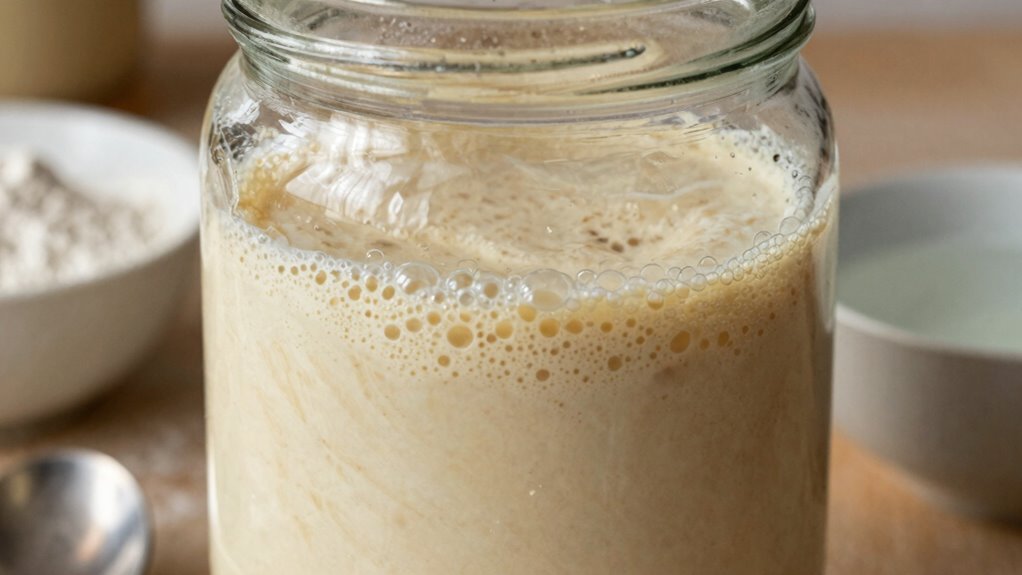
To make your sourdough more tangy, extend fermentation times, use a more mature starter, or choose whole grain or rye flours that promote acidity. To reduce sourness, shorten fermentation, keep dough cooler, or switch to bread flour with added commercial yeast. Adjusting starter feeding ratios and hydration levels also affects flavor. Fine-tuning these variables helps you control tanginess precisely—if you want to master the perfect balance, there’s more to explore.

Get baking supplies delivered free with Prime
- Fast, free delivery on millions of items
- Prime Video, Amazon Music and more included
- Member-only deals all year
Key Takeaways
- Shorten fermentation time or proof at warmer temperatures to produce a milder, less tangy sourdough.
- Extend fermentation duration or ferment overnight in cool environments to increase sourness.
- Adjust hydration levels: higher hydration accelerates fermentation, resulting in more tang; lower hydration reduces sourness.
- Use less mature or less active starter to decrease acidity and achieve a milder flavor.
- Incorporate whole wheat or rye flours to boost fermentation speed and enhance tanginess.
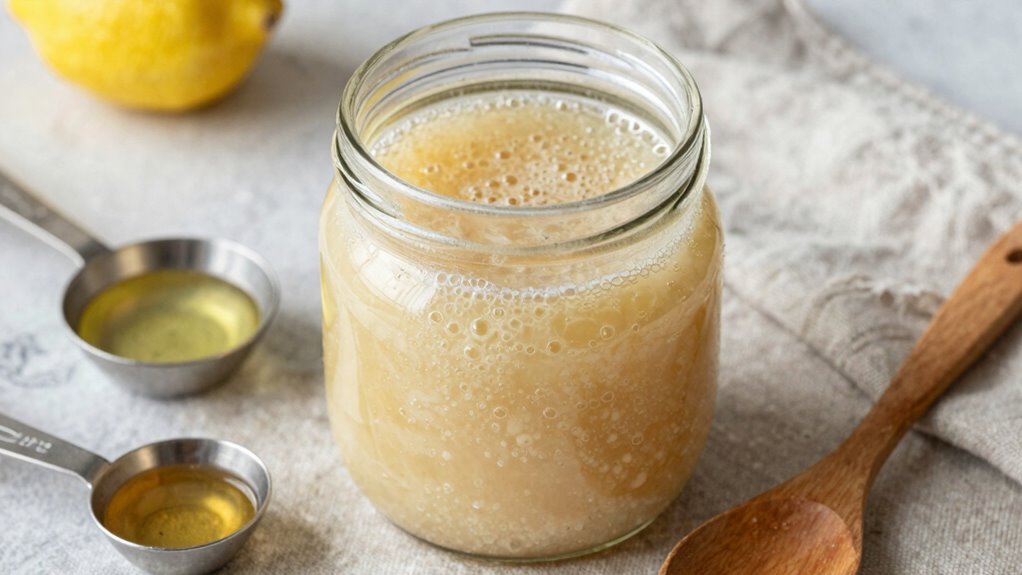
Have you ever wondered how to tame the tangy flavor of your sourdough bread? The key lies in understanding fermentation timing and ingredient adjustments. The length of fermentation directly impacts how tangy your bread becomes. When you extend the fermentation, the natural acids and lactic bacteria have more time to develop, resulting in a sharper, more pronounced sourness. Conversely, shortening fermentation periods produces a milder loaf with less tang.
To control fermentation timing, start by monitoring your dough’s rise. If you want a less tangy bread, try reducing the fermentation time. For example, instead of letting your dough ferment overnight, aim for a shorter, warm proof of around 4-6 hours. Keep an eye on the dough’s volume and texture; it should be airy and slightly risen but not overly bubbly. On the other hand, if you prefer a tangier bread, extend the fermentation by letting it sit longer, perhaps 8-12 hours or even overnight in a cool environment. This allows more acid production, intensifying the sour flavor.
Ingredient adjustments also play a crucial role in controlling sourness. The hydration level of your dough influences fermentation speed and flavor. Higher hydration dough tends to ferment faster, producing more tang, so if you want to reduce sourness, consider using slightly less water. Additionally, the type of flour matters. Whole wheat and rye flours contain more nutrients and wild yeasts, which can accelerate fermentation and increase sourness. Switching to bread flour or adding a small amount of commercial yeast can help regulate fermentation, leading to a milder flavor profile.
Another adjustment involves the starter itself. If your starter is particularly sour or active, it will contribute to a tangier bread. Refreshing your starter more frequently or using a less mature starter can decrease acidity. Conversely, a well-maintained, mature starter tends to produce more sourness. You can also experiment with feeding your starter with different ratios of flour and water. A higher feeding ratio (more flour relative to water) can slow fermentation, reducing sourness, while a lower ratio speeds it up, increasing tang. European cloud servers and their innovative solutions can even be used to optimize fermentation processes through data analysis and automation.
As an affiliate, we earn on qualifying purchases.
Frequently Asked Questions
Can I Adjust Sourness During the Baking Process?
Yes, you can adjust sourness during baking by tweaking fermentation temperature and your starter feeding schedule. If you want a milder flavor, lower the fermentation temperature and feed your starter more frequently with fresh flour, which reduces acidity. For a tangier taste, increase fermentation temperature and extend the time between feedings. These adjustments influence fermentation activity, allowing you to control sourness during the baking process effectively.
How Does Hydration Level Affect Sourness?
Think of hydration level as the volume knob for sourness; turning it up or down changes the flavor landscape. Higher hydration impacts dough consistency, making it softer and more extensible, which promotes a milder sour taste. Conversely, lower hydration results in a firmer dough, often amplifying tanginess. Adjust hydration carefully to craft your preferred sourness, as it directly influences fermentation activity and how the flavors develop over time.
Does the Type of Flour Influence Tanginess?
Yes, the type of flour influences tanginess because different grain types and flour proteins affect fermentation. Higher protein flours, like bread flour, develop a stronger gluten network, which can moderate sourness. Whole grain flours, such as rye or whole wheat, contain more natural sugars and enzymes, promoting more lactic acid bacteria activity and increasing tanginess. So, choosing your flour type allows you to control the sour flavor in your sourdough.
How Long Can I Store a Sourdough Starter?
Think of your sourdough starter as a living treasure that can last years if you nurture it properly. You can store it in the fridge for up to a week without feeding, but for longer storage, keep it sealed and fed monthly. Regular starter maintenance and controlling fermentation temperature are key. When you’re ready to use it again, give it a few feedings at room temperature to revive its vigor.
Are There Natural Ingredients to Modify Sourness?
You can use natural sweeteners like honey or fruit to mellow sourness, or add flavor enhancers such as malt or milk to boost tanginess. These ingredients help balance the sour flavor without artificial additives. Incorporate small amounts gradually to find the perfect level of sourness for your sourdough. Keep experimenting with natural ingredients to customize your bread’s flavor profile to your liking.
digital kitchen scale for baking
As an affiliate, we earn on qualifying purchases.
As an affiliate, we earn on qualifying purchases.
Conclusion
Now that you know how to tweak your sourdough’s tang, you hold the power to craft bread that’s perfectly balanced—whether you crave a gentle whisper of sour or a bold, tangy explosion. With just a few simple adjustments, you can transform your baking game and impress everyone with your mastery. Don’t settle for bland bread—embrace the art of flavor control and turn your sourdough into a legendary masterpiece that’ll leave everyone in awe.
As an affiliate, we earn on qualifying purchases.
As an affiliate, we earn on qualifying purchases.
Fall Picks
fall essentials
As an affiliate, we earn on qualifying purchases.