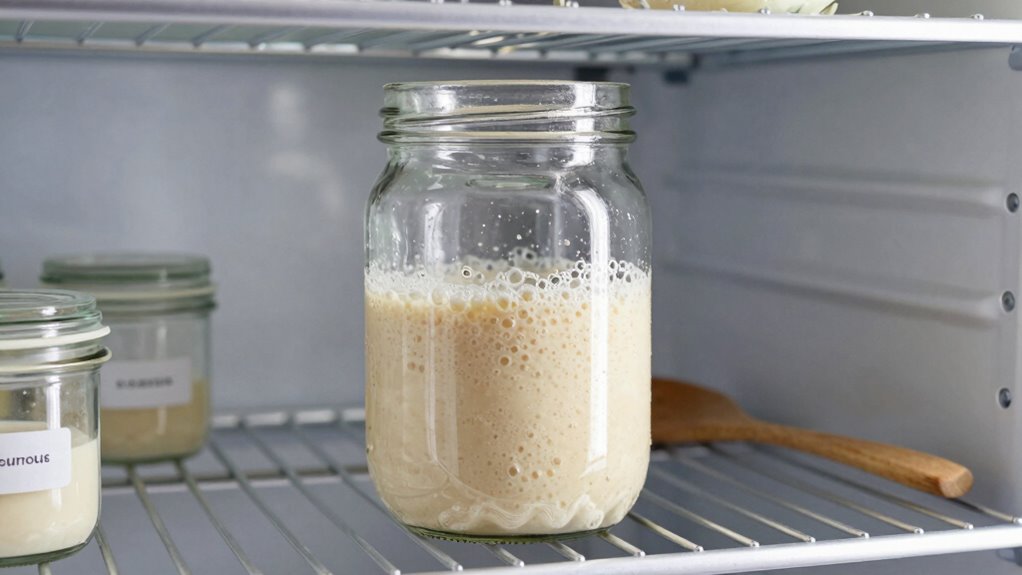

To keep your sourdough starter healthy in the fridge, feed it about once a week with a small amount of flour and water, discarding most of the previous starter first. Let it sit at room temperature briefly before returning it to the fridge, ensuring it’s bubbly and active before storage. When you’re ready to bake, remove and feed it, allowing it to become lively again. Keep exploring for detailed tips to optimize your process.
Key Takeaways
- Feed the starter thoroughly before refrigeration and let it sit until bubbly to ensure active fermentation.
- Store in a loosely covered jar to allow gas escape and prevent pressure buildup.
- Limit feedings to once a week during refrigeration; discard most of the starter before each feeding.
- Keep the starter in the fridge to slow microbial activity and maintain vitality.
- Remove from fridge 1-2 days before baking, then feed and wait until bubbly and active to use.
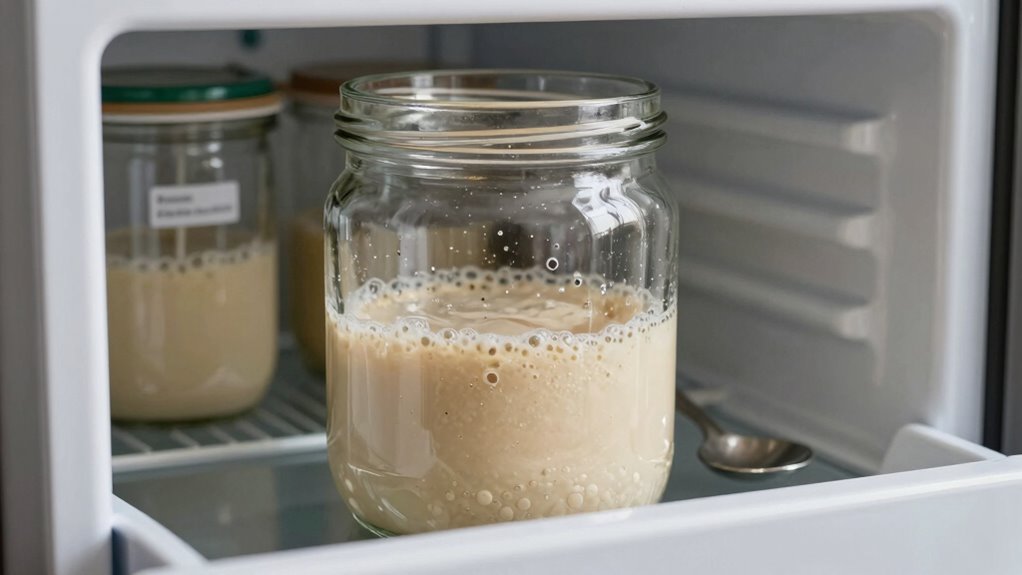
Refrigerating your sourdough starter is an effective way to pause its fermentation and reduce maintenance. When you do this, you’re essentially putting a halt to the active fermentation process, giving your starter a break without losing its vitality. This is especially useful if you’re traveling, taking a break from baking, or simply want to minimize daily care. To do this effectively, understanding fermentation control and proper storage techniques is key. Proper storage keeps your starter healthy and ready to reactivate when you’re ready to bake again.
Refrigerate your sourdough starter to pause fermentation and simplify maintenance during travel or breaks.
First, you need to consider your storage techniques. Before refrigerating, feed your starter thoroughly, ensuring it has enough food to sustain itself during the pause. Once fed, allow it to sit at room temperature for a few hours until it becomes bubbly and active. Then, cover it loosely—using a cloth or a loose lid—to allow gases to escape, preventing pressure buildup. After this initial active phase, you can place the starter in the fridge. It’s best stored in a clean jar with a lid, but not airtight, to allow gases to escape and avoid pressure buildup. This setup helps maintain the starter’s health while reducing its activity level.
When it comes to fermentation control, the goal is to slow down the yeast and bacteria activity without killing them. Refrigeration achieves this by lowering the temperature, which substantially slows fermentation. Typically, you’ll only need to feed your starter once a week if it’s stored in the fridge. Before each feeding, take it out, discard most of it, and feed it with fresh flour and water. Stir well to incorporate air and ensure even fermentation. After feeding, you can put it back in the fridge. This routine keeps the microbial activity balanced, preventing the starter from becoming overly sour or developing undesirable molds. Proper storage techniques are crucial to maintaining your starter’s health during this downtime.
It’s important to remember that the timing and frequency of feedings depend on how often you bake. If you bake regularly, you might keep your starter at room temperature and feed it daily. When you want to store it longer, refrigeration is your best option. Always label the jar with the date of the last feeding so you know when to check on it. Before using it for baking, take it out of the fridge a day or two in advance, feed it, and let it warm up and become active again. This process ensures your starter is healthy and vigorous, ready to give you reliable, flavorful bread.
Frequently Asked Questions
How Long Can I Refrigerate My Sourdough Starter Without Feeding?
You can refrigerate your sourdough starter for up to two weeks without feeding, but it depends on its hydration levels and container choice. Use a loosely covered, non-metallic container to prevent spoilage. Before refrigerating, feed it well to boost its health. When ready to use again, take it out, discard some, and feed it to reactivate, ensuring it stays healthy and active for baking.
Can I Leave My Starter in the Fridge Indefinitely?
Like a dormant volcano, your starter can rest indefinitely in the fridge if you maintain proper hydration and temperature control. However, neglecting regular feeding can weaken it over time. While you can leave it for weeks or even months, occasional feedings are essential to keep it active and healthy. So, think of your starter as a living thing that needs consistent care, even in cold storage.
Should I Feed My Starter Immediately After Refrigeration?
Yes, you should feed your starter immediately after refrigeration. When you take it out, the fermentation activity slows, and the starter becomes less hydrated. Feeding it right away helps restore its hydration level and jumpstarts fermentation. This process guarantees your starter stays healthy and active, making it ready for baking. Regular feeding after refrigeration keeps the balance of hydration and fermentation activity ideal for consistent bread results.
How Does Refrigeration Affect the Starter’s Flavor?
Refrigeration turns your starter into a flavor treasure chest, dramatically deepening its flavor complexity and boosting acidity. It’s like sealing a fine wine in a cellar, allowing rich, tangy notes to develop over time. The cold temp slows fermentation, so your starter’s flavor evolves subtly, becoming bolder and more nuanced. When you take it out, expect an intense burst of sourness and a more complex profile, making every bake extraordinary.
Can I Freeze My Sourdough Starter Instead of Refrigerating?
Yes, you can freeze your sourdough starter for long-term preservation. Freezing puts your starter into dormancy, halting fermentation and slowing activity. To do this, feed it first, then freeze in a sealed container. When you’re ready to use it again, thaw it slowly at room temperature, then resume regular feedings. Freezing is a reliable method for preservation, but keep in mind it may slightly impact your starter’s vigor and flavor.
Conclusion
Refrigerating your sourdough starter is a simple way to fit bread-making into your busy schedule. Did you know that a well-maintained starter can last for months in the fridge with minimal feedings? Just remember to feed it weekly and give it a good stir before using. With this easy routine, you’ll enjoy fresh, homemade bread anytime without the hassle. Happy baking—and your starter will thank you for the extra care!