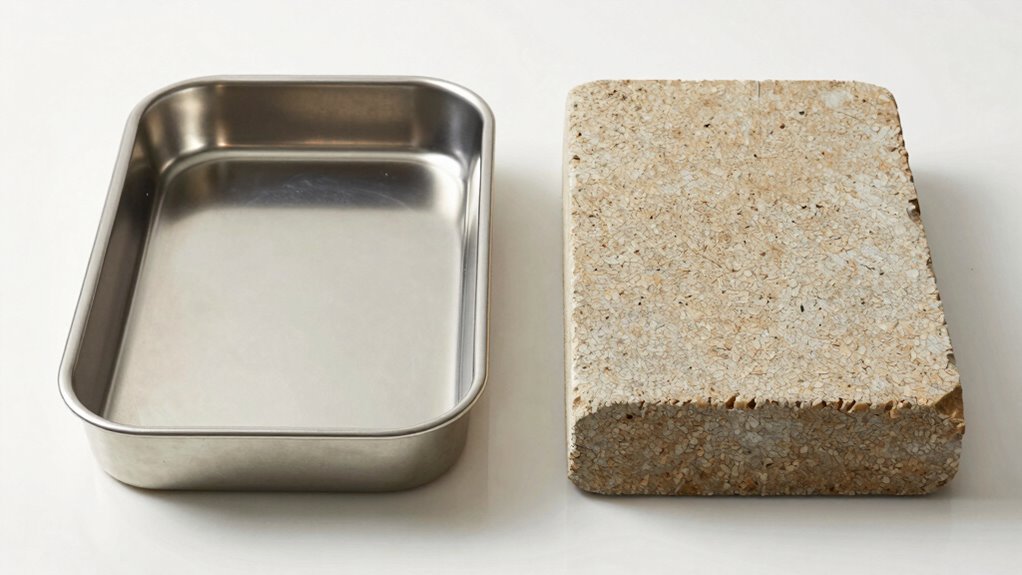

Baking steel and baking stone differ mainly in how they conduct heat. Steel transfers heat faster because of its high thermal conductivity, helping you get a crispy crust quickly. Stones, made from ceramic or cordierite, retain heat well but transfer it more slowly. This means steel heats up fast and creates a crisp crust in less time, while stone provides even, steady heat. Keep going to find out more about how to choose the best for your baking needs.

Get baking supplies delivered free with Prime
- Fast, free delivery on millions of items
- Prime Video, Amazon Music and more included
- Member-only deals all year
Key Takeaways
- Baking steel conducts heat much faster than baking stone, leading to quicker and more even crusts.
- Steel’s high thermal conductivity means it heats up rapidly, while stone absorbs heat slowly and releases it gradually.
- Steel provides a crisp crust due to its quick heat transfer, whereas stone offers steady, consistent heat for a traditional bake.
- The difference in conductivity affects baking time: steel shortens it, stone requires longer preheating for the same results.
- Choosing between them depends on desired baking speed, crust texture, and how quickly you want your oven to reach optimal temperature.
As an affiliate, we earn on qualifying purchases.
What Are Baking Steel and Baking Stone?

Baking steel and baking stone are popular tools for achieving crispy, professional-quality pizza crusts at home. A baking steel is a thick, flat piece of steel that’s excellent at conducting heat rapidly, giving you a crisp crust with less effort. Baking stone, on the other hand, is typically made of ceramic or cordierite; it retains heat well but heats more slowly. Baking steel advantages include faster heat transfer and easier handling because steel is durable and lightweight. Additionally, their thermal conductivity significantly influences how quickly and evenly the crust cooks. The responsiveness of baking steels allows for quicker adjustments during the baking process, enhancing control. Proper heat retention is crucial for maintaining consistent baking temperatures, and steels generally excel in this area due to their thermal properties. However, baking stone disadvantages involve longer preheating times and potential fragility if not handled carefully. Both tools mimic a pizza oven’s floor, but steels are generally more responsive and durable, while stones may offer a more traditional baking experience. Color accuracy plays a role in how well the crust develops a desirable appearance and texture during baking.
As an affiliate, we earn on qualifying purchases.
How Does Heat Conductivity Work in Baking?
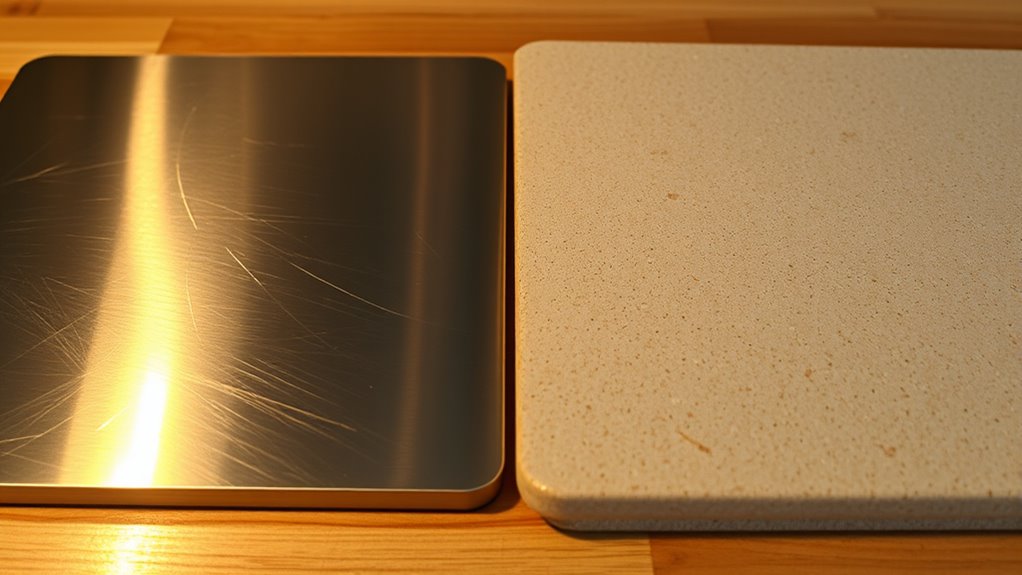
Understanding how heat moves through your baking surface is key to perfect results. Different materials transfer heat via conduction, convection, and radiation, affecting how evenly your dough cooks. By considering their thermal properties, you can choose the best surface to achieve crispy crusts and consistent baking. Additionally, Air quality in your home can also influence baking outcomes, especially if airborne particles settle on your baked goods. Good ventilation can help maintain optimal baking conditions for better results. Furthermore, the thermal conductivity of your baking material determines how quickly and evenly heat is distributed during baking. Knowing the material’s composition can further help optimize your baking process for better results. Moreover, understanding heat transfer mechanisms can assist in selecting the appropriate baking surface for specific recipes.
Heat Transfer Mechanisms
Heat transfer in baking depends primarily on how well the baking steel or stone conducts heat to the dough. When you place the hot surface in your oven, heat flows from the material to the dough through conduction. This process involves the transfer of energy from molecules vibrating due to thermal expansion, which helps evenly distribute heat. Baking steel, with its high thermal conductivity, transfers heat rapidly and uniformly, leading to a quick rise in dough temperature. On the other hand, a baking stone absorbs and retains heat well, providing steady heat over time. This heat retention ensures consistent baking, but it takes longer for the stone to reach the desired temperature. Understanding these mechanisms helps you control baking results by optimizing heat transfer and maintaining even temperatures. Efficient heat transfer is essential for achieving the best baking outcomes. Additionally, thermal mass plays a crucial role in how these materials store and deliver heat during baking. A good understanding of heat conduction can help you choose the right baking surface for different recipes, especially considering the material’s conductivity properties.
Material Thermal Properties
Material thermal properties determine how quickly and effectively heat moves through baking surfaces like steel and stone. These properties influence thermal transfer, which is how heat flows from your oven into the material and then to your dough. Steel has high thermal conductivity, so it rapidly transfers heat, leading to quick and even heating. Stone, on the other hand, has lower thermal conductivity but offers high heat resistance, allowing it to store and distribute heat more gradually. This difference impacts how your baked goods develop crust and overall texture. Understanding these properties helps you predict how each surface responds during baking, ensuring better control over heat flow. Proper selection of material based on thermal properties can substantially improve your baking results.
Impact on Baking Results
The way heat moves through your baking surface directly affects the quality of your baked goods. Better heat conductivity ensures temperature uniformity, so your bread, pizza, or pastries bake evenly without hot spots or undercooked areas. A surface with high conductivity allows heat to penetrate quickly, creating a crisp crust and well-cooked interior. Additionally, it helps retain moisture by preventing rapid temperature drops that can dry out your dough. Baking steel, with its superior conductivity, heats faster and maintains a stable temperature, resulting in consistent results. A baking stone, while slower to heat, still offers good heat distribution but may require more preheating. Recognizing the heat transfer properties of your baking surface can help you optimize your baking techniques for better outcomes. Understanding the differences in thermal conductivity between materials enables bakers to tailor their approach for specific recipes. Proper thermal management in your baking setup is essential for achieving the best possible results and consistency. Using the right material can also influence the energy efficiency of your baking process, reducing overall baking time and energy consumption.
As an affiliate, we earn on qualifying purchases.
Which Conducts Heat Better: Steel or Stone?
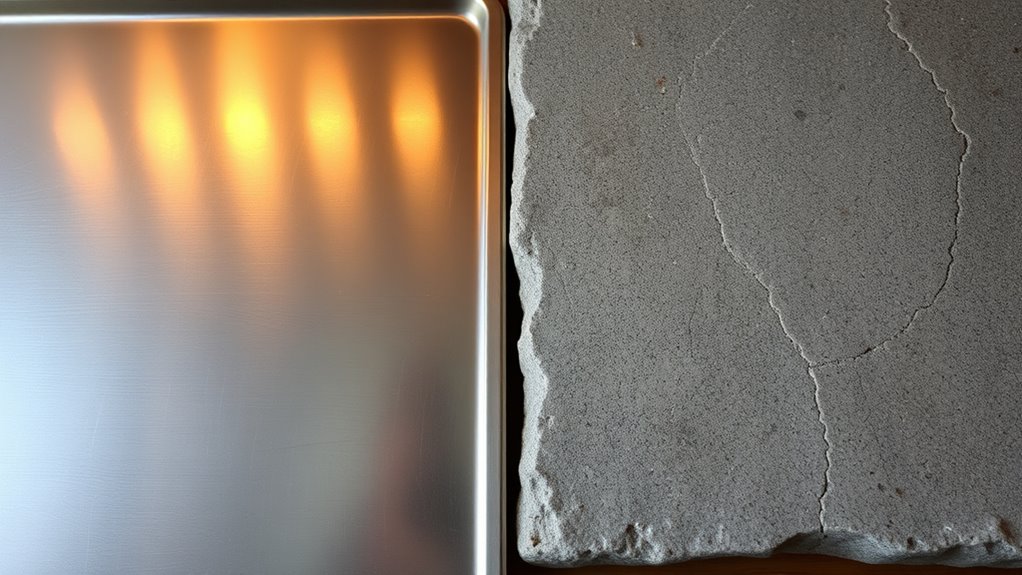
When it comes to conducting heat efficiently, steel generally outperforms stone. Steel’s higher thermal conductivity allows for faster heat transfer, meaning your oven’s heat reaches the dough more rapidly. This results in quicker, more even baking. Conversely, stone has higher thermal resistance, which slows heat transfer and retains heat longer. This can help maintain consistent oven temperatures but may delay initial heat transfer to your crust. To understand better:
- Steel conducts heat faster due to its high thermal conductivity.
- Stone resists heat transfer, leading to slower heat flow.
- The choice impacts how quickly and evenly your crust bakes.
- Material properties are essential for optimizing your baking setup for perfect results.
- Proper baking surface selection can influence heat transfer efficiency and crust quality. Additionally, understanding heat transfer mechanisms can help you choose the best material for your baking needs.
- Selecting the right material can also affect baking time and the final texture of your baked goods.
As an affiliate, we earn on qualifying purchases.
Why Is Conductivity Important for Perfect Crusts?
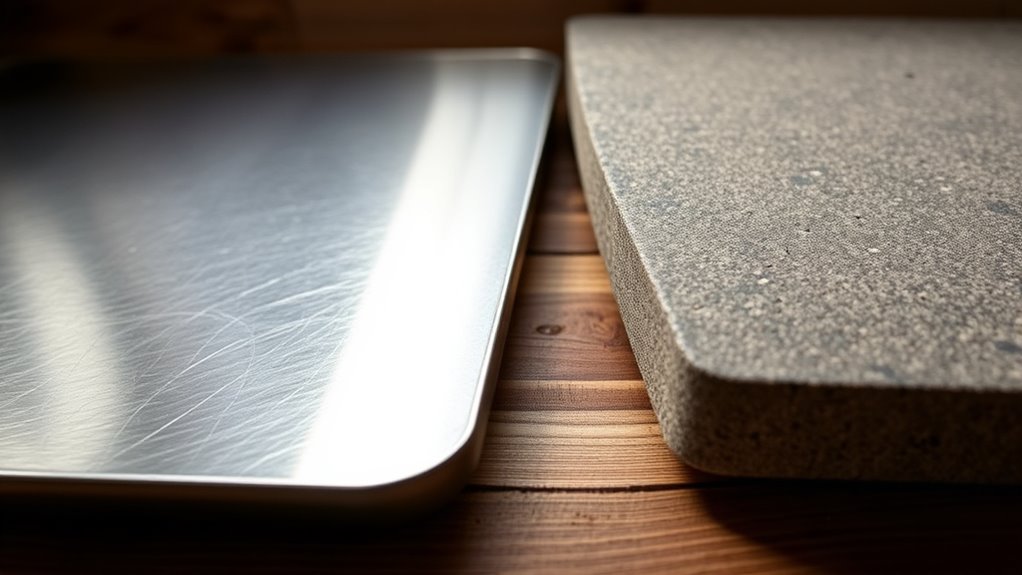
Since heat transfer directly affects how your crust develops, high conductivity is essential for achieving that perfect, evenly baked crust. When your baking surface conducts heat well, it transfers oven temperature efficiently to the dough’s exterior, promoting even crust formation. This is especially important if you have high dough hydration, which requires quick heat transfer to avoid a soggy crust. Good conductivity ensures your oven temperature translates directly into consistent baking results. Understanding the conductivity level of your baking surface helps you select the right material to optimize your baking outcomes. Additionally, different materials like steel and stone have varying thermal properties that influence heat transfer efficiency. Being aware of these material differences allows bakers to choose the best surface for their specific baking style and desired crust texture.
Pros and Cons of Steel and Stone for Conductivity
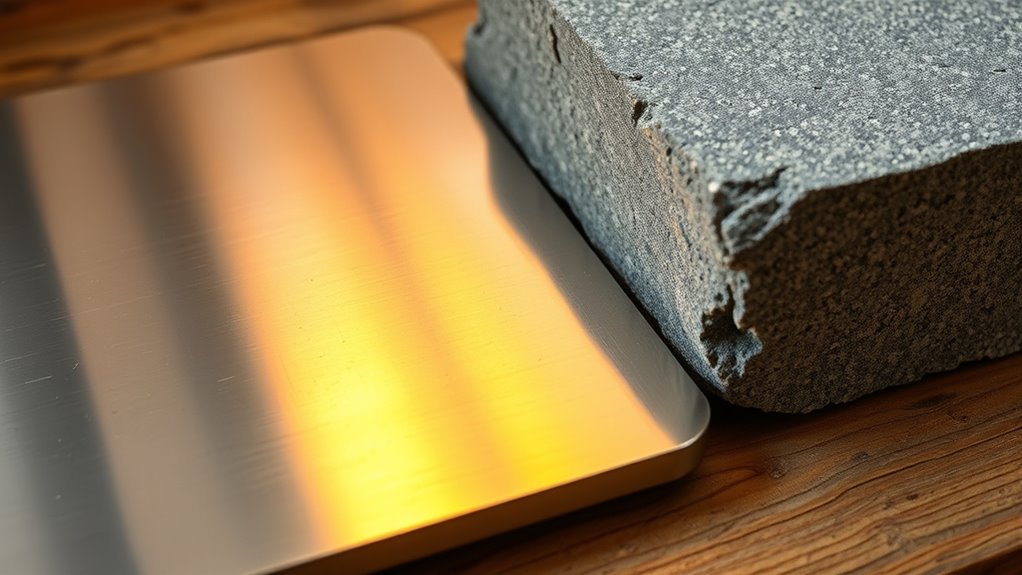
When comparing steel and stone, you’ll notice differences in how quickly they transfer heat, affecting your crust’s texture. Steel often lasts longer and resists cracking better, but it may require different care to stay in top shape. Understanding these pros and cons helps you choose the right material for your baking needs.
Heat Transfer Speed
Steel heats up and transfers heat more quickly than stone, making it ideal for achieving a rapid oven temperature rise. This speed means you can start baking sooner and reduce overall baking time. With steel, your oven reaches the desired temperature faster, which can give your bread a crisp crust faster. However, this quick heat transfer also means the steel cools down faster once removed from the oven, affecting consistency.
- Faster oven temperature rise helps you start baking sooner.
- Reduced baking time results in quicker overall cooking.
- Rapid heat transfer can cause uneven heating if not managed carefully.
In contrast, stone heats more slowly, which means it takes longer to reach your target oven temperature but provides more even heat during baking.
Durability and Longevity
Durability and longevity are key considerations when choosing between steel and stone for baking surfaces, as each material responds differently to regular use. Steel offers excellent oven durability, resisting warping and cracking over time, which extends its material lifespan. In contrast, stone can crack or break if subjected to sudden temperature changes, reducing its lifespan. Steel’s resilience makes it ideal for frequent baking, while stone may need careful handling to prevent damage. Here’s a quick comparison:
| Aspect | Steel | Stone |
|---|---|---|
| Oven durability | Very high, resistant to warping | Moderate, prone to cracking |
| Material lifespan | Longer with proper use | Shorter, susceptible to damage |
Maintenance and Care
Maintaining your baking surface properly guarantees it performs well over time, whether you choose steel or stone. Good cleaning routines help prevent buildup and damage, ensuring even heat transfer. For steel, simply wipe with a damp cloth and dry thoroughly; avoid abrasive cleaners. Stones, on the other hand, need gentle brushing and minimal water to prevent cracking. Proper storage solutions protect your surface from chipping or warping—store steel upright or flat in a dry space, and keep stones in a padded area.
- Regularly clean and dry your surface after each use.
- Use appropriate cleaning routines tailored to steel or stone.
- Store in a safe, dry location to prevent damage and maintain integrity.
How to Pick the Best Baking Surface for Your Needs
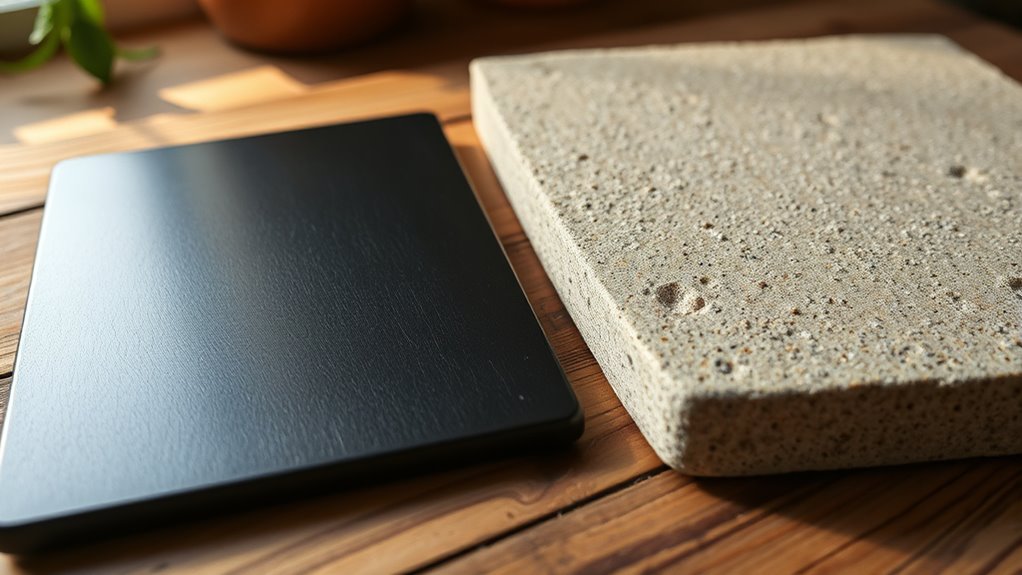
Choosing the right baking surface depends on your specific needs and baking habits. To do that, consider baking surface compatibility—how well a steel or stone works with your oven and recipes. If you want quick heat transfer for crispy crusts, a baking steel might be your best choice. If you prefer a more forgiving surface with excellent heat retention, a baking stone offers greater cooking surface versatility. Think about what you bake most often: thin-crust pizzas, bread, or cookies. Also, assess how easy it is to handle and clean each surface. Your ideal baking surface balances performance with convenience. By matching these factors to your baking style, you ensure consistent results and an enjoyable experience every time you bake.
Tips to Get the Most Out of Your Steel or Stone

To get the best results from your baking steel or stone, proper preheating them before adding your dough is essential. This ensures even heat transfer and ideal crust development. Here are three tips to maximize your baking:
- Set your oven temperature high—around 500°F (260°C)—and preheat for at least 45 minutes. This warms the steel or stone thoroughly.
- Adjust your baking time based on your dough; thicker crusts need a few extra minutes to bake fully.
- Use a pizza peel or parchment paper to slide your dough onto the hot surface quickly, reducing heat loss during transfer.
Following these steps helps you get a crisp crust and consistent bake, leveraging the conductivity benefits of your steel or stone.
Frequently Asked Questions
How Long Do Baking Steel and Stone Last With Regular Use?
With regular use, a baking steel can last 5 to 10 years, thanks to its durability comparison showing it resists wear and tear well. A baking stone typically lasts 2 to 5 years, as it’s more prone to cracking or breaking over time. To maximize their lifespan, handle both carefully, avoid drastic temperature changes, and clean them properly. Your baking steel will serve you longer with proper care.
Can Baking Steel or Stone Be Used in a Standard Home Oven?
Yes, you can use baking steel or stone in a standard home oven. They’re compatible with most oven settings, making them easy to incorporate into your baking routine. Both materials are durable, so they withstand high temperatures and regular use without damage. Just make certain you follow the manufacturer’s instructions for heating and handling to maximize oven compatibility and material durability, giving you consistent, professional-quality results every time.
Are There Any Safety Concerns When Using Steel or Stone?
Imagine you’re baking a pizza and accidentally leave your steel or stone in a hot oven too long. While generally safe, there’s a slight fire hazard if you’re not cautious—avoid placing them near flammable materials. Also, surface durability matters; steel is highly durable, but stones can crack if exposed to sudden temperature changes. Always handle with oven mitts and follow manufacturer instructions to stay safe.
How Does Preheating Time Differ Between Steel and Stone?
You’ll find that preheating your steel takes less time because its lower thermal mass heats up quickly, offering faster heat transfer. In contrast, a stone’s higher heat retention means it needs a longer preheat to reach the same temperature. Steel heats rapidly, making it ideal if you want quick results, whereas stone’s slower preheating benefits from its ability to store and evenly distribute heat during baking.
Is Cleaning or Maintenance Different for Steel Versus Stone Surfaces?
You’ll want to approach surface cleaning and maintenance routines differently for steel and stone. For steel, use a damp cloth or gentle scrubber to remove residue, avoiding harsh chemicals. You can occasionally heat it to burn off stubborn spots. For stone, avoid soap and harsh cleaners; instead, wipe with a damp cloth and mild soap if needed. Regularly inspect and dry both surfaces to prevent damage and guarantee longevity.
Conclusion
Choosing between baking steel and stone can make or break your bread game. Steel’s lightning-fast heat transfer could turn your crust from good to mind-blowingly perfect in seconds, while stone’s steady warmth keeps your bake consistent. Pick the right one, and you’ll uncover baking greatness—your oven will become a legendary creation station. Get ready to impress everyone with crusts so perfect, they’ll think you’ve got magic in your oven. The baking world is about to change forever!
Halloween Picks
halloween
As an affiliate, we earn on qualifying purchases.