To spot overfermented dough, check for a sour smell, bubbly or frothy surface, and a fragile, sticky texture that tears easily. It may collapse or lose elasticity, resulting in dense baked goods with poor texture and a sour flavor. To salvage it, knead in fresh flour and water, shape smaller or flatter items, or repurpose into flatbreads or crackers. Learn more tips to prevent and fix overfermentation for perfect baking outcomes.
Key Takeaways
- Identify overfermentation by a strong sour smell, bubbly surface, and dough that feels fragile or overly sticky.
- Look for signs like deflation, liquid consistency, or a loss of elasticity in the dough.
- Detect intense aroma and frothy, bubbly texture as indicators of overfermentation.
- Overfermented dough often results in dense, flat baked goods with poor texture and sour flavor.
- Salvage by kneading in fresh flour and water, shaping into smaller portions, or repurposing into flatbreads or crackers.

Have you ever noticed your dough smelling overly sour or collapsing before baking? That’s often a sign of overfermentation, which occurs when the fermentation process goes on too long. During fermentation, yeast consumes sugars in the dough, producing carbon dioxide and alcohol that help it rise. But when fermentation extends beyond the ideal window, the dough’s consistency changes dramatically. It can become overly slack, sticky, or even start to deflate. Recognizing these signs early can save your baked goods from turning out dense or flat.
Overfermentation makes dough sour, slack, and prone to collapsing before baking.
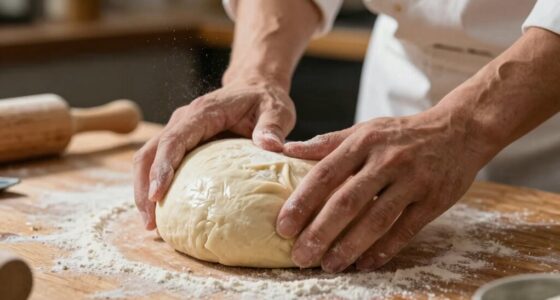
As the fermentation process advances past its perfect point, the dough’s structure breaks down. You’ll notice it becomes more liquid or runny, losing the firm, elastic quality it should have. Instead of a smooth, resilient dough that holds its shape well, it might feel excessively sticky or even look bubbly and frothy. This is because the gluten network—responsible for the dough’s elasticity—has weakened due to prolonged yeast activity and acid buildup. Overfermentation also causes the dough to develop an intense sour aroma, often more pungent than the typical tang of a well-fermented loaf. If you touch or stretch it, it may feel fragile, tearing easily rather than bouncing back. Understanding fermentation timing and how it affects dough quality is key to avoiding waste.
Knowing how to identify overfermented dough is essential for salvage. You might be tempted to bake it as-is, but the results will likely be disappointing—dense, flat, and lacking in texture. Instead, consider adjusting your approach. If the dough is still somewhat workable, you can try to rescue it by kneading in a bit of fresh flour and water to strengthen the gluten network. This can help restore some dough consistency, giving it a better chance to rise again. Alternatively, you can shape it into smaller rolls or flatbreads, which are more forgiving if the dough has lost some of its elasticity. Keep in mind, though, that the flavor will be quite tangy, and the texture might be more open or crumbly.
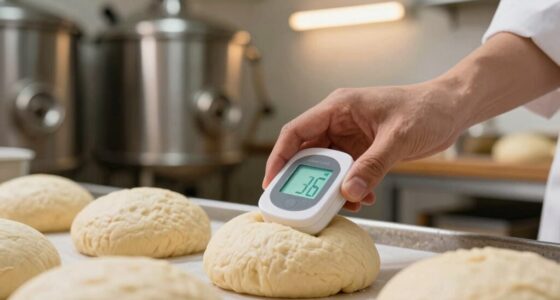
Another effective method is to reduce the fermentation time for your next batch, especially if you notice signs of overfermentation early. Using cooler fermentation temperatures can slow down yeast activity, giving you more control over the process. If your dough has overfermented badly, you might also consider repurposing it into other baked goods, like crackers or flatbreads, where a dense or tangy crumb isn’t an issue. Ultimately, understanding the signs of overfermentation and adjusting your technique accordingly can help you salvage and make the most of your dough, avoiding waste and ensuring better baking results.
Frequently Asked Questions
Can Overfermentation Affect the Nutritional Value of the Dough?
Overfermentation can affect the nutritional value of your dough because fermentation byproducts can lead to nutritional degradation. As the dough ferments excessively, beneficial nutrients like vitamins and minerals may break down, reducing their availability. This process can also produce undesirable flavors and textures. To preserve nutrition, monitor fermentation closely and avoid overdoing it, ensuring your dough retains its healthy benefits without compromising taste or quality.
How Does Overfermentation Impact Gluten Structure and Texture?
Imagine baking bread and noticing a dense, gummy crumb. Overfermentation weakens the gluten network, causing the dough’s structure to break down. This results in a coarse, irregular crumb and poor rise. The gluten strands lose elasticity, making it harder to shape and achieve a light, airy texture. To avoid this, monitor fermentation times carefully—overfermentation considerably compromises the dough’s gluten structure and overall texture.
Is There a Way to Prevent Overfermentation During Long Proofing?
To prevent overfermentation during long proofing, you should carefully monitor fermentation timing and adjust proofing techniques accordingly. Keep an eye on the dough’s size and aroma, and refrigerate it if it ferments too quickly. Using cooler temperatures slows fermentation, giving you more control. Additionally, consider shortening proofing times or employing retarding methods like refrigeration to maintain ideal dough development without risking overfermentation.
Can Overfermented Dough Be Used for Other Recipes Besides Bread?
Yes, overfermented dough can be used for alternative recipes like pizza crusts, flatbreads, or crackers. To salvage it, punch it down to release excess gas, then reshape and allow a brief second proof. This helps regain some structure and flavor. Keep in mind, the dough’s flavor will be more tangy, which can add unique character to your recipes. Experiment with small batches to find the best use.
What Are the Signs of Overfermentation in Sourdough Starters?
A gentle touch reveals the signs of an overzealous fermentation in your starter. If it develops a strong, sour aroma and shows excessive bubbling, it’s a hint that fermentation has gone beyond ideal. You might notice a layer of liquid on top—called starter discard—indicating it’s been fermenting too long. Typically, staying mindful of your fermentation timeline helps prevent overfermentation, ensuring your starter remains lively and ready for baking.
Conclusion
So, next time your dough shows signs of overfermentation, don’t panic. With a little effort, you can salvage it and still enjoy your baking. Remember, understanding the signs and knowing how to fix it gives you more control in the kitchen. Isn’t it satisfying to turn a mistake into a delicious success? With patience and practice, you’ll master identifying and rescuing overfermented dough, making every bake a triumph rather than a disappointment.