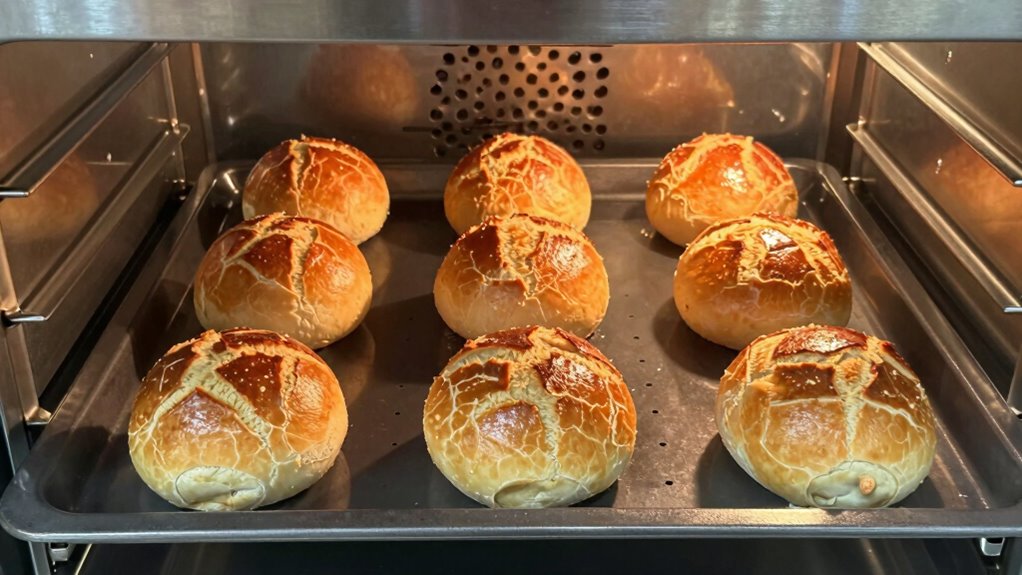
To bake multiple loaves evenly, you should leave at least one to two inches of space between each loaf. Proper spacing promotes good heat circulation, prevents overcrowding, and helps develop a uniform crust and crumb. Use multiple racks if needed, and avoid stacking or crowding the oven. Adjust spacing based on loaf size and oven capacity. If you want to master even baking, keep exploring these spacing tips for perfect results every time.

Get baking supplies delivered free with Prime
- Fast, free delivery on millions of items
- Prime Video, Amazon Music and more included
- Member-only deals all year
Key Takeaways
- Leave 1 to 2 inches of space between loaves to promote even heat circulation and prevent sticking.
- Use multiple racks with consistent spacing, ideally placing loaves 1-2 inches apart for uniform baking.
- Avoid overcrowding the oven; ensure proper spacing to allow airflow and prevent hot spots.
- Adjust spacing based on loaf size and dough behavior, increasing gaps for larger or expanding loaves.
- Rotate racks halfway through baking to ensure even heat exposure and consistent results.
oven baking rack for multiple loaves
As an affiliate, we earn on qualifying purchases.
As an affiliate, we earn on qualifying purchases.
Why Proper Spacing Matters When Baking Multiple Loaves
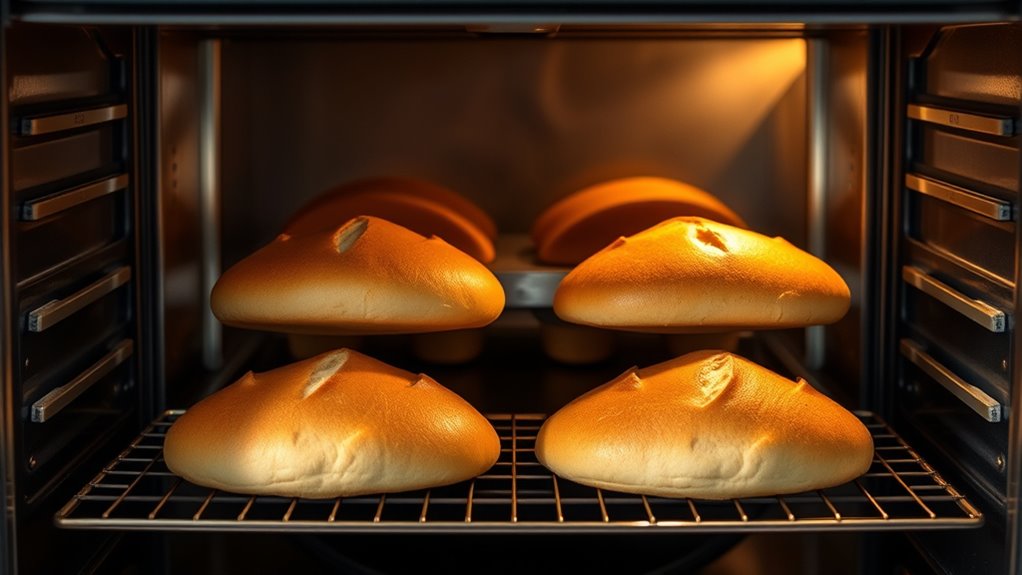
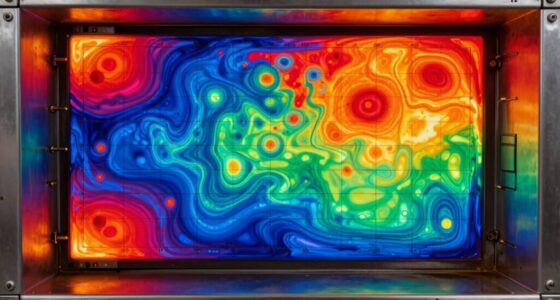
When baking multiple loaves at once, proper spacing is essential to guarantee even baking. If your loaves are too close, the heat can’t circulate evenly, causing uneven crusts and undercooked centers. During bread shaping, pay attention to how the dough holds its shape, as tight or loose shaping can affect how evenly heat penetrates. If you’ve made ingredient substitutions, such as adding more moisture or altering the dough’s density, spacing becomes even more critical to accommodate different baking times. Proper spacing ensures that each loaf receives uniform heat exposure, preventing soggy or overly browned edges. Additionally, understanding proper oven placement can further enhance your baking results by optimizing heat circulation. Maintaining consistent baking conditions across multiple loaves helps achieve uniform results, especially when working with varied dough types. Being mindful of airflow within the oven can also prevent hot spots and ensure even baking for all loaves. Incorporating knowledge about oven temperature stability can further improve your baking consistency and quality.
baking sheet with multiple racks
As an affiliate, we earn on qualifying purchases.
As an affiliate, we earn on qualifying purchases.
What’s the Best Distance Between Loaves for Even Baking?
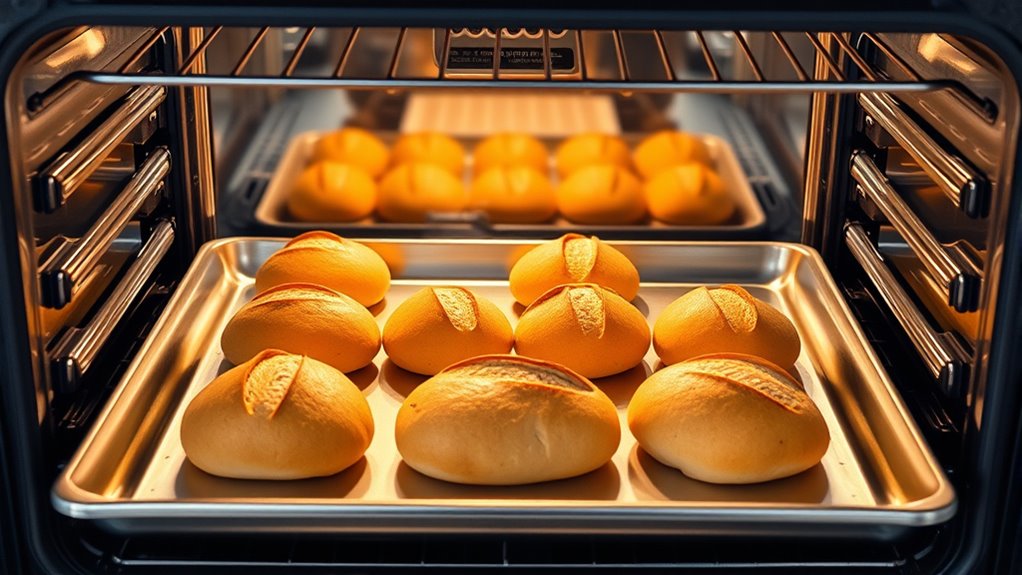
What is the ideal distance to leave between loaves for even baking? Generally, spacing your loaves 1 to 2 inches apart allows heat to circulate properly, promoting even bread density and crust development. To optimize results, consider these tips:
- Keep loaves at least 1 inch apart to prevent sticking.
- Space them evenly to ensure uniform heat exposure.
- Avoid overcrowding, which can lead to uneven crusts.
- Adjust based on loaf size—larger loaves may need slightly more space.
- Proper spacing also helps prevent hot spots, ensuring consistent baking throughout each loaf.
This spacing helps heat reach all sides, supporting consistent crust formation and bread texture. Proper distance minimizes hot spots and ensures each loaf bakes evenly, giving you that perfect crust and even crumb structure every time.
oven spacing tools for bread baking
As an affiliate, we earn on qualifying purchases.
As an affiliate, we earn on qualifying purchases.
How Oven Size and Racks Affect Your Bread Spacing
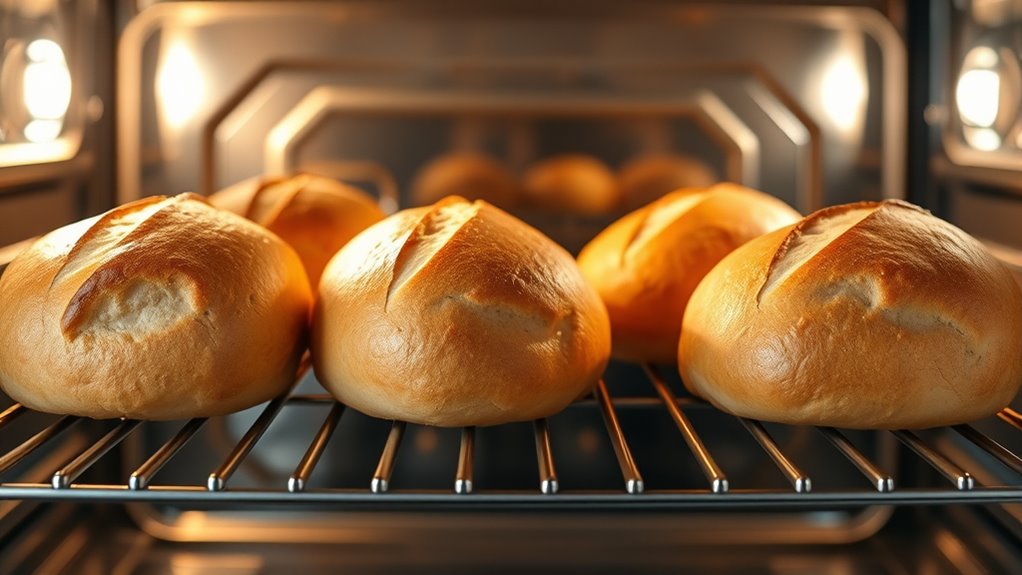
The size of your oven and the arrangement of racks play a significant role in how you space your loaves for even baking. If your oven is smaller, you’ll need to place loaves closer together, but avoid overcrowding to make sure proper heat circulation. With a larger oven, you have more flexibility to space loaves farther apart, promoting even heat distribution. Rack placement matters as well; positioning racks in the middle or upper third of the oven helps prevent uneven browning. Avoid stacking loaves vertically on the same rack, which can block heat flow. Adjusting your rack placement based on your oven size guarantees each loaf receives consistent heat, leading to uniform baking and better crust development. Proper spacing tailored to your oven’s capacity enhances baking results. Understanding heat circulation and airflow is essential for achieving evenly baked loaves every time, especially when considering oven capacity and how it impacts heat distribution. Additionally, ensuring proper airflow patterns within the oven can significantly improve baking consistency across multiple loaves.
As an affiliate, we earn on qualifying purchases.
How to Arrange Loaves on Different Baking Sheets and Pans
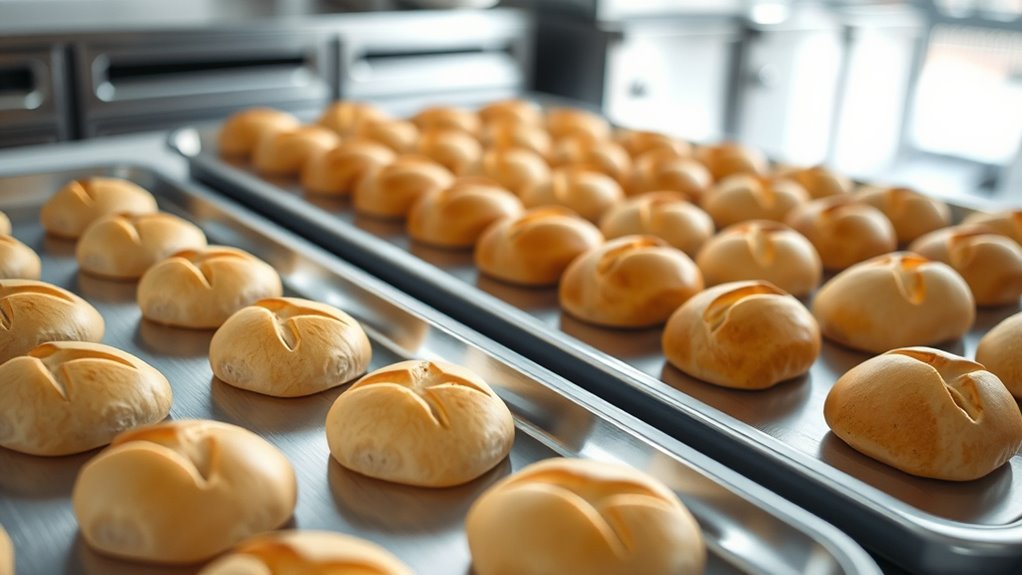
Choosing the right baking sheets and pans is essential for even bread baking. Properly arranging loaves guarantees consistent heat transfer and prevents sticking. Here’s how to optimize your setup:
- Use different-sized pans for varied bread shapes, helping with even cooking.
- Arrange loaves with at least 1-2 inches of space for proper heat circulation.
- Place bread shaped with similar techniques together to ensure uniform baking.
- Adjust ingredient substitutions carefully; denser breads may need more space to prevent uneven baking.
- Proper oven airflow is also crucial, so avoid overcrowding and ensure air can circulate freely around each loaf. Additionally, understanding the role of heat transfer in baking can help you anticipate how different arrangements affect baking outcomes. Recognizing how heat convection distributes heat within the oven can further improve baking results.
When bread shaping varies, ensure the shapes are similar to promote even cooking. Also, remember that ingredient substitutions can affect baking times and spacing needs. Proper arrangement on different pans maximizes oven heat flow, resulting in perfectly baked loaves.
Using Racks: Single vs. Multiple for Baking Multiple Loaves
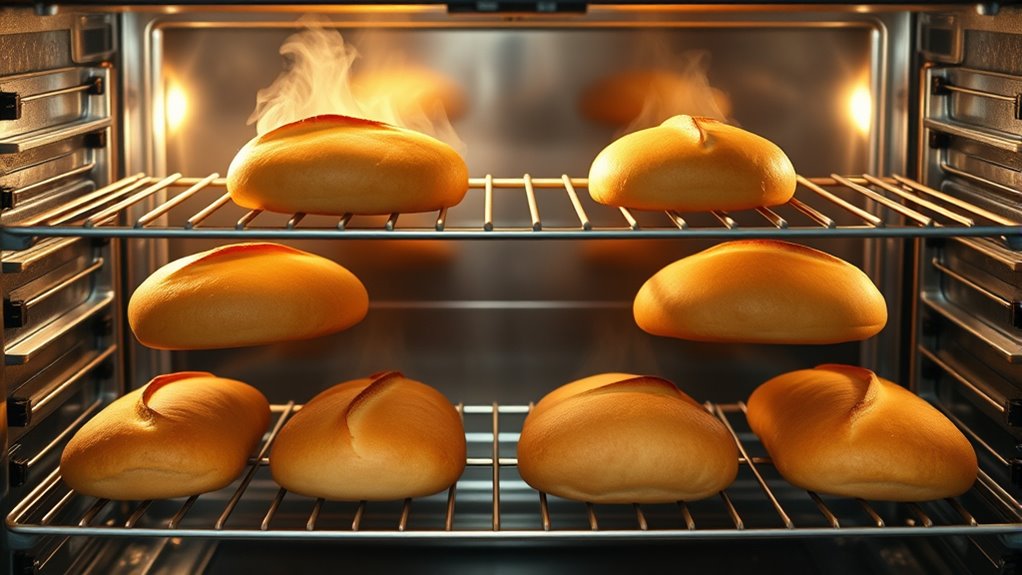
Using racks can substantially impact how evenly your loaves bake, especially when you’re working with multiple breads. When you use a single rack, oven thermodynamics guarantee heat circulates more uniformly, promoting even baking. A single rack provides better airflow around each loaf, reducing hot spots caused by uneven heat distribution. If you opt for multiple racks, guarantee they are well-spaced and use a baking vessel like a baking sheet or sheet pan to hold the racks. This setup prevents overcrowding, which can disrupt airflow and cause uneven baking. Keep in mind that the effectiveness of multiple racks depends on your oven’s heat circulation. Proper spacing and a suitable baking vessel are key to maintaining consistent oven thermodynamics, ensuring all loaves bake evenly regardless of how many racks you use. Oven heat circulation plays a crucial role in achieving evenly baked loaves when using multiple racks. Additionally, understanding how oven airflow interacts with rack placement can help optimize your baking results, especially when considering baking vessel placement and design.
How to Prevent Overcrowding and Improve Airflow
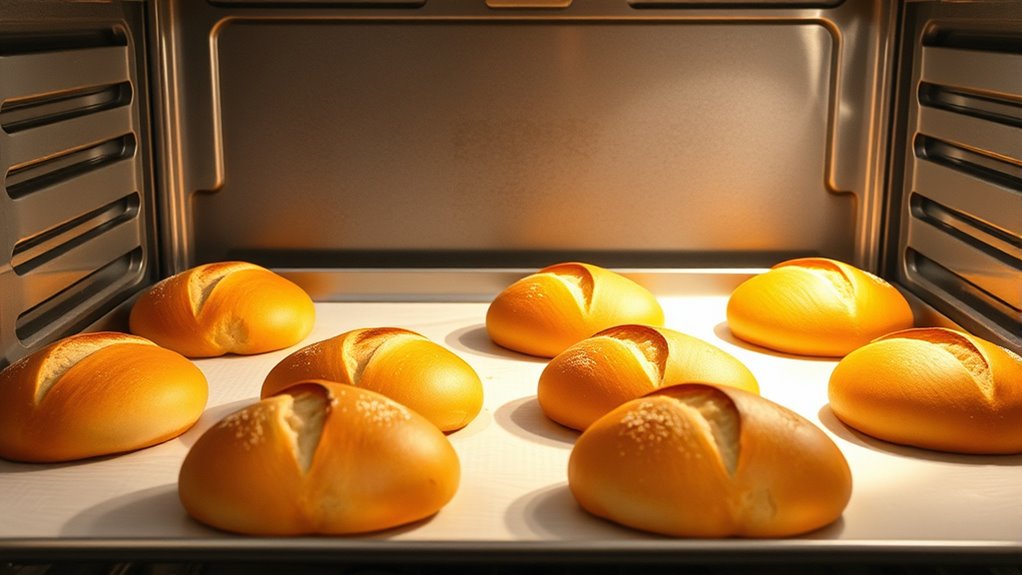
To prevent overcrowding, make sure you space your loaves properly on the racks, leaving enough room for air to circulate. Using multiple racks effectively can help you avoid stacking loaves too closely together. By paying attention to proper spacing techniques, you’ll guarantee even baking and better airflow throughout the oven. Additionally, understanding how airflow impacts heat distribution can further optimize your baking results. Proper oven setup and positioning can also play a crucial role in achieving consistent baking outcomes. Remember that clutter management can improve airflow and prevent uneven heat spots, ensuring each loaf bakes evenly. Adjusting rack placement based on heat circulation patterns can further enhance baking consistency.
Proper Spacing Techniques
Ensuring proper spacing between loaves is essential for even baking and good airflow. When you space your loaves correctly, heat circulates evenly, preventing soggy bottoms or burnt tops. To achieve this:
- Leave at least 1 to 2 inches between loaves to allow airflow.
- Ensure bread shaping results in uniform-sized loaves, promoting consistent baking.
- Maintain proper ingredient ratios to prevent uneven rising, which can affect spacing.
- Use a baking sheet or pan with enough room, avoiding overcrowding that hampers heat circulation.
Use Multiple Racks Effectively
When baking multiple loaves, placing them on separate racks can considerably improve airflow and prevent overcrowding. Using multiple oven racks allows hot air to circulate evenly around each loaf, promoting uniform baking. Be sure to adjust the dough placement so each loaf has enough space, avoiding overcrowding on any one rack. If your oven has two racks, position the racks in the middle and upper third, leaving enough room for air to flow freely. Space the loaves evenly and avoid stacking or crowding them. This setup helps prevent hot spots and ensures each loaf bakes evenly. Remember to rotate the racks halfway through baking if your oven has hot spots, maintaining consistent oven temperature and airflow. Proper airflow is essential for achieving evenly baked loaves and preventing uneven browning. Additionally, using oven thermometers can help monitor temperature fluctuations and further optimize baking conditions. Ensuring good oven circulation can also help improve overall baking results. Incorporating baking accessories such as baking stones or pans designed for multiple items can further enhance airflow and heat distribution for consistent baking.
How to Adjust Spacing for Different Bread Sizes and Dough Types
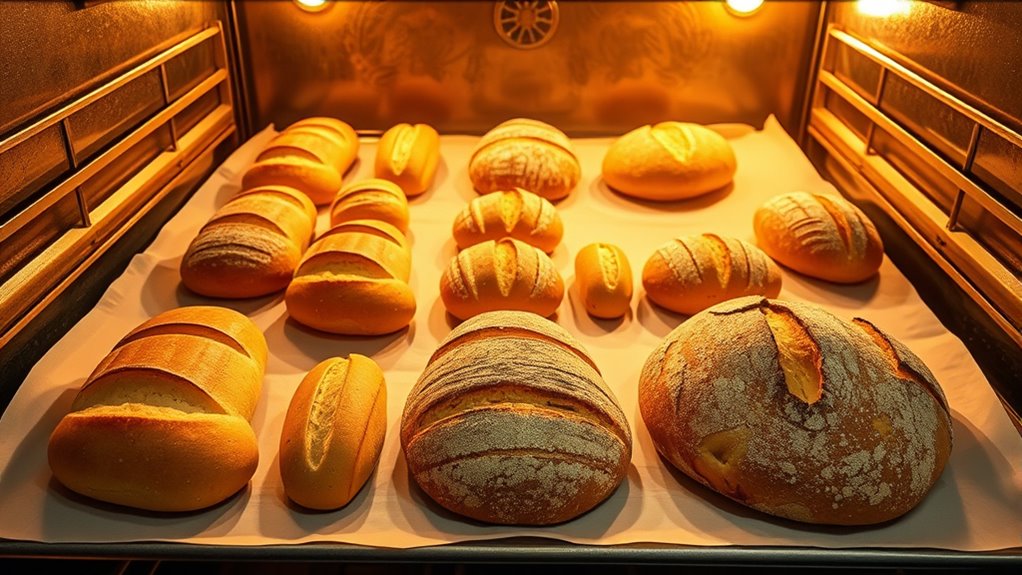
When adjusting spacing, start by increasing the gaps for larger loaves to guarantee proper expansion. Keep in mind that dough with higher hydration may need more space to prevent sticking, while stiffer dough can be placed closer together. Use visual cues like the dough’s rise and shape to fine-tune your spacing and achieve even baking results. Additionally, understanding oven heat distribution can help you optimize placement for more consistent baking outcomes. Recognizing the size and shape of your loaves can further enhance your ability to space them correctly for uniform baking. Being aware of oven hot spots can also help you adjust placement to avoid uneven baking.
Adjust Gap Based on Size
Adjusting the gap between your loaves is essential to make certain of even baking, especially when working with different bread sizes and dough types. Larger loaves require more space to prevent sticking and ensure proper heat circulation. To optimize your spacing:
- Increase the gap for bigger loaves to allow expansion and prevent touching.
- Decrease spacing for smaller or denser doughs that don’t spread much.
- Consider dough variation—hydration levels affect how much the dough expands.
- Alter spacing if you notice uneven browning or undercooked edges.
Consider Dough Hydration Levels
Dough hydration levels substantially influence how much your bread expands during baking, which in turn impacts how you should space your loaves. Higher hydration doughs tend to spread more, requiring extra space to prevent sticking or uneven crust development. Conversely, lower hydration doughs expand less, so you can place loaves closer together. To optimize spacing, consider the dough’s hydration and size:
| Dough Type | Recommended Spacing |
|---|---|
| High hydration | Increase gaps to accommodate expansion |
| Medium hydration | Standard spacing; monitor during baking |
| Low hydration | Slightly closer placement, less spreading |
Adjusting based on dough hydration helps ensure even baking and crust development, avoiding overcrowding and uneven results.
Use Visual Cues for Spacing
How can you tell if your loaves are spaced correctly during baking? Use visual cues to assess if your spacing aligns with spacing guidelines. Different bread sizes and dough types require adjustments. Here are quick tips:
- Check for even gaps—about 1 to 2 inches—between loaves.
- Observe how the dough expands—too close, and they may touch or stick.
- Watch for air circulation—loaves should not crowd the oven space.
- Adjust spacing based on dough type—softer doughs need more room to prevent sticking.
These visual cues help you fine-tune your spacing for consistent baking. By paying attention to these cues, you ensure even heat distribution and perfect crusts every time. Proper spacing makes all the difference in bread baking success.
Managing Hot Spots With Proper Spacing Strategies
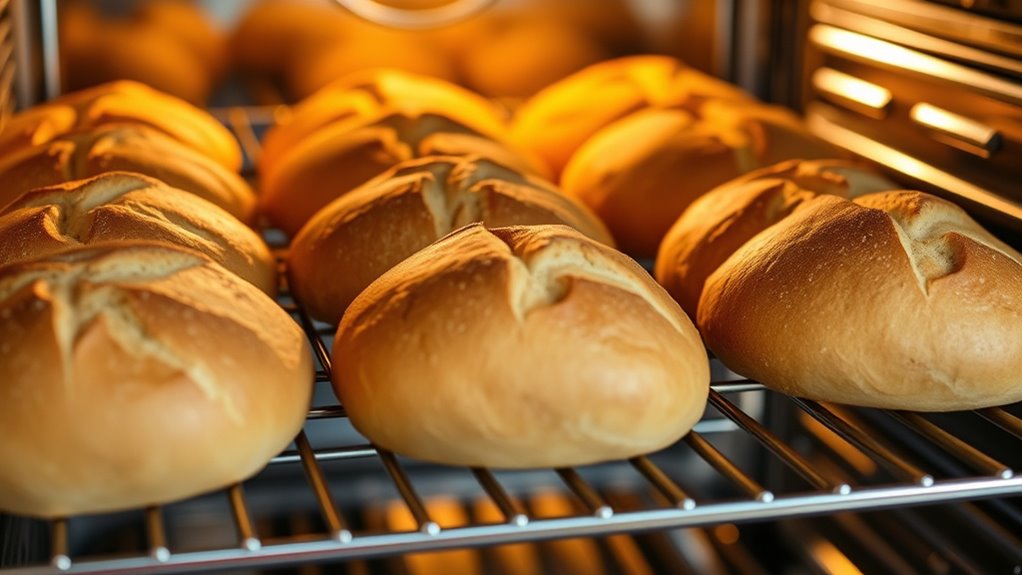
Hot spots in your oven can cause uneven baking, but proper spacing between loaves helps distribute heat more evenly. To manage these hot spots, consider how oven temperature and bread shape affect heat flow. Keep loaves spaced so hot air circulates freely, avoiding crowded clusters. Larger or differently shaped bread may need extra space to prevent uneven browning. Use the table below to visualize effective spacing strategies:
| Bread Shape | Recommended Spacing | Hot Spot Management | Temperature Adjustment | Baking Time Tips |
|---|---|---|---|---|
| Round Loaves | 1-2 inches apart | Rotate if uneven | Lower oven temp slightly | Check early |
| Baguettes | 1 inch apart | Use convection fan | Maintain consistent temp | Use oven thermometer |
| Small Rolls | 0.5-1 inch apart | Use baking stones | Adjust oven rack height | Rotate halfway |
| Flattened Loaves | 1.5 inches apart | Avoid overcrowding | Keep oven temp steady | Monitor closely |
| Specialty Shapes | Custom spacing | Use heat diffusers | Adjust as needed | Check for hot spots |
How to Monitor and Adjust Loaves During Baking
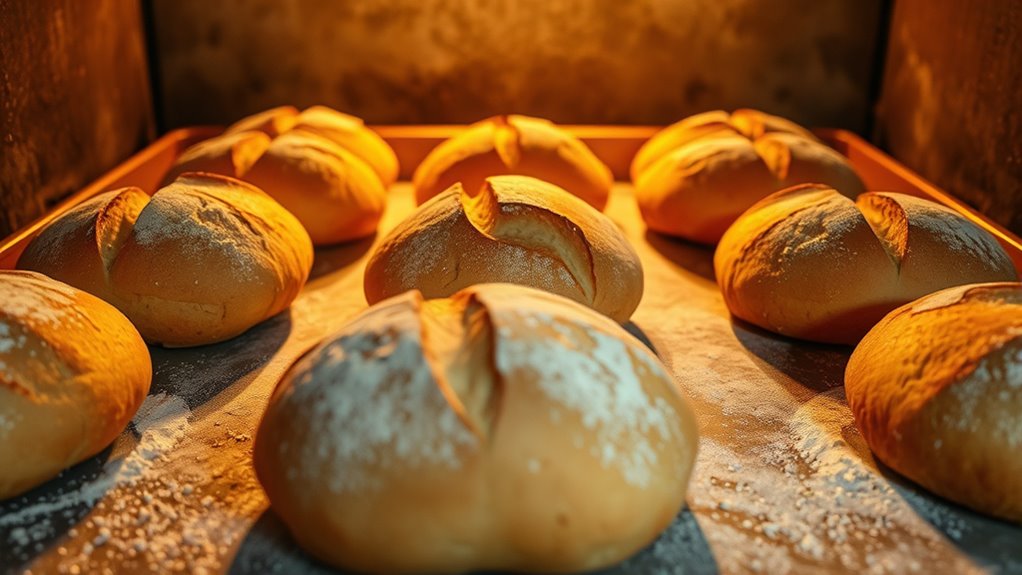
As your loaves bake, keep an eye out for underbaked spots that may need extra heat. If you notice uneven browning or raw centers, adjusting the oven temperature can help correct the issue. Monitoring closely allows you to make timely changes for evenly baked loaves.
Spotting Underbaked Spots
Ever wonder how to tell if your bread is baking evenly? To spot underbaked spots, look closely at your loaves. Consider these steps:
- Check the crust development; if some areas are pale or soft, they may be underbaked.
- Gently tap the loaf—if it sounds hollow, it’s likely done, but uneven crust can hide underbaked spots.
- Examine the bread shape—uneven rising might cause part of the loaf to be underdone.
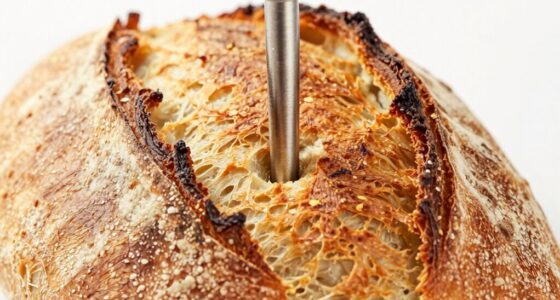
- Use a thermometer to check internal temperature; under 190°F (88°C) indicates it needs more time.
Pay attention to any soft or doughy patches, especially around the centers or edges. Proper bread shaping guarantees even heat distribution, helping you avoid underbaked spots and achieve a beautifully baked crust.
Adjusting Oven Temperature
Monitoring and adjusting your oven temperature during baking is essential for evenly cooked loaves. Keep an eye on your bread’s progress and use an oven thermometer to verify accuracy, as oven safety is paramount. If you notice uneven browning or undercooked centers, you may need to adjust the temperature slightly—lowering it if the crust is too dark or increasing it if the inside remains doughy. Remember, ingredient substitutions, like using different types of flour or sweeteners, can affect baking time and temperature. Make small adjustments gradually to prevent over- or under-baking. Always avoid opening the oven door too often, as it causes temperature fluctuations that can compromise your loaves’ evenness. Proper monitoring and careful adjustments help you achieve bakery-quality results with confidence.
Common Mistakes to Avoid When Spacing Multiple Loaves
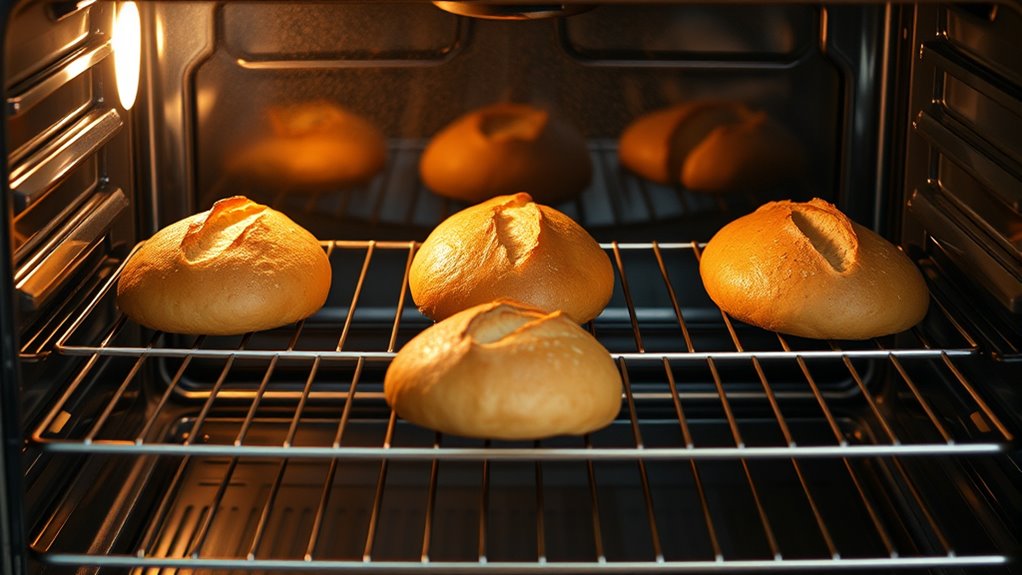
One common mistake when spacing multiple loaves is placing them too close together, which can cause uneven baking and sticking. To avoid this, pay attention to proper spacing. Here are key pitfalls to watch out for:
- Overcrowding the oven: Crowding leads to poor heat circulation, causing uneven browning.
- Ignoring overproofing issues: Overproofed loaves expand excessively, risking sticking if packed too tightly.
- Using ingredient substitutions improperly: Changes in ingredients can alter dough stretch and rise, affecting spacing needs.
- Neglecting air circulation: Failing to leave enough space reduces airflow, resulting in inconsistent baking results.
Frequently Asked Questions
Can Different Bread Recipes Require Different Spacing?
Yes, different bread recipes can require different spacing because factors like bread dough hydration affect how much they expand. Higher hydration doughs tend to spread more, so you should give them extra space on the oven rack. Proper oven rack placement also matters; placing loaves too close can hinder even baking and expansion. Adjust spacing based on your recipe’s hydration level and loaf size to make sure each loaf bakes evenly.
How Does Oven Temperature Affect Loaf Spacing?
Oven heat and temperature regulation directly affect loaf spacing because higher temperatures cause bread to rise faster and expand more. If your oven runs hot, you should space loaves farther apart to prevent them from touching or merging. Conversely, with lower oven temperatures, you can place loaves closer together. Always monitor oven heat closely and modify spacing accordingly to guarantee even baking without overcrowding.
Is It Better to Use Multiple Baking Sheets or a Single Large Sheet?
Using multiple baking sheets often works best because it allows you to maximize oven space and maintain proper oven rack arrangement. This prevents loaves from touching and ensures even baking. A single large sheet can be overcrowded, leading to uneven heat distribution. So, opt for multiple baking sheet choices and arrange your oven racks thoughtfully to promote consistent baking and evenly spaced loaves.
How Does Loaf Shape Influence Spacing Requirements?
Loaf shape acts like the wings of a bird, guiding how much space you need. Longer, narrower loaves need more room to expand, while round or square shapes can be baked closer together. When using different baking pan types, consider their size and shape to avoid overcrowding. Proper spacing guarantees even heat distribution, preventing sticking or uneven baking. Adjust your placement based on loaf shape for perfect results every time.
Should I Rotate Loaves During Baking for Even Results?
Yes, you should rotate loaves during baking for even results. Move the baking sheet from front to back or side to side halfway through baking. Make certain your oven rack placement allows for proper airflow, and use a baking sheet material that conducts heat evenly, like metal. Rotation helps avoid hot spots, ensuring each loaf bakes uniformly and develops a consistent crust and crumb.
Conclusion
So, there you have it—master the art of spacing, and your bread will rise to the occasion (literally). Ignore these tips, and you’ll end up with uneven loaves that look like a toddler’s art project. Remember, a little patience and proper spacing turn your baking chaos into bakery-quality perfection. Or, you know, just keep guessing—your call. Happy baking, or at least, happy pretending to be a bread pro!
Fall Picks
fall essentials
As an affiliate, we earn on qualifying purchases.