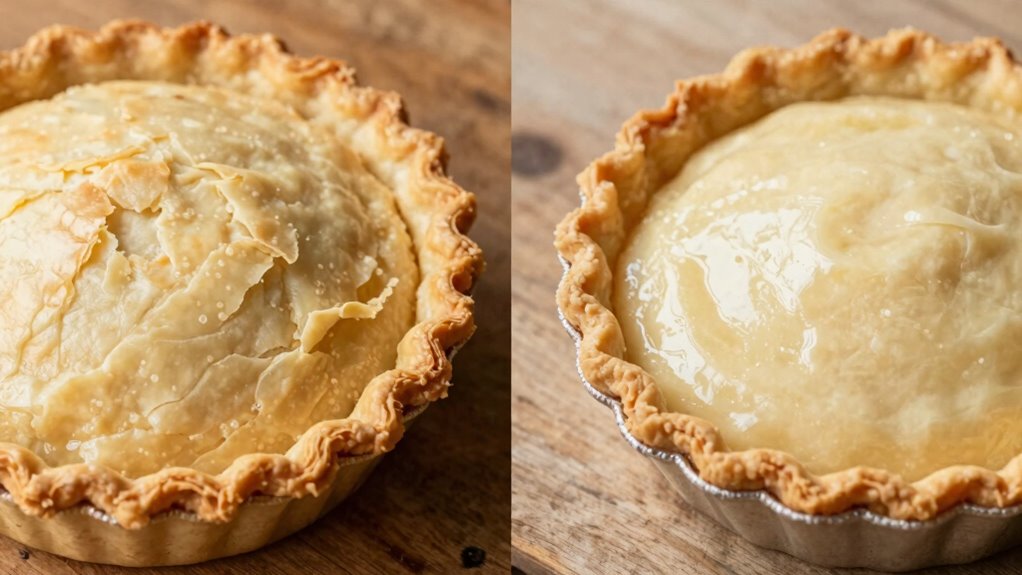
If you’re choosing between pâte brisée and pâte sucrée, think about the pie’s flavor and texture. Pâte brisée is flaky and tender, perfect for savory dishes, fruit tarts, or quiches. Pâte sucrée is richer and sweeter, ideal for custard pies, fruit galettes, or decadent desserts. Each crust lends a different character to your pie. To make the right choice and master their uses, keep exploring these techniques and options.

Get baking supplies delivered free with Prime
- Fast, free delivery on millions of items
- Prime Video, Amazon Music and more included
- Member-only deals all year
Key Takeaways
- Pâte brisée is ideal for savory pies and fruit tarts due to its flaky, neutral flavor.
- Pâte sucrée’s sweet, rich profile makes it perfect for custard tarts and sweet pastries.
- Use pâte brisée for quiches, savory galettes, or apple pies; pâte sucrée suits sweet tartlets and fruit galettes.
- Pâte brisée offers a crisp, tender bite, while pâte sucrée provides a crumbly, buttery texture suited for sweet desserts.
- Choose pâte brisée for versatile, savory or fruit fillings; opt for pâte sucrée when a sweeter, more decadent crust is desired.

When choosing between pâte brisée and pâte sucrée, understanding their differences is vital for achieving the perfect tart or pastry. These two crusts serve distinct purposes and lend different textures and flavors to your baked goods. Pâte brisée, often called a classic French pie crust, is known for its flaky, tender bite. It’s versatile and pairs well with a variety of fillings, from savory quiches to fruit tarts. Pâte sucrée, on the other hand, is sweeter and richer, making it ideal for desserts where a more decadent crust is desired. Recognizing their unique qualities helps you select the right dough for your specific recipe.
From a baking techniques standpoint, pâte brisée is typically made with cold fat, usually butter or sometimes shortening, cut into flour until the mixture resembles coarse crumbs. The key is to handle the dough as little as possible to maintain its flakiness. You’ll want to add just enough cold water to bring the dough together without overworking it. Pâte sucrée involves creaming butter and sugar first, then incorporating eggs and flour. This process results in a more cohesive, tender dough with a slightly crumbly yet firm texture. Proper chilling of the dough before rolling out is vital for both types to prevent shrinking during baking and to develop the best texture. Additionally, understanding baking techniques can help you achieve a more consistent and professional finish.
Handling cold fats and minimal mixing ensures flaky pâte brisée and tender pâte sucrée crusts.
Ingredient substitutions are common when preparing these crusts, especially if you’re missing a particular component. For pâte brisée, you can substitute part of the butter with shortening or even a neutral oil for a different texture or to adapt to dietary needs. Using gluten-free flour blends is also possible, but you’ll want to incorporate additional binders like xanthan gum to maintain structure. For pâte sucrée, if butter isn’t available, margarine can be used, but it may alter the flavor and texture slightly. Sugar can be replaced with honey or maple syrup, though you should adjust the liquid ingredients accordingly to keep the dough workable. When making substitutions, keep in mind how each change impacts the dough’s consistency, handling, and final bake.
Choosing the right crust ultimately depends on the dessert you’re preparing. Pâte brisée’s neutral, flaky qualities make it a great all-purpose crust, especially for savory or fruit-based pies. Pâte sucrée’s sweet richness enhances custard tarts, fruit galettes, and other sweet pastries. By mastering the proper baking techniques and understanding ingredient substitutions, you can customize each crust to suit your taste, dietary needs, or ingredient availability. Whether you stick with traditional methods or experiment with variations, knowing these fundamentals guarantees your crusts turn out perfectly every time.
Products Worth Considering

Vitamix Propel Series 750 Professional-Grade Blender, 4 Programs, Black

KitchenAid Classic Series 4.5 Quart Tilt-Head Stand Mixer K45SS, Onyx Black

Ninja PossibleCooker PRO Plus 11-in-1 8.5 qt Trace Blue (MC2002BL)
As an affiliate, we earn on qualifying purchases.
Frequently Asked Questions
Can I Substitute Pâte Brisée for Pâte Sucrée in Desserts?
Yes, you can substitute pâte brisée for pâte sucrée in desserts, but expect some differences. Pâte brisée has less sugar, resulting in a more neutral flavor and a slightly crumblier texture. If you want a sweeter crust, consider adding sugar or adjusting the recipe. Keep in mind, this substitution may cause a subtle texture variation, but it can work well in many desserts, especially if you prefer a less sweet crust.
Which Crust Is Better for Fruit Pies?
For fruit pies, you’ll want a pâte brisée crust, as it provides a sturdy, neutral base that complements the sweet filling without overpowering it. A fruit pie crust should balance the sweet vs savory aspect, so pâte brisée’s subtle flavor works well, letting the fruit shine. Avoid overly sweet or rich crusts like pâte sucrée, which are better suited for desserts that need a sweeter, more tender shell.
How Do I Prevent Pâte Sucrée From Cracking?
Did you know that over 60% of bakers experience cracking in pâte sucrée? To prevent it, focus on proper dough handling and keep your dough cool. Avoid overworking it, which weakens the structure, and chill the dough before rolling. Also, don’t stretch it too thin—thicker edges help prevent cracks. Properly handling and chilling your dough reduces stress and keeps your crust smooth and crack-free.
Are There Gluten-Free Options for These Crusts?
Yes, you can make gluten-free crusts using gluten-free flours like almond, rice, or oat flour. These alternatives create delicious, crumbly textures suitable for both pâte brisée and pâte sucrée. You might need to adjust the fat and liquid ratios to improve flexibility and prevent cracking. Experimenting with different gluten-free flours and binders like xanthan gum helps you craft tasty, allergy-friendly alternative crusts for your favorite pies.
How Do Storage Times Differ Between the Two Crusts?
Did you know that Pâte Brisée typically has a shelf life of about 2-3 days at room temperature, while Pâte Sucrée lasts around 1-2 days? For longer storage, you should freeze both crusts. In the freezer, they can last up to 3 months, but once thawed, use them promptly. Proper storage guarantees freshness and prevents freezer burn, especially for the more delicate Pâte Sucrée.
Conclusion
Choosing between pâte brisée and pâte sucrée depends on your pie’s purpose. For instance, if you’re making a classic apple tart, pâte sucrée adds the perfect sweetness and richness. Imagine baking a fruit galette with pâte brisée—its buttery, crisp texture complements the filling beautifully. The right crust elevates your dessert, so consider your flavor profile and presentation. With the right choice, you’ll craft a pie that’s both delicious and visually appealing, impressing all who taste it.