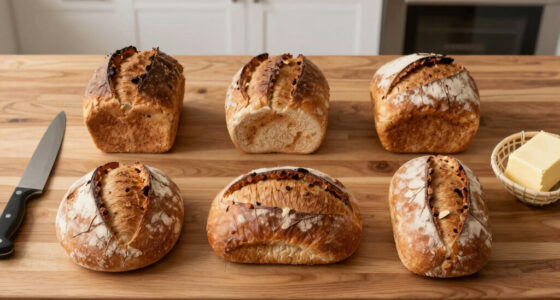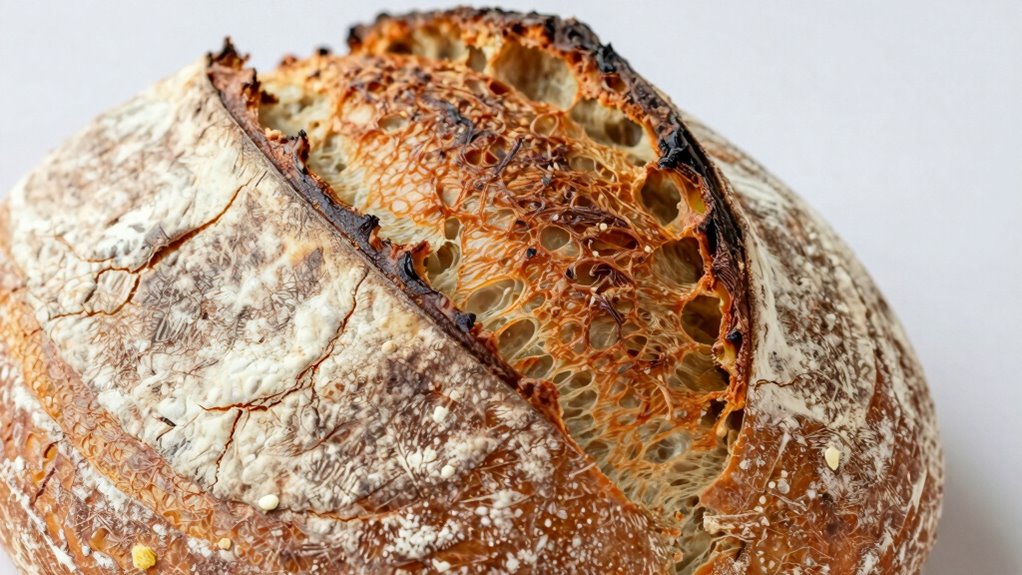

If your bread splits on the side, it’s often due to factors beyond scoring, like oven temperature and dough hydration. Baking at too high a temperature causes rapid expansion, leading to uncontrolled cracks, while too low can make the bread dense and prone to cracking during baking. Also, insufficient gluten development or improper fermentation impacts elasticity, affecting how the dough expands. For a more thorough understanding of preventing side splits, keep exploring these key factors.

Get baking supplies delivered free with Prime
- Fast, free delivery on millions of items
- Prime Video, Amazon Music and more included
- Member-only deals all year
Key Takeaways
- Improper oven temperature causes uneven expansion, leading to side splits during baking.
- Low dough hydration reduces elasticity, increasing the risk of side cracks as the bread expands.
- Insufficient gluten development weakens the dough’s structure, allowing unwanted side splits to form.
- Rapid oven spring from high heat creates internal pressure that causes side cracks.
- Uneven fermentation or poor dough handling can result in inconsistent expansion and side splits.
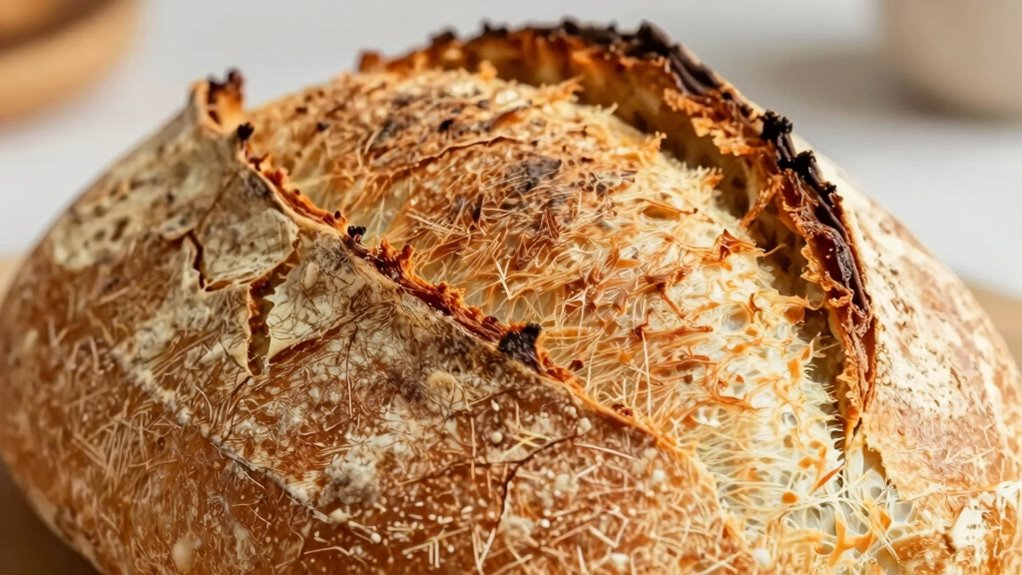
If you’ve ever tried to share a loaf of bread without making a mess, you know that splitting bread on the side can be a game-changer. But sometimes, despite your best efforts, the bread still splits unevenly or unexpectedly. While scoring the dough before baking is a common remedy, it’s not the only factor at play. Several other elements, like oven temperature and dough hydration, considerably influence how your bread splits during baking. Understanding these can help you achieve a cleaner, more uniform cut every time.
First, let’s look at oven temperature. Baking at too high a temperature causes rapid oven spring, which can put excessive pressure inside the dough. This sudden expansion can lead to uncontrolled splits or cracks on the side of the bread. Conversely, baking at too low a temperature might result in dense bread that doesn’t fully expand, increasing the chance of uneven cracking as the crust struggles to contain the internal gas. Finding the right oven temperature ensures a balanced bake—allowing the bread to rise evenly without forcing it to split prematurely or unevenly. A properly calibrated oven, often around 375°F to 425°F depending on the recipe, helps create an environment where the bread expands gradually, reducing unexpected side cracks.
Dough hydration is another critical factor. The amount of water in your dough directly impacts its elasticity and the way it expands during baking. Higher hydration doughs are more flexible and can stretch more evenly as they heat up, which minimizes the risk of unwanted splits. On the other hand, dough with low hydration tends to be denser and less elastic, increasing the likelihood of cracks forming on the sides when the internal gas expands. If your bread tends to split on the side, consider adjusting your dough hydration. Slightly increasing the water content can make the dough more pliable, allowing it to expand uniformly without cracking. Just be careful not to add too much water, as overly wet dough can be difficult to handle and may lead to other issues like a gummy crumb.
Additionally, using proper fermentation techniques can improve gluten development, which enhances the dough’s ability to expand evenly and reduces side splits. In short, controlling oven temperature and managing dough hydration are key to preventing unwanted side splits. They work hand-in-hand to promote even expansion and a stable crust. While scoring is useful, paying attention to these underlying factors ensures your bread develops with a clean, professional-looking side split—if any at all. With a little adjustment and understanding, you can master the art of baking bread that rises beautifully and splits only where you want it to.
digital oven thermometer for baking
As an affiliate, we earn on qualifying purchases.
As an affiliate, we earn on qualifying purchases.
Frequently Asked Questions
Can Oven Temperature Affect How Bread Splits During Baking?
Yes, oven temperature affects how bread splits during baking. If your oven heat is too high, the crust forms quickly and causes uneven expansion, leading to side splits. Conversely, if the baking temperature is too low, the bread may not expand properly, increasing the chance of splitting unpredictably. Maintaining a consistent, appropriate baking temperature helps control how your bread rises and prevents unwanted cracks or splits.
How Does Dough Hydration Influence Side Splitting?
Your dough hydration level directly impacts side splitting, as higher hydration creates a wetter, more elastic dough with a looser dough consistency. This increased moisture makes the crust more prone to splitting during baking because the steam escapes unevenly. To prevent this, keep your dough at a suitable hydration level, ensuring it’s neither too dry nor too wet, which helps maintain a stable crust and reduces side splits.
Does Using Different Flour Types Impact Bread Cracking?
Think of different flour types as tuning your instrument; each one influences your bread’s texture. Using whole wheat or rye flour can cause more cracking due to less gluten development, making the dough less elastic. Proper fermentation timing allows gluten to strengthen, reducing cracks. If you rush fermentation or switch flours without adjustments, your bread’s surface might crack, so adapt your process accordingly for a smooth, crack-free loaf.
Is There a Difference Between Side Splitting and Internal Tearing?
Yes, there’s a difference between side splitting and internal tearing. Side splitting occurs when the crust cracks open on the bread’s exterior, often due to oven temperature or dough tension. Internal tearing happens inside the loaf, where the crumb structure breaks apart, usually caused by weak gluten development or uneven proofing. Recognizing these issues helps you adjust techniques to achieve a more uniform, beautiful loaf.
Can Pre-Scoring or Slashing Prevent Side Splits?
Like a painter’s brushstroke, pre-scoring or slashing guides your dough’s natural expansion, helping prevent side splits. When you use proper scoring techniques, you create controlled weak spots that direct elasticity in your dough, reducing unwanted cracks. Ensuring your dough has good elasticity and making precise cuts allows your bread to rise beautifully without splitting on the sides. So yes, skillful scoring can be your secret weapon against side splits.
As an affiliate, we earn on qualifying purchases.
Conclusion
So, next time your bread splits on the side, remember it’s like a story unfolding in the oven. Sometimes, it’s not just scoring that causes the tale to break open, but your oven’s heat, dough’s tension, or even how you handle it. Think of your bread as a delicate dance—when one step is just a little off, the whole performance changes. Keep experimenting and you’ll master the rhythm of perfect, beautifully scored loaves.
As an affiliate, we earn on qualifying purchases.
As an affiliate, we earn on qualifying purchases.
Evergreen bestsellers Picks
bestsellers
As an affiliate, we earn on qualifying purchases.