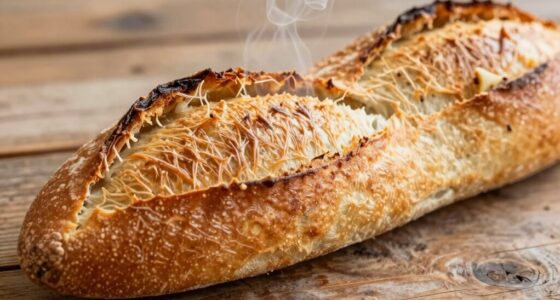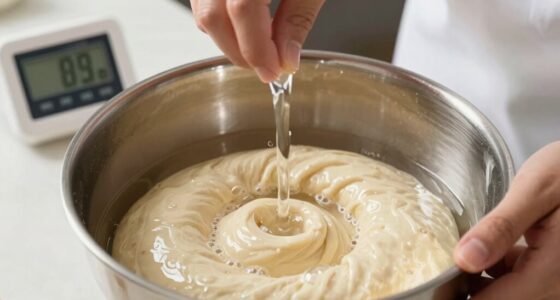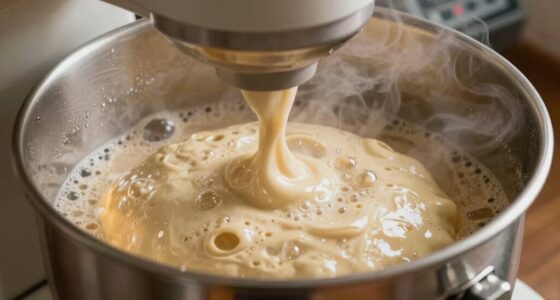
When your bread has an open crumb, it’s often weaker and more prone to tearing during slicing. Insufficient gluten development, rushed fermentation, or low moisture make the crumb brittle and less cohesive. Hard crusts and structural weaknesses add stress, causing tears. To prevent this, you need to strengthen the crumb with proper kneading, fermentation, and hydration. Keep these factors in mind—if you want to learn how to improve your slicing success, stay with us.

Get baking supplies delivered free with Prime
- Fast, free delivery on millions of items
- Prime Video, Amazon Music and more included
- Member-only deals all year
Key Takeaways
- Insufficient gluten development results in a weak, less cohesive crumb prone to tearing during slicing.
- Overly dry or brittle crumb lacks moisture, increasing the risk of open tears when cut.
- Weak or underproofed gluten networks can cause structural failure and splitting during slicing.
- Thin or hard crusts place additional stress on the crumb, leading to tearing.
- Proper fermentation, hydration, and kneading strengthen crumb structure, reducing open tears during slicing.
As an affiliate, we earn on qualifying purchases.
What Is Crumb Structure and Why Does It Matter?

Have you ever wondered why some bread feels light and airy while others are dense and heavy? The answer lies in the crumb structure, which is shaped by gluten development and fermentation timing. When you knead the dough properly, gluten strands form and strengthen, creating a flexible network that traps gas. This network allows the bread to rise evenly and develop an open, porous crumb. Proper fermentation timing ensures the dough ferments enough for ideal gluten development without overproofing, which can collapse the structure. If fermentation is rushed or underdone, the gluten network remains weak, resulting in a dense crumb. Understanding these factors helps you achieve the desired crumb texture, whether you want a fluffy loaf or a heartier one.
As an affiliate, we earn on qualifying purchases.
What Factors Influence Crumb Tightness and Porosity?

Several factors directly impact whether your bread develops a tight crumb or a more open, porous structure. Gluten development is essential; well-developed gluten networks trap gases effectively, creating more openness. Underdeveloped gluten results in a denser crumb. Fermentation timing also plays a key role—longer, controlled fermentation allows yeast to produce gases gradually, promoting a lighter, airier crumb. If fermentation is rushed or too short, the crumb tends to be tighter and less porous. Additionally, overproofing can weaken gluten structure, leading to a collapse during baking. Proper dough handling, including gentle mixing and careful fermentation, helps balance gluten strength and gas retention. Managing energy-efficient processes and fermentation timing can influence whether your bread has a tight or open crumb. Achieving optimal fermentation conditions is crucial for consistent results.
As an affiliate, we earn on qualifying purchases.
How Does Crumb Strength Impact Slicing and Tear Resistance?
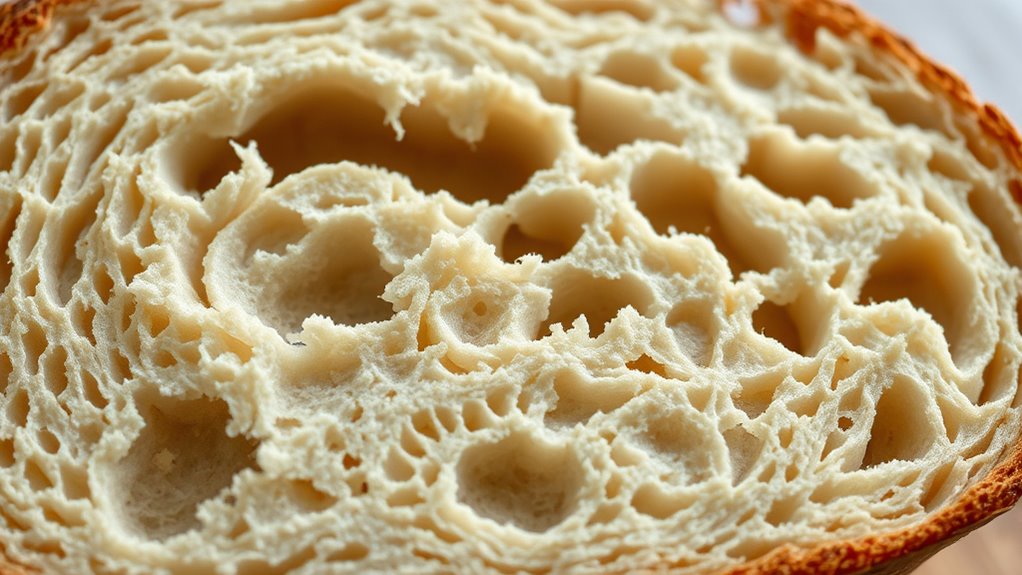
Crumb strength directly influences how easily bread slices and tears. If your crumb has good elasticity, it can stretch without breaking, making slicing smoother and reducing open crumbs. Higher crumb cohesion means the bread holds together better, resisting tearing during slicing. When crumb strength is ideal, slices stay intact, and tears are minimized. Proper crumb structure ensures uniform slices and maintains the bread’s integrity during cutting. Achieving the right balance ensures your bread slices cleanly and uniformly while maintaining integrity. Strong, elastic, and cohesive crumbs improve slicing performance, reducing open crumb tears and enhancing the overall eating experience. Additionally, understanding crumb development can help bakers optimize dough formulations for better sliceability, especially as it relates to sector performance metrics in the baking industry.
As an affiliate, we earn on qualifying purchases.
What Causes Open Crumb Tears During Slicing?

Open crumb tears often occur when the bread’s internal structure isn’t strong enough to withstand the slicing process. This weakness allows the crumb to split unexpectedly, creating tears rather than clean slices. Several factors contribute to this problem:
- Insufficient crumb moisture, which causes the crumb to dry out and become brittle.
- A thin or overly hard bread crust, increasing stress on the crumb during slicing.
- Weak gluten development, resulting in a less cohesive structure that’s prone to tearing.
To prevent open crumb tears, focus on maintaining proper crumb moisture, achieving a balanced crust, and ensuring strong gluten formation. These elements work together to create a sliceable bread with a resilient crumb that resists tearing during slicing.
How Can You Make Your Bread’s Crumb More Stable and Slice-Friendly?
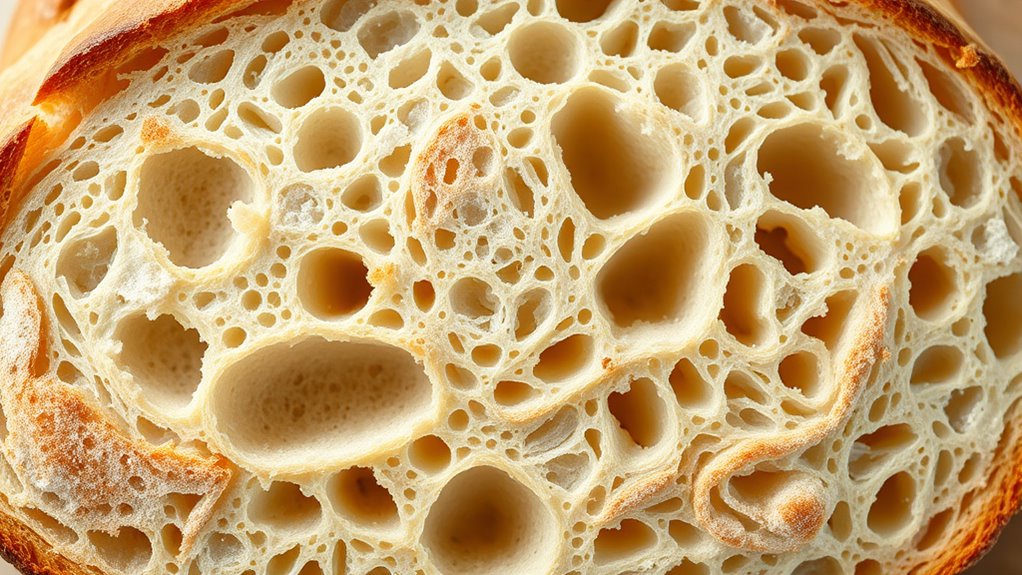
To make your bread’s crumb more stable and easier to slice, focus on strengthening its internal structure during mixing and proofing. Achieving good gluten development is key; knead thoroughly to create a strong, elastic network that holds the crumb together. Proper fermentation ensures that gluten proteins bond effectively, providing stability. Additionally, monitor the moisture content—too little can lead to a crumb that’s dry and fragile, while too much can cause it to be gummy. Aim for consistent hydration throughout the dough. A well-hydrated dough with developed gluten creates a crumb that’s both resilient and slice-friendly. Paying attention to dough handling techniques can further improve the overall structure and sliceability of your bread. Ensuring optimal hydration levels supports proper gluten formation and crumb stability.
Frequently Asked Questions
Can Different Types of Flour Affect Crumb Tear Tendencies?
Yes, different types of flour can affect crumb tear tendencies. Flours with higher protein content promote stronger gluten development, creating a more elastic crumb that resists tearing. Conversely, lower-protein flours produce a softer, more fragile crumb prone to tearing when sliced. So, choosing the right flour based on your desired crumb structure impacts how well your bread slices cleanly without open tears.
How Does Fermentation Time Influence Crumb Structure?
You’ll notice that longer fermentation duration improves crumb structure by allowing the dough to develop stronger gluten networks and more complex flavor. As fermentation time increases, the dough’s enzymes break down starches and proteins, enhancing flavor development and creating a more open, airy crumb. This process results in a lighter texture, reducing open crumb tears when slicing, as the dough becomes more elastic and resilient.
Do Baking Temperature Variations Impact Crumb Stability?
You’ll notice that baking temperature variations directly impact crumb stability. When oven heat is too high, rapid crust formation can cause the bread to tear open, compromising crumb structure. Conversely, lower temperatures allow for even baking, promoting a stable, elastic crumb. Achieving the right oven heat balances crust formation and crumb integrity, ensuring your bread holds together beautifully and resists tearing, giving you that perfect slice every time.
What Role Do Additives or Dough Conditioners Play?
Additives and dough conditioners markedly influence crumb tear quality by enhancing dough strength and elasticity. You’ll notice that additive effects, like improved gas retention and uniform crumb structure, make slicing easier and reduce open crumb tears. Dough conditioning improves gluten development, providing a more resilient crumb that maintains its integrity when cut. By incorporating these ingredients, you help create a more stable, consistent crumb that resists tearing during slicing.
How Does Storage Humidity Affect Crumb Integrity Before Slicing?
Storage humidity greatly impacts your bread’s crumb integrity before slicing. If humidity is too high, moisture migrates into the crumb, causing it to become overly soft and prone to tearing. Conversely, low humidity dries out the bread, making the crumb brittle and more likely to crack. Maintaining consistent storage conditions helps preserve the crumb’s structure, ensuring clean slices and preventing open crumb tears.
Conclusion
Understanding crumb structure helps you achieve better slices, so your bread looks and feels just right. By paying attention to factors like dough hydration and fermentation, you can prevent those pesky tears. Think of it like tending a garden—patience and care yield a sturdy, beautiful bloom. With a little practice, your bread will slice smoothly, revealing a perfect open crumb. Remember, even in the age of the Gutenberg press, a well-made loaf remains a timeless delight.
Halloween Picks
halloween
As an affiliate, we earn on qualifying purchases.