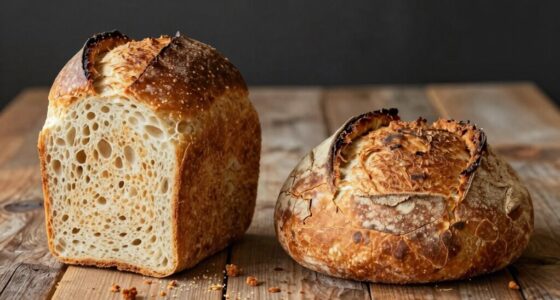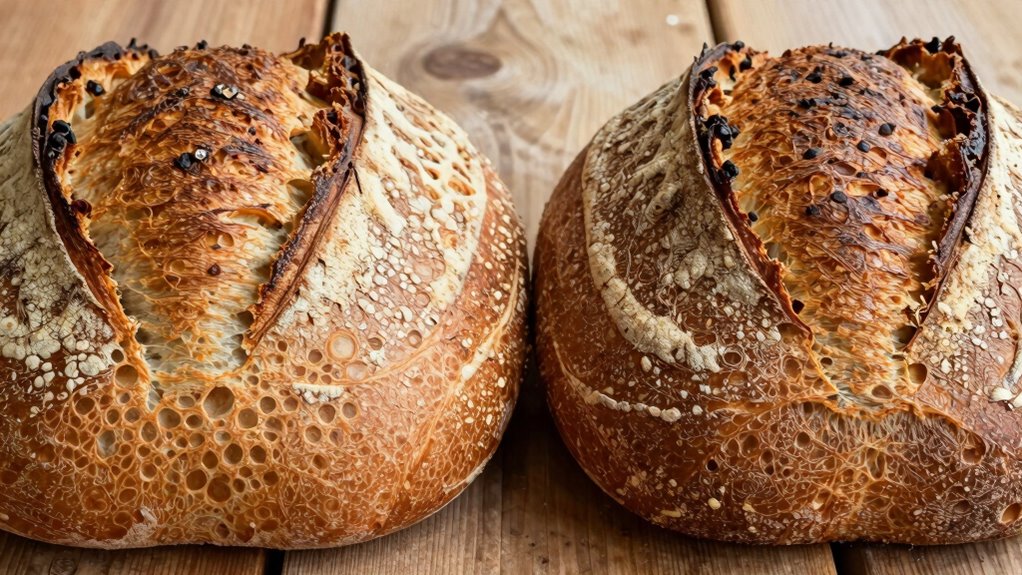

The key difference between a puffy and a strong loaf lies in fermentation and gluten development. For a puffy loaf, you extend fermentation to generate more gas, creating an airy, open crumb with a delicate gluten network that’s elastic and extensible. In contrast, a strong loaf has less fermentation, a resilient gluten network, and a denser crumb. If you’re curious how to master these techniques, knowing more can help you craft perfect bread every time.
Key Takeaways
- Puffy loaves result from extended fermentation that creates a delicate, airy gluten network, trapping more gas.
- Strong loaves develop a resilient gluten structure that limits expansion, leading to a denser crumb.
- Longer fermentation enhances gas retention, producing a light, open crumb in puffy bread.
- Shorter or different fermentation techniques produce a tighter gluten network, resulting in a sturdier, dense loaf.
- Proper dough handling influences gluten elasticity and extensibility, determining whether bread becomes airy or robust.
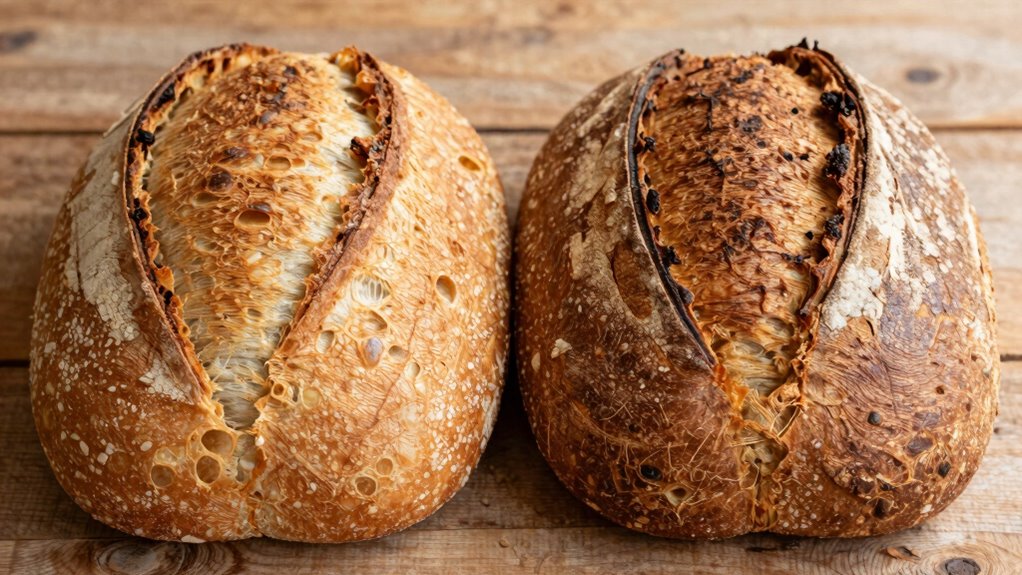
When choosing bread, you might notice two common types: puffy loaves and strong loaves. The difference between them isn’t just about appearance; it’s rooted in the bread’s internal structure, which comes down to how the dough is made and how it develops during baking. The key lies in the fermentation process and gluten development. Understanding these aspects helps you grasp why some loaves are airy and light, while others are dense and sturdy.
During fermentation, yeast consumes sugars in the dough, producing carbon dioxide and alcohol. This gas gets trapped within the dough’s matrix, causing it to rise. The longer and more controlled this fermentation process, the more gas is produced and retained, leading to a puffy, open crumb. A puffy loaf relies on this extended fermentation to create a delicate network of bubbles, which gives it that airy texture. On the other hand, a strong loaf is often fermented for a shorter period or with different techniques, resulting in a tighter crumb and more structure.
Extended fermentation creates a delicate bubble network, resulting in a light, airy loaf with an open crumb.
Gluten development plays a pivotal role in shaping these differences. Gluten is the protein in wheat flour that forms a network when mixed with water and kneaded. This network traps the gases produced during fermentation, giving the bread its shape and structure. In making a puffy loaf, you want a well-developed gluten network that’s elastic and extensible enough to hold a lot of gas without tearing. Proper kneading and rest periods allow the gluten to develop fully, creating that light, airy texture. For a strong loaf, the gluten network is intentionally made denser or less extensible, which limits gas expansion and results in a firmer, more robust crumb.
In essence, the puffy loaf’s lightness comes from a fermentation process that maximizes gas production and a gluten network that’s highly elastic. Conversely, a strong loaf emphasizes gluten development that’s more resilient and less prone to expansion, giving it the sturdiness you feel when biting into it. Controlling fermentation is crucial to achieving the desired loaf type, as it directly influences the gas retention and gluten structure. By paying attention to how you handle the dough—how long you ferment it and how you develop its gluten—you can influence whether your bread ends up puffy or strong. Additionally, understanding the fermentation process can help you optimize your bread’s texture and flavor. Ultimately, understanding these internal processes helps you tailor your baking to achieve the exact texture and structure you desire.
As an affiliate, we earn on qualifying purchases.
Frequently Asked Questions
How Does Humidity Affect Loaf Texture?
Humidity impacts loaf texture by influencing moisture retention and crust formation. When humidity is high, your bread retains more moisture, making it softer and less prone to a thick crust. Conversely, low humidity leads to quicker moisture loss, resulting in a crisper crust and a denser interior. Controlling humidity levels during baking and cooling helps you achieve the perfect balance of a tender crumb and desirable crust.
Can Ingredient Substitutions Change Loaf Strength?
Yes, ingredient substitutions can change loaf strength, surprisingly enough. You might think swapping ingredients is just about flavor, but it affects the loaf’s structure too. Using different flours or adding variety like seeds or nuts can strengthen or weaken the dough. So, if you want a loaf with more strength or flavor enhancement, experimenting with ingredient variety isn’t just fun — it’s essential for real results.
What Role Does Kneading Play in Loaf Puffiness?
Kneading plays a vital role in loaf puffiness by developing gluten, which strengthens dough elasticity. As you knead, gluten strands form and align, trapping air bubbles that expand during baking. This process creates a lighter, puffier loaf. Too little kneading results in weak gluten and a dense loaf, while proper kneading guarantees ideal gluten development, giving your bread the perfect elasticity needed for that airy, fluffy texture.
How Does Baking Temperature Influence Loaf Density?
Think of your oven temperature as the conductor of a symphony, guiding the dough’s fermentation into perfect harmony. A higher oven temperature quickly sets the loaf’s structure, resulting in a lighter, airier crumb. Conversely, a lower temperature allows for slower baking, which can produce a denser loaf. Adjusting oven temperature influences how well the dough’s fermentation develops, ultimately shaping the loaf’s texture and density.
Are There Specific Flours for Puffy Versus Strong Loaves?
You should choose specific flours based on your desired loaf. For puffy loaves, opt for softer flours with lower protein content, which develop gluten more gently, allowing for better fermentation timing and a lighter texture. For stronger loaves, select high-protein flours that promote robust gluten development, resulting in a denser, sturdier bread. Adjust fermentation timing accordingly to optimize the gluten structure and achieve your ideal bread height and texture.
As an affiliate, we earn on qualifying purchases.
Conclusion
Now that you see the subtle dance between a puffy loaf and a strong one, you realize they’re like two sides of the same coin—each with its own charm. Whether you crave the airy lightness or the firm resilience, understanding these differences helps you bake with purpose. So, next time you step into the kitchen, remember: your bread’s character is shaped by just a few simple choices—like the brushstrokes that bring a masterpiece to life.
As an affiliate, we earn on qualifying purchases.
As an affiliate, we earn on qualifying purchases.