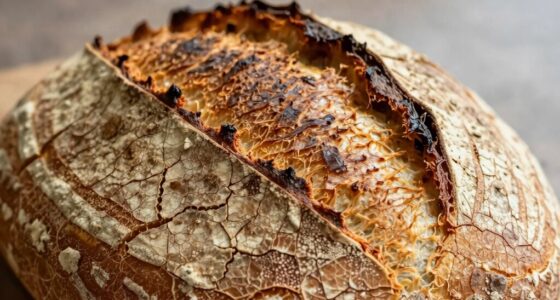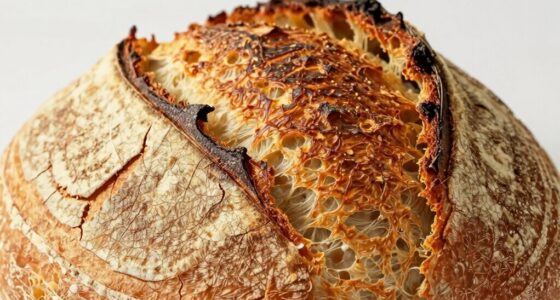
To think about proofing enriched dough, focus on timing, appearance, and feel. Make certain your dough doubles in size and feels soft, puffy, and slightly elastic—use the finger poke test to check if it springs back. Pay attention to temperature, as it affects fermentation speed. Avoid rushing or over-proofing, which can weaken gluten or cause collapse. Mastering these signs ensures perfect results; keep exploring for more tips on achieving ideal proofing.

Get baking supplies delivered free with Prime
- Fast, free delivery on millions of items
- Prime Video, Amazon Music and more included
- Member-only deals all year
Key Takeaways
- Focus on visual and tactile cues like doubling in size and softness, not just clock time.
- Recognize proper proofing by gentle indentation springing back and airy appearance.
- Avoid rushing or over-proofing by monitoring dough’s elasticity and jiggle.
- Maintain consistent temperature and environment to ensure reliable fermentation.
- Use the poke test and overall appearance to judge when the dough is perfectly proofed.
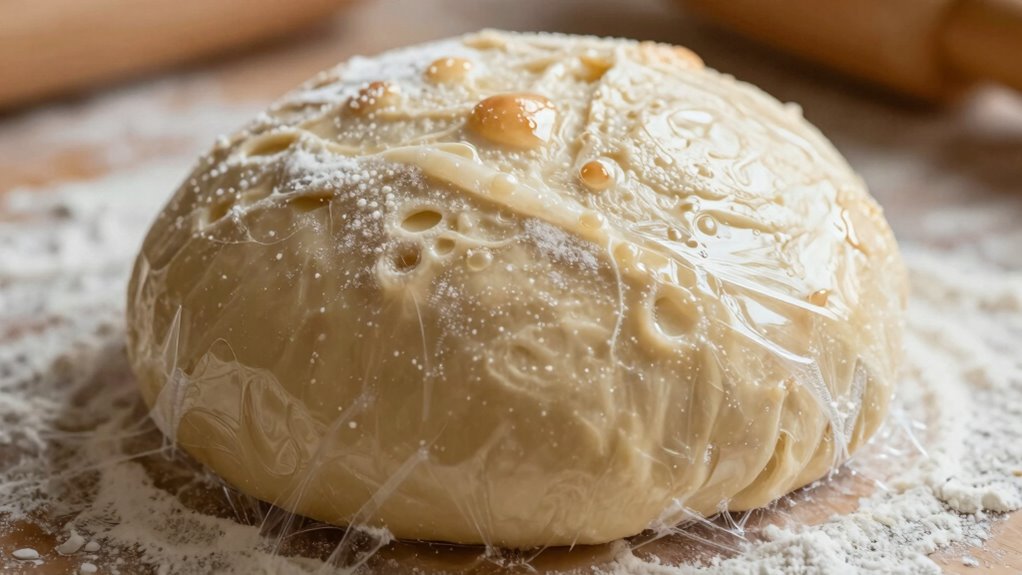
Ever wondered why some enriched doughs turn out perfectly soft and fluffy while others fall flat? The secret often lies in how you handle proofing, especially concerning fermentation timing and temperature regulation. Enriched doughs—those made with butter, eggs, milk, and sugar—are delicate. They require just the right conditions to develop their structure and flavor without over-proofing or under-proofing.
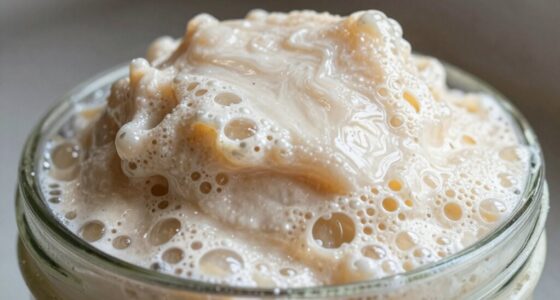
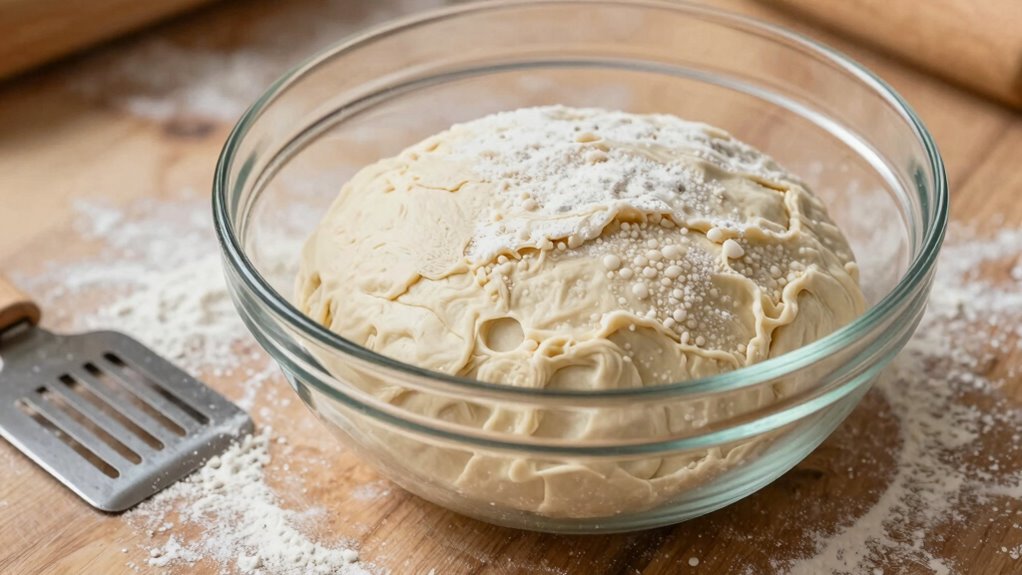
Fermentation timing is essential. You want your dough to rise enough to create a light, airy crumb, but not so much that the gluten starts to break down. Typically, the first proofing stage needs to be long enough for the yeast to produce the gases that leaven the dough, but not so long that the gluten begins to weaken. Keep an eye on how the dough looks and feels rather than just the clock. When it has roughly doubled in size and feels soft and puffy, it’s usually ready for the next step. Rushing this process can lead to dense baked goods, while waiting too long might cause over fermentation, resulting in a sour flavor or a collapsed structure. Proper fermentation plays a crucial role in achieving the ideal texture and flavor in enriched doughs. Additionally, understanding the signs of over-proofing can help you avoid these issues. Being familiar with proofing signs can further improve your baking results and prevent common mistakes.
Watch for doubled size and soft, puffy texture to ensure perfect fermentation without overdoing it.
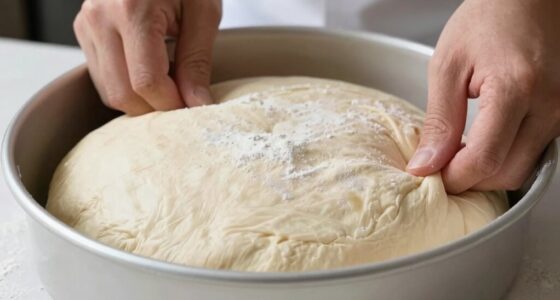
Monitoring your dough is the best way to judge proofing. Look for a dough that has doubled in size, feels soft and jiggly, and shows slight elasticity. Pressing it gently with your finger should leave a slight indent that slowly springs back. You can also perform the poke test to determine if your dough is ready—if the indent remains, it needs more time. Combining keen observation with proper fermentation timing and temperature regulation ensures your enriched dough develops a tender, fluffy crumb and rich flavor. Recognizing the ideal proofing environment can make a significant difference in achieving consistent results. Understanding these factors helps you avoid common pitfalls and consistently produce bakery-quality results at home.
As an affiliate, we earn on qualifying purchases.
Frequently Asked Questions
How Does Ingredient Temperature Affect Proofing Times?
Temperature control directly impacts your proofing times by influencing the fermentation rate. If your ingredients are warmer, the yeast activates faster, shortening proofing time. Conversely, cooler temperatures slow down fermentation, requiring more time for the dough to rise fully. You should monitor ingredient temperature closely to guarantee consistent results, adjusting proofing duration as needed to avoid under or over-proofing. Proper temperature management helps achieve ideal dough texture and flavor.
Can I Proof Enriched Dough in the Refrigerator?
Yes, you can proof enriched dough in the refrigerator, embracing the slow art of cold fermentation. This gentle process allows flavors to deepen and develop more complexity, rewarding your patience. While it may take longer, the enriched dough benefits from the cooler environment, making it easier to manage your schedule. Just cover it well to prevent drying out, and enjoy the enhanced flavor and texture that cold fermentation imparts.
What’s the Best Way to Tell if Dough Is Over-Proofed?
To tell if your dough is over-proofed, look for signs like excess dough elasticity, which indicates it’s stretched out too much, and it may feel overly soft or collapse when touched. Over-proofed dough often loses its shape, develops large bubbles, and doesn’t spring back when gently pressed. If you notice these signs, it’s best to punch it down, reshape, and let it proof again to achieve the desired texture.
How Does Humidity Influence Proofing Results?
Humidity affects your proofing environment profoundly. Higher humidity keeps the dough moist, preventing it from drying out and encouraging proper fermentation. Low humidity can cause the surface to form a crust too quickly, hindering expansion. You should aim for a consistent, moderate humidity level to guarantee even proofing. Adjust your environment accordingly, using a humidifier or covering the dough properly, to attain ideal proofing results and a light, airy texture.
Can I Proof Multiple Times for Better Texture?
Sure, proofing multiple times might seem like the secret to perfect texture, but really, it’s just an elaborate dance of folding techniques and proofing containers. Each proof refines the dough’s structure, but overdoing it risks weakening gluten and losing that airy quality. Trust your instincts—use proper proofing containers and gentle folds—and remember, sometimes less is more for that ideal, tender crumb.
As an affiliate, we earn on qualifying purchases.
Conclusion
Remember, proper proofing transforms your enriched dough into a tender, airy masterpiece. Don’t rush the process—patience is key. Did you know that over 70% of home bakers find that accurate proofing improves loaf volume and texture? By paying attention to your dough’s rise, you’ll achieve bakery-quality results every time. So, trust the process, observe carefully, and enjoy the delicious rewards of well-proofed, enriched bread.
As an affiliate, we earn on qualifying purchases.
As an affiliate, we earn on qualifying purchases.
Halloween Picks
halloween
As an affiliate, we earn on qualifying purchases.