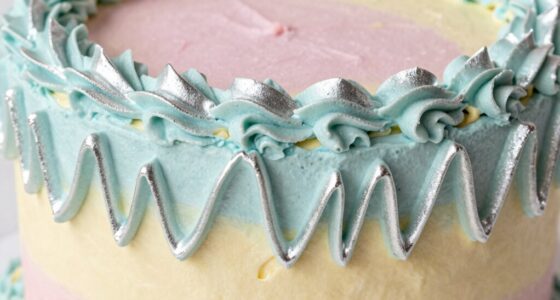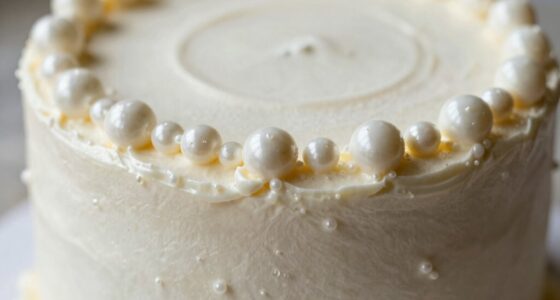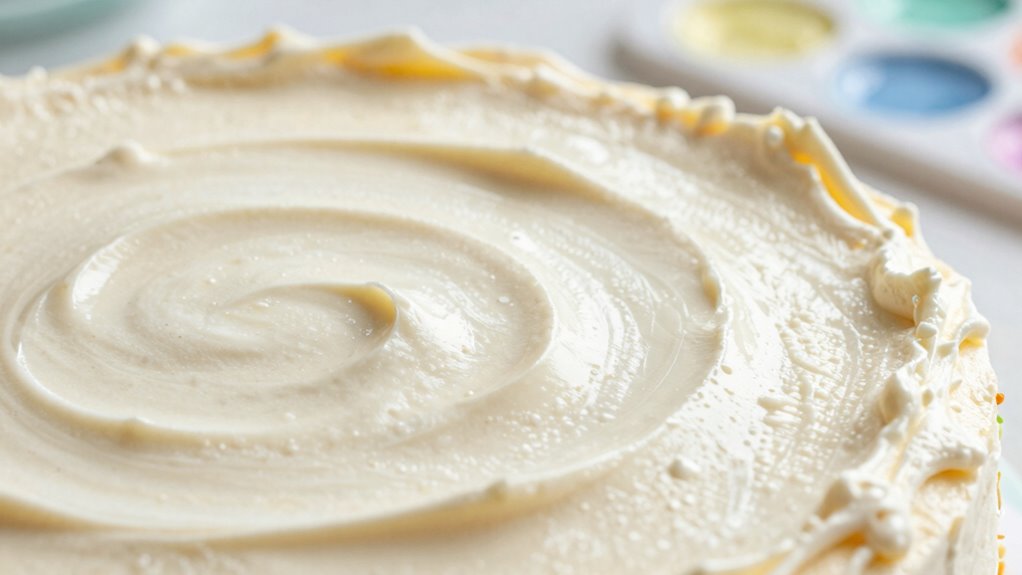

To judge frosting consistency without guesswork, look for a uniform appearance with no streaks or uneven patches. Feel its texture—smooth, creamy, and able to hold shape—you can test this by spreading a small amount. Gently press to see if it glides smoothly without crumbling or sliding off. Remember, subtle changes in ingredient temperature affect consistency. Mastering these cues helps you perfect your frosting—keep exploring to learn more about achieving ideal results every time.

Get baking supplies delivered free with Prime
- Fast, free delivery on millions of items
- Prime Video, Amazon Music and more included
- Member-only deals all year
Key Takeaways
- Assess color uniformity to ensure even ingredient incorporation and proper blending.
- Test texture by spreading or piping to confirm it holds shape without being too stiff or runny.
- Apply gentle pressure with a spatula or piping bag to observe smooth glide and avoid crumbling or sliding.
- Make incremental adjustments with small amounts of liquid or powdered sugar, then re-evaluate.
- Use visual and tactile cues consistently to develop an intuitive sense of frosting readiness.
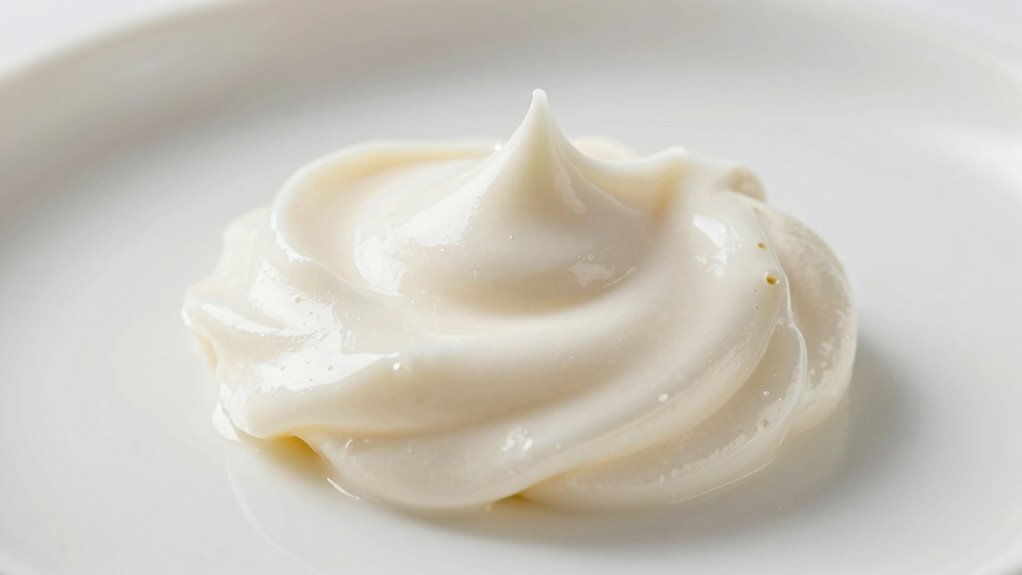
Have you ever wondered how to tell if your frosting is just right? Achieving the perfect consistency can be tricky, but with a little attention to detail, you can master it without guesswork. One of the first things to consider is the appearance, especially color variations. When you whip up your frosting, it should have a uniform hue that matches your intended shade. If you notice streaks or uneven patches, it’s a sign that your frosting isn’t fully blended or might need a bit more mixing. A consistent color indicates even incorporation of ingredients, which is essential for smoothness and aesthetic appeal. Keep in mind that some ingredients, like butter or cream cheese, can cause slight color variations, especially if they’re not at room temperature. So, if you see minor differences in shade, that’s normal, but significant unevenness suggests you should give it a thorough stir.
Texture adjustments are equally important in judging frosting consistency. As you work with your frosting, pay close attention to how it feels when you lift it with a spatula or spoon. It should be smooth, creamy, and hold its shape without being stiff or runny. If it’s too thick and difficult to spread, it might need a splash of liquid—like milk or heavy cream—to loosen it up. Conversely, if your frosting is too runny or watery, it indicates that it needs more powdered sugar or confectioners’ sugar to thicken it. Proper texture allows for easy spreading or piping, so testing its firmness on a small portion can help you decide if it’s ready for decorating. Additionally, understanding the ingredients and their impact on texture can help you predict how your frosting will behave during mixing. For example, overmixing buttercream can incorporate excess air, affecting its consistency and appearance. Recognizing how temperature affects frosting can also help you judge whether it’s at the right stage for applying to your baked goods. Being aware of the desired firmness for different decorating techniques can further refine your process.
Another way to gauge frosting consistency is by how it reacts to pressure. When you apply gentle pressure with a spatula or piping bag, it should glide smoothly without tearing or collapsing. If it crumbles or feels stiff, it’s too thick; if it’s too soft and slides off the cake, it’s too thin. Adjusting the texture involves adding small amounts of liquid or powdered sugar incrementally, then mixing thoroughly before testing again. Paying attention to color consistency and texture adjustments helps you develop an intuitive feel for your frosting’s ideal state. Additionally, understanding the ingredients and their impact on texture can help you predict how your frosting will behave during mixing. With practice, you’ll become confident in recognizing when your frosting is perfectly balanced—smooth, spreadable, and visually appealing—making your decorating process seamless and enjoyable.
As an affiliate, we earn on qualifying purchases.
Frequently Asked Questions
Can Frosting Be Too Thick to Spread Smoothly?
Yes, frosting can be too thick to spread smoothly. When this happens, you struggle with decorating techniques, leading to uneven layers or tearing. To fix this, add a small amount of milk or cream gradually, mixing well until you reach the desired consistency. This adjustment also allows you to explore flavor variations, making your frosting more versatile. Make certain your frosting is just soft enough to spread easily for perfect decorating results.
How Does Temperature Affect Frosting Consistency?
Think of frosting like a dance partner—you want just the right temperature to keep it smooth and lively. Temperature effects directly impact frosting texture: too warm, and it becomes runny; too cold, and it stiffens. If your kitchen’s chilly, your frosting may feel firm and difficult to spread. Conversely, a warm room can make it too soft. Preserving consistent temperature ensures your frosting stays perfect for spreading and decorating.
Is It Okay to Add More Liquid if Frosting Is Too Stiff?
Yes, you can add more liquid if your frosting’s too stiff, but do it carefully. Use small amounts of milk or cream, and incorporate them gradually with gentle mixing techniques to avoid making the frosting too runny. This ingredient adjustment helps achieve the desired consistency without compromising the texture. Always add liquids slowly, and check the frosting’s firmness frequently to maintain control over the final result.
What Tools Help Assess Frosting Texture Accurately?
Imagine a delicate balance scale: your tools, like a spatula and a spoon, act as the weights to assess frosting texture. These tools help you evaluate color stability and flavor enhancement by gently pressing and swirling, revealing if the frosting’s thickness matches your desired consistency. Using these, you can confidently adjust ingredients, ensuring your frosting’s texture is just right, without risking over-mixing or adding too much liquid.
How Long Should Frosting Sit Before Judging Its Consistency?
You should let the frosting sit for about 10-15 minutes after removing it from storage, as this allows the ingredients to settle and reach room temperature. During this time, avoid ingredient substitutions that could alter the texture. After sitting, assess its consistency by gently spreading it; it should be smooth and hold its shape without being too stiff or runny. This guarantees an accurate judgment of frosting quality.
As an affiliate, we earn on qualifying purchases.
Conclusion
Now that you know how to assess frosting consistency, you’re ready to avoid the guesswork and create perfect finishes every time. Think of it like tuning a musical instrument—too stiff, and it won’t sing; too loose, and it falls flat. Finding that sweet spot means your frosting will glide smoothly like a well-played melody. With practice, you’ll master the art of judging consistency, turning baking into a delightful symphony of precision and creativity.
As an affiliate, we earn on qualifying purchases.
As an affiliate, we earn on qualifying purchases.
Halloween Picks
halloween
As an affiliate, we earn on qualifying purchases.