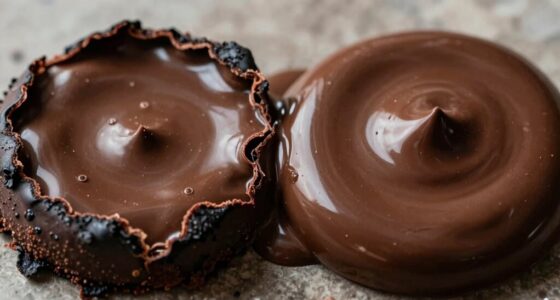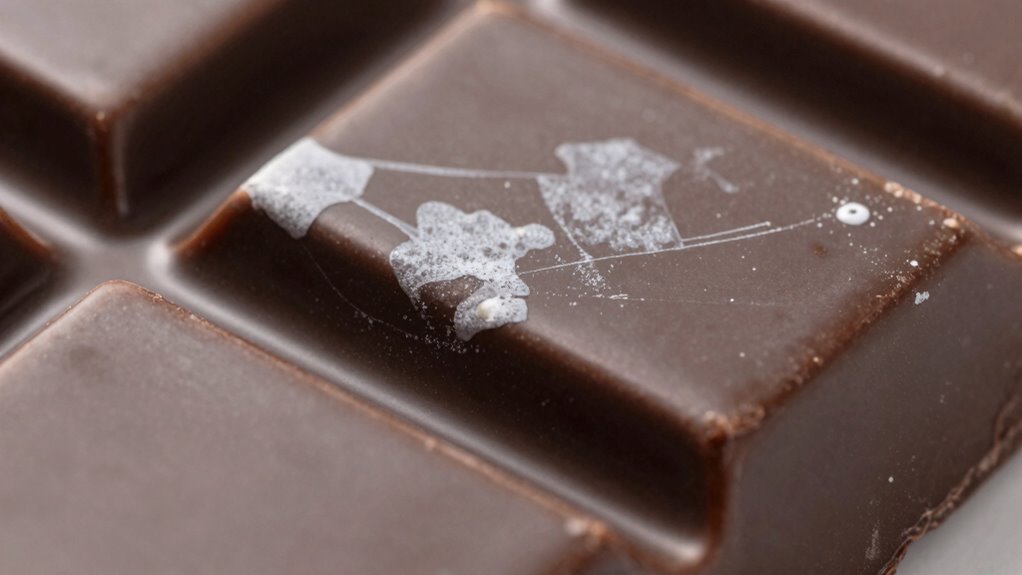

To spot fat bloom before it gets worse, look for a dull, whitish coating or a greasy film on the surface of your confections. It often appears as a cloudy or greasy appearance and may cause a change in texture. Keep an eye out for signs of fat migration, especially after temperature fluctuations or improper storage. Recognizing these early signs helps prevent further deterioration, and if you want to learn how to keep your treats looking great, continue exploring these tips.
Key Takeaways
- Look for a dull, whitish, or cloudy film on the surface of the confection.
- Check for a greasy or greasy-looking coating that differs from normal appearance.
- Monitor for irregular texture or a chalky feel on the surface.
- Observe any color changes or surface cracking that may accompany fat migration.
- Regularly inspect stored chocolates, especially after temperature fluctuations or improper handling.
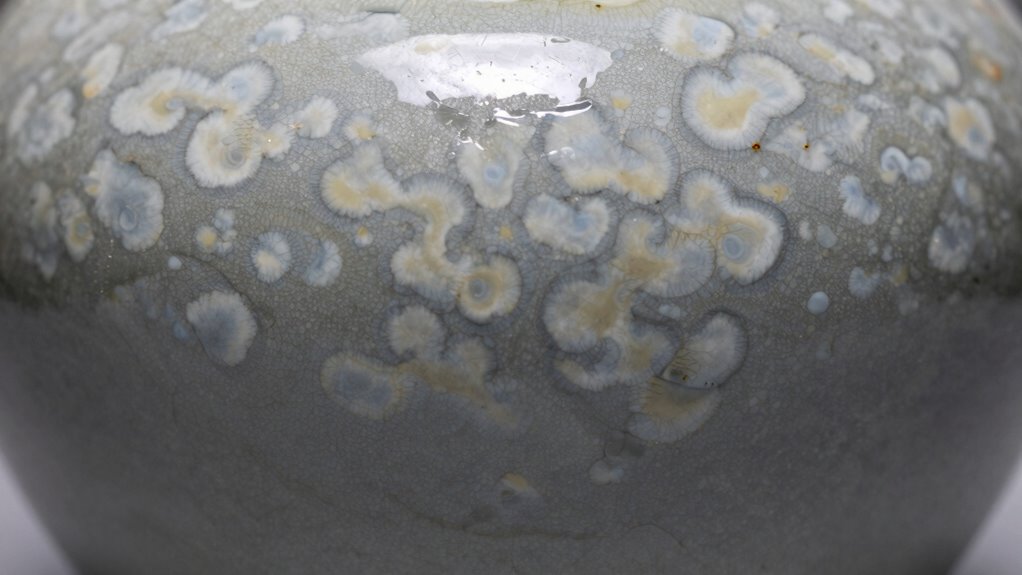
Have you ever noticed a dull, whitish coating on the surface of your honey or syrup? If so, you might be familiar with fat bloom, a common issue that affects various confections and edible fats. Fat bloom appears as a cloudy or greasy film, and while it doesn’t necessarily mean your product is unsafe, it indicates that fat has migrated and solidified on the surface. Recognizing it early can save you from wasting food and help you understand how to prevent it in the future.
Fat bloom appears as a cloudy film, signaling fat migration but not necessarily indicating spoilage.
When dealing with chocolates, storage plays an essential role. Proper chocolate storage is vital to avoid fat bloom. Keep chocolates in a cool, consistent environment—ideally between 60-70°F (15-21°C)—and avoid temperature fluctuations. Rapid changes cause the fat within the chocolate to melt and then recrystallize unevenly on the surface, leading to bloom. Also, avoid storing chocolates in the refrigerator if you can; moisture and condensation can exacerbate the problem. Instead, store chocolates in an airtight container in a cool, dark place to maintain quality and prevent fat migration. Temperature control is key in maintaining the integrity of fats in confections. Proper handling and storage conditions can make a significant difference in preventing fat bloom.
Fat bloom isn’t just a cosmetic issue; it’s often linked to improper handling and storage. In chocolates, it results from fat separating from the cocoa butter and migrating to the surface. This process can be accelerated if chocolates are exposed to heat or stored improperly. To prevent this, consider controlling the temperature carefully and minimizing exposure to light and humidity. If you’re dealing with homemade confections or candies, similar principles apply—keep them in a cool, stable environment to prevent fat from moving and solidifying on the surface. Additionally, understanding the causes of fat migration can help you better prevent and address fat bloom effectively. Recognizing factors influencing fat migration can help you take proactive steps.
Understanding how to spot fat bloom early helps you decide whether your product is still good to consume or needs to be discarded. If you see a greasy, dull film forming on your chocolates or candies, it’s a sign of fat migration. While the bloom doesn’t necessarily affect safety, it can impact the texture and appearance, making the product less appealing. Proper storage practices, especially in the context of chocolate storage, are your best defense against fat bloom and keeping your treats looking and tasting their best. Additionally, learning about fat migration can help you better understand the causes and prevention methods for fat bloom.
Ultimately, preventing fat bloom is about proper storage and handling. For chocolates, this means maintaining a stable, cool environment and avoiding moisture. By recognizing the early signs of fat bloom, you can take steps to minimize its appearance and preserve the quality of your confections. Proper storage practices, especially in the context of chocolate storage, are your best defense against fat bloom and keeping your treats looking and tasting their best.
As an affiliate, we earn on qualifying purchases.
Frequently Asked Questions
Can Fat Bloom Affect the Taste of Chocolate?
Fat bloom can affect the taste of chocolate by causing flavor alteration, making it less rich and smoother. You might also notice texture changes, such as a waxy or greasy feeling on the surface. While fat bloom doesn’t make the chocolate unsafe to eat, it can compromise its overall quality and enjoyment. To maintain the best flavor, store your chocolate properly and watch for signs of fat bloom early.
Is Fat Bloom Harmful to Health?
Fat bloom isn’t harmful to your health; it’s mainly a cosmetic concern that affects chocolate’s appearance and texture. While it might not taste as good, consuming fat bloom doesn’t pose health risks. However, its presence can reduce your enjoyment and make the chocolate look less appealing. If you notice fat bloom, it’s best to store your chocolate properly to minimize further issues, but rest assured, it’s safe to eat.
How Long Does Fat Bloom Typically Take to Form?
You might notice fat bloom forming in just a few days to weeks, especially when chocolate experiences temperature fluctuations. It causes a whitish, streaky appearance that affects the chocolate texture. To prevent fat bloom, keep your chocolates in a consistent, cool environment, and avoid rapid temperature changes. Regularly storing chocolate properly is key to fat bloom prevention, ensuring your treats stay smooth and delicious longer.
Can Fat Bloom Be Completely Removed From Chocolate?
You can remove fat bloom from chocolate, but it might not restore the original texture completely. Fat bloom causes a dull, streaky appearance and changes the chocolate’s texture, making it less smooth. To fix it, gently re-temper the chocolate by melting and cooling it carefully, which can help redistribute fats. Keep in mind, though, that some visual imperfections may remain, and the chocolate’s texture might still be slightly affected.
Does Fat Bloom Indicate Poor Storage Conditions?
Fat bloom often signals that storage practices or temperature control weren’t ideal. When chocolate is exposed to fluctuating temperatures or stored improperly, fat can migrate to the surface, creating a whitish appearance. This doesn’t mean the chocolate is unsafe, but it does suggest that maintaining consistent storage conditions and temperature control is essential. To prevent fat bloom, keep chocolate in a cool, dry place away from direct sunlight and temperature swings.
As an affiliate, we earn on qualifying purchases.
Conclusion
Think of fat bloom like a warning sign on a stormy horizon—you don’t want to ignore it. By paying close attention to changes in your chocolate’s appearance, you catch problems early and prevent them from spreading like wildfire. Spotting these signs now keeps your treat’s smooth, glossy finish intact, ensuring it stays delicious and appealing. Stay vigilant, and your chocolate will continue to be a shining beacon of sweetness, not a warning of trouble ahead.
temperature controlled chocolate box
As an affiliate, we earn on qualifying purchases.
As an affiliate, we earn on qualifying purchases.
food-grade fat bloom detection kit
As an affiliate, we earn on qualifying purchases.
As an affiliate, we earn on qualifying purchases.