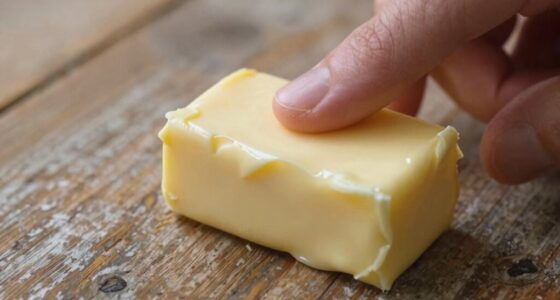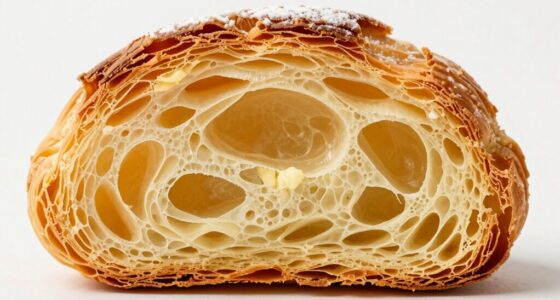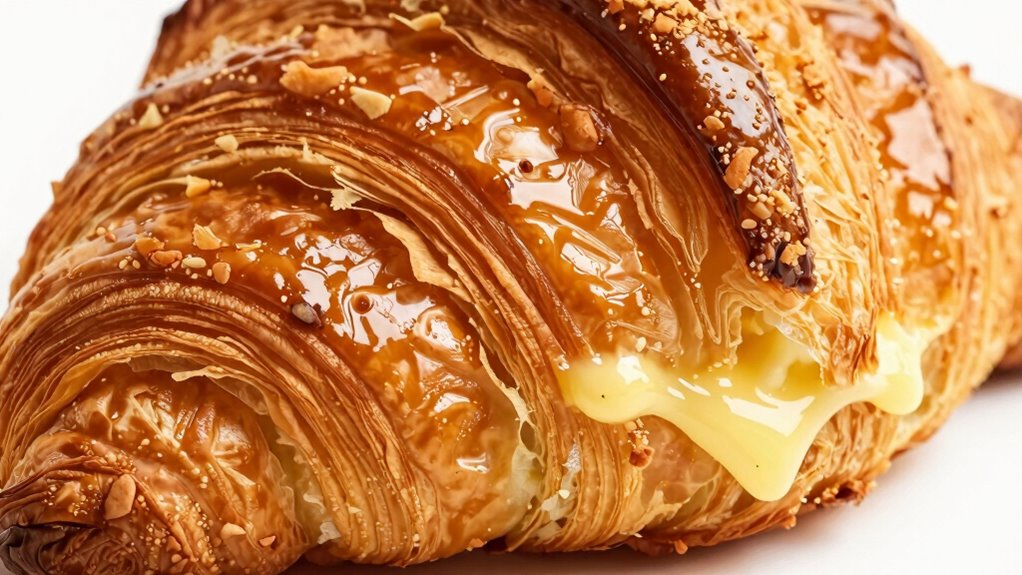

Butter leaks from croissant layers mainly because of uneven butter distribution and improper handling during lamination. If you overwork the dough or don’t keep the butter chilled, the layers won’t form properly, allowing the butter to escape during baking. Baking at the wrong temperature can also cause butter to melt too quickly or not set properly, leading to leaks. For a perfect croissant, understanding these factors helps avoid butter oozing out—there’s more to learn to perfect your technique.

Get baking supplies delivered free with Prime
- Fast, free delivery on millions of items
- Prime Video, Amazon Music and more included
- Member-only deals all year
Key Takeaways
- Inadequate fermentation reduces dough elasticity, making layers less capable of retaining butter during baking.
- Improper lamination or uneven butter distribution creates weak spots, allowing butter to escape.
- Baking at too high or too low temperatures causes improper butter melting and puffing, leading to leaks.
- Overworking or damaging dough layers diminishes their ability to trap butter effectively.
- Poor layer formation or thick layers prevent proper sealing, increasing butter leakage during baking.
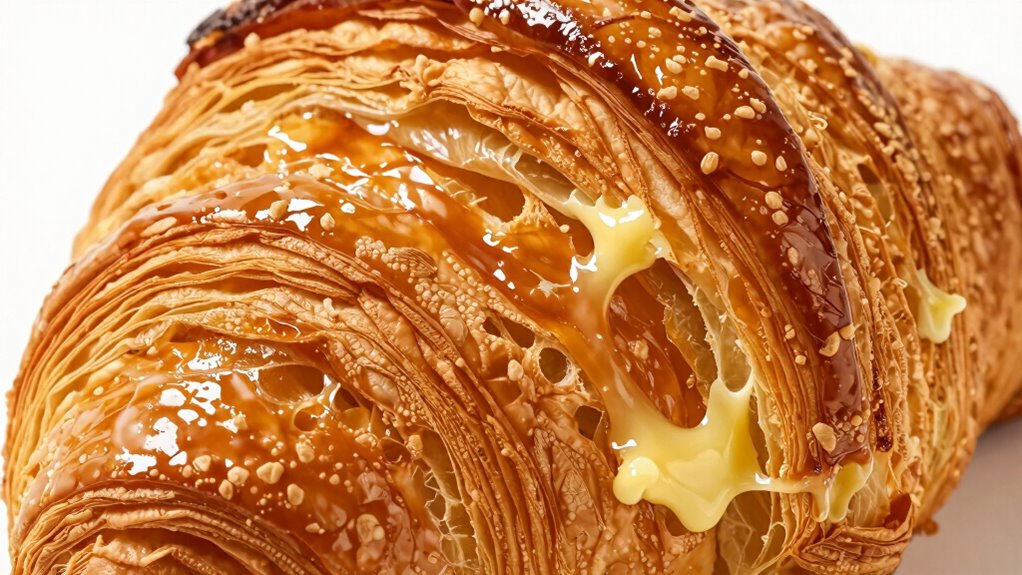
If you’ve ever bitten into a croissant only to find a pool of butter oozing out, you’re not alone. That greasy surprise can be frustrating, especially when you’re expecting that perfect, flaky bite. The reason behind this often comes down to how the dough was prepared and baked. Two key factors influence whether the layers hold their structure or leak butter: dough fermentation and baking temperature.
A buttery, flaky croissant depends on proper fermentation and baking temperature to keep layers intact and avoid leaks.
Dough fermentation plays an essential role in the croissant’s final texture. When you let the dough ferment properly, the yeast produces carbon dioxide, which helps develop gluten and creates a light, airy structure. If the fermentation is rushed or incomplete, the dough may not develop enough elasticity, leading to uneven layers that can allow butter to seep through during baking. Proper fermentation also helps the layers bond well, trapping the butter inside rather than letting it escape. When fermentation is too short, the dough remains dense, and the layers don’t expand properly, making it more prone to leakages. Additionally, Proper fermentation ensures the butter is evenly distributed within the layers, reducing the likelihood of leaks. Ensuring the fermentation process is controlled and balanced is crucial for achieving the ideal croissant texture. A well-fermented dough also improves the layering structure, which is vital for a flaky, leak-free croissant.
Baking temperature is another critical factor. Croissants require a hot oven—generally around 375°F to 400°F—to ensure the layers puff up quickly and evenly. If the oven isn’t hot enough, the butter melts slowly and seeps out before the layers have a chance to set. Conversely, if the temperature is too high, the outside may brown too quickly, creating a crust that prevents the layers from expanding fully. This can cause the butter to trap inside or leak out as the layers struggle to separate properly. Achieving the right baking temperature guarantees the butter is absorbed into the layers rather than melting away prematurely. Additionally, the butter distribution within the dough must be even, as uneven butter placement can cause leakage regardless of fermentation or temperature.
Handling the dough carefully during lamination is also crucial. Overworking the dough can break down the layers, making them less distinct and more likely to leak. Proper lamination—folding and rolling the dough with butter—creates thin, distinct layers that trap the butter inside. When these layers are too thick or uneven, butter has an easier escape route during baking. Ensuring the butter remains chilled during lamination also helps maintain the integrity of the layers. Proper handling during lamination preserves the structure and prevents butter leaks, contributing to that perfect flaky texture.
croissant lamination dough scraper
As an affiliate, we earn on qualifying purchases.
As an affiliate, we earn on qualifying purchases.
Frequently Asked Questions
Can the Butter Leak Happen With Homemade Croissants?
Yes, butter leakage can happen with homemade croissants if your baking techniques aren’t precise. When you overstuff the layers or don’t fold and roll properly, the croissant flavor is compromised, and butter can leak out during baking. To prevent this, make sure you use the right amount of butter, follow proper lamination methods, and maintain consistent thickness. These steps help keep the layers intact and preserve that perfect flaky texture.
Does the Type of Butter Affect Leakage?
Yes, the type of butter you use affects leakage. High-quality butter with a higher fat content creates better layers and less leakage, while lower-quality butter can melt or leak more easily. Your pastry techniques also matter—proper lamination and folding help contain the butter. So, choosing the right butter quality and mastering your pastry techniques are key to preventing butter leaks in your croissants.
How Does Storage Temperature Impact Butter Leakage?
Storing croissants at higher temperatures causes butter to become softer and more likely to leak. Cool, consistent storage conditions keep butter solid and contained within the layers, preventing leakage. When you store croissants in a warm environment, the butter’s behavior changes, making it more prone to seeping out. To avoid this, keep your croissants in a cool place, ideally in an airtight container, ensuring the butter stays intact and your pastry remains flaky.
Are There Specific Ingredients That Prevent Butter From Leaking?
Think of a croissant as a delicate dance, where each ingredient plays a crucial role. To prevent butter from leaking, high-quality butter with a balanced ingredient composition is necessary. Ingredients like emulsifiers or stabilizers can act as shields, holding the layers tight. Using premium butter ensures the right consistency, reducing leakage. So, yes, specific ingredients—especially those that enhance butter’s stability—can make all the difference in keeping your layers flawless.
Can Baking Time Influence Butter Leakage in Croissants?
Yes, baking time can influence butter leakage in croissants. If you bake them too long or at too high a temperature, the butter melts excessively, causing it to seep out and affecting the flaky texture. To prevent this, keep an eye on the baking temperature and time, ensuring the croissants are golden and flaky without overcooking. Proper timing helps maintain the perfect flaky layers and prevents butter from leaking.
baking oven thermometer for croissants
As an affiliate, we earn on qualifying purchases.
As an affiliate, we earn on qualifying purchases.
Conclusion
Next time you bite into a croissant and find butter oozing out, remember it’s a sign of its buttery, flaky perfection. Imagine the layers as a delicate dance, each one holding just enough to create that melt-in-your-mouth experience. I once watched a baker carefully fold dough, saying, “Every layer is a promise of richness.” When the layers leak, it’s a reminder that great things often come from a little mess—beauty in imperfection.
As an affiliate, we earn on qualifying purchases.
As an affiliate, we earn on qualifying purchases.
Fall Picks
fall essentials
As an affiliate, we earn on qualifying purchases.