
While an open crumb looks attractive, it’s not always better for bread’s function and enjoyment. Too many large holes can make the bread fragile, difficult to slice, and less practical for sandwiches or toast. Overly open bread may also have a less chewy texture and reduced moisture retention. Achieving a balanced crumb often results in a loaf that’s both beautiful and delicious. Stay with us to uncover how balancing gluten and baking techniques can improve your bread’s overall quality.

Get baking supplies delivered free with Prime
- Fast, free delivery on millions of items
- Prime Video, Amazon Music and more included
- Member-only deals all year
Key Takeaways
- An overly open crumb can compromise bread’s structural integrity and make it prone to tearing.
- Large holes may reduce the bread’s suitability for sandwiches or spreading toppings evenly.
- Excessive openness can lead to a less chewy, more fragile texture.
- A tightly knit crumb maintains moisture better and provides a more consistent eating experience.
- Visual openness should be balanced with flavor, texture, and practicality for optimal bread quality.
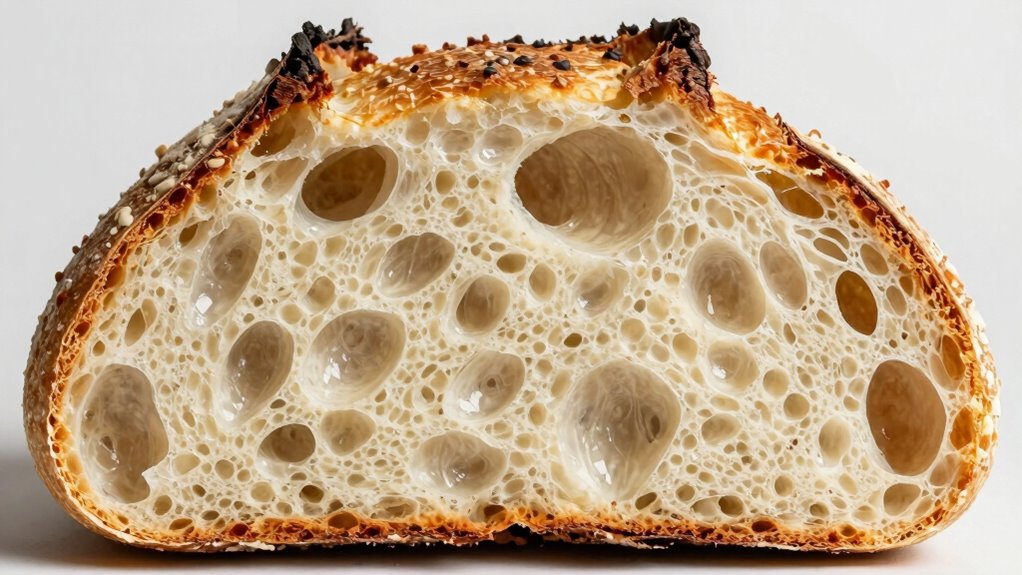
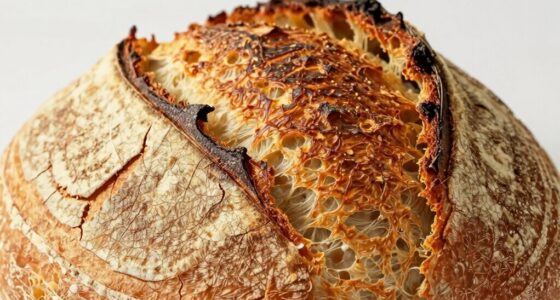
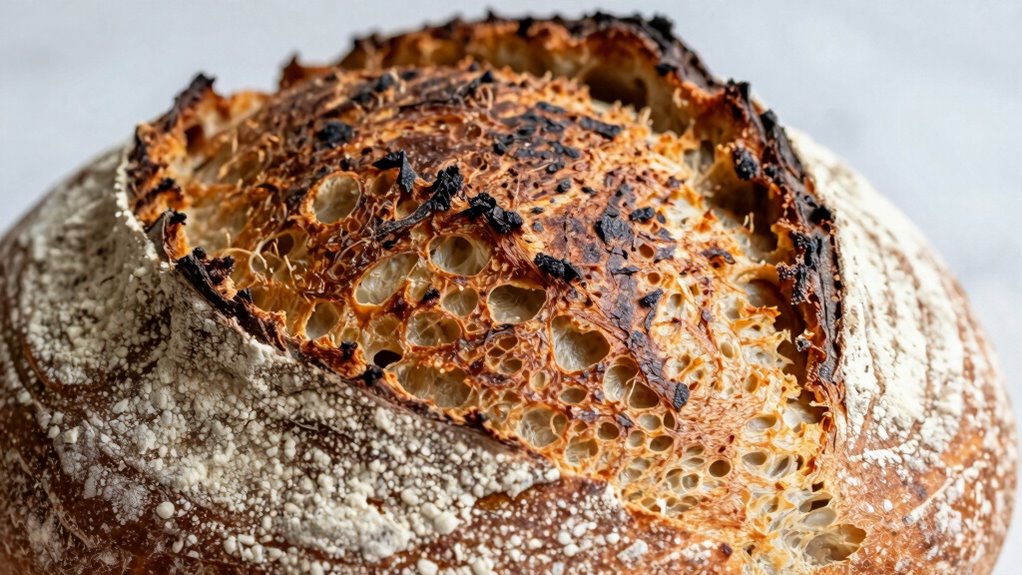
Have you ever wondered what makes a loaf of bread irresistibly inviting? It’s a combination of factors, but one key element is the open crumb. An open crumb, characterized by large, irregular holes, can look impressive and appealing. However, achieving this look isn’t just about aesthetics; it’s tied closely to gluten development and baking techniques. When you focus solely on creating an open crumb, you might overlook the importance of proper gluten structure. Gluten forms when flour proteins hydrate and stretch during mixing, giving bread its elasticity and strength. For an open crumb, you need a well-developed gluten network that traps gases produced by yeast or sourdough fermentation. This network allows the dough to rise aggressively and produce those large holes. But if you overmix or undermix, you risk damaging the gluten strands or failing to develop enough structure, which can result in a bread with a dense or uneven crumb.
A well-developed gluten network is essential for an open crumb and airy, irregular holes in bread.
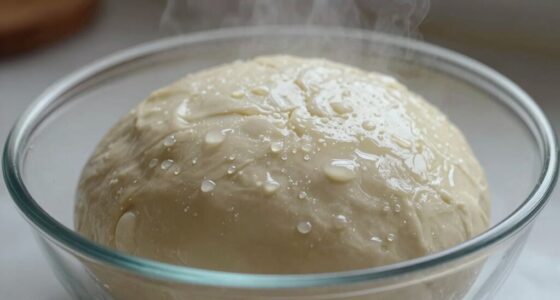
Baking techniques also play a crucial role. Techniques like proper fermentation, shaping, and scoring influence how the bread expands and how gases are retained. For example, a long, slow fermentation not only enhances flavor but also helps develop gluten naturally, leading to a more open crumb. Shaping the dough correctly creates tension on the surface, encouraging a good oven spring and even expansion. When you score the dough, you control where the bread expands during baking, impacting the final crumb structure. Proper fermentation also involves understanding the importance of gluten formation, which is essential for bread with an open crumb. Additionally, controlling fermentation time is vital to avoid overproofing, which can weaken the gluten network. Proper timing and temperature management can help optimize gluten development, ensuring a balance between an open crumb and overall bread strength. It’s also important to note that hydration levels significantly influence the open-ness of the crumb, with higher hydration often leading to larger holes. However, focusing solely on getting big holes can lead to overproofing or underproofing, which can make the bread collapse or develop an uneven crumb.
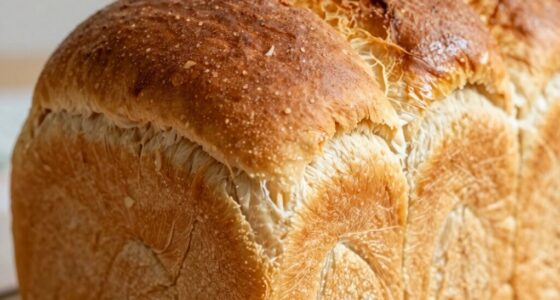
Furthermore, a bread with an overly open crumb isn’t always practical. It can be more fragile and prone to tearing, making it less suitable for sandwiches or toast. The texture may be too airy, lacking the chewiness or density some prefer. Sometimes, a tighter crumb provides better structure and moisture retention. If you chase the perfect open crumb at the expense of overall balance, you might end up with bread that’s visually striking but less functional or enjoyable to eat.
In the end, understanding that the goal isn’t just about achieving an open crumb but about balancing gluten development and baking techniques helps you make better bread. While the airy holes look impressive, they shouldn’t come at the cost of flavor, texture, or practicality. A well-made loaf considers all these factors, resulting in bread that’s not only beautiful but also delicious and satisfying.
As an affiliate, we earn on qualifying purchases.
Frequently Asked Questions
How Does Open Crumb Affect Bread Shelf Life?
Open crumb can reduce bread’s shelf life because the large holes expose more surface area, which affects crust preservation and moisture retention. As moisture escapes more quickly through the open structure, the bread dries out faster, leading to staler, less fresh-feeling bread sooner. To extend shelf life, you might need to store it properly and consider the impact of the open crumb on how long it stays soft and enjoyable.
Can Open Crumb Bread Be Stored Longer?
Did you know that open crumb bread typically lasts 1-2 days longer than denser loaves? While open crumb bread might seem more delicate, proper storage techniques can help extend its freshness. To preserve the crust and prevent staling, store it in a paper bag or bread box, avoiding plastic, which traps moisture. This way, your open crumb bread stays fresher longer without sacrificing its signature airy texture.
Does Open Crumb Influence Bread Flavor?
Open crumb can influence bread flavor by enhancing flavor development through increased air exposure, which promotes fermentation and complex taste profiles. However, the crumb density matters—lighter, open crumb may have a subtler flavor, while denser crumb often results in a richer taste. If you prefer a more intense flavor, a slightly denser crumb might be better, but open crumb offers a unique texture and aroma that many find appealing.
Are Certain Bread Types Better With Open Crumb?
Certain bread types look better with an open crumb, but not all. You might find that dense bread, like a hearty rye or pumpernickel, benefits from a tighter crumb for structure and flavor. Crumb aesthetics matter, and the open crumb isn’t always the goal—it can compromise texture. So, consider the bread’s purpose and style; sometimes, a close-knit crumb enhances taste, keeping you guessing which bread suits each occasion best.
How Does Open Crumb Impact Bread Texture?
Open crumb makes the bread’s texture lighter and airier, but it can reduce crumb density, making it less substantial. You’ll notice more crumb elasticity, which allows the bread to stretch without tearing, giving a pleasing chew. However, if the open crumb is too large, it may compromise the bread’s overall strength and moisture retention. Balancing openness with structure is key to achieving the desired texture.
As an affiliate, we earn on qualifying purchases.
Conclusion
So, remember, open crumb bread isn’t always better bread. It’s about the look, the feel, and the flavor you crave. Sometimes, a tight crumb offers a soft, chewy bite; other times, an open crumb provides airy delight. Whether you prefer the rustic charm or the dense comfort, it’s your choice to make. Embrace the variety, appreciate the differences, and enjoy baking what suits your taste—because the best bread is the one that makes you smile.
As an affiliate, we earn on qualifying purchases.
As an affiliate, we earn on qualifying purchases.
Halloween Picks
halloween
As an affiliate, we earn on qualifying purchases.