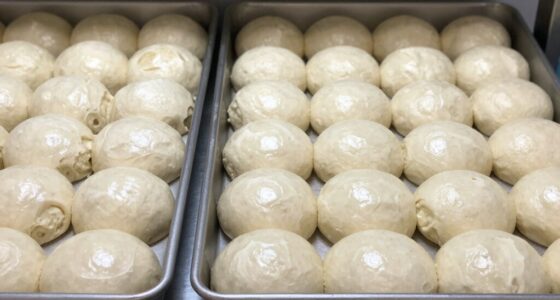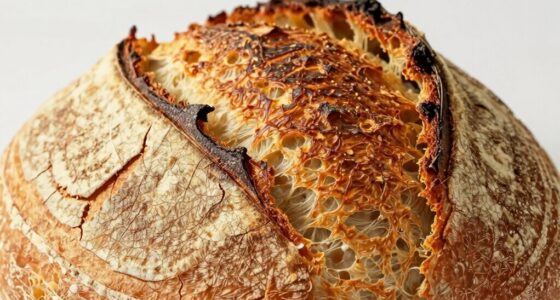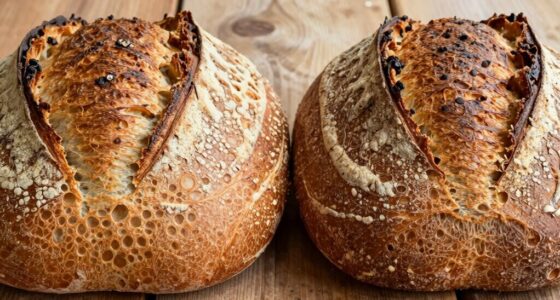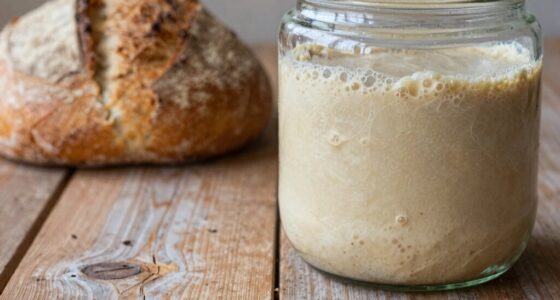

Many bakers often mistake surface bubbles and dough expansion as the only signs of proper bulk fermentation. However, these cues can be misleading, especially in high-hydration doughs or cooler environments. Instead, focus on how the dough responds to gentle pokes, its elasticity, and surface appearance beyond just volume. Understanding these subtle signs helps prevent over- or under-proofing. Keep exploring, and you’ll discover how temperature and hydration greatly influence fermentation cues.

Get baking supplies delivered free with Prime
- Fast, free delivery on millions of items
- Prime Video, Amazon Music and more included
- Member-only deals all year
Key Takeaways
- Bakers often rely solely on volume increase, ignoring subtle signs like surface bubbles or dough elasticity.
- Many misinterpret surface doming or bubbles without considering environmental factors or dough response.
- Overlooking dough temperature and hydration can lead to incorrect assumptions about fermentation readiness.
- Bakers may ignore the dough’s texture and springback, focusing only on appearance or timing.
- Relying solely on visual cues without testing elasticity or using poke tests causes misjudgment of proper fermentation.
Many bakers misinterpret the signs of bulk fermentation, which can lead to under- or over-proofed dough. The most common mistake is focusing solely on appearance or timing rather than paying attention to subtle cues. One critical sign often overlooked is the dough’s response to fermentation temperature and dough hydration, which are key factors influencing how your dough behaves during proofing. Additionally, understanding how fermentation temperature affects yeast activity can help you better judge when your dough is ready. Fermentation temperature plays a major role in how quickly or slowly your dough develops. If your environment is too warm, the yeast ferments rapidly, and you might think the dough is ready when it’s actually over-proofed. Conversely, if it’s too cool, fermentation slows down, and the dough may seem underdeveloped even when it’s past the ideal point. Instead of relying solely on the clock, you should observe how the dough reacts at different temperatures. A slightly warmer environment can accelerate fermentation, but you need to watch for signs like bubbles forming on the surface, a slight doming, or a visible stretchiness, which indicate the gluten network is strengthening. Recognizing these signs requires understanding how dough hydration interacts with fermentation conditions to influence dough behavior. Dough hydration also influences how you interpret fermentation signs. Higher hydration doughs tend to be stickier and more elastic, which can mask the typical signs of readiness. They often develop more bubbles and expand rather than just rising in volume, so you shouldn’t judge fermentation solely by volume increase. Instead, look for a gentle, consistent aeration and a slight doming of the dough’s surface. Lower hydration doughs, on the other hand, may show less visible signs of fermentation, and their readiness might be better judged by poke tests—pressing lightly on the dough and seeing if it springs back slowly. What many bakers miss is that the dough’s hydration level and fermentation temperature work together to produce the right signs of readiness. For example, a high-hydration dough might need more time even if it appears “bubbly,” because the moisture content affects gluten development and gas retention. If you don’t account for these factors, you risk under-proofing by stopping too early or over-proofing and losing oven spring. Paying attention to fermentation cues, such as the dough’s elasticity and surface appearance, provides a more accurate assessment than just timing. It’s also important to consider how dough handling techniques during fermentation can impact the final proofed dough’s structure. In essence, the one bulk fermentation sign that’s often misunderstood is not just how much the dough rises but how it responds to temperature and hydration. Paying close attention to these cues—and adjusting your environment and hydration levels accordingly—helps you achieve perfectly proofed dough every time, rather than relying solely on visual cues or timeframes.
As an affiliate, we earn on qualifying purchases.
Frequently Asked Questions
How Do Temperature Fluctuations Affect Bulk Fermentation Signs?
Temperature fluctuations can profoundly impact your bulk fermentation signs by altering fermentation speed. When temperatures vary, your dough may ferment too quickly or slowly, making signs like bubbles and dough expansion unreliable. To get accurate results, maintain temperature consistency, so your dough ferments evenly. This helps you better gauge when it’s ready, ensuring your bread develops the right flavor and texture without over- or under-proofing.
Can Dough Hydration Levels Influence Fermentation Indicators?
Sure, dough hydration levels do influence fermentation indicators more than you’d think. When hydration consistency is high, the dough becomes stickier, often making signs like bubbles or volume increase harder to spot—ironic, right? Too much water can mask the true fermentation progress, while lower hydration may exaggerate signs. So, keeping hydration levels steady helps you interpret fermentation signs accurately, rather than relying on misleading dough stickiness or appearance.
What Are Common Misconceptions About Fermentation Timing?
You might think fermentation timing is always about doubled size or bubbles, but that’s a misconception. Fermentation speed varies based on dough elasticity, temperature, and ingredients. Overestimating fermentation can lead to over-proofed dough, while underestimating it can cause underdeveloped flavors. Instead, trust signs like a slight jiggle or a soft, airy texture. Remember, patience and understanding dough elasticity help you judge the right timing, rather than just clock-watching.
How Do Different Flour Types Impact Fermentation Cues?
Think of different flours like various musical instruments—they each produce unique sounds during fermentation. Whole wheat flour, rich in enzymes, accelerates gluten development and enzyme activity, signaling readiness sooner. Conversely, bread flour, with higher protein content, develops gluten more slowly, requiring patience. Understanding these differences helps you interpret fermentation cues accurately, as the gluten development process varies, guiding you to perfect your dough’s timing based on flour type.
Are There Visual Cues That Override Traditional Signs?
Yes, visual cues and sensory indicators can sometimes override traditional signs. You might notice a dough’s surface becoming glossy or showing bubbles, signaling it’s ready, even if it hasn’t doubled in size. Feel the dough’s elasticity or aroma for clues. Trusting these sensory indicators alongside visual cues helps you better judge fermentation, especially when usual signs seem ambiguous. Always observe your dough closely and develop your senses to refine your timing.
bulk fermentation dough thermometer
As an affiliate, we earn on qualifying purchases.
As an affiliate, we earn on qualifying purchases.
Conclusion
Next time you see your dough quietly resting, don’t rush to judge. It’s like a sleeping giant, holding secrets of flavor and texture, waiting for just the right moment to awaken. Trust those subtle signs—the gentle bubbles, the softening crust—because they’re whispers from your dough, guiding you to perfection. With patience, you’ll reveal the true symphony of fermentation, crafting bread that sings with every bite. Sometimes, the quietest signs yield the loudest delicious results.
As an affiliate, we earn on qualifying purchases.
As an affiliate, we earn on qualifying purchases.
Fall Picks
fall essentials
As an affiliate, we earn on qualifying purchases.