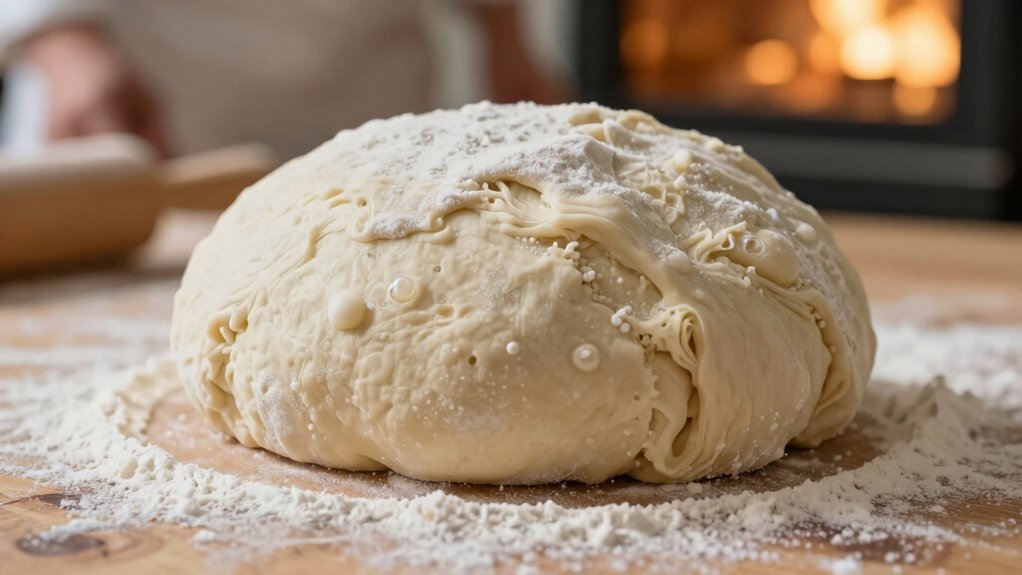

When your dough feels dense, it usually means it needs more time to ferment properly. This isn’t a sign of failure, but rather a cue to be patient, as extended fermentation improves flavor, gluten development, and gas production. By allowing the dough to develop fully, you’re more likely to end up with a loaf that’s airy, crusty, and rich in taste. Keep going, and you’ll discover how patience turns dense dough into amazing bread.

Get baking supplies delivered free with Prime
- Fast, free delivery on millions of items
- Prime Video, Amazon Music and more included
- Member-only deals all year
Key Takeaways
- Dense dough can indicate proper fermentation, which enhances flavor and crumb structure if given enough time.
- It often results from under-fermentation, and patience allows the dough to develop better texture before baking.
- High-quality, fresh ingredients improve gluten strength, leading to denser dough that bakes into a better loaf.
- Recognizing dense dough as a sign to continue fermentation can prevent premature baking and improve final results.
- Allowing dense dough to rest further helps develop complex flavors and a more desirable crust and crumb.
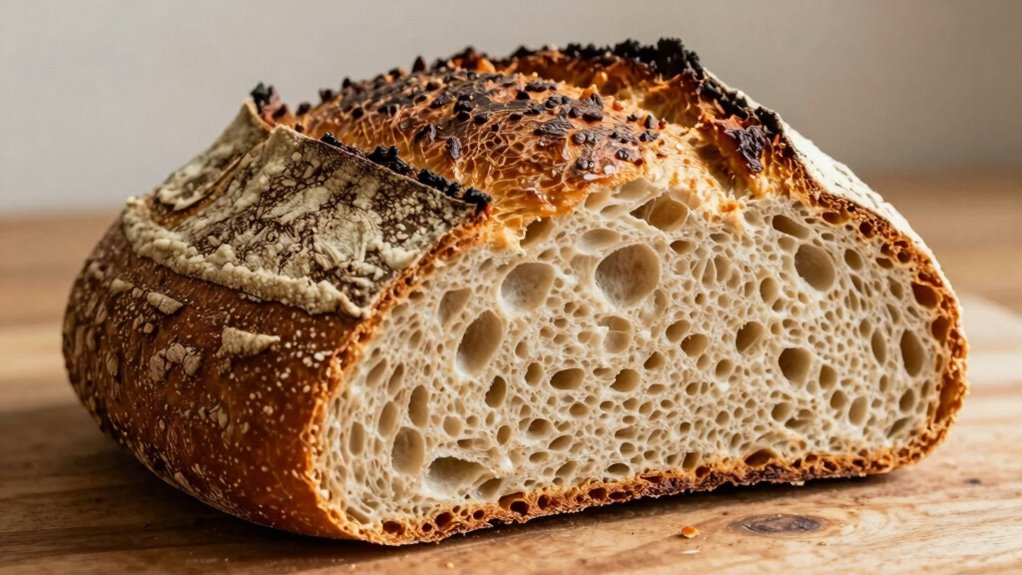
You might think that a dense dough indicates a failed bread, but in many cases, it’s actually a sign of a better loaf waiting to be baked. Dense dough often results from specific fermentation timing and ingredient quality, and understanding these factors can help you produce superior bread. When dough feels heavy or compact, it’s usually because the fermentation process hasn’t fully completed or the ingredients haven’t been optimized, but that doesn’t mean your bread is doomed. In fact, paying attention to these details can turn dense dough into a sign of potential perfection.
Fermentation timing plays a critical role here. If you under-ferment, the dough remains dense because the yeast hasn’t produced enough gas to create a light, airy crumb. On the other hand, over-fermenting can also cause density, as the gluten structure weakens, collapsing under its own weight. The key is finding that sweet spot—allowing enough time for the yeast to develop flavors and gas without overdoing it. Proper fermentation results in dough that’s just right, with a slightly sticky feel and a visible rise, but even if it’s still dense, don’t rush to discard it. Sometimes, patience is what’s needed to allow the dough to develop fully, leading to better flavor and texture after baking. Monitoring fermentation progress can help you recognize when the dough has reached the ideal stage for baking. Paying close attention to fermentation cues can also help you determine the right moment to proceed. Additionally, understanding gluten development can provide insights into how the dough’s structure influences its final rise.
Finding the right fermentation time is key to avoiding dense, underdeveloped bread. Patience yields better flavor and texture.
Understanding fermentation timing and how it impacts dough structure is essential for bakers aiming for consistent results. Ingredient quality is equally essential. Using fresh, high-quality flour and ingredients ensures your dough has the necessary nutrients for ideal fermentation. Lower-quality flour may lack the gluten strength needed for proper rise, contributing to dense bread. Similarly, the freshness of yeast and other ingredients affects how well fermentation proceeds. If your ingredients aren’t first-rate, it might take longer for the dough to rise or develop the desired structure. Incorporating proper ingredient handling can also influence fermentation efficiency and final texture. But once you select quality ingredients and give your dough enough time, even a dense start can transform into a beautifully risen loaf.
In the end, a dense dough isn’t necessarily a sign of failure; it’s often a cue that you need to fine-tune your fermentation timing and ingredient choices. With patience and attention to detail, what begins as a compact mass can become a crusty, airy loaf that’s full of flavor. Recognizing these signs and understanding their causes puts you on the path to baking bread that’s better than you imagined, with a perfect crumb and rich taste. So next time your dough feels heavy, remember—it might just be a signal that your bread is on its way to greatness.
As an affiliate, we earn on qualifying purchases.
Frequently Asked Questions
Can Dense Dough Be Suitable for All Bread Types?
Dense dough isn’t suitable for all bread types, as some require a lighter, airy texture. You should consider the fermentation process and avoid artificial ingredients, which can affect the dough’s density. For bread like sourdough or rustic varieties, a denser dough can enhance flavor and structure. However, for softer breads like baguettes or sandwich loaves, a lighter dough is preferable. Adjust your ingredients and fermentation accordingly for the best results.
How Does Gluten Development Affect Dough Density?
Gluten development directly impacts dough density by creating a strong gluten structure that traps gas, leading to a lighter, more elastic dough. When the gluten network is well-developed, the dough becomes more elastic, allowing it to rise better and produce a softer, airier texture. Conversely, underdeveloped gluten results in denser bread, as the dough lacks the necessary elasticity to trap gases effectively, making it heavier and denser.
Is Dense Dough Easier or Harder to Work With?
Dense dough might seem harder to handle at first, but with proper fermentation techniques, it becomes more manageable and yields better bread. You can improve its workability by adjusting ingredient substitutions, like adding more water or using different flours to enhance elasticity. While it may require more effort initially, embracing its density helps develop flavor and structure, making your baking process more rewarding and your bread more satisfying.
What Are Common Mistakes Leading to Overly Dense Dough?
You often get overly dense dough from common mistakes like using artificial ingredients that hinder yeast activity or not allowing enough fermentation time. Poor storage techniques, such as refrigerating dough improperly, can also affect its rise. To avoid dense bread, guarantee you use natural ingredients, give the dough enough time to develop flavor and structure, and store it correctly. Proper fermentation and storage are key to achieving lighter, better bread.
Does Dense Dough Impact Bread Flavor?
Imagine your bread as a vintage vinyl—the dense dough can actually enhance flavor, giving your bread a richer taste over time. While a dense dough might limit some texture variation, it often leads to better flavor enhancement by allowing fermentation to develop deeper, more complex flavors. So, yes, dense dough impacts bread flavor positively, creating a more satisfying, nuanced experience, even if the texture is a bit more compact.
As an affiliate, we earn on qualifying purchases.
Conclusion
So, next time your dough feels too dense, don’t toss it just yet. That heaviness might actually be a secret weapon, promising a richer, more flavorful loaf down the line. Irony strikes again—what seems like a flaw could be the very thing that elevates your bread’s character. Sometimes, embracing the imperfections leads to the most rewarding results. After all, the best bread often comes from the unexpected, dense moments of patience.
As an affiliate, we earn on qualifying purchases.
As an affiliate, we earn on qualifying purchases.
Halloween Picks
halloween
As an affiliate, we earn on qualifying purchases.