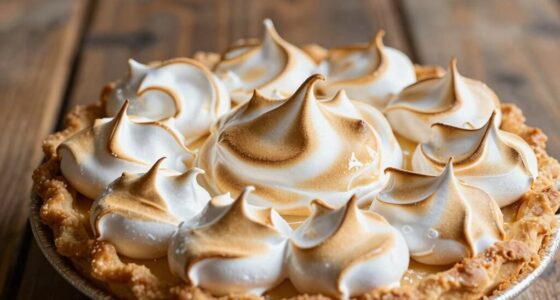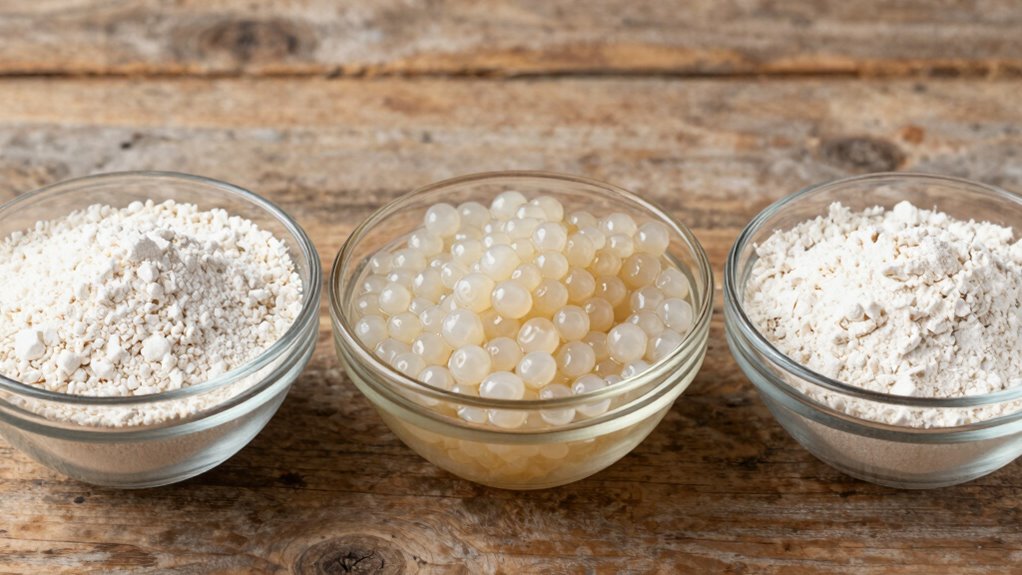

When choosing a pie thickener, consider your dietary needs, desired texture, and storage. Cornstarch thickens quickly, creates a glossy finish, and is gluten-free, making it great for fruit pies. Tapioca offers a translucent look and chewy texture, and also suits gluten-free diets. Flour is more traditional, but it requires longer cooking and may produce a matte appearance. To make the best choice for your pie, explore these options further to find the perfect fit.

Get baking supplies delivered free with Prime
- Fast, free delivery on millions of items
- Prime Video, Amazon Music and more included
- Member-only deals all year
Key Takeaways
- Cornstarch provides a glossy, smooth finish and thickens quickly, ideal for fruit pies with fresh flavors.
- Tapioca offers a translucent, chewy texture suitable for high-moisture fillings and maintains firmness over time.
- Flour creates a matte appearance, requires longer cooking, and is less potent but good for thickening larger quantities.
- Both cornstarch and tapioca are gluten-free, making them better choices for gluten-sensitive diets.
- Consider storage, shelf life, and desired texture when choosing between the three thickeners.
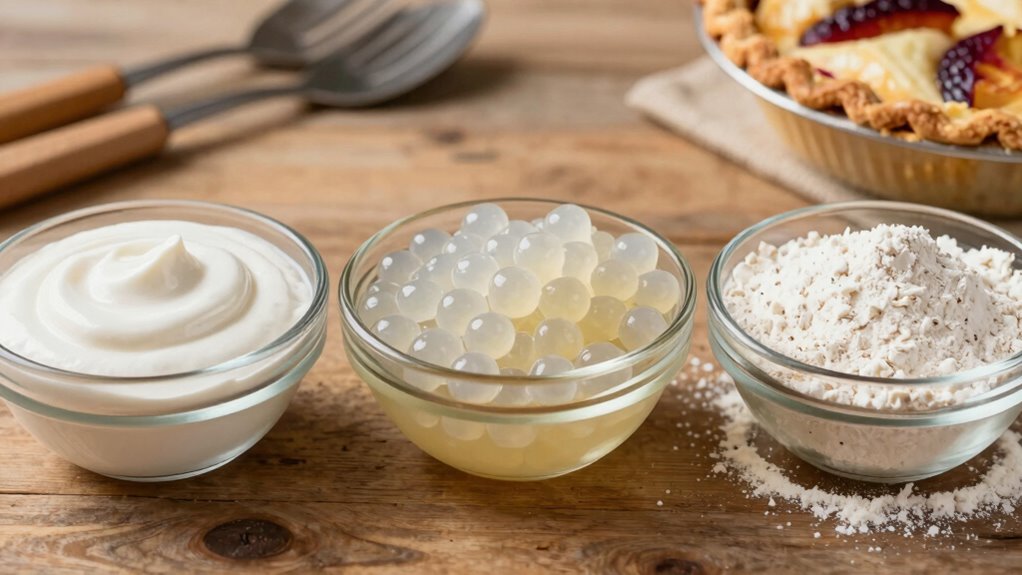
Are you wondering which thickener works best for your pie filling? Choosing the right one depends on your dietary needs, desired texture, and how long you plan to keep the pie. Cornstarch, tapioca, and flour each have their strengths, but understanding their differences can help you make the best choice. If you’re looking for gluten-free options, cornstarch and tapioca are excellent picks since they naturally contain no gluten. Regular wheat flour, on the other hand, isn’t suitable for those avoiding gluten, but there are gluten-free flours available if you prefer that route. Shelf life is another factor to consider—cornstarch and tapioca tend to have a longer shelf life when stored properly, usually up to several years, while flour’s shelf life is somewhat shorter, especially once opened, and it can develop off-flavors or spoilage if not stored in a cool, dry place.
When it comes to thickening power, cornstarch is highly effective because you only need a small amount to thicken your filling. It creates a glossy, smooth texture that’s perfect for fruit pies like cherry or apple. Tapioca, often available as pearls or flakes, also thickens well and can give your pie a slightly chewy, translucent quality that’s especially good for fruit fillings with high moisture content. Flour, being more traditional, is less potent—meaning you’ll need to use more to achieve the same thickness. It produces a matte finish and a slightly grainy texture if not cooked thoroughly, but it’s a reliable, familiar option.
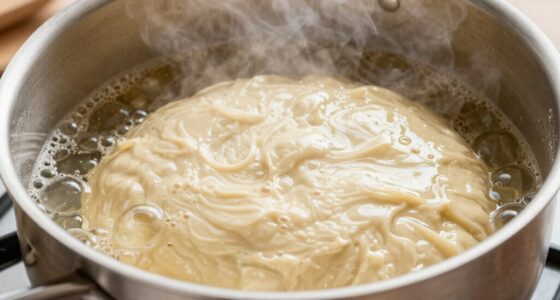
In terms of preparation, cornstarch and tapioca generally require less cooking time. You mix them into your filling and cook just until thickened, which helps preserve fresh fruit flavors. Flour, however, benefits from a longer cooking process to eliminate the raw taste and improve clarity. If you’re making a pie that will be stored for days or weeks, think about how each thickener holds up over time. Cornstarch and tapioca tend to maintain their thickening properties longer without breaking down, helping your filling stay firm and appealing. Flour-based fillings may become a bit watery or less appealing after extended storage.
Ultimately, your choice depends on your dietary preferences, the texture you want, and how long your pie will last. Both cornstarch and tapioca offer gluten-free options with impressive shelf lives, making them ideal for those with gluten sensitivities or allergies. Flour remains a classic, but it requires a bit more attention to cooking time and storage. Whichever you pick, understanding these differences ensures your pie filling turns out just right every time.
Top picks for "cornstarch tapioca flour"
As an affiliate, we earn on qualifying purchases.
Frequently Asked Questions
Can I Substitute Cornstarch for Tapioca in All Recipes?
You can substitute cornstarch for tapioca in many recipes, but expect a different thickening consistency and flavor impact. Cornstarch thickens quickly and creates a glossy finish, while tapioca offers a smoother, more elastic texture with less flavor interference. Keep in mind, tapioca’s thickening power may vary, so you might need to adjust quantities. Overall, while interchangeable in some cases, your results might differ slightly depending on the recipe.
How Do I Prevent Lumps When Using Flour as a Thickener?
Think of flour as a delicate dancer that needs careful guidance to avoid lumps. To prevent clumping, whisk it into cold liquid first to create a smooth paste, then gradually add to your hot filling. Be mindful of pasteurization effects—cooked longer to fully activate thickening. Adjust your cooking time to guarantee the flour dissolves evenly, giving your pie a silky, lump-free finish that sings with every bite.
Are There Gluten-Free Options Among These Thickeners?
Yes, there are gluten-free options among these thickeners. Cornstarch and tapioca are naturally gluten-free, making them great choices for gluten-free and vegan thickening. Just make certain you buy certified gluten-free cornstarch or tapioca to avoid cross-contamination. Flour, however, typically contains gluten unless specified as gluten-free. These options allow you to create thickened, delicious pies without gluten, catering to dietary restrictions and vegan preferences.
Which Thickener Works Best for Freezing Pies?
If you want your pie to stay perfect after freezing, tapioca starch is your best choice. It offers superior freezing stability and preserves texture better than cornstarch or flour. When thawed, it remains clear and maintains a smooth filling, preventing that undesirable grainy or watery texture. So, for a hassle-free frozen pie with consistent quality, trust tapioca—your secret weapon for lasting freshness and flawless slices.
How Does Each Thickener Affect the Flavor of the Filling?
You’ll notice that each thickener affects flavor differently. Cornstarch has a neutral taste, so it doesn’t alter your filling’s flavor, but it can sometimes create a slight starchy aftertaste. Tapioca adds a subtle sweetness and chewy texture, which can enhance fruit flavors. Flour may introduce a slightly nutty or wheat taste, potentially altering the original flavor profile. Choose based on flavor impact and taste preferences for your pie.
Conclusion
Now that you’ve explored cornstarch, tapioca, and flour, you can picture your perfect pie—its filling shimmering with a glossy, inviting sheen. Whether you choose the clear, silky finish of tapioca, the sturdy thickness of flour, or the crisp clarity of cornstarch, each brings its own charm. Trust your instincts and imagine slicing into that warm, fragrant pie, knowing your choice will create a luscious, beautifully thickened filling that’s just right.
Fall Picks
fall essentials
As an affiliate, we earn on qualifying purchases.