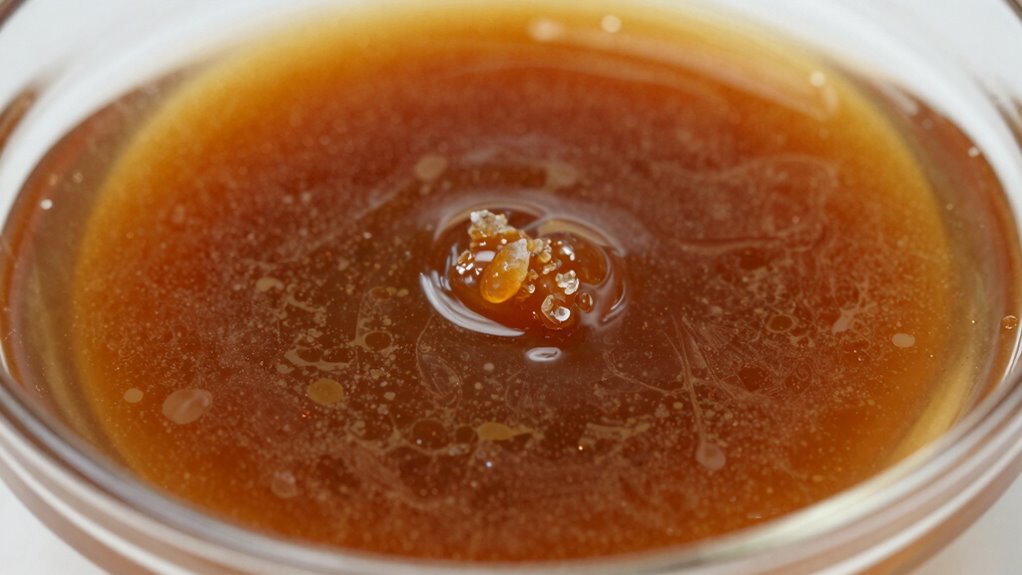
Your caramel can turn grainy when sugar crystallizes during cooking or cooling, often caused by fluctuating temperatures, excessive stirring, or disturbance. To prevent this, avoid stirring once boiling, brush down the pan sides to wash away crystals, and use a candy thermometer to keep the temperature steady—around 340°F. Cooling slowly and handling gently also help maintain a smooth texture. Keep these tips in mind, and you’ll discover more ways to perfect your caramel.
Key Takeaways
- Excessive stirring after boiling or during cooling can cause sugar crystals to form, making caramel grainy.
- Maintaining a precise, steady temperature with a candy thermometer ensures even caramelization and prevents crystallization.
- Using acids like lemon juice or cream of tartar inhibits crystal formation during cooking.
- Cooling the caramel gradually without agitation helps prevent crystal development and maintains smoothness.
- Avoid disturbing the mixture during cooling and handle it gently for a glossy, grain-free finish.

Have you ever wondered why your smooth, glossy caramel suddenly becomes grainy? It’s a frustrating moment, especially after you’ve poured your heart into making a perfectly silky treat. The culprit is often sugar crystallization, a common but easily preventable issue. When sugar crystallizes, it forms tiny, hard crystals that give your caramel a gritty texture instead of the smooth, velvety finish you’re aiming for. Luckily, understanding the role of temperature control can help you keep that from happening and guarantee your caramel stays luscious and glossy. Proper handling of sugar during cooking plays a crucial role in preventing crystallization.
Sugar crystallization occurs when sugar molecules come out of solution and form solid crystals. This can happen for several reasons, but most often it’s related to how you handle the sugar during cooking. If the sugar is stirred too much once it starts boiling, or if the mixture is disturbed as it cools, you create a perfect environment for crystals to form. The key to preventing this is managing your temperature carefully. Using a reliable candy thermometer, you can monitor the temperature precisely and avoid overheating or cooling too quickly. When you heat sugar to the right temperature—typically around 340°F (170°C) for caramel—you dissolve the sugar completely, reducing the chances of crystallization.
Prevent crystallization by controlling temperature and stirring minimally during cooking.
Temperature control doesn’t just prevent crystallization; it also helps you achieve the ideal caramel color and consistency. When you cook sugar, it first melts and then begins to caramelize as the temperature rises. If the heat is too high or uneven, parts of the mixture may caramelize faster than others, leading to a grainy or uneven texture. That’s why maintaining a steady, moderate temperature is vital. Additionally, once the sugar reaches the desired temperature, you should remove it from heat promptly and avoid stirring or agitating it during cooling. This minimizes the chance of crystals forming on the sides of the pan or in the mixture.
Another helpful tip is to brush down the sides of the pan with a damp brush to wash away any sugar crystals that may have started to form. Using ingredients like lemon juice or cream of tartar can also inhibit crystallization by interfering with sugar molecules’ ability to stick together. These acids break down sucrose, helping keep the mixture smooth. In essence, controlling the temperature meticulously and taking preventative steps during cooking and cooling are your best defenses against grainy caramel. With patience and precision, you can turn out that beautifully glossy, smooth caramel every time, free from the gritty texture that sugar crystallization can cause.
Frequently Asked Questions
Can Adding Butter or Cream Fix Grainy Caramel?
Adding butter or cream can help fix grainy caramel by smoothing out the texture. When you add butter, it incorporates into the caramel, creating a richer, silkier consistency. Similarly, cream incorporation helps soften the sugar crystals, reducing graininess. Gently stirring in small amounts of butter or cream while heating can often salvage your caramel, making it smooth and glossy again. Just be careful to add gradually to avoid further crystallization.
Does the Type of Sugar Affect Caramel’s Texture?
Think of sugar varieties as different musical instruments shaping your caramel’s melody. Using granulated sugar, for example, creates a smooth, glossy caramel, while brown sugar adds richness and a slightly softer texture. The type of sugar directly influences caramel consistency, so choosing the right one matters. If you want a silky finish, opt for fine, pure sugars. Your choice guides the texture, making your caramel sing with perfect harmony.
How Does Humidity Influence Caramel Graininess?
Humidity impact markedly influences caramel’s texture, often causing it to become grainy. When the air’s moist, it introduces extra moisture into your caramel, disrupting the smooth, glossy finish. To prevent this, you need moisture control by working in a dry environment, storing caramel properly, and avoiding humidity exposure during cooking. Keeping humidity levels low helps maintain a silky texture and prevents the formation of unwanted sugar crystals.
Is It Safe to Reheat Grainy Caramel?
Reheating grainy caramel is generally safe, but it can affect texture and flavor. To avoid issues, reheat gently over low heat, stirring constantly. If your caramel turns grainy again, try remedies like adding a splash of cream or water and stirring until smooth. Always guarantee the caramel is heated evenly to prevent burning or further graininess. Remember, patience during reheating helps maintain a smoother, more delicious result.
Can Using a Different Pan Prevent Graininess?
Think of your pan as a conductor guiding a symphony; using a different pan can help prevent graininess. Opt for heavy-bottomed pans or alternatives with even heat distribution, like stainless steel or copper. These pans minimize hot spots, ensuring your caramel heats uniformly. By choosing the right vessel, you reduce chances of sugar crystallization, keeping your caramel silky and smooth. Your patience and the right pan make all the difference.
Conclusion
So, next time you make caramel, think of it as a delicate dance where timing and temperature are your partners. If you rush or ignore those cues, your smooth partner can turn stiff and grainy. With patience and attention, you’ll master the rhythm, creating silky, luscious caramel every time. Remember, good caramel isn’t just a treat—it’s a symphony of precision, patience, and a little bit of patience. Keep practicing, and your sweet creations will always shine.