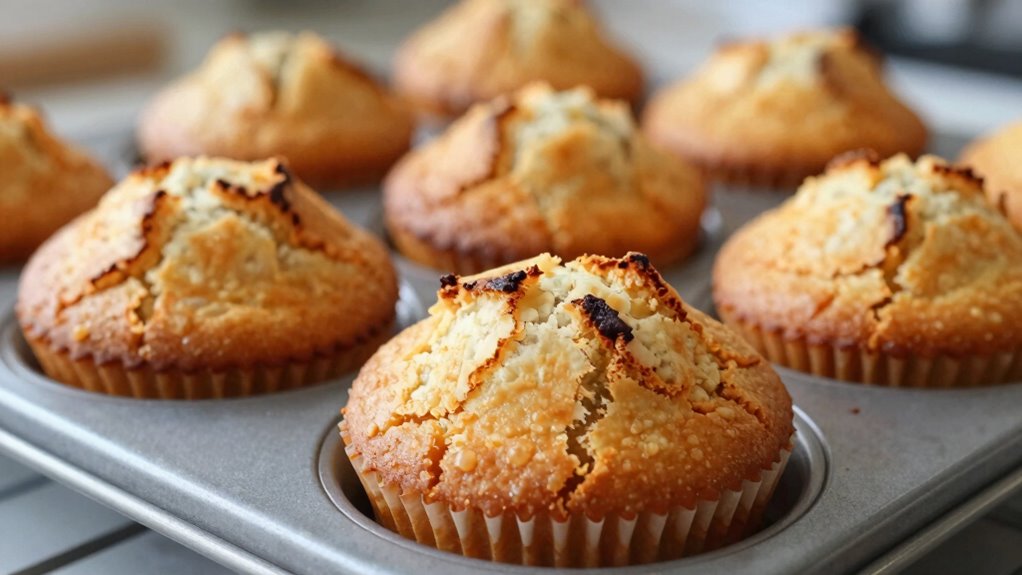
If your muffins turn out dry, it’s likely because you overbaked them and missed key signals like moist crumbs or a toothpick that comes out with a few moist bits. Baking too long or at too high a temperature causes moisture to evaporate, leaving the muffins dry and tough. To avoid this, watch for proper doneness and control your oven temperature carefully. Keep these tips in mind, and you’ll discover how to prevent overbaking in future batches.

Get baking supplies delivered free — and shop member deals
- Fast, free delivery on millions of items
- Access to Prime Big Deal Days deals on October 6–7
- Prime Video, Amazon Music and more included
Key Takeaways
- Overbaking causes moisture evaporation, leading to dry muffins despite a firm appearance.
- Relying solely on visual cues like color can miss overbaking; use toothpick tests for moisture.
- Baking at too high a temperature accelerates drying; lower, consistent heat preserves moisture.
- Ignoring proper baking time or oven signals results in missing the overbaking warning.
- Lack of moisture-retaining ingredients or improper mixing can cause dryness, even if not overbaked.
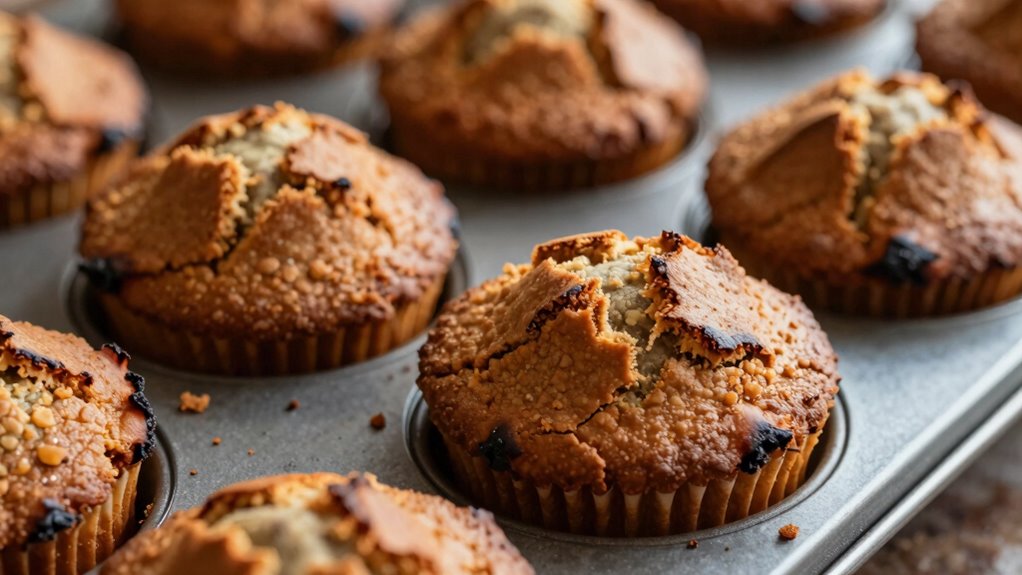
Have you ever bitten into a muffin only to find it dry and crumbly? If so, you’re not alone. Many bakers face this frustrating issue, often because of overbaking or improper moisture retention during the process. When muffins turn out dry, it’s usually a sign that they’ve been in the oven too long or that the baking techniques used didn’t support keeping the moisture inside. To prevent this, understanding how to preserve moisture during baking is key.
Moisture retention in muffins depends heavily on your baking techniques. One common mistake is overbaking, which causes the moisture inside the muffin to evaporate completely. You might think that longer baking times ensure a firm structure, but they often do the opposite — they dry out the batter. To avoid this, it’s essential to monitor your muffins closely towards the end of the baking process. Keep in mind that muffins are done when a toothpick inserted into the center comes out with a few moist crumbs, not wet batter or completely clean. This subtle cue helps you avoid overbaking and losing valuable moisture.
Another effective baking technique to promote moisture retention involves adjusting your oven temperature. Baking at a slightly lower temperature for a longer period allows the muffins to cook evenly, reducing the risk of over-drying the exterior while the interior remains underdone. Using an oven thermometer can help ensure your oven’s temperature is accurate, preventing unintended overbaking. Additionally, placing a pan of water in the oven during baking can create a humid environment, which helps keep the muffins moist by slowing down the evaporation process.
Incorporating ingredients that enhance moisture can also make a difference. For example, adding yogurt, sour cream, or applesauce to your batter introduces extra moisture, which helps keep the muffins tender and moist through the baking process. These ingredients not only improve moisture retention but also contribute to a softer crumb. Proper mixing techniques are equally important—overmixing can develop gluten, leading to tougher muffins, while undermixing can cause uneven moisture distribution. Mix just until the ingredients are combined for a tender, moist result.
As an affiliate, we earn on qualifying purchases.
Frequently Asked Questions
Can Underbaking Cause Muffins to Be Too Moist?
Yes, underbaking can make your muffins too moist, resulting in a dense, gummy texture. When you don’t bake them long enough, the center remains wet, disrupting the muffin’s ideal texture. To guarantee consistent baking, check for a golden top and use a toothpick to test doneness. Proper baking time helps you achieve the perfect muffin texture and consistent baking results, avoiding overly moist or undercooked muffins.
How Does Ingredient Temperature Affect Muffin Moisture?
Think of ingredient temperature as the mood of your batter—warm ingredients blend more smoothly, making moist muffins, while cold ones can cause dryness. When your ingredients are at room temperature, mixing techniques become more effective, ensuring even distribution of moisture. If you chill ingredients or use cold butter, it’s like trying to dance with stiff joints—your muffins may turn out drier. Keep ingredients at the right temperature for tender, moist results.
What Role Does Oven Calibration Play in Muffin Doneness?
Your oven calibration plays a vital role in muffin doneness because inaccurate oven accuracy can lead to over or under-baking. Regularly check your oven’s temperature using a calibration checklist to make certain it’s heating correctly. If your oven isn’t properly calibrated, muffins might turn out dry or undercooked. Proper calibration guarantees consistent heat, helping you achieve perfectly baked muffins every time, preventing dry muffins from overbaking signals you might have missed.
Are There Quick Tests to Check Muffin Doneness Without a Timer?
Checking muffin doneness is like spotting a clear sky—quick and straightforward. You can do a toothpick test by inserting it into the center; if it comes out clean, they’re ready. Also, look for visual cues like a golden-brown top and firm edges. These quick tests save you from overbaking, ensuring moist muffins every time without needing a timer.
How Does Altitude Influence Muffin Baking and Moisture?
At high altitude, you need to adjust oven calibration and ingredient temperature to improve moisture retention. The lower air pressure causes muffins to bake faster and lose moisture, so increase baking time slightly and add moisture-rich ingredients. Use doneness tests like inserting a toothpick, but be mindful that rapid baking might require more frequent checks. Proper adjustments help you achieve moist, perfectly baked muffins despite the altitude challenge.
moisture-retaining muffin liners
As an affiliate, we earn on qualifying purchases.
As an affiliate, we earn on qualifying purchases.
Conclusion
Next time your muffins turn out dry, remember it’s a whisper from your oven, warning you of overbaking’s silent toll. Like a fading sunset, the perfect bake is fleeting—once lost, it’s hard to reclaim. Embrace the dance of timing and temperature, letting them be your guiding stars. With patience and attention, you’ll turn that overbaked shadow into a golden sunrise, revealing moist, tender muffins that sing of your culinary mastery.
As an affiliate, we earn on qualifying purchases.
As an affiliate, we earn on qualifying purchases.
Halloween Picks
halloween
As an affiliate, we earn on qualifying purchases.