If your bread isn’t browning, the first thing to check is your oven temperature—many ovens run cooler than set, so using an oven thermometer can help. Also, verify your dough has enough surface sugars, either from the recipe or through proper fermentation. Uneven heat or baking surfaces can prevent even browning, so consider using a baking stone or adjusting rack position. For more tips on achieving a perfect crust, keep exploring these common causes.
Key Takeaways
- Ensure your oven reaches the proper temperature with an oven thermometer to promote browning.
- Check that your dough has enough sugar or add a glaze to enhance caramelization.
- Use baking stones, proper racks, and preheat thoroughly for even heat distribution.
- Extend baking time at the right temperature to develop a deeper crust color.
- Verify oven calibration and consider applying an egg wash to improve surface browning.

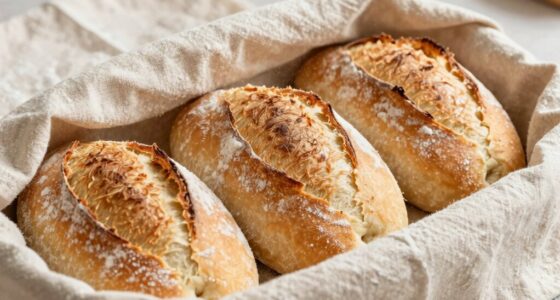
If your bread isn’t browning in the oven, it can be frustrating, especially when you’re aiming for that perfect golden crust. One common culprit is the oven temperature. If your oven isn’t hot enough, the Maillard reaction, which gives bread its rich color and flavor, doesn’t occur efficiently. Many home ovens have inaccuracies, so using an oven thermometer can help you verify that your oven hits the desired temperature—usually around 375°F to 425°F for baking bread. If it’s too low, the crust won’t develop properly, leaving your bread pale and dull. Conversely, if it’s too high, the crust might burn before the inside is fully baked. Adjusting the oven temperature and preheating thoroughly can make a noticeable difference in browning.
Ensuring your oven hits 375–425°F with a thermometer improves bread browning and crust development.
Another factor that ties into browning is your dough’s glucose levels. During baking, the sugars in your bread melt and caramelize, contributing to that golden hue. If your dough lacks sufficient sugars, either from the recipe or fermentation process, browning will be limited. Over-fermented dough can have reduced glucose levels because the yeast consumes the sugars, leaving less available for browning. To fix this, consider adding a touch of sugar or honey to your dough, especially if you’re working with leaner recipes. Also, ensuring proper fermentation time allows the yeast to develop enough flavor and sugars without depleting them completely.
Moreover, the baking environment plays a role. If you’re baking on an uneven surface or in an oven with poor heat circulation, the bread might not brown evenly. Using a baking stone or steel can help distribute heat more evenly and improve crust development. Additionally, applying an egg wash or milk wash before baking can enhance browning by adding surface sugars and proteins that caramelize during baking.
It’s also worth considering your baking duration. Sometimes, simply extending the bake time at the correct temperature allows the crust to develop that appealing color. Keep a close eye on the bread’s progress, and remember that removing it at the right moment ensures a perfect crust without overbaking.
Top picks for "bread brown usually"
Open Amazon search results for this keyword.
As an affiliate, we earn on qualifying purchases.
Frequently Asked Questions
Can Using a Different Oven Type Affect Browning?
Yes, using a different oven type can affect your baking results. Convection ovens circulate hot air, leading to more even browning, while traditional ovens may produce uneven results. If you switch oven types, you might notice changes in how your bread browns. Adjusting temperature or baking time can help achieve the desired crust color, ensuring your bread turns out perfectly browned regardless of the oven you use.
How Does Altitude Impact Bread Browning?
High altitude affects bread browning because the lower air pressure causes faster evaporation and quicker crust formation. You should make baking adjustments like reducing oven temperature slightly and increasing liquids to prevent over-browning. Additionally, shortening baking time and adding a bit more flour can help. These steps ensure your bread develops a nice, even color without burning or under-baking, giving you better control at high altitude.
Is It Necessary to Preheat the Oven Before Baking?
Yes, you should preheat the oven before baking. By doing so, you guarantee the oven reaches the correct oven temperature, which helps your bread bake evenly and develop a nice crust. Preheating also stabilizes the baking time, so your bread doesn’t end up underdone or overbaked. Skipping this step can result in uneven browning or longer baking times, affecting the final texture and appearance of your bread.
Can the Shape of Bread Influence Browning?
Think of your bread as a canvas: its shape influences how it colors, much like a painter’s brushstrokes. A wider, flatter loaf exposes more surface area, encouraging even browning, while a tight, tall shape might trap moisture and hinder crust development. Your bread shape directly affects crust thickness and exposure to heat, so choose wisely if you want that golden-brown perfection.
How Does the Moisture Content of Dough Affect Browning?
You should know that dough hydration directly impacts browning because higher moisture content can slow the Maillard reaction. When your dough retains too much moisture, it prevents the crust from forming a crispy, golden surface. To enhance browning, you can slightly reduce water in your dough or increase oven temperature. Proper moisture retention guarantees your bread develops a rich, appealing color while maintaining the desired texture.
Conclusion
So, if your bread refuses to turn golden, it’s like a stubborn artist holding back their masterpiece. Usually, it’s just a simple fix—adjust your oven temp, check your ingredients, or give it a little more time. Think of it as coaxing a shy flower to bloom; patience and the right touch bring out that beautiful, tempting crust. Keep experimenting, and soon enough, your bread will shine like a star on the bakery stage.