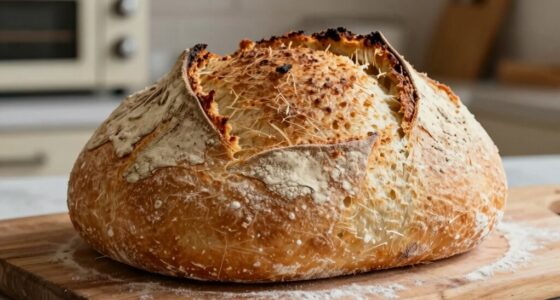
Large tunnels in your bread often happen when the fermentation isn’t even, causing uneven gas pockets to expand. If you don’t develop the gluten well or handle the dough too roughly during shaping, it can create weak spots that form big tunnels during baking. Also, rushing or over-proofing can cause gases to collect and expand unevenly. If you want to learn how to fix these issues and achieve a more uniform crumb, keep exploring the tips ahead.

Get baking supplies delivered free with Prime
- Fast, free delivery on millions of items
- Prime Video, Amazon Music and more included
- Member-only deals all year
Key Takeaways
- Rapid or uneven fermentation causes large gas pockets, leading to big tunnels instead of an open, even crumb.
- Insufficient gluten development weakens the dough’s ability to trap gases, resulting in irregular tunnels.
- Over-proofing allows excessive gas buildup, which can create large tunnels during baking.
- Poor dough handling and shaping can cause uneven gas distribution, forming large tunnels in the crumb.
- Inconsistent temperature control speeds up fermentation, increasing the risk of large tunnels forming.

If you’ve noticed large tunnels in your bread, it’s often due to the way dough ferments and develops gas. The fermentation process plays an essential role in shaping the crumb structure, and understanding it can help you prevent those unwanted large tunnels. When yeast ferments the sugars in your dough, it produces carbon dioxide, which creates bubbles that cause the dough to rise. If this process is uneven or uncontrolled, it can lead to irregular gas pockets, resulting in those large tunnels you see in the final loaf. Proper fermentation relies on maintaining consistent conditions, including temperature and timing, to allow the yeast to produce gases steadily and evenly. Your dough handling techniques directly influence how the gas is distributed during fermentation. Properly mixing and kneading develop the gluten structure, which acts like a network to trap gases evenly throughout the dough. If you under-knead, the gluten network remains weak, allowing gas to escape in certain areas and form large tunnels. Conversely, over-kneading can over-develop the gluten, making the dough tough and less capable of expanding uniformly. Finding the right balance during kneading is vital to create a resilient dough that can hold and distribute gas evenly. Another vital aspect is how you shape and proof your dough. When shaping, gentle handling prevents the formation of large air pockets that can expand during baking. During the proofing stage, giving the dough enough time to ferment allows the yeast to produce gases gradually, resulting in a more uniform crumb. Rushing this step or over-proofing can cause the gas to concentrate in specific areas, leading to those prominent tunnels. Using proper dough handling techniques during shaping and proofing ensures the gas bubbles are evenly distributed before baking. Temperature control also impacts the fermentation process. Warmer environments accelerate yeast activity, which can cause rapid gas production and uneven bubble formation. Cooler temperatures slow fermentation, giving the dough more time to develop a stable gluten network. Keeping your dough in a consistent, moderate temperature allows for steady fermentation, reducing the likelihood of large tunnels forming. Additionally, understanding fermentation timing and managing it carefully can help prevent over- or under-fermentation, both of which contribute to tunnel formation.
As an affiliate, we earn on qualifying purchases.
Frequently Asked Questions
Can Large Tunnels Affect Bread Shelf Life?
Large tunnels in bread can reduce shelf life because they often indicate uneven fermentation, affecting storage moisture and allowing mold or staling to develop faster. These tunnels can create pockets where moisture escapes or accumulates, compromising preservative effects. As a result, your bread may spoil sooner. Properly kneading and proofing dough helps minimize tunnels, ensuring better storage moisture retention and extending its freshness and shelf life.
Do Different Flour Types Influence Tunnel Formation?
Think of flour types as the paintbrushes in your baking masterpiece. Different flours, with their varying protein levels, influence gluten development and shape tunnel formation. High-protein flours, like bread flour, strengthen gluten, creating a resilient dough that can trap larger gas pockets, leading to bigger tunnels. Lower-protein flours produce softer bread with finer crumb, so choosing your flour wisely can control those tunnels and improve your bread’s texture.
How Does Hydration Level Impact Tunnel Size?
Higher hydration levels markedly impact tunnel size in your bread. When you increase hydration, it enhances gluten development, creating a more extensible dough. This results in larger, more irregular tunnels as gases expand during fermentation and baking. Conversely, lower hydration leads to a tighter crumb with smaller tunnels. So, adjusting hydration impacts gluten development and directly influences tunnel size, giving you more control over your bread’s texture.
Are Large Tunnels More Common in Certain Bread Styles?
Yes, large tunnels are more common in certain bread styles like sourdough or rustic loaves. You often see this with artisan techniques and fermentation methods that encourage open, airy crumb. These methods involve longer fermentation and gentle shaping, which promote large gas bubbles. By using these techniques, you can intentionally create breads with prominent tunnels, giving them a distinctive texture and appearance that’s highly valued in artisanal baking.
Can Shaping Techniques Prevent Large Tunnels?
Yes, shaping techniques can prevent large tunnels. Focus on maintaining proper dough tension during shaping to create a tight crumb, which helps distribute gases evenly. Additionally, controlling fermentation ensures the dough doesn’t overproof, reducing the risk of large tunnels forming. By applying these methods, you promote uniform gas retention and achieve a more consistent, open crumb without unwanted tunnels.
As an affiliate, we earn on qualifying purchases.
Conclusion
Understanding why your bread has large tunnels helps you improve your baking. Did you know that over 60% of home bakers report uneven crumb structures? By controlling fermentation and shaping, you can achieve a more uniform, open crumb. So next time, pay attention to your dough’s rise and handling. With a little practice, you’ll minimize those tunnels and enjoy beautifully airy bread that’s as inviting as a bakery’s. Happy baking!
digital kitchen thermometer for baking
As an affiliate, we earn on qualifying purchases.
As an affiliate, we earn on qualifying purchases.
As an affiliate, we earn on qualifying purchases.
Halloween Picks
halloween
As an affiliate, we earn on qualifying purchases.